
Eastern Woodlands Native Americans quick facts
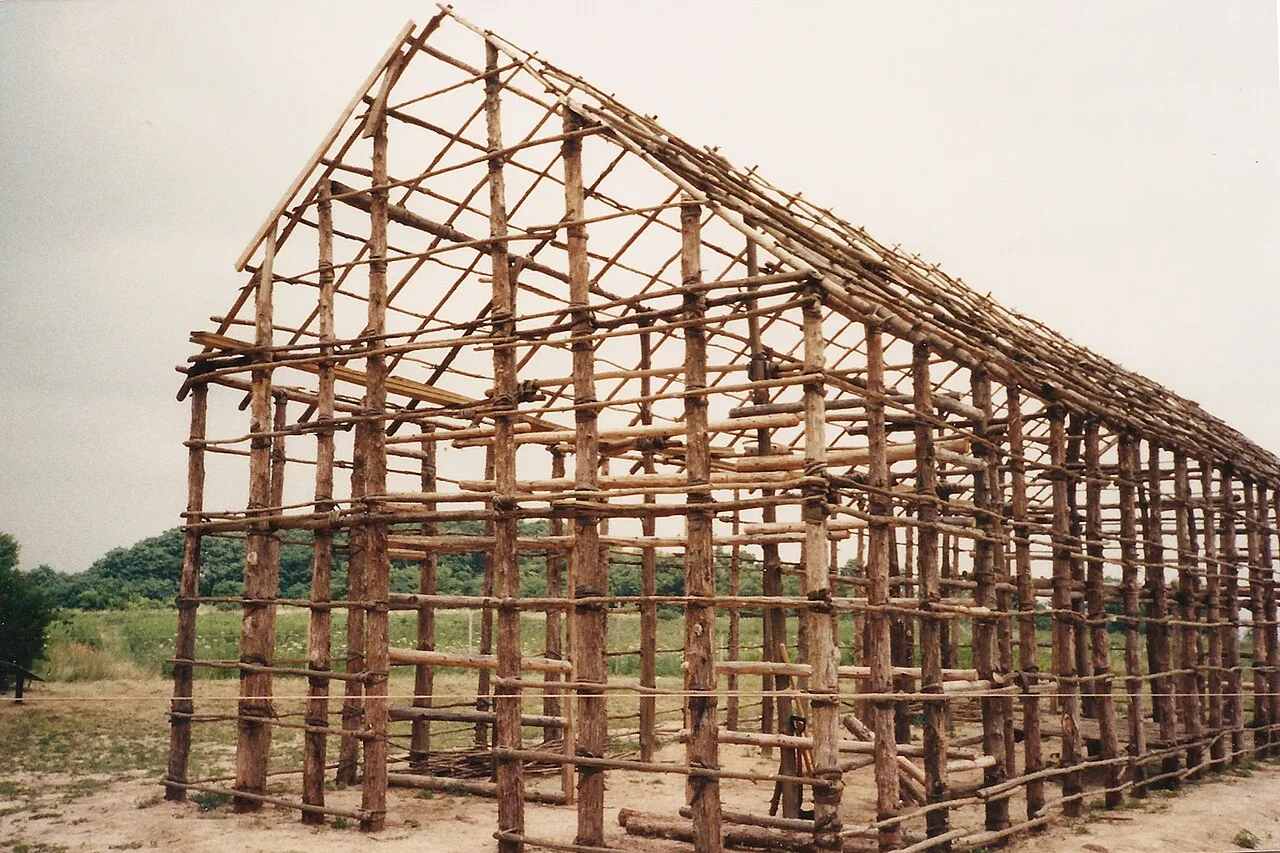
- Haudenosaunee means “People of the Longhouse”. A typical longhouse was 180 to 220 feet long.
- Twenty or more related families could share one longhouse, all from the same clan.
- Corn, beans and squash are called the Three Sisters because they grow best planted together.
- The Haudenosaunee Grand Council has 50 chiefs, and every one has an equal voice.
- Clan Mothers choose their clan’s leaders. Women were also the farmers.
Where were the Eastern Woodlands?
The Eastern Woodlands is the name for the huge forested part of North America east of the Mississippi River. It stretches from the Great Lakes and the St Lawrence River in the north down towards the Gulf of Mexico in the south, and out to the Atlantic coast.
Before European settlers arrived, most of this land was covered in trees. Rivers and lakes ran through it everywhere. That mattered, because the forest and the water gave people almost everything they needed: wood, bark, animals to hunt, fish, plants and a way to travel.
Teachers often split the region in two. The northern part is sometimes called the Northeast Woodlands, with long, snowy winters. The southern part, where the Cherokee lived, has milder weather and a longer growing season. This guide looks mostly at the north, and our Cherokee facts cover the south.

The nations of the woodlands
The Eastern Woodlands were never home to one people. Many separate nations lived there, each with its own language, leaders and way of doing things. It is a bit like Europe: lots of countries sharing one continent.
Two big language families covered much of the north. The Haudenosaunee spoke Iroquoian languages. Their name means “People of the Longhouse”, and they lived in what is now New York State. Many of their neighbours spoke Algonquian languages. These included the Ojibwe around the Great Lakes, the Wampanoag on the coast of Massachusetts, and the Miami in Indiana and Ohio.
| Nation | Where they lived | Language family |
|---|---|---|
| Mohawk, Oneida, Onondaga, Cayuga, Seneca, Tuscarora | New York State (the Haudenosaunee) | Iroquoian |
| Ojibwe (Anishinaabe) | Around the Great Lakes, in the US and Canada | Algonquian |
| Wampanoag | South-eastern Massachusetts and nearby islands | Algonquian |
| Miami (Myaamia) | Indiana and Ohio | Algonquian |
| Cherokee | The southern Appalachian Mountains | Iroquoian |
Homes: longhouses and wigwams
Almost every picture of Native Americans shows a tipi. You would not have seen one here. Tipis belong to the Plains, where people moved with the buffalo. Woodland people stayed in one place for longer, and they built with the forest around them.
The Haudenosaunee lived in longhouses. A longhouse had a frame of wooden posts and poles, covered with big sheets of bark. The New York State Museum says a typical one was 180 to 220 feet long, which is about 55 to 67 metres. Archaeologists have even found the outlines of two that were 364 and 400 feet long. That is longer than a football field.
A longhouse was a home for a whole extended family. Twenty or more families might live in one, all related through their mothers. Everyone inside belonged to the same clan. Clans were named after animals and birds, such as the Turtle, the Bear and the Hawk. The clan’s symbol was often painted on the front of the longhouse.
The Ojibwe and many other Algonquian nations lived in wigwams instead. A wigwam is a smaller, rounded house. Young trees were bent into a dome and covered with bark or woven mats. The Minnesota Historical Society says the Ojibwe lived in wigwams until the 20th century.
| Longhouse | Wigwam | |
|---|---|---|
| Shape | Long and narrow, with a rounded roof | Round, shaped like a dome |
| Size | Usually 180 to 220 feet long | Much smaller, for one family |
| Who lived there | Many related families from one clan | One family |
| Built by | The Haudenosaunee | The Ojibwe and other Algonquian nations |
| Covered with | Sheets of bark | Bark or woven mats |

Food: the Three Sisters, hunting and fishing
Woodland nations were farmers as well as hunters. Their three most important crops were corn, beans and squash. The Haudenosaunee call them the Three Sisters, because the three plants grow best together.
It is clever gardening. The US National Agricultural Library explains how each sister helps the others. The tall corn gives the beans something to climb. The beans put goodness back into the soil. The squash spreads its big leaves over the ground, which keeps the soil damp and stops weeds from growing.
Women did the farming. Among the Haudenosaunee, they planted the corn first in small hills of earth. Two or three weeks later they came back and planted beans in the same hills. Squash or pumpkins grew in between.
People hunted deer and other animals in the forest, and they fished in the rivers and lakes. Around the Great Lakes, the Ojibwe also made maple sugar and syrup from the sap of maple trees. They harvested wild rice, which grows in shallow water. An Ojibwe prophecy told them to travel west to “the land where food grows on water”. They found it where the wild rice grew.
Clothing
Much of the clothing was made from deerskin, softened until it was comfortable to wear. Plimoth Patuxet Museums describe what the Wampanoag wore in the 1600s. Men, older boys, young girls and women wore a breechcloth. This was a strip of soft deerskin that passed between the legs and was tucked under a belt at the front and back.
In cold weather, men and women wrapped themselves in a mantle, a kind of cloak. It was often made of deerskin and fastened at one shoulder. Women often wore deerskin skirts tied at the waist with a thin belt.
Remember that this describes one nation at one time. As the museum puts it, each Native nation had, and still has, its own way of dressing.
Natural resources and how they were used
If your project asks about natural resources, this is the section for you. Woodland people used what the forest, the rivers and the coast gave them, and they wasted very little.
| Natural resource | What it was used for |
|---|---|
| Trees and saplings | Frames for longhouses and wigwams |
| Bark, especially birch bark | Covering houses, making containers, and the skin of canoes |
| Deer | Meat to eat, and skins for clothing |
| Rivers and lakes | Fish, travel by canoe, and wild rice |
| Maple trees | Sap boiled into maple sugar and syrup |
| Rich soil | Growing corn, beans and squash |
| Purple and white shells | Wampum beads |
The Ojibwe travelled the lakes and rivers in birch bark canoes. In a forest this thick, the water was often the easiest way to get anywhere.
Wampum is made from small purple and white shell beads strung together. It was never just decoration. In the Onondaga Nation’s account of how the Haudenosaunee came together, wampum is part of the story of peace itself, as you will see below.

Government: the Haudenosaunee Confederacy
One of the most famous things to come out of the Eastern Woodlands is a way of governing. Five nations, the Mohawk, Oneida, Onondaga, Cayuga and Seneca, agreed to stop fighting each other and join together. This union is the Haudenosaunee Confederacy.
The Onondaga Nation tells how it happened. The Creator sent a messenger, known as the Peacemaker, to bring the nations a plan of peace. He worked with a man named Hiawatha, who was full of grief. Hiawatha had strung purple and white shells together, the first wampum. The Peacemaker held the wampum and comforted him, and together they carried the message of peace from nation to nation.
The Confederacy is run by a Grand Council of 50 chiefs. The Onondaga Nation lists how many each nation sends: nine Mohawk, nine Oneida, fourteen Onondaga, ten Cayuga and eight Seneca. Every chief has an equal voice. Around 1720, the Tuscarora joined as the sixth nation.
Women hold real power in this system. Each clan has a Clan Mother. She watches over her clan, gives advice, and chooses the clan’s next leader. Leaders are also asked to think about the Seven Generations not yet born before they decide anything.
Nobody knows exactly when the Confederacy began. The National Park Service says about AD 1200. The Onondaga Nation says the nations have lived in peace for “countless centuries”. Historians still disagree, so if your worksheet asks for a date, it is fine to say “hundreds of years before Europeans arrived”.
The woodland nations today
It is easy to read about longhouses and canoes and think these nations belong to the past. They do not. The Haudenosaunee nations still meet, still choose chiefs and Clan Mothers, and still run their own affairs. The Onondaga Nation, for example, has its own government offices, its own fire department and its own school calendar.
The Ojibwe are one of the largest Native nations in North America. The Minnesota Historical Society says they live in both the United States and Canada, all around the Great Lakes. Many still harvest wild rice and make maple sugar, just as their ancestors did.
Want to meet one nation in more detail? Read our guides to the Mohawk Nation and the Miami Tribe, or start with our Native American facts.
Three things people get wrong
“Native Americans lived in tipis.” Some did, on the Plains. In the Eastern Woodlands people lived in longhouses and wigwams, built from the trees around them. A tipi would have been a strange sight there.
“Women just stayed at home.” Women were the farmers who grew most of the food. Among the Haudenosaunee, Clan Mothers choose the leaders. That is real political power, and it is part of the Great Peace itself.
“The woodland peoples died out.” They did not. They lost a great deal of land and suffered terribly after Europeans arrived, but the nations survived. Their governments, languages and ceremonies carry on today.
Did you know? Archaeologists in New York State have found the outlines of two longhouses that were 364 and 400 feet long. That is longer than a football field, all under one roof of bark.
Try it
Pace out a longhouse. A typical one was about 200 feet long, which is roughly 80 big steps. Walk it across a playground or a park, then imagine twenty families living along it.
Knowledge check
Why are corn, beans and squash called the Three Sisters?
Show answer
Because they grow best together. The corn holds up the beans, the beans put goodness back into the soil, and the squash leaves shade the ground to keep it damp and stop weeds.
Who chooses a clan’s leader among the Haudenosaunee?
Show answer
The Clan Mother. The Onondaga Nation explains that this duty was given to women by the Peacemaker when the Great Peace began.
Frequently asked questions
What are the Eastern Woodlands?
The Eastern Woodlands is the forested part of North America east of the Mississippi River, from the Great Lakes down towards the Gulf of Mexico. Many Native nations lived there, including the Haudenosaunee, Ojibwe, Wampanoag, Miami and Cherokee.
What kind of homes did the Eastern Woodlands tribes live in?
The Haudenosaunee lived in longhouses, long buildings of poles covered with bark, shared by many related families. The Ojibwe and other Algonquian nations lived in wigwams, smaller dome-shaped houses covered with bark or woven mats.
What did the Eastern Woodlands Native Americans eat?
Their main crops were corn, beans and squash, known as the Three Sisters. They also hunted deer, fished in rivers and lakes, and around the Great Lakes they made maple sugar and harvested wild rice.
What did the Eastern Woodlands Native Americans wear?
Much of their clothing was made from soft deerskin. In the 1600s, Wampanoag people wore breechcloths, women wore deerskin skirts, and in cold weather everyone wrapped up in a deerskin mantle, a kind of cloak.
What natural resources did the Eastern Woodlands tribes use?
They used trees and bark for houses and canoes, deer for food and clothing, rivers and lakes for fish and travel, maple trees for sugar, rich soil for crops, and purple and white shells for wampum beads.
What is the Haudenosaunee Confederacy?
It is a union of nations that agreed to live in peace: first the Mohawk, Oneida, Onondaga, Cayuga and Seneca, then the Tuscarora around 1720. A Grand Council of 50 chiefs meets, and Clan Mothers choose the leaders.
Do Eastern Woodlands tribes still exist?
Yes. The Haudenosaunee nations still have their own governments, chiefs and Clan Mothers, and the Ojibwe are one of the largest Native nations in North America, living around the Great Lakes in the US and Canada.
Sources
- New York State Museum: Haudenosaunee longhouse — longhouse size and construction, the 364 and 400 foot longhouses, families and clans
- Onondaga Nation: History — the Peacemaker and Hiawatha, wampum, Clan Mothers, the 50 chiefs and the Seven Generations
- National Park Service: The Six Nations Confederacy during the American Revolution — the meaning of Haudenosaunee, the Confederacy about AD 1200 and the Tuscarora joining around 1720
- Minnesota Historical Society: The Ojibwe People — wigwams, birch bark canoes, maple sugar, wild rice and the Ojibwe today
- US National Agricultural Library: The Three Sisters — how corn, beans and squash help each other, and how Haudenosaunee women planted them
- Plimoth Patuxet Museums: What to wear? — Wampanoag deerskin clothing in the 1600s


