
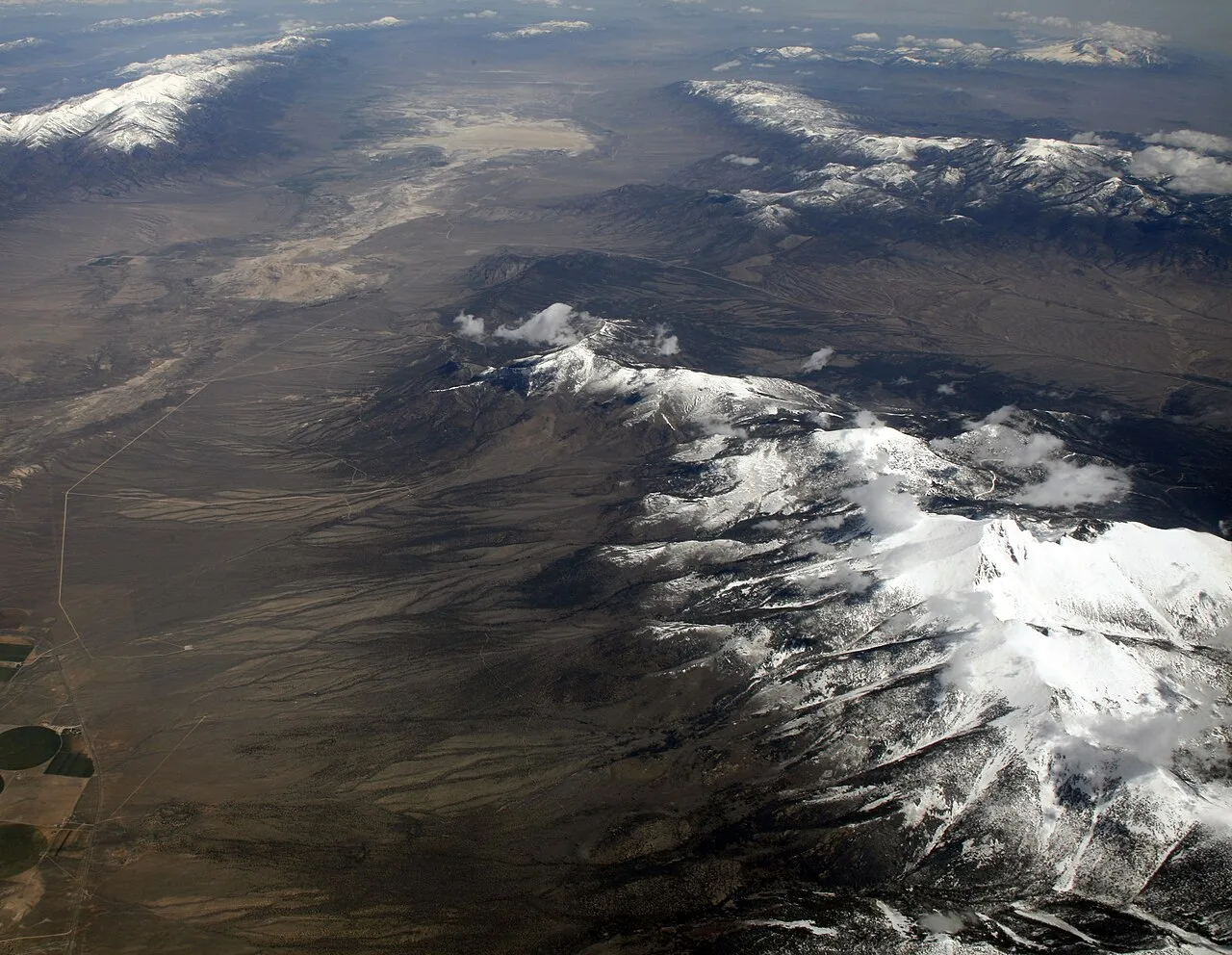
Great Basin Native Americans quick facts
- It is called a basin because no rivers flow out of it to the sea.
- All the Great Basin nations speak Numic languages except the Washoe, whose language is from a different family.
- Pine nut soup was a staple food, and families still camp in the mountains to gather pine nuts every autumn.
- Most of a family’s household goods were made from willow, from baskets to bows.
- The Great Basin Native Basketweavers Association, formed in 1999, is teaching basketry to young people.
Where is the Great Basin?
The Great Basin is a huge dry region in the western United States. The National Park Service says it stretches from the Sierra Nevada mountains of California to the Wasatch Mountains of Utah, and from southern Oregon to southern California. Nearly all of Nevada is inside it.
Why is it called a basin? A basin is a bowl, and water that falls in a bowl stays there. In the Great Basin, no rivers flow out to the sea. All the rain and snow that falls either dries up in the sun or soaks into the ground.
The land is a pattern of long mountain ranges with wide, flat valleys in between. Much of it is desert. Settlers who crossed it in wagons thought almost nobody could live there. They were wrong. People had been living there for thousands of years.

The nations of the Great Basin
Several nations have lived in the Great Basin, and their descendants still live there today. The National Park Service names them as the Western Shoshone, the Goshute, the Ute, the Paiute and the Washoe. The Paiute are often split into the Northern, Southern and Owens Valley Paiute.
| Nation | Language family |
|---|---|
| Western Shoshone | Numic |
| Goshute | Numic |
| Ute | Numic |
| Northern, Southern and Owens Valley Paiute | Numic |
| Washoe | Hokan, like several nations in California and the south-west |
Most of these nations speak Numic languages. They are separate languages, but they are closely related, a bit like Spanish and Italian. The Washoe are the odd ones out. Their language belongs to a completely different family.
Four of these nations are native to the state of Nevada: the Washoe, the Western Shoshone, the Northern Paiute and the Southern Paiute. Online Nevada, the state’s encyclopedia, explains that all four developed similar ways of life, because they all faced the same high desert.
Living with the seasons
In a dry land, food is spread thinly. Pine nuts ripen in one place, berries in another, and animals move about. So the Great Basin nations lived in small family groups that moved with the seasons.
Each family knew exactly where to be, and when. The National Park Service says they knew the land “intimately” and understood its natural cycles. They gathered enough food in the summer and autumn to last them through the winter. Where the land allowed it, some families also fished or farmed small plots.
Owning lots of things would have made moving hard. That is why families kept only what they could carry. It was a smart choice for the land they lived in, not a sign of being poor.
Long before these nations, another people farmed part of the region. Archaeologists call them the Fremont. They lived there from about 1,500 to 700 years ago, grew corn and squash, built small villages and made painted pottery.
Homes
Great Basin homes were built from what grew nearby. The most complicated was a house with a willow frame. Willow poles made the shape. Then the frame was covered with mats woven from cattails or tules, or with long fringes woven from grass. Tules are tall reeds that grow in marshes.
These homes were not meant to last for ever. A family moving to the next harvest could build another. Compare that with the huge longhouses of the Eastern Woodlands or the earth lodges of the Great Plains, which were built for people who stayed in one place.

Food: pine nuts, rabbits and more
The most important food of all was the pine nut, the seed of the pinyon pine. Pine nuts were cooked into pine nut soup, a staple food, which means people ate it all the time. Online Nevada says that families still set up pine nut camps in the mountains every autumn, in the same places their families have gone for generations.
People hunted jackrabbits, deer, antelope and water birds. Those who lived near lakes and rivers caught fish. They also gathered many kinds of berries, seeds and roots.
The Washoe traded with nations in California for acorns, and used them to make soup and biscuits. Food mattered so much that some groups were known by the food they ate.
Natural resources and how they were used
The Great Basin looks empty, but it is full of useful things if you know where to look. Willow was the most useful of all. Online Nevada says most of a family’s household goods were made from it.
| Natural resource | What it was used for |
|---|---|
| Willow | Baskets, cradleboards, bows and arrows, fish traps, rope and house frames, and medicine |
| Cattails and tules | Woven mats for covering houses |
| Pinyon pine | Pine nuts for soup, the main food |
| Deer | Meat, and hides made into buckskin |
| Jackrabbits and antelope | Meat |
| Redbud, bracken fern root and devil’s claw | Colours and patterns woven into baskets |
| Acorns (traded from California) | Soup and biscuits for the Washoe |
Willow was medicine, too. It was made into tea, mashed roots or powdered bark to treat toothache and other illnesses. Willows contain a substance called salicin, which is related to aspirin.
Baskets and clothing
The best-known craft of the Great Basin is willow basketry. Weavers coiled or twined willow sticks and split willow fibres. They made cradleboards, called baby baskets, and flat trays for winnowing, which means shaking seeds so the wind blows away the light husks. They also made cone-shaped burden baskets for carrying loads, and round decorated baskets.
Basket makers still ask permission from the willows before they gather them, and they give thanks. They only take what they need. Hunters and pine nut gatherers do the same for what they take.
Clothing was made from buckskin, deer hide tanned until it was soft. Sometimes it was smoked to give it a golden colour. Buckskin was used for clothes, moccasins, gloves and cradleboard covers. Tanning is a long, messy job, so only a few people still do it today.

Stories, songs and dances
Stories tie people to places. On the eastern shore of Pyramid Lake in Nevada stands a rock the Northern Paiute call the Stone Mother. Their story tells how her tears, cried for her lost children, made the lake.
The oldest music of the desert nations was singing, with sticks tapped to keep the rhythm. Later, hand drums were made from hide stretched over a round wooden hoop. Dances were usually simple round dances, often named after animals, like the Rabbit Dance.
The Great Basin nations today
The Great Basin nations are still there. Their skills are no longer needed just to survive, but they still matter a great deal, and they are passed on as part of who these nations are.
Willow basketry has had a comeback in the last twenty years or so. Younger people are learning to weave. The Great Basin Native Basketweavers Association, formed in 1999, holds “weave-ins” around Nevada and a gathering every year.
Want to see how life was different where people stayed in one place? Start with our Native American facts, and meet a Plains nation in our Pawnee facts.
Three things people get wrong
“The Great Basin peoples were poor.” Settlers saw that families owned very little and called them poor, even “primitive”. The National Park Service says that was wrong. These were successful people with a rich culture: skilled basket makers, potters, jewellers and storytellers, who had lived well in the desert for thousands of years.
“There is nothing to eat in a desert.” There is plenty, if you know where and when to look. Pine nuts, jackrabbits, antelope, fish, berries, seeds and roots fed families all year, with enough stored for winter.
“They were all one tribe.” They were several nations, each with its own identity. Even their languages come from two different families: the Washoe language is not related to the others at all.
Did you know? Willows contain salicin, a substance related to aspirin. Great Basin families used willow tea, mashed roots and powdered bark to treat toothache and other illnesses.
Try it
Make a list of everything in one room of your home that you would need to carry if you moved every few weeks. Cross out anything too heavy to carry. What is left?
Knowledge check
Why did Great Basin families move with the seasons?
Show answer
Because in a dry land food is spread thinly. Pine nuts, berries, seeds and animals were ready in different places at different times, so small family groups moved to each harvest and stored enough for winter.
What were Great Basin homes made of?
Show answer
Willow poles made the frame, and it was covered with mats woven from cattails or tules, or with long fringes of woven grass.
Frequently asked questions
What is the Great Basin?
The Great Basin is a dry region of the western United States, from the Sierra Nevada of California to the Wasatch Mountains of Utah. It is called a basin because no rivers flow out of it to the sea; the rain and snow dry up or soak into the ground.
What tribes lived in the Great Basin?
The Western Shoshone, Goshute, Ute, Paiute and Washoe. The Paiute are often divided into Northern, Southern and Owens Valley Paiute. Their descendants still live in the Great Basin today.
What kind of homes did the Great Basin tribes live in?
They built houses with a frame of willow poles covered with woven mats of cattails or tules, or with long fringes of woven grass. The homes were light, because families moved with the seasons.
What did the Great Basin Native Americans eat?
Pine nuts were the most important food, cooked into pine nut soup. They also ate jackrabbits, deer, antelope, water birds and fish, along with berries, seeds and roots. The Washoe traded for acorns to make soup and biscuits.
What natural resources did the Great Basin tribes use?
Willow was the most important: it made baskets, cradleboards, bows and arrows, fish traps, rope and house frames. They also used cattails and tules for mats, pinyon pines for pine nuts, and deer hides for buckskin clothing.
What did the Great Basin Native Americans wear?
They wore clothing made of buckskin, deer hide tanned until soft and sometimes smoked to a golden colour. Buckskin was also used for moccasins, gloves and cradleboard covers.
Do the Great Basin tribes still exist?
Yes. The National Park Service notes that their descendants still live in the Great Basin. Families still gather pine nuts every autumn, and willow basketry is being taught to young people again.
Sources
- National Park Service: Basin and Range — where the Great Basin is, and why it is called a basin
- Great Basin National Park: Historic tribes of the Great Basin — the nations, their languages, the seasonal way of life, and why settlers were wrong to call them poor
- Great Basin National Park: People — the Fremont farmers of 1,500 to 700 years ago
- Online Nevada Encyclopedia: Folklife of tribal groups — the four Nevada nations, food, willow basketry, buckskin, stories, music and the nations today
- Online Nevada Encyclopedia: Coyote willow — willow-frame houses covered with cattail or tule mats, willow goods and willow medicine


