
Great Plains Native Americans quick facts
- The National Park Service counts more than 30 separate Plains nations, each with its own language and customs.
- Lakota tipis were made of tanned buffalo skins, and the women who built them owned them.
- An earth lodge was 30 to 60 feet across and took about seven to ten days to build.
- Horses came with the Spanish in the 1500s. The Pawnee only began getting them around 1700.
- A big bison bull could weigh more than 2,000 pounds and give about 800 pounds of meat.
Where are the Great Plains?
The Great Plains are the huge grasslands in the middle of North America. The National Park Service describes the region as running from the Mississippi River in the east to the Great Basin in the west. Today it includes states such as Nebraska and North and South Dakota.
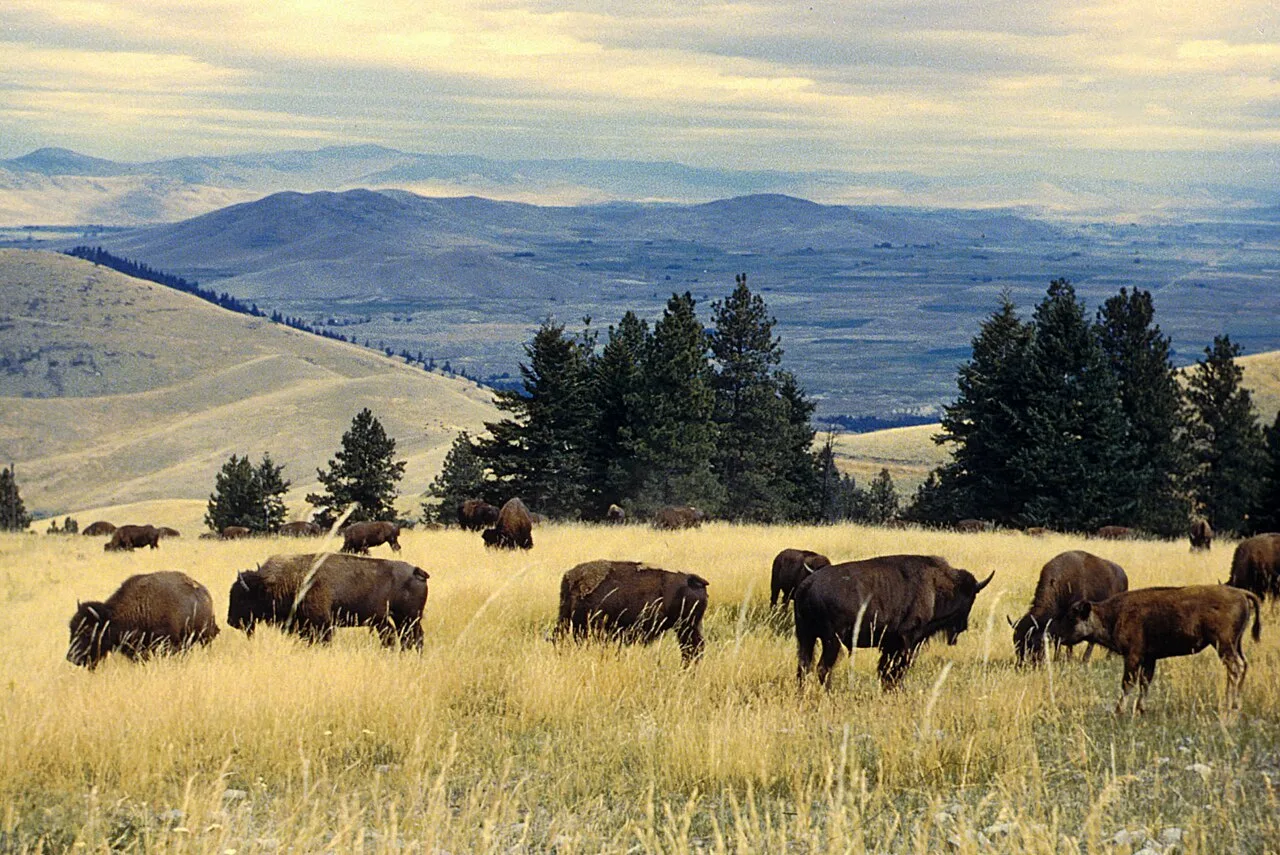
It is a land of long grass and big skies. Great herds of bison, often called buffalo, once roamed across it. Rivers such as the Missouri wind through the grassland, and their valleys have rich soil for farming.

The nations of the Plains
There was never one Plains people. The National Park Service counts more than 30 separate tribes, each with its own language, beliefs and customs. It says they were as different from each other as the European settlers who arrived later.
| Nation | Where they lived | Way of life |
|---|---|---|
| Lakota (Sioux) | Moved west from Lake Superior around 1700, onto the northern and central Plains | Followed the bison, living in tipis |
| Pawnee | Nebraska | Farming villages of earth lodges, with long bison hunts |
| Mandan, Hidatsa and Arikara | Along the Missouri River in North Dakota | Farming villages of earth lodges |
The Lakota were made up of several bands. Two of them, the Oglala and the Brule, roamed across what is now western Nebraska. The Pawnee were split into four bands and spoke a Caddoan language, very different from their neighbours’.
Two ways of life: on the move and in villages
Picture a Plains nation and you probably see riders on horseback chasing bison. Some nations did live like that. The National Park Service points out that many others did not.
Some Plains nations were mobile. They moved across a large area, following the bison herds. Others were farmers. They lived in villages in the fertile river valleys, grew crops, and went out to hunt bison for part of the year.
The Pawnee did both. They had permanent villages of earth lodges and grew crops around them. Between spring planting and the autumn harvest, they left the villages on long bison hunts. On those hunts they lived in tipis.
Homes: tipis and earth lodges
A tipi is a cone-shaped tent. Nebraska Studies explains that Lakota tipis were made of tanned buffalo skins, stretched over a frame of long poles. Women built the tipis, and the tipis belonged to them. A tipi could be taken down, packed up and carried to the next camp, which was exactly what people who followed the herds needed.
An earth lodge was the opposite: a big, solid home built to last for years. The Mandan, Hidatsa and Arikara lived in them along the Missouri River. The National Park Service at Knife River describes how they were made. Women cut four cottonwood posts for the centre, and the men helped raise them. Then the women built an outer circle of posts. They covered the frame with willow branches, dried prairie grass and thick sod.
A finished earth lodge was 30 to 60 feet across and 10 to 15 feet high. Building one took about seven to ten days. Between ten and twenty people lived inside, usually sisters and their families. Among the Hidatsa, women owned the earth lodge, and they rebuilt it about every ten years.
| Tipi | Earth lodge | |
|---|---|---|
| Shape | A cone | A round dome |
| Made of | Buffalo skins over long poles | Cottonwood posts, willow, grass and sod |
| Size | Small enough to carry | 30 to 60 feet across |
| Built for | Moving with the bison herds | Staying in one village for years |
| Who built it | Women | Mostly women, with men helping lift the heaviest posts |

How the horse changed everything
The horse was a fairly new arrival. The National Park Service explains that Spanish settlers brought them to the south-west in the 1500s. From there they spread north to the Plains nations.
Before horses, people used dogs to drag their belongings on the hunts. Walking after bison across such huge distances was hard, so few people travelled far from the river valleys.
The Pawnee began getting horses around 1700. The Lakota had them by about 1740, and they became more and more nomadic. Nomadic means moving from place to place instead of staying in one home. By 1780, there may have been up to 10,000 Lakota living on the Plains.
Horses mattered in other ways, too. Among the Lakota, a man could earn respect by giving horses away to others.
The bison: food and natural resources
For many Plains nations, life centred on the bison hunt. A big bull could weigh more than 2,000 pounds and give about 800 pounds of meat. Nebraska Studies calls the bison a “Plains supermarket”, because one animal gave people so many useful things besides meat.
| Part of the bison | What it was used for |
|---|---|
| Meat | Food, eaten fresh or cut into thin strips and dried in the sun |
| Hide | Tanned for tipi walls, and later traded |
| Horns | Spoons and scoops |
| Thick skin on top of the head | A bowl |
| Heart | A bag for carrying dried meat |
| Stomach | A cooking pot |
| Shoulder blade | The blade of a hoe for the gardens |
The stomach pot is a clever trick. People filled it with water, meat, herbs and wild onions. Then they dropped in hot stones until the water boiled. A little later, they had stew.
Hunters had two main ways to hunt. A large group could surround a herd and keep it milling about without stampeding. Or riders could chase the herd on horseback. The bow and arrow was the favourite weapon for a long time. It was almost impossible to reload an old musket while riding a galloping horse.
Hunting was shared, too. When each man hunted for his own family, the markings on his arrows showed whose bison was whose. Some hunters were chosen to hunt for poorer families, or for families with nobody able to hunt.
Farming and food
The farming nations grew a lot of their own food. Among the Pawnee, women planted, looked after and harvested the gardens around the villages. Each garden was about an acre, which is a bit smaller than a football pitch.
Their tools were simple and made from what they had. They used a rake, a hoe made from a bison’s shoulder blade, and a digging stick hardened in the fire.
Along the Missouri, the Mandan, Hidatsa and Arikara stored their harvest underground. Women dug bell-shaped cache pits, lined them with willow and dry grass, and filled them with dried corn, beans, squash and sunflower. Then they covered the pits over to hide where they were.
Clothing and art
Among the Lakota, women made the family’s clothes, as well as building the tipis and preparing the food. Plains nations were famous artists. The National Park Service notes that most of their art decorated things they used every day: tipis, clothing, bags and musical instruments.
Clothing was decorated with embroidery made from porcupine quills. Later, when traders brought cheap glass beads, beadwork became common and the designs grew more detailed. Rawhide carrying cases called parfleches were painted in bright geometric patterns.

What happened, and the Plains nations today
In the 1800s, more and more settlers moved onto Plains lands. The Plains nations fought back and won some battles, but they were greatly outnumbered. The National Park Service explains that they were forced onto reservations, areas of land set aside for them by the US government. They were pushed to give up hunting, and much of their culture was taken away.
This is a sad part of the story, and it is fine to feel upset about it. It is also not the end of the story. In 1924, a new law made Native Americans citizens of the United States.
The Plains nations are still here. The Standing Rock Sioux Tribe, home to Lakota and Dakota people, has a reservation of 2.3 million acres across North and South Dakota. It has its own tribal council, and it works to protect its language and culture. You can read about another Plains nation, still going strong, in our Pawnee facts.
Three things people get wrong
“Every Plains nation lived in tipis and moved all the time.” Many did not. The Pawnee, Mandan, Hidatsa and Arikara lived in villages of earth lodges and grew corn, beans and squash. They used tipis only on the hunt.
“Plains people always had horses.” Horses were a fairly new arrival. They came with the Spanish in the 1500s, and the Pawnee only started getting them around 1700. Before that, dogs helped carry the loads.
“The Plains nations disappeared.” They lost most of their land. The nations themselves survived, with their own governments, languages and ceremonies, and they are still on the Plains today.
Want to see how life was different in the forests to the east? Start with our Native American facts.
Did you know? A bison’s stomach made a cooking pot. People filled it with water, meat, herbs and wild onions, then dropped in hot stones until it boiled into a stew.
Try it
Make a two-column list: things a family that moves every few weeks would need, and things a family in a village could keep. Now compare it with the tipi and earth lodge table on this page.
Knowledge check
Why did people who followed the bison live in tipis rather than earth lodges?
Show answer
Because a tipi could be taken down, packed and carried to the next camp. An earth lodge was a heavy home of posts, grass and sod, built to stay in one village for years.
How did the horse change life on the Plains?
Show answer
Before horses, people used dogs to drag their belongings and rarely travelled far from the river valleys. With horses they could follow the bison across huge distances, and some nations, like the Lakota, became nomadic.
Frequently asked questions
Who were the Great Plains Native Americans?
They were the more than 30 nations of the grasslands between the Mississippi River and the Great Basin, including the Lakota, Pawnee, Mandan, Hidatsa and Arikara. Each nation had its own language, beliefs and customs.
What kind of homes did the Plains Indians live in?
Nations that followed the bison lived in tipis, cone-shaped tents of buffalo skin over long poles. Farming nations such as the Pawnee, Mandan and Hidatsa lived in earth lodges, big round homes of posts covered with willow, grass and sod.
What did the Great Plains Native Americans eat?
Bison meat was the most important food, eaten fresh or dried in thin strips. Farming nations also grew corn, beans, squash and sunflowers, and stored the harvest in pits dug under the ground.
How did the Plains Indians use the bison?
They used many parts of it. The meat was food, the hide made tipi walls, the horns became spoons, the stomach became a cooking pot, the heart became a bag, and the shoulder blade became the blade of a hoe.
When did the Plains Indians get horses?
The Spanish brought horses to the south-west in the 1500s, and they spread north from there. The Pawnee began getting horses around 1700, and the Lakota had them by about 1740.
What did the Great Plains Native Americans wear?
Women made the family’s clothes. Clothing was decorated with embroidery of porcupine quills, and later with glass beads brought by traders, which let the designs become more detailed.
Do the Great Plains tribes still exist?
Yes. The Plains nations were forced onto reservations in the 1800s, but they survived. The Standing Rock Sioux Tribe, for example, has its own tribal council and a reservation of 2.3 million acres across North and South Dakota.
Sources
- National Park Service: The Plains Indians — more than 30 nations, mobile and farming ways of life, the horse, Plains art, and reservations
- Nebraska Studies: The Pawnee and the Lakota Sioux — Pawnee and Lakota bands, horses around 1700 and 1740, tipis, women’s work and Pawnee gardens
- Nebraska Studies: Bison, a Plains supermarket — bison size, the uses of each part, and how the hunts were run
- National Park Service, Knife River Indian Villages: Earthlodge — how earth lodges were built, their size, who lived in them, and cache pits
- Standing Rock Sioux Tribe — the tribe today: its council, its reservation and its work to protect language and culture


