
Plateau Native Americans quick facts
- In spring floods, ten times more water poured over Celilo Falls than goes over Niagara Falls today.
- Up to 5,000 people gathered at Celilo Falls to trade, feast and hold ceremonies.
- The Nez Perce never pierced their noses. The name was a French traders’ mistake; they call themselves Nimiipuu.
- Nez Perce horse breeders created the spotted Appaloosa breed.
- Celilo Falls disappeared under the water behind The Dalles Dam on 10 March 1957.
Where is the Plateau?
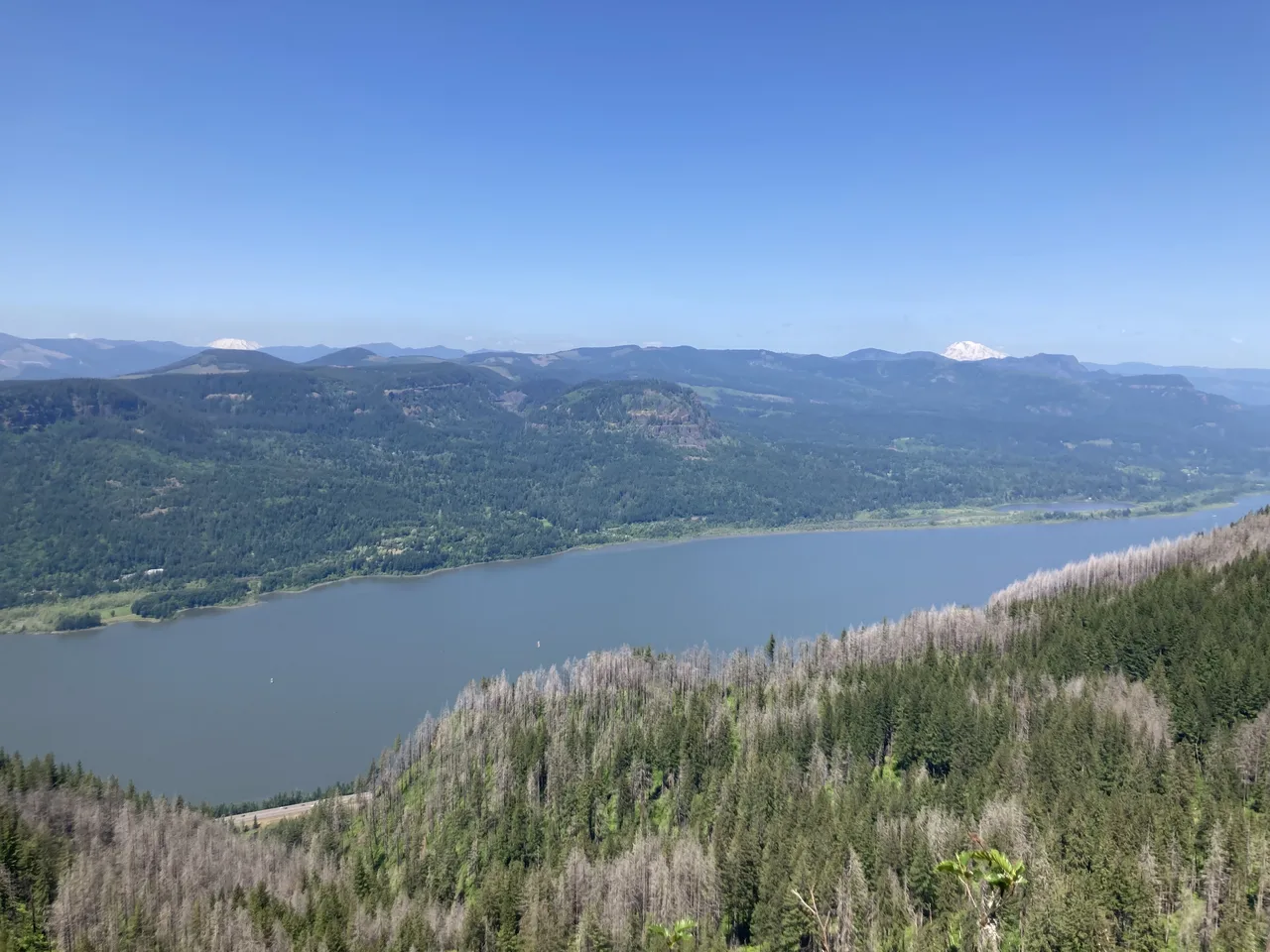
The Plateau region is part of the Pacific Northwest of North America. Its full name is the Columbia Plateau, after the great Columbia River that runs through it. Today it takes in parts of Washington, Oregon, Idaho and Montana.
Rivers are the heart of the Plateau. Every year, salmon swim up the Columbia and the rivers that feed it, and for thousands of years the nations of the Plateau planned their lives around them.
The Columbia Plateau
- The Columbia Plateau gets its name from which feature?
- What did the nations of the Plateau plan their lives around?

The nations of the Plateau
Many nations live on the Plateau. Four of them, the Yakama, Umatilla, Warm Springs and Nez Perce, work together today through the Columbia River Inter-Tribal Fish Commission. The Commission explains that they are called “Plateau tribes” because their home is the Columbia Plateau.
Their languages belong to one family, called Sahaptian. The languages are related to each other in the way some European languages are, like French and Spanish. Some have been lost, but many are now being taught to children again.
The best known of the four are the Nez Perce. They call themselves the Nimiipuu, which means “the people”. Their homeland once covered 17 million acres in what is now Idaho, Oregon, Washington and Montana.
Names and Words of the Plateau
- Sahaptian — The language family of the Plateau nations
- Nimiipuu — What the Nez Perce call themselves, meaning the people
- Plateau tribes — Nations whose home is the Columbia Plateau
- Fish Commission — A group the Yakama, Umatilla, Warm Springs and Nez Perce work through together
| Nation | What to know |
|---|---|
| Nez Perce (Nimiipuu) | Famous horse breeders, who created the Appaloosa. Headquarters in Lapwai, Idaho |
| Yakama | Some Yakama fishers still catch salmon with dipnets, as on the Klickitat River in Washington |
| Umatilla | A Plateau nation of eastern Oregon |
| Warm Springs | One of the four nations of the Columbia River Inter-Tribal Fish Commission |
Moving with the seasons
The Plateau nations were semi-nomadic. That means they moved from place to place during the year, to be where the food was. They fished for salmon, gathered roots, vegetables and fruit, and hunted deer, elk and other animals.
The Nez Perce travelled furthest of all. With the seasons, they went east to hunt buffalo on the Great Plains and west to fish for salmon at Celilo Falls on the Columbia River.
Homes: tule longhouses and winter pit houses
Plateau families lived in longhouses covered with tule mats. Tule is a tall, tough reed that grows in marshes, and it is also called bulrush. The reeds were woven into mats and laid over a frame of poles.
Winter needed something warmer. For the cold months, families dug a shallow pit in the ground and built a roof of poles over it. The roof was covered with tule mats or tree bark.
Once the Plateau nations had horses, they also began using tipis of poles covered with animal skins or reed mats. The Fish Commission explains that tipis had not been practical before, because the materials were too heavy and bulky to carry. Horses changed that. In later years, canvas often replaced tule mats.
Homes of the Plateau
- Longhouse — A pole frame covered with woven tule mats
- Pit house — A shallow pit with a pole roof, used in winter
- Tipi — Poles covered with animal skins or reed mats
- Tule — A tall, tough marsh reed, also called bulrush
| Home | Made of | Used |
|---|---|---|
| Longhouse | A pole frame covered with woven tule mats | Much of the year |
| Pit house | A shallow pit with a pole roof, covered with tule mats or bark | Winter |
| Tipi | Poles covered with animal skins or reed mats | After horses arrived, for travelling |
Salmon and Celilo Falls
Salmon was the most important food on the Plateau. People caught it with nets and spears, often standing on platforms built out over the rushing water.
The greatest fishing place of all was Celilo Falls on the Columbia River, called Wy-am. During the spring floods, ten times more water poured over it than goes over Niagara Falls today. Salmon fought their way up through its narrow, tumbling channels, and people have fished there for thousands of years.
Celilo was also one of the great market places of North America. As many as 5,000 people gathered there to trade, feast, play games and hold ceremonies. Tribes came from as far away as the Great Lakes, the Southwest and the Northwest Coast.
Fishing there followed strict rules. Nobody fished until after the First Salmon ceremony. A whistle started and ended fishing each day, and there was no fishing at night. Elders, and families with nobody able to fish, could take what they needed from the catch. Visiting tribes were given as much as they could carry home.
It was dangerous work. Most people who fell into the roaring water did not survive, so later every fisher tied a rope around his waist, with the other end fixed to the shore. Children were kept away. For a boy, the first day he was allowed onto the fishing platforms with the men was a big step towards growing up.
Fishing at Celilo Falls
- Where did people stand to fish with nets and spears?
- Besides fishing, what was Celilo Falls famous for?
- What did fishers tie around their waists to keep safe?
Camas, roots and berries
The Plateau nations also gathered plants. One of the most important was camas, a meadow plant with a starchy bulb. The National Park Service says the Nez Perce have eaten it “since time immemorial”, which means for longer than anyone can remember.
Camas blooms in late spring and early summer and is ready to dig by the autumn. To make sure there would be a good crop the next year, people left the smaller bulbs in the ground. They cooked the bulbs in small earth ovens and made them into bread and other meals.
Camas also fed the explorers Lewis and Clark. In September 1805, they came out of the Bitterroot Mountains hungry and met the Nez Perce on Weippe Prairie, where families had gathered to dig camas. The Nez Perce shared their harvest. One member of the expedition said camas bread tasted like pumpkin bread. The visitors ate so much of it that they felt ill.
Camas and Gathering
- What is camas?
- Why did people leave the smaller camas bulbs in the ground?
- Who shared their camas harvest with the hungry explorers Lewis and Clark?
Natural resources and how they were used
| Natural resource | What it was used for |
|---|---|
| Salmon | The main food, caught with nets and spears |
| Camas and other roots | Bread and other meals |
| Tule reeds | Woven mats for houses, and baskets |
| Deer and elk | Food and clothing. Antlers made digging sticks, wedges and weapons |
| Obsidian | Arrowheads. Obsidian is a glassy rock made by volcanoes |
| Wood, stone and bone | Tools and arrow shafts |
| Pine sap | Waterproofing the inside of baskets |
Baskets and weaving
The Plateau nations were known for their detailed baskets. Plain ones stored dried food. Some were made waterproof by coating the inside with pine sap.
The cleverest were cooking baskets. A basket was woven around a large flat stone. To make soup, the cook dropped hot stones from the fire into the basket. They did not burn through the bottom, because they landed on the big stone underneath. People also wove hats, mats, clothing and bedding.
Horses and the Appaloosa
Horses reached the Plateau nations in the 1600s, and they changed everything. They let people travel much further and became a kind of wealth.
The Nez Perce were especially skilled horse breeders. By choosing which horses to breed, they created a new breed, the Appaloosa, famous for its spotted coat.
Horses and Baskets
- Which breed of spotted horse did Nez Perce breeders create?
- How did cooks make soup in a woven cooking basket?
- Why did some Plateau baskets have pine sap on the inside?

The Plateau nations today
In the 1900s came a heavy blow. On 10 March 1957, the gates of The Dalles Dam closed. Four and a half hours later, Celilo Falls was underwater. The government paid for the flooded fishing sites, but the tribes lost the heart of their fishing and trade. Yakama leader Ted Strong said that anyone who fished there can still hear its roar if they listen.
The Plateau nations are still here, and many live on reservations set aside in the 1800s. Salmon still matters enormously. The Fish Commission says Plateau people today eat up to ten times as much salmon as the average American, and some still fish with traditional nets and spears from platforms.
The Nez Perce Tribe is based in Lapwai, Idaho, and runs a strong fish programme that employs nearly 50 people. Want to compare the Plateau with its neighbours? Start with our Native American facts.
Three things people get wrong
“The Nez Perce pierced their noses.” They never did. Nez percé means “pierced nose” in French, a name given by French-Canadian fur traders who got it wrong. The people call themselves the Nimiipuu.
“Plateau people always lived in tipis.” Their older homes were tule-mat longhouses and winter pit houses. Tipis only became practical once they had horses to carry the heavy materials.
“Salmon fishing on the Plateau is a thing of the past.” It is not. Plateau people still fish, some of them in traditional ways, and salmon is still at the centre of their cultures.
Did you know? Plateau cooking baskets were woven around a big flat stone. Hot rocks from the fire were dropped in to boil the soup, and the stone at the bottom stopped them burning through.
Try it
Find Celilo Falls, The Dalles and Lapwai, Idaho on a map. Then trace the Columbia River from the Plateau to the Pacific Ocean, the way the salmon swim.
Knowledge check
Why did Plateau nations only start using tipis after they got horses?
Show answer
Because tipi poles and covers were too heavy and bulky to carry on foot. Horses could carry them from camp to camp.
What rules did fishers follow at Celilo Falls?
Show answer
Nobody fished until after the First Salmon ceremony, a whistle started and ended each day’s fishing, there was no fishing at night, and elders and families without a fisher could take what they needed.
Frequently asked questions
Who are the Plateau Native Americans?
They are the nations of the Columbia Plateau in the Pacific Northwest, including the Nez Perce, Yakama, Umatilla and Warm Springs. Their languages belong to the Sahaptian family.
What kind of homes did the Plateau tribes live in?
They lived in longhouses covered with mats woven from tule reeds. In winter they dug a shallow pit and roofed it with poles covered in tule mats or bark. After they got horses they also used tipis.
What did the Plateau tribes eat?
Salmon was their most important food, caught with nets and spears, often from platforms over the water. They also dug camas bulbs and other roots, gathered berries, and hunted deer and elk.
What was Celilo Falls?
Celilo Falls, or Wy-am, was a huge waterfall on the Columbia River and one of the great fishing and trading places of North America for thousands of years. It was flooded by The Dalles Dam in 1957.
What natural resources did the Plateau tribes use?
They used salmon and camas for food, tule reeds for mats and baskets, deer and elk for food and clothing, antlers for tools, obsidian for arrowheads, and pine sap to waterproof baskets.
Why are they called the Nez Perce?
French-Canadian fur traders called them nez percé, meaning pierced nose, but the tribe never pierced their noses. The people call themselves the Nimiipuu, which means the people.
Do the Plateau tribes still exist?
Yes. Many live on reservations set aside in the 1800s. Salmon is still central to their cultures, and the Nez Perce Tribe, based in Lapwai, Idaho, runs its own fish programme.
Sources
- Columbia River Inter-Tribal Fish Commission: Indians and Indian tribes (for kids) — the four Plateau nations, languages, seasonal life, homes, baskets, tools, horses and the nations today
- Columbia River Inter-Tribal Fish Commission: Celilo Falls — the falls, the trading centre, fishing rules, and the flooding in 1957
- Columbia River Inter-Tribal Fish Commission: Nez Perce Tribe — the name Nimiipuu, the homeland, and the tribe today
- National Park Service: Camas — how camas is harvested and cooked, and Lewis and Clark’s camas bread
- National Park Service: Weippe Prairie — the Nez Perce gathering place where Lewis and Clark first met the Nez Perce in 1805
Plateau Native Americans Final Quiz
- The Plateau nations were semi-nomadic. What does that mean?
- Where did the Nez Perce go to hunt buffalo?
- Which of these was NOT made from tule reeds?
- What is obsidian?
- Which of these were deer and elk used for?
- How do some Yakama fishers catch salmon today, as on the Klickitat River in Washington?
- What is happening to Plateau languages today?
- Where is the headquarters of the Nez Perce Tribe?
- Which sentence about salmon and the Plateau nations is true today?


