
Southeast Native Americans quick facts
- People have lived at Ocmulgee in Georgia for more than 12,000 years.
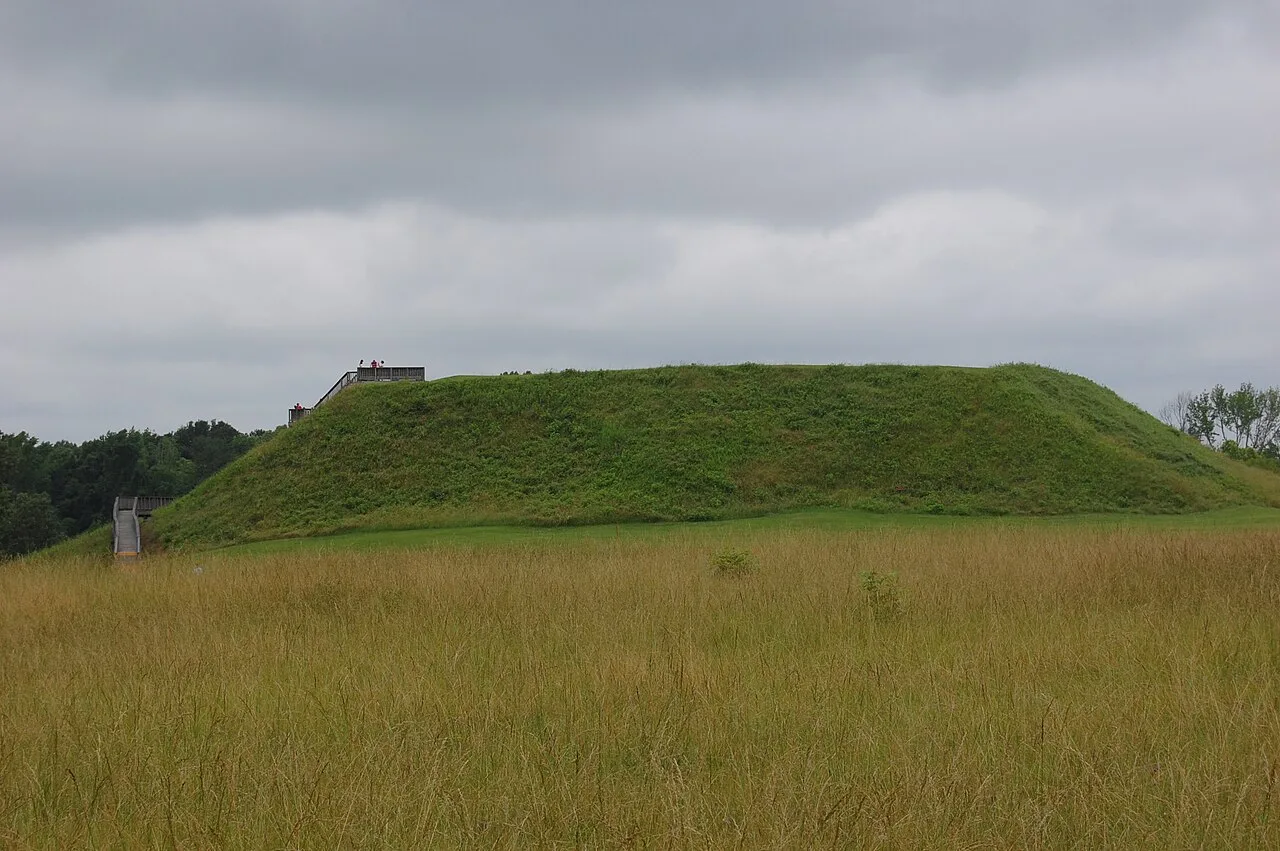
- The Mississippians, who arrived after about AD 900, built great earth mounds you can still see.
- “Creek” is an English nickname from Ochese Creek. The people call themselves the Muscogee.
- The Seminole chickee began in the early 1800s as a fast shelter while families were chased by US soldiers.
- Seminole patchwork clothing dates from only around 1920.
Where is the Southeast?
The Southeast is the warm, green corner of the United States. It includes states such as Georgia, Alabama, Tennessee, North Carolina and Florida. Long before those states existed, it was the homeland of many Native nations.
Rivers mattered enormously in the Southeast. A National Park Service lesson for schools points out how important rivers were to the nations here. The Muscogee, for example, built their towns along the Ocmulgee, Flint, Chattahoochee, Coosa and Tallapoosa Rivers.

The mound builders
People have lived in the Southeast for a very long time. At Ocmulgee Mounds in Macon, Georgia, the National Park Service says the land has been lived on for more than 12,000 years.
The first people there were hunters who followed the giant animals of the Ice Age. Later people hunted deer, fished, and gathered nuts, berries and roots. Then came people who built villages that lasted and grew sunflowers.
After about AD 900, a new culture arrived. Archaeologists call these people the Mississippians. They built huge mounds of earth, and visitors can still see them at Ocmulgee today. Later, European explorers arrived and brought disease and upheaval, and many people died. The survivors formed the nations that came next, including the Muscogee.

The nations of the Southeast
Many nations lived in the Southeast. The National Park Service names five of the largest: the Muscogee (Creek), the Seminole, the Cherokee, the Choctaw and the Chickasaw.
| Nation | Where they lived when Europeans arrived |
|---|---|
| Cherokee | Western North Carolina, East Tennessee and North Georgia |
| Muscogee (Creek) | Along the rivers of Georgia and Alabama |
| Seminole | Florida |
| Choctaw and Chickasaw | The south-eastern United States |
You may see these five called the “Five Civilized Tribes” in older books. It is an old label, and the National Park Service puts it in quotation marks. It is better to use each nation’s own name.
Towns and the Muscogee Confederacy
Why are the Muscogee also called the Creek? When English traders arrived, the Muscogee lived along the Ocmulgee River. The English called that river Ochese Creek, and called the people there the “Ochese Creek Indians”. Over time that was shortened to “Creek Indians”. The people themselves have always used the name Muscogee.
Muscogee life was built around the town, called a dalwa. A town was a central settlement with villages around it. Towns joined together into a confederacy before Europeans arrived. Each town kept its own power, but they shared a way of life.
The confederacy had two main groups. The Lower Creeks lived along the Ocmulgee, Flint and Chattahoochee Rivers. The Upper Creeks lived around the Coosa and Tallapoosa Rivers. It grew over time, partly by taking in people whose own nations had been broken apart by Europeans.
Homes: log houses and the chickee
The Seminole Tribe of Florida explains that the first Seminoles in North Florida built log houses, some of them two storeys high, with bedrooms upstairs.
The famous Seminole home, the chickee, came later. It has a frame of cypress logs and a roof thatched with palmetto leaves. It began in the early 1800s, when Seminole families were being chased by US soldiers and needed shelters they could build fast and leave behind.
The Seminole Tribe calls the chickee popular, efficient and practical. A chickee lasts about ten years and needs a new thatched roof every five. Chickees can be seen all over South Florida today, and some Seminole people make their living building them.
In the Seminole language Mikasuki, chikít means any place where people live: a house, a home or an apartment. “Chickee” is how the word is spelled in English.
Food
Corn is at the centre of one of the most important south-eastern ceremonies. The Muscogee still hold the Green Corn ceremony, a sacred ceremony that goes back to before they were forced from their homeland.
Seminole cooking used what Florida offered. Families made flour from the roots of a wild plant called coontie. A pot of hot soup or sofkee, a drink made from corn, was kept on the fire all day, and people ate when they were hungry rather than at fixed mealtimes.
Another old Seminole dish is boiled swamp cabbage, made from the tender white heart of the cabbage palm. Today, the Seminole Tribe says, most traditional cooking is saved for special occasions, though sofkee and fry bread are still everyday favourites.
Natural resources and how they were used
| Natural resource | What it was used for |
|---|---|
| Rivers | Places to build towns, and fish to eat |
| Earth | The great mounds of the Mississippians |
| Deer | Food, hunted for thousands of years |
| Nuts, berries and roots | Food gathered from the forests |
| Corn | Sofkee, and the Green Corn ceremony |
| Cypress logs and palmetto leaves | The frame and roof of the chickee |
| Coontie roots | Flour for Seminole cooking |
| Cabbage palm | Boiled swamp cabbage |
Clothing
The best-known south-eastern clothing is Seminole patchwork: bright bands of tiny, detailed patterns stitched into skirts, shirts and jackets. Many people think it is ancient. It is not. The Seminole Tribe explains that patchwork is “really quite modern”, and that it flowered around 1920.
The nations that became the Seminole began moving into North Florida before 1750. By then they had already swapped much of their older clothing for clothes made from goods they traded with Europeans, often sewn in European styles.

Removal and the Trail of Tears
This part of the story is sad, and it is fine to feel upset reading it. In the 1830s, the United States government forced the south-eastern nations to leave their homelands and move west to “Indian Territory”, which is now Oklahoma.
For the Muscogee, the National Park Service explains, more than 14,000 people made the three-month journey in 1836 and early 1837. It was over 800 miles on land and another 400 by water. Most took only what they could carry. The Cherokee suffered the same kind of forced march, which is often called the Trail of Tears.
The cost was enormous. In 1832, 21,792 Muscogee people lived in Georgia and Alabama. Twenty years after removal ended, only 13,537 were left in Oklahoma. The National Park Service says that, for the size of their population, the Muscogee and related nations lost even more people than the Cherokee did on their better-known Trail of Tears.
Some families escaped removal. Some Muscogee joined the Seminole in Florida, and the Seminole Tribe of Florida still lives there today.
The Southeast nations today
The south-eastern nations rebuilt. In Oklahoma, the Muscogee wrote a constitution in 1867 and made Okmulgee their capital, named after their old capital in Georgia.
There were more hard times ahead. In 1898 a US law broke up the tribal government, and in 1907 the nation’s land became part of the new state of Oklahoma. The Muscogee kept going. In 1979 the people adopted a new constitution, and today the Muscogee Nation is the fourth-largest federally recognised tribe in the United States.
Today, the National Park Service says, life in the Muscogee Nation is in many ways like life anywhere in the United States. Children go to school and wear jeans. But tribal towns and ceremonial grounds still exist, and the Green Corn ceremony is still held. Family ties are strong, and beliefs are passed from grandparents to grandchildren.
Want to meet one south-eastern nation in more detail? Read our Cherokee facts, or start with our Native American facts.
Three things people get wrong
“Creek is their real name.” It is an English nickname taken from a river, Ochese Creek. The people call themselves the Muscogee.
“Seminole patchwork is an ancient tradition.” It is less than 110 years old. The Seminole Tribe says it flowered around 1920.
“All the south-eastern nations were moved west.” Most were forced out, but not everyone went. The Seminole Tribe of Florida is still in Florida.
Did you know? In the Seminole language Mikasuki, chikít means any place people live, from a house to an apartment. English speakers turned it into “chickee”.
Try it
Look at a map of Georgia and Alabama and find the Ocmulgee, Flint, Chattahoochee, Coosa and Tallapoosa Rivers. These were the lands of the Lower and Upper Creeks.
Knowledge check
Why are the Muscogee sometimes called the Creek?
Show answer
English traders met them along a river they called Ochese Creek and named them the Ochese Creek Indians, later shortened to Creek. The people call themselves the Muscogee.
Why did the Seminole start building chickees?
Show answer
In the early 1800s, Seminole families were being chased by US soldiers and needed shelters they could build quickly and leave behind. The chickee, with a cypress frame and palmetto roof, was the answer.
Frequently asked questions
Who were the Southeast Native Americans?
They are the nations of the south-eastern United States, including the Muscogee (Creek), Cherokee, Seminole, Choctaw and Chickasaw. Their ancestors include the Mississippians, who built great earth mounds after about AD 900.
What kind of homes did the Southeast tribes live in?
Homes varied. The first Seminoles in North Florida built log houses, some two storeys high. In the early 1800s the Seminole began building chickees, with a cypress log frame and a palmetto-thatch roof.
What did the Southeast Native Americans eat?
Corn was central, and the Muscogee still hold the Green Corn ceremony. The Seminole made flour from coontie roots, kept sofkee, a corn drink, on the fire all day, and cooked the heart of the cabbage palm.
What did the Southeast Native Americans wear?
By the 1700s, the nations that became the Seminole wore clothes made from goods traded with Europeans. The famous Seminole patchwork, with bright bands of detailed patterns, is modern and dates from around 1920.
Who were the mound builders?
Archaeologists call them the Mississippians. They arrived in the Southeast after about AD 900 and built huge earth mounds. Their mounds can still be seen at Ocmulgee Mounds National Historical Park in Georgia.
What happened to the Southeast tribes?
In the 1830s the US government forced most of them west to Indian Territory, now Oklahoma. More than 14,000 Muscogee made a three-month journey of over 1,200 miles in 1836 and 1837. Some escaped, and the Seminole Tribe of Florida is still in Florida.
What are the Five Civilized Tribes?
It is an old label for the Cherokee, Chickasaw, Choctaw, Muscogee (Creek) and Seminole. The National Park Service puts it in quotation marks, and it is better to use each nation’s own name.
Sources
- National Park Service, Ocmulgee Mounds: People — 12,000 years of people at Ocmulgee and the Mississippian mound builders
- National Park Service, Ocmulgee Mounds: The Muscogee Nation — the name Creek, towns and the confederacy, removal, and the Muscogee Nation today
- National Park Service: The “Five Civilized Tribes” lesson plan — the five nations, where they lived, and the Lower and Upper Creeks
- Seminole Tribe of Florida: Chickee — early Seminole log houses and how and why the chickee began
- Seminole Tribe of Florida: Seminole clothing — trade-goods clothing and when patchwork began
- Seminole Tribe of Florida: Seminole food — coontie flour, sofkee and swamp cabbage


