
Southwest Native Americans quick facts
- Adobe walls soak up the sun’s heat by day and give it back at night, keeping homes cool in the day and warm after dark.
- Before the Spanish came, people often entered pueblo homes by a ladder through a hatch in the roof.
- Sheep only arrived in 1598. Before that, people in the Southwest wove cotton on upright looms.
- Navajo code talkers could send a three-line message in 20 seconds. Machines of the time took 30 minutes.
- The Navajo Nation covers more than 27,000 square miles, bigger than 10 of the 50 US states.
Where is the Southwest?
The Southwest is the hot, dry corner of the United States. It covers Arizona and New Mexico, and parts of Utah and Colorado. Much of it sits on the high, rocky Colorado Plateau, cut by deep canyons and flat-topped hills called mesas.
Rain is precious here. The National Park Service explains that many Ancestral Pueblo farmers depended on the rain that fell on their fields. Their religious beliefs gave rain a sacred importance, and a year of ceremonies centred on bringing it.
The Dry Southwest
- What are flat-topped hills in the Southwest called?
- Which two states make up the heart of the Southwest in this guide?
- Why did Ancestral Pueblo ceremonies through the year focus on rain?

The Ancestral Pueblo people
People have lived in the Southwest for a very long time. The first people on the Colorado Plateau in Arizona arrived about 10,000 years ago. They moved about to find food. By around 500 BC, people had begun growing crops, and over time they settled down in one place for longer.
Archaeologists call the farming people who came next the Ancestral Pueblo people. They grew corn and lived across the northern Southwest until Spanish explorers arrived in 1540. The National Park Service lists what they had in common: they relied on the crops they grew, they built pueblos, they made their own style of pottery, and they used kivas, rooms built underground for ceremonies.
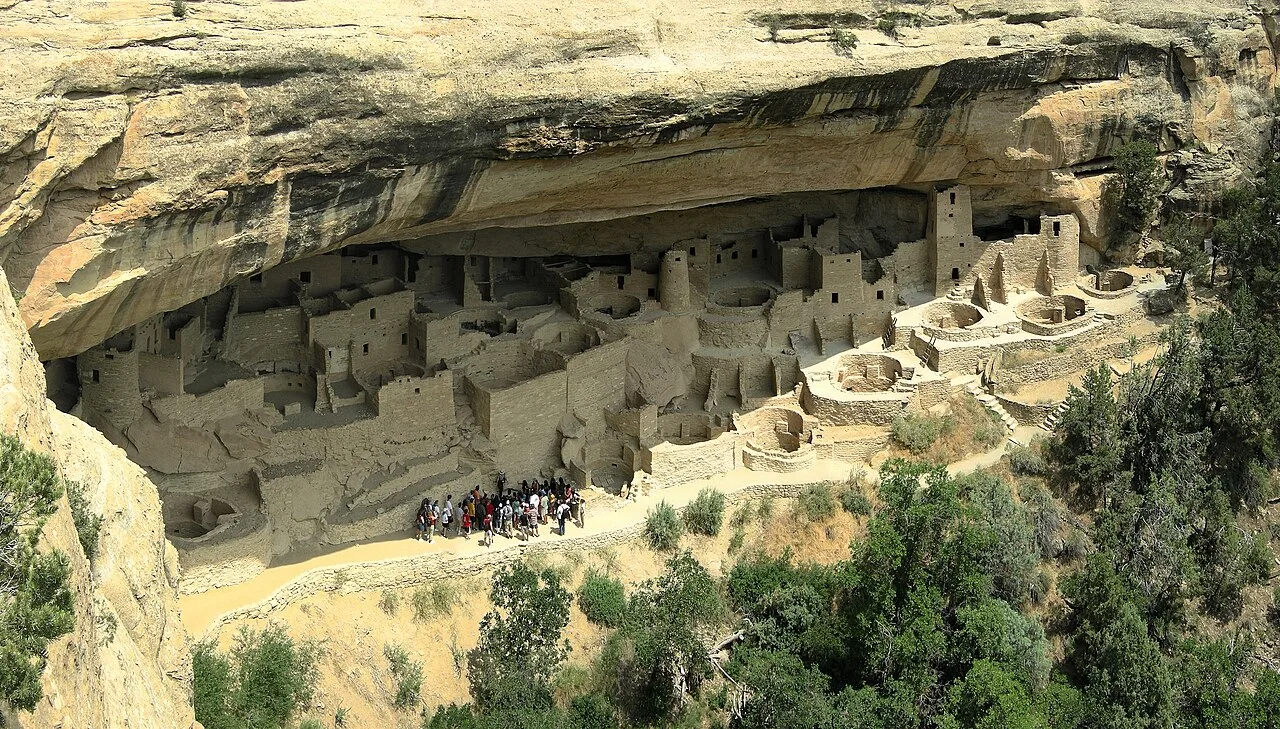
Some of their villages were built into cliffs. At Navajo National Monument in Arizona, you can still hike to two villages from the 1200s, Betatakin and Keet Seel. In the early 1200s, people began to leave. The land could no longer feed everyone, possibly because of drought.
They did not vanish. The National Park Service says there is “no doubt” that today’s Pueblo people are their descendants.
The Ancestral Pueblo People
- How did the first people on the Colorado Plateau find their food?
- Which of these is NOT something the National Park Service lists that Ancestral Pueblo people had in common?
- Where in Arizona can you hike to the villages of Betatakin and Keet Seel?

The nations of the Southwest
Two very different groups of nations share the Southwest: the Pueblo peoples, who live in villages and farm, and the Navajo, who call themselves the Diné.
| Nation | Where |
|---|---|
| Hopi | Arizona |
| Zuni | New Mexico |
| Acoma and Laguna | New Mexico |
| Rio Grande pueblos, such as Taos, Cochiti, Santo Domingo and Isleta | Along the Rio Grande in New Mexico |
| Navajo (Diné) | Arizona, New Mexico and Utah |
The Pueblo nations are not all the same people. After about AD 1300, families moved about a great deal. The National Park Service explains that today’s pueblo communities are made up of many groups from widespread places. The Hopi, for example, descend from several different branches of the Ancestral Pueblo people.
Homes: pueblos, adobe and the hogan
A pueblo is a village of many rooms joined together, sometimes several storeys high. Early pueblos were built of stone and mud. Before the Spanish came, people often climbed into their homes by a ladder, through a hatch in the roof. A fire in the middle of the room kept it warm, and the smoke went out the same hatch.
Many pueblos are built of adobe. A Smithsonian account explains why it suits a hot, dry land so well. In the day, the thick walls soak up the sun’s heat, so the inside stays much cooler than outside. At night, as the air cools, the walls give the stored heat back into the house.
After the Spanish arrived, most Pueblo nations began shaping adobe bricks in wooden moulds, the Spanish way. The Hopi were the exception. They kept building with stone and mud until the 1900s. Pueblo families also added Spanish-style fireplaces, and beehive-shaped outdoor ovens for baking corn bread.
The Navajo traditional home is the hogan. It matters so much that the seal of the Navajo Nation shows a traditional hogan beside a modern house, with corn and the animals of Navajo farm life around them.
Pueblo Homes
- How did people often get into pueblo homes before the Spanish came?
- What did most Pueblo nations begin to do after the Spanish arrived?
- What are beehive-shaped outdoor ovens used for in a pueblo?
Farming in a dry land
Growing food in a desert takes skill. The National Park Service describes two ways the Ancestral Pueblo people farmed.
- Dry and floodwater farming in the west: crops grew on rain alone, or on the water that rushed down after a storm.
- Irrigation in the east, along the Rio Grande: small channels carried river water to the fields, alongside dry and floodwater farming.
Corn, also called maize, was their main crop. Farmers grew drought-resistant crops and learned to grow more than they needed, so they had food to store and to trade. That surplus is what let villages grow bigger.
Natural resources and how they were used
In a dry land, people built and made things from whatever the land offered.
| Natural resource | What it was used for |
|---|---|
| Stone and mud | The walls of pueblos and cliff villages |
| Earth for adobe | Thick walls that stay cool by day and warm at night |
| Clay | Pottery |
| Corn | The main food, and bread baked in outdoor ovens |
| Cotton | Cloth woven on upright looms |
| Sheep (after 1598) | Wool for weaving, and meat and milk |
| Rain and rivers | Watering crops by dry farming, floods and irrigation |
Weaving and clothing
Long before sheep, there was cotton. The National Park Service says that by the 1200s, Native people in what is now New Mexico grew cotton and wove it into cloth on upright looms. Those looms were much like the ones the Diné still use today.
In 1598, the Spanish leader Juan de Oñate brought sheep north into the region. The sheep gave meat, milk and wool. The Diné took up sheep-herding and used the wool in their weaving, which became famous all over the world.
Sheep still matter deeply. The Diné have a saying, Dibé bé iiná, which means “sheep is life”. Diné shepherds still raise Navajo-Churro sheep, the descendants of those first Spanish animals.
Weaving and Sheep
- Cotton — Grown and woven into cloth by the 1200s
- Upright loom — A frame like the ones Diné weavers still use
- Juan de Oñate — The Spanish leader who brought sheep north in 1598
- Dibé bé iiná — A Diné saying that means sheep is life
- Navajo-Churro — Sheep raised today, descended from the first Spanish animals

The Navajo code talkers
During the Second World War, the Navajo language became a secret weapon. In May 1942, the first 29 Navajo recruits went to training camp. There they built a code from their own language, with a dictionary of words for military terms that they had to learn by heart.
The code was fast. The Navajo Nation says code talkers could encode, send and decode a three-line English message in 20 seconds. Machines of the time took 30 minutes. About 400 Navajo men were trained as code talkers. At the battle of Iwo Jima, six of them sent and received more than 800 messages in the first two days, all without a mistake.
The Southwest nations today
The Pueblo nations are still here. The Hopi, the Zuni, Acoma, Laguna and the pueblos along the Rio Grande are all communities descended from the Ancestral Pueblo people.
The Navajo Nation is huge. Its land covers more than 27,000 square miles across Utah, Arizona and New Mexico, which is bigger than 10 of the 50 US states. More than 250,000 people are part of the nation. Its government has three branches, like the US government, and a council of 88 delegates who represent 110 local communities. Delegates often speak Navajo during council meetings.
Want to compare the Southwest with other regions? Start with our Native American facts.
The Southwest Nations Today
- Which of these is NOT one of the Pueblo nations named in the guide?
- What language do delegates often speak during Navajo Nation council meetings?
- How does the Navajo Nation's government compare with the US government?
Three things people get wrong
“The Ancestral Pueblo people mysteriously disappeared.” They moved. They left some places in the 1200s, possibly because of drought, and joined other communities. The National Park Service says there is no doubt that today’s Pueblo people are their descendants.
“Everyone in the Southwest lived in pueblos.” The Pueblo nations did. The Navajo are a separate nation with a different way of life, and their traditional home is the hogan.
“Navajo weavers have always used wool.” Sheep only arrived with the Spanish in 1598. Before that, people in the Southwest wove cotton, on upright looms like the ones Diné weavers still use.
Did you know? At the battle of Iwo Jima in 1945, six Navajo code talkers sent and received more than 800 messages in the first two days, all without a single mistake.
Try it
On a sunny day, touch a thick stone or brick wall in the afternoon, then again after dark. Can you feel it giving back the heat it stored? That is how adobe keeps a pueblo comfortable.
Knowledge check
Why is adobe a good building material for the Southwest?
Show answer
Because its thick walls soak up the sun’s heat during the day, keeping the inside cool, and then give that heat back at night when the air turns cold.
Did the Ancestral Pueblo people disappear?
Show answer
No. They left some places in the 1200s, possibly because of drought, and joined other communities. The National Park Service says there is no doubt that today’s Pueblo people are their descendants.
Frequently asked questions
Who are the Southwest Native Americans?
They are the nations of Arizona, New Mexico and nearby parts of Utah and Colorado. They include the Pueblo peoples, such as the Hopi, Zuni, Acoma, Laguna and the Rio Grande pueblos, and the Navajo, who call themselves the Diné.
What kind of homes did the Southwest tribes live in?
Pueblo peoples lived in pueblos: villages of many joined rooms, sometimes several storeys high, built of stone and mud or adobe. The traditional Navajo home is the hogan, which appears on the seal of the Navajo Nation.
What did the Southwest Native Americans eat?
Corn was their main crop. Ancestral Pueblo farmers grew drought-resistant crops using rain, floodwater and, along the Rio Grande, irrigation, and they grew extra to store and trade.
What did the Southwest Native Americans wear?
By the 1200s, people in the Southwest grew cotton and wove it into cloth on upright looms. After the Spanish brought sheep in 1598, the Diné began weaving with wool and became famous weavers.
What is a kiva?
A kiva is a room built underground and used for ceremonies. Kivas are one of the things the Ancestral Pueblo people had in common, along with pueblos, farming and their own style of pottery.
Who were the Navajo code talkers?
They were Navajo men who used their language as a secret code in the Second World War. About 400 were trained, and they could send a message in 20 seconds that took machines 30 minutes.
Do the Southwest tribes still exist?
Yes. The Pueblo nations are the descendants of the Ancestral Pueblo people, and the Navajo Nation has more than 250,000 people, land larger than 10 US states, and its own three-branch government.
Sources
- National Park Service: Ancestral Puebloan — who the Ancestral Pueblo people were, pueblos and kivas, farming methods, and today’s descendant communities
- National Park Service: Navajo National Monument — the first people of the Colorado Plateau, early farming, the cliff villages of Betatakin and Keet Seel, and why people left
- Smithsonian Folklife Festival: Adobe architecture — how adobe stays cool by day and warm at night, roof hatches, and changes after the Spanish arrived
- National Park Service: New Mexico fiber arts traditions — cotton weaving on upright looms, sheep arriving in 1598, and the Diné saying “sheep is life”
- The Navajo Nation: History — the size of the Navajo Nation, its population and government, the seal, and the code talkers
Southwest Native Americans Final Quiz
- What name do the Navajo use for themselves?
- Why could Ancestral Pueblo villages grow bigger once farmers grew more than they needed?
- Which method did farmers along the Rio Grande use in addition to dry and floodwater farming?
- What was the main crop of the Ancestral Pueblo people?
- What do the seal of the Navajo Nation and the hogan have to do with each other?
- What made the Navajo language a secret weapon in the Second World War?
- Which fact is TRUE about Navajo weaving?
- What do archaeologists and the National Park Service agree about today's Pueblo people?


