Science quick facts
- Gametocyte Ingestion and Infection of the Mosquito
- Environmental factors like temperature and humidity greatly affect the development stages of plasmodiums within the mosquitos.
- Temperatures around 20°C or higher are ideal for Plasmodium development inside mosquitoes, though development can occur as low as 16°C under daily temperature variation.
- Humidity also extends mosquito lifespan and supports longer parasite incubation periods.
Life Cycle Of Malaria Parasite
Plasmodium is a genus of single-celled eukaryotic parasites with over 200 described species. Five infect humans: P. falciparum, P. vivax, P. ovale, P. malariae, and P. knowlesi. The parasite alternates between
- A female Anopheles mosquito (definitive host)
- Humans (intermediate host).
Life Cycle Stages Of Malaria Parasite In Mosquito
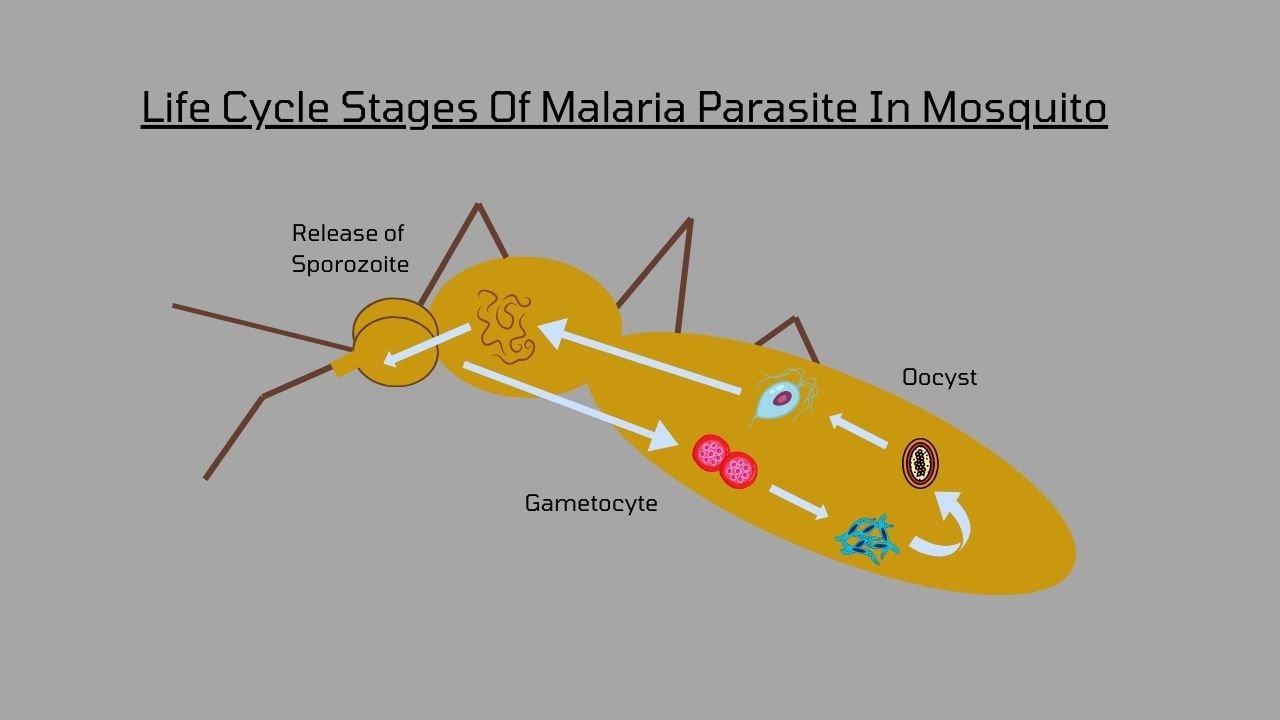
The following are the life cycle stages of the malaria parasite in mosquitoes:
- Gametocyte Ingestion and Infection of the Mosquito
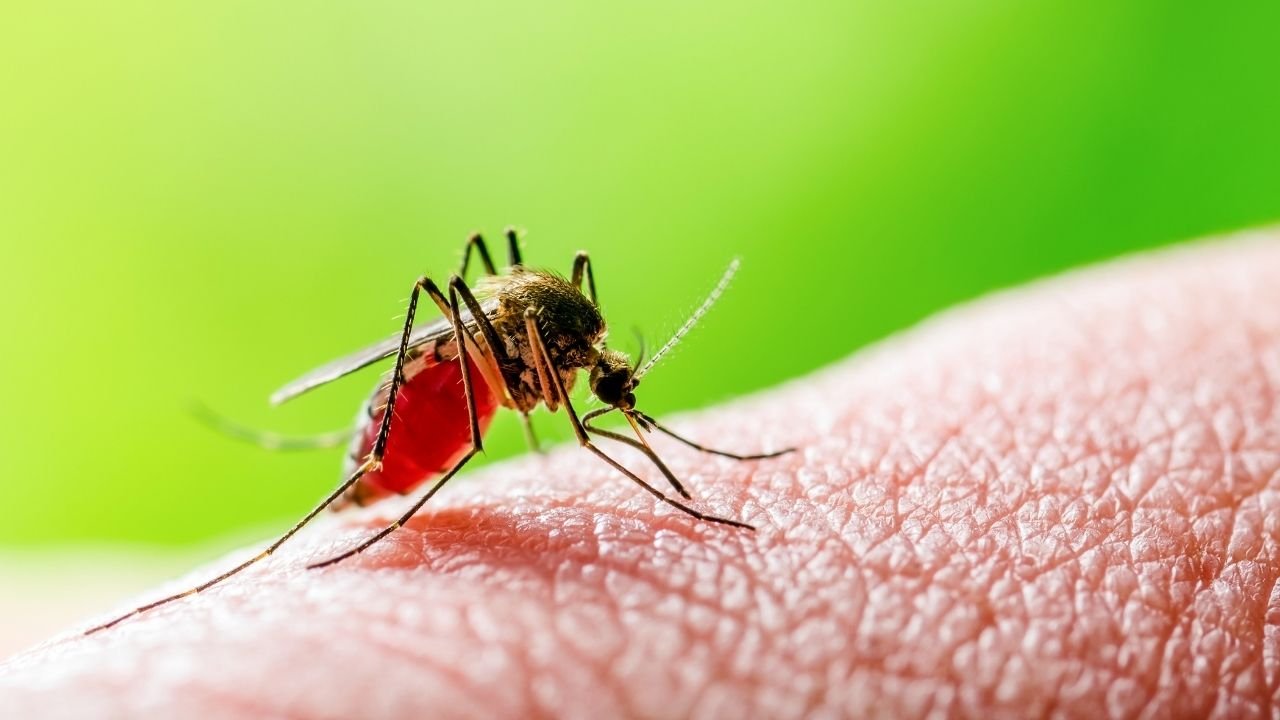
In a person infected with malaria, some of the parasites are found in the form of gametocytes, which are pre-reproductive cells. When a female anopheles mosquito sucks the blood of an infected person, it ingests these gametocytes.
- Gametogenesis
The gametocytes develop into male and female gametes in the gut of mosquitoes. The mature male and female gametes fertilize and form zygotes.
- Oocyst Formation
The zygotes develop into ookinete. Ookinetes migrate and attach to the outer wall of the mosquito gut. At this stage, they are called oocysts. They undergo a series of divisions to form sporozoites.
- Release of Sporozoite
Mature oocysts burst and release sporozoites into the hemocoel (body cavity) of mosquitos. These sporozoites migrate to the mosquito’s salivary glands and are ready to infect a new human host during the next blood meal.
- Transmission
At the same time when the infected mosquito takes a blood meal from another human, it also injects sporozoites to the skin of that human along with saliva. In this way, the life cycle of the malaria parasite continues.
Life Cycle Stages Of Malaria Parasite In Humans
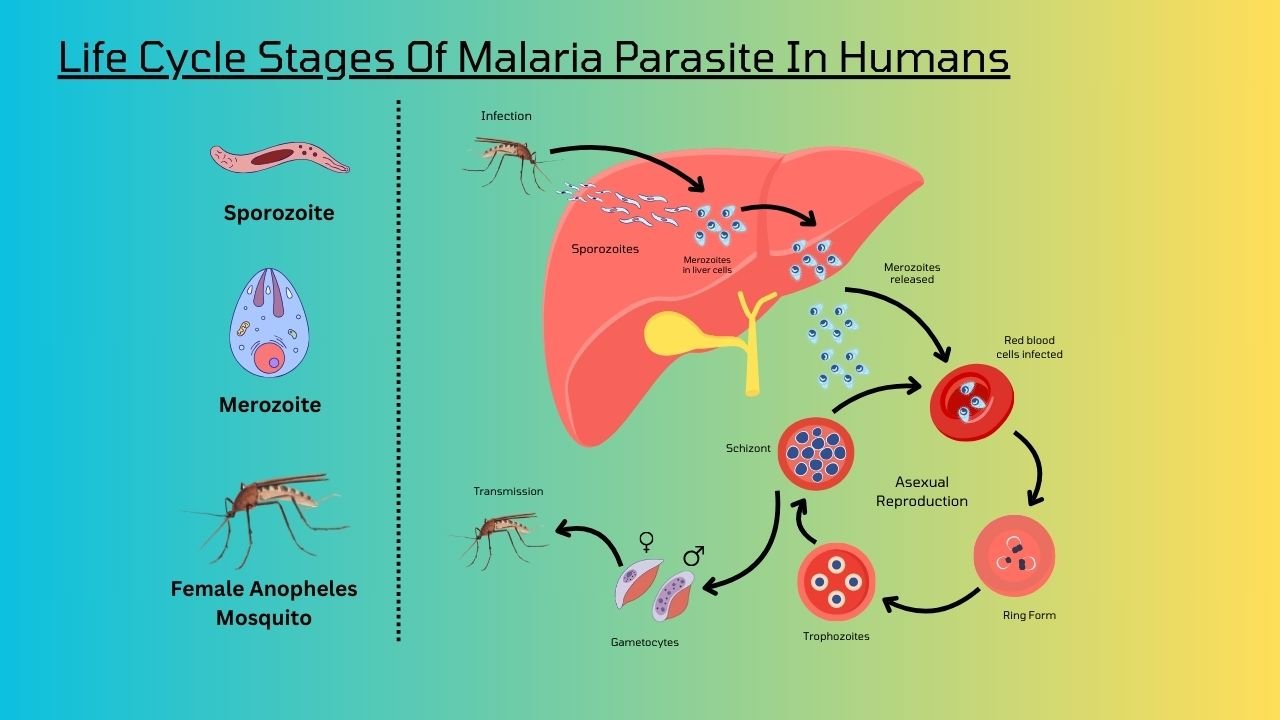
The following are the life cycle stages of malaria parasite in humans:
- Liver Stage (Exoerythrocytic Cycle)
When the sporozoites are injected into the bloodstream of a human along with the saliva of infected mosquitoes, they rapidly make their way into the liver cells (hepatocytes). All species of Plasmodium develop in the liver cells. Inside the liver cells, the sporozoites asexually reproduce.The duration of the liver stage varies by species, lasting from several days to months depending on the Plasmodium type. Plasmodium vivax and Plasmodium ovale species remain dormant as hypnozoites in the liver cells. The parasite in this stage can remain dormant for months to several years. Without the bite of a mosquito, these two species of Plasmodium can start an asexual reproduction cycle and cause clinical symptoms. This type of malaria infection is known as relapsing malaria.
- Merozoite Release
The sporozoites asexually reproduce and develop into merozoites until the liver cell ruptures and releases merozoites into the bloodstream.
- Erythrocytic Cycle
In the bloodstream, the merozoites rapidly invade red blood cells (RBCs are also called erythrocytes). Inside the red blood cells, merozoites undergo several stages of asexual reproduction including; trophozoite (young form), schizont (dividing form), and finally more merozoites.The blood (erythrocytic) cycle length differs by species — P. falciparum, P. vivax, and P. ovale take about 48 hours; P. malariae takes about 72 hours; and P. knowlesi completes its cycle in roughly 24 hours.
- Symptom Manifestation
The infected red blood cells rupture releasing merozoites and toxic byproducts. Merozoites destroy every red blood cell they infect. It leads to symptoms of malaria including chills, fever, and anemia.
- Gametocyte Formation
During the erythrocytic cycle, some merozoites differentiate into male and female pre-reproductive forms called gametocytes. When a female Anopheles mosquito takes a blood meal from an infected person, these gametocytes are also taken. In this way, the life cycle of malaria parasites continues.
Factors Affecting The Life Cycle Of Malaria Parasite
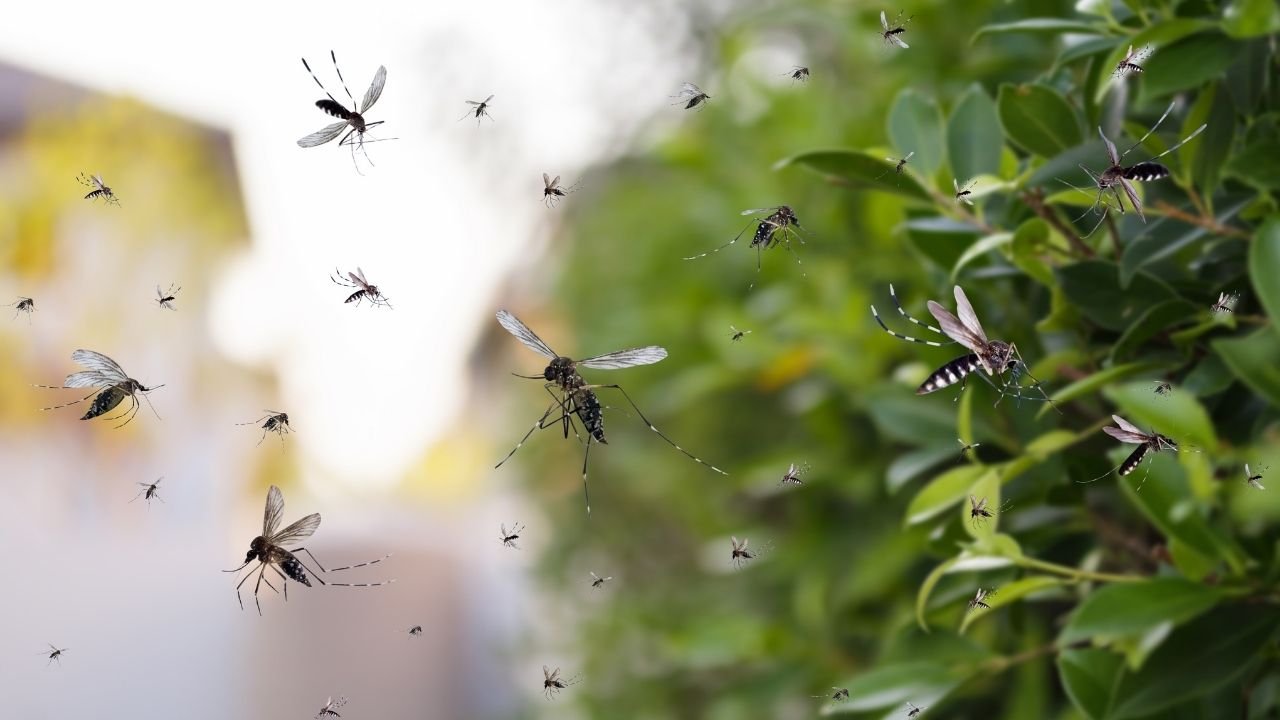
The following are the main factors that affect the life cycle of the malaria parasite:
- Environmental factors like temperature and humidity greatly affect the development stages of plasmodiums within the mosquitos. Temperatures around 20°C or higher are ideal for Plasmodium development inside mosquitoes, though development can occur as low as 16°C under daily temperature variation. Humidity also extends mosquito lifespan and supports longer parasite incubation periods.
- Host immunity and genetic factors can also affect the ability of parasites to infect and multiply. For example, people with the sickle-cell trait or G6PD deficiency (Glucose-6-Phosphate-Dehydrogenase deficiency) are partially protected against malaria because such conditions inhibit the life cycle of malaria parasites.
- The type and behavior (habitat preference and feeding time) of mosquitoes affect the transmission of malaria. Some mosquitoes (mainly Anopheles species) serve as good vectors because of their feeding habits and long life and transmit the parasite more effectively.
FAQs
Is Malaria A Virus Or Bacteria?
The parasites that cause malaria are not viruses or a type of bacteria. These parasites are called plasmodium and belong to the group of single-celled eukaryotes known as Protozoa.
What Is The Most Serious Malaria Parasite?
The most serious malaria parasite is Plasmodium falciparum. Patients with more severe malaria from falciparum species may develop liver and kidney failure, convulsions, coma, and death.
Which Organs Does Malaria Affect?
Malaria can affect and damage the liver or kidneys. It can also cause the rupture of the spleen.
What Is The Best Treatment For Malaria?
The best treatment for uncomplicated malaria is artemisinin-based combination therapy (ACT), such as artemether-lumefantrine or dihydroartemisinin-piperaquine. These combine two drugs that attack the parasite in different ways.For severe malaria, intravenous artesunate is the recommended first-line treatment. Exchange transfusion is no longer recommended.
What Is the Malaria Season?
The rainy season is the most common season for malaria due to more damp places. Such places are suitable breeding sites for mosquitoes.In regions near the equator where the rainy season is year-round, the intensity and transmission of malaria are also year-round.
Keep learning
Continue with Brain Facts For Kids – Brain Information – All About The Brain and Jupiter Facts For Kids – Jupiter Information For Kids – All About Jupiter.
Did you know? Gametocyte Ingestion and Infection of the Mosquito
Try it
Make a three-column chart for Science: what you already knew, what you learned, and one question you would investigate next.
Knowledge check
What is one important fact about Science?
Show answer
Gametocyte Ingestion and Infection of the Mosquito