
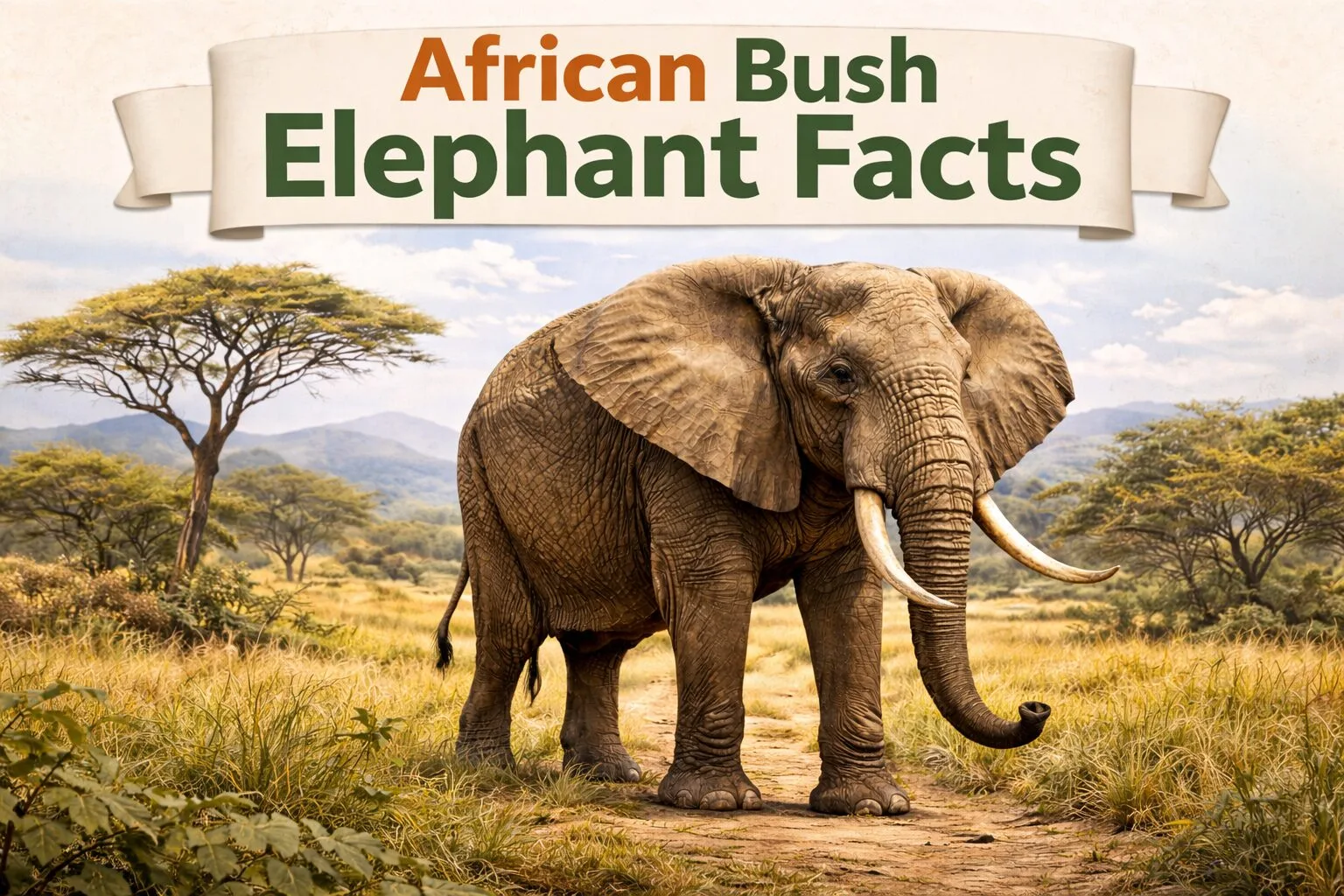
Did you know the African Bush elephant is the world’s largest land animal? These majestic creatures are known for their enormous size and sadly their endangered status. Keep reading to learn interesting facts about African Bush Elephants and how you can help protect them!
What Is the African Bush Elephant?
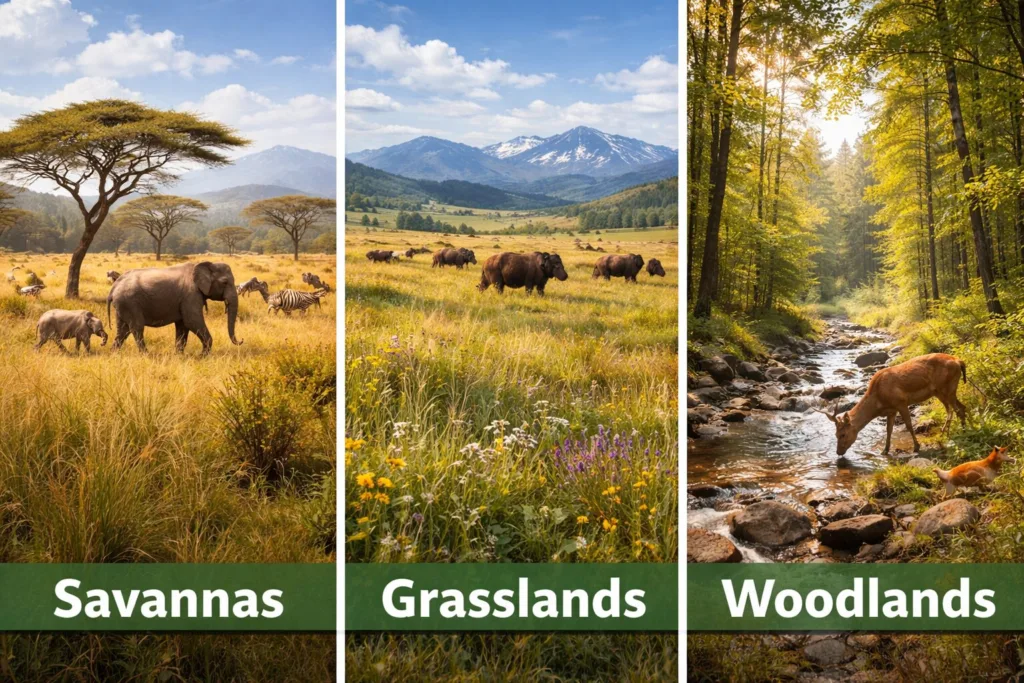
The African Bush Elephant, also known as the African Savanna Elephant (scientific name: Loxodonta Africana). These elephants live in:
- Savannas
- Grasslands
- Woodlands
Appearance & Size of The African Bush Elephant
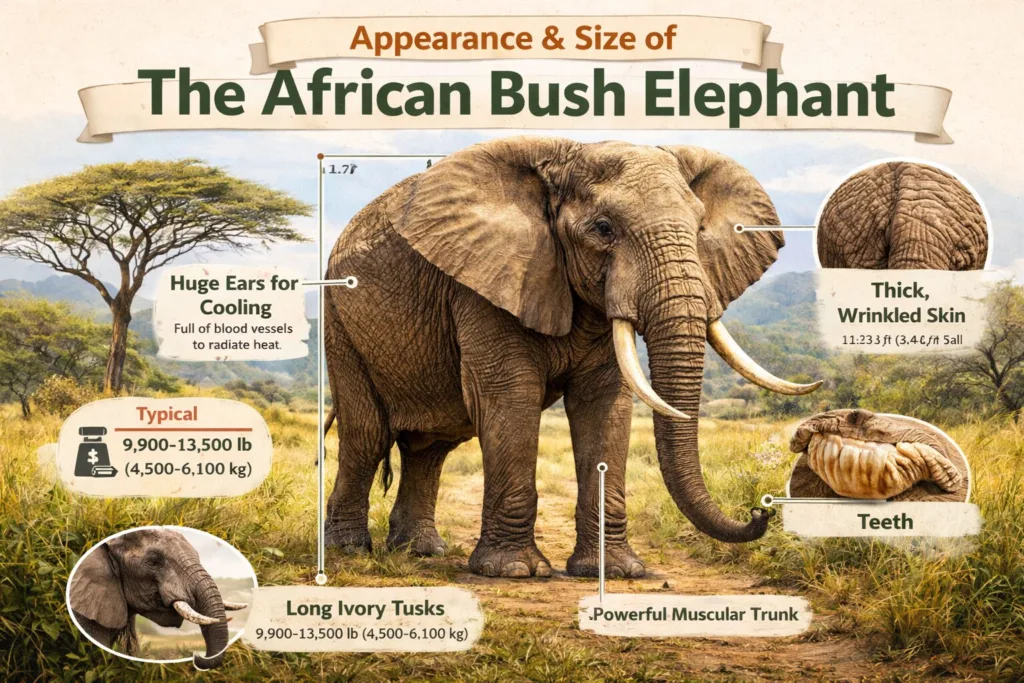
- Typical Weight Range: African Bush Elephants weigh between 4,500-6,100 kilograms (9,900-13,500 lb)
- Shoulder height: African Bush Elephants shoulder height is between 3-4 meters (10-13 ft)
- Ears: African Bush Elephants have very large ears with blood vessels, their ears help radiate heat like an ear air conditioner
- Skin and hair: African Bush Elephants have thick and wrinkled skin and sparse hair on their skin
- Tusks: African Bush Elephants’ tusks are made of ivory
- Trunk: African Bush Elephants trunks are extremely muscular and its function is smell, touch, breathing, drinking, lifting, communicating!
- Teeth & molar replacement: Elephants have a pattern of replacing molars several times throughout their life. Eventually they may lose their ability to chew in old age.
Diet & Eating Habits of African Bush Elephants
What Do African Bush Elephants Eat?
These animals are herbivores, which means they only eat plants, for example:
- Grass
- Roots
- Leaves
- Fruits and Berries
- Tree Barks
These animals eat all the time and spend many hours eating and foraging, while they drink hundreds of liters of water!
Habitat & Geographic Range
These elephants inhabit savannahs and grasslands of East and Southern Africa specifically:
- Botswana
- Kenya
- Namibia
- South Africa
- Tanzania
- Zambia and Zimbabwe.
Role in Ecosystem of African Bush Elephants
These animals play a vital role in the ecosystem as they help shape their environment by:
- Breaking branches & creating new paths with their herds and size
- Their movement and feeding can open up grazing for other animal
- According to WWF the African Bush Elephants help with climate change reduction by increasing carbon storage in their forest habitat. They do this by influencing the shape of the forest structure
Behavior & Social Life of African Bush Elephants
Did you know elephants live in matriarchal family groups? The family group is led by the oldest female who do allomothering, where other females help care for calves, while the males tend to live more solitary or in bachelor groups once mature.
Communication & Intelligence of Elephants
Elephants have a very complex and sophisticated communication system where their vocalizations include infrasound (low frequencies that travel far). This helps Elephants locate and coordinate with family groups in a large terrain. elephants communicate through their trunk gestures, ears movement, etc. Learning about how elephants communicate shows us how intelligent these creatures are!
Conservation & Threats Towards African Bush Elephants
According to IUCN status, African Forest Elephants are critically endangered, while the African Bush Elephants (savanna) are endangered as well. We have witnessed the decline of these elephant populations from millions to only 415,000 African Elephants in the world.
Threats Towards African Bush Elephants
The main threats towards African Bush Elephants are:
- Poaching is defined as illegal hunting or capturing of wild animals, mostly for commercial use.
- Illegal Ivory Trade as elephant trunks are made of ivory which is used in jewelry, medicine, etc.
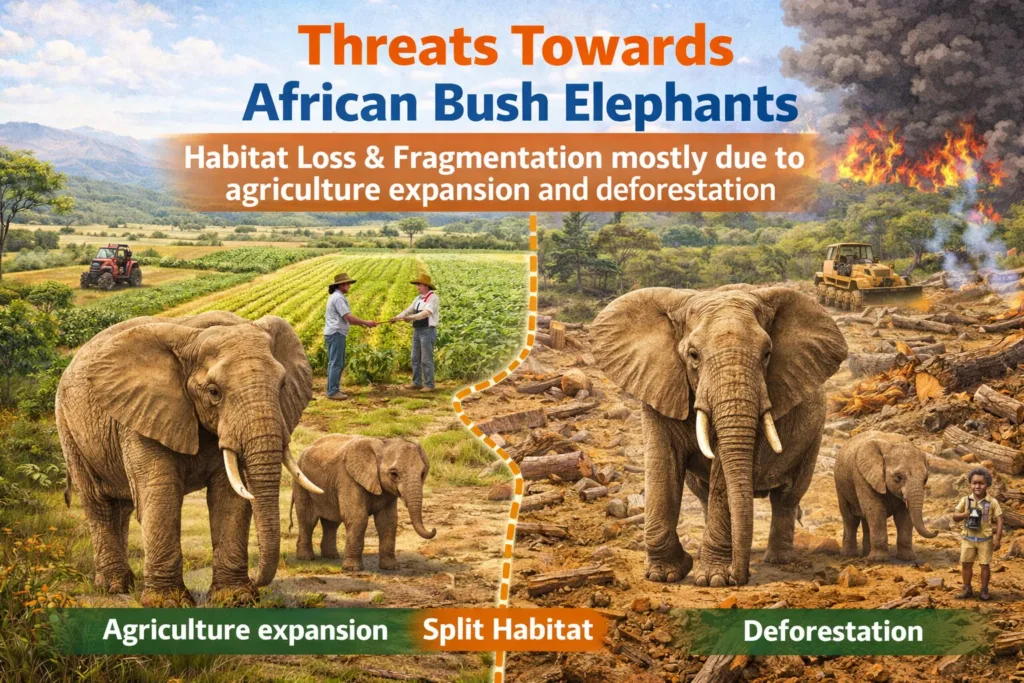
- Habitat Loss and Fragmentation mostly due to agriculture expansion and deforestation
Preservation Efforts for African Bush Elephants
There are many preservation efforts being made to safeguard the African Bush Elephants, like:
- International laws like CITES are banning ivory trade
- Many protected areas and sanctuaries are created to save the elephants
- Anti-poaching patrols are established to protect the African Bush elephants
- Spread of awareness through ecotourism and the internet
What Kids & Communities Can Do to Help The African Bush Elephants
- Support conservation groups like WWF, AWF, etc.
- Spread awareness about ongoing issues like poaching
- Discourage people from ivory purchases
- Create fundraisers for conservation groups
Facts About Elephants
Here are some facts about elephants:
- Unfortunately 90% of the elephant population has been wiped out in the last century alone.
- According to WWF there are only 415,000 wild elephants alive today
- Did you know due to poaching for ivory and loss of habitat, the African forest elephant is now listed as Critically Endangered?
- It is a common misconception that African Bush elephants and African Forest elephants are the same species, but these are two separate species.
- Did you know elephant tusks are actually teeth?
Conclusion
The reason why elephants matter is because they play a vital role in the ecosystem like all animals, and this complex system of nature should not be disturbed or put to an end. We need to protect this beautiful part of wildlife and keep learning about different topics in life. Next time you’re in a zoo or see an elephant on the television try to remember these facts about African Bush Elephants!
External Links
WWF- Top 10 facts about elephants