Animals quick facts
- They belong to the subfamily Erinaceinae , and there are 17 recognised species of hedgehogs found in parts of Europe, Asia, Africa, and New Zealand, where they were introduced.
- Keep reading to learn interesting hedgehog facts for kids.
- A hedgehog’s back and sides are covered in thousands of sharp spines.
- Some sources describe hedgehogs as having about 3,000 to 5,000 quills , while adult European hedgehogs are often described as having around 5,000 to 7,000 spines .
Hedgehogs are small mammals. They belong to the subfamily Erinaceinae, and there are 17 recognised species of hedgehogs found in parts of Europe, Asia, Africa, and New Zealand, where they were introduced. Keep reading to learn interesting hedgehog facts for kids.
Quick Snapshot: Kid-Friendly Fact Box
| Feature | Fact |
|---|---|
| Typical Size & Weight | Many hedgehogs are around 20–25 cm long and can weigh up to about 1.2 kg |
| Number of Species | 17 recognised species |
| Typical Lifespan | Often 2–5 years in the wild, and longer in protected care |
| Where They Live | Forests, grasslands, gardens, parks, farmland, and dry habitats depending on the species |
| What They Eat | Mostly insects and other small invertebrates, but they can also eat other foods when available |
What Do Hedgehogs Look Like?
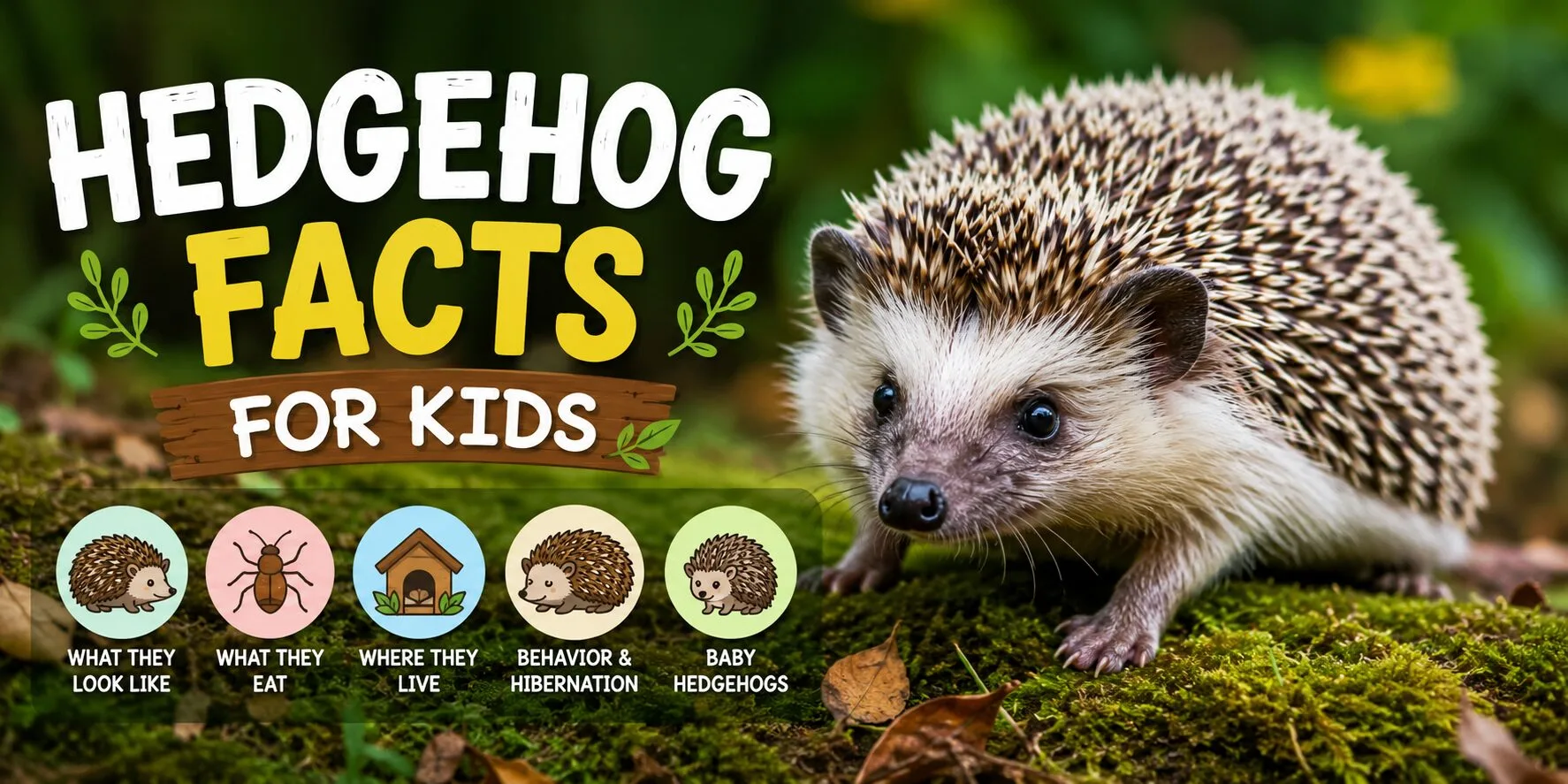
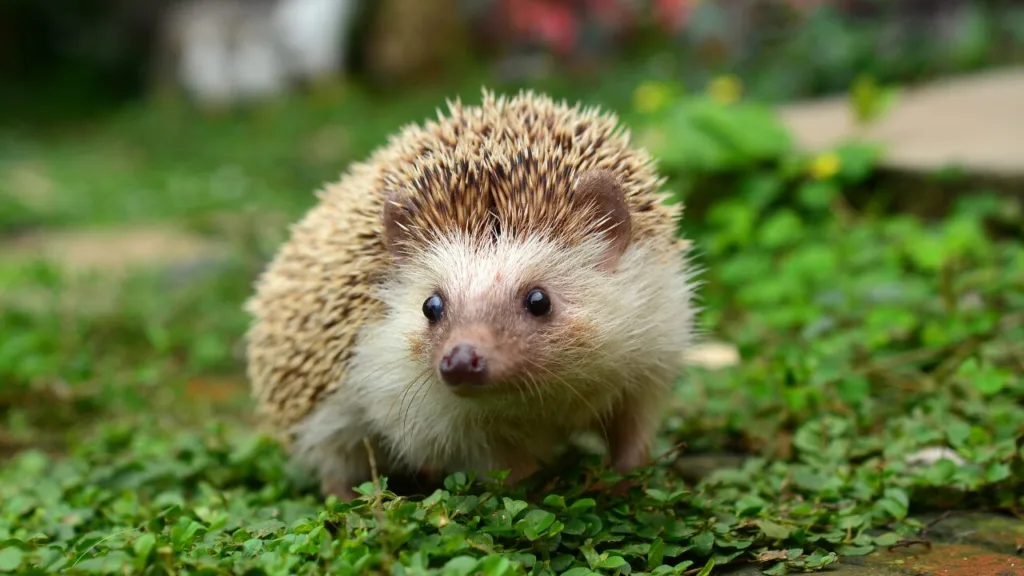
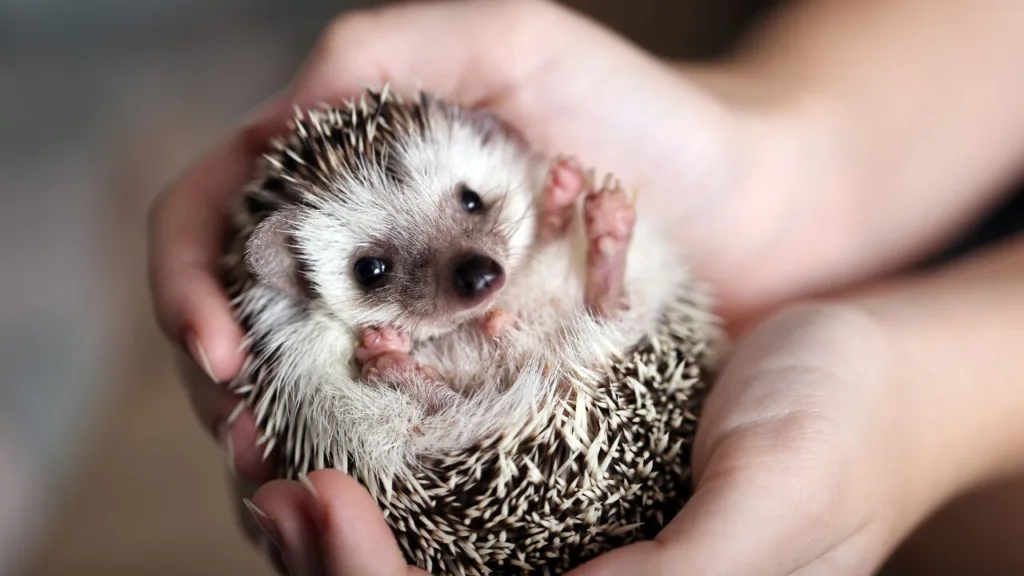
A hedgehog’s back and sides are covered in thousands of sharp spines. Some sources describe hedgehogs as having about 3,000 to 5,000 quills, while adult European hedgehogs are often described as having around 5,000 to 7,000 spines. These spines are modified hairs and are not poisonous.
Although hedgehogs have spiky backs, they have soft, furry bellies. When danger comes, they curl into a tight ball to protect their face, legs, and belly, leaving their sharp spines facing outward.
Hedgehogs also have a small face, a pointed nose, short legs, and a tiny tail. Their noses are very sensitive, and they use their strong sense of smell to search for food and explore their surroundings.
Why Do Hedgehogs Have Spines?
Hedgehogs have spines to protect themselves from predators. When a predator comes close, the hedgehog curls into a ball and raises its spines. Any animal trying to bite it may get a mouth full of sharp spikes.
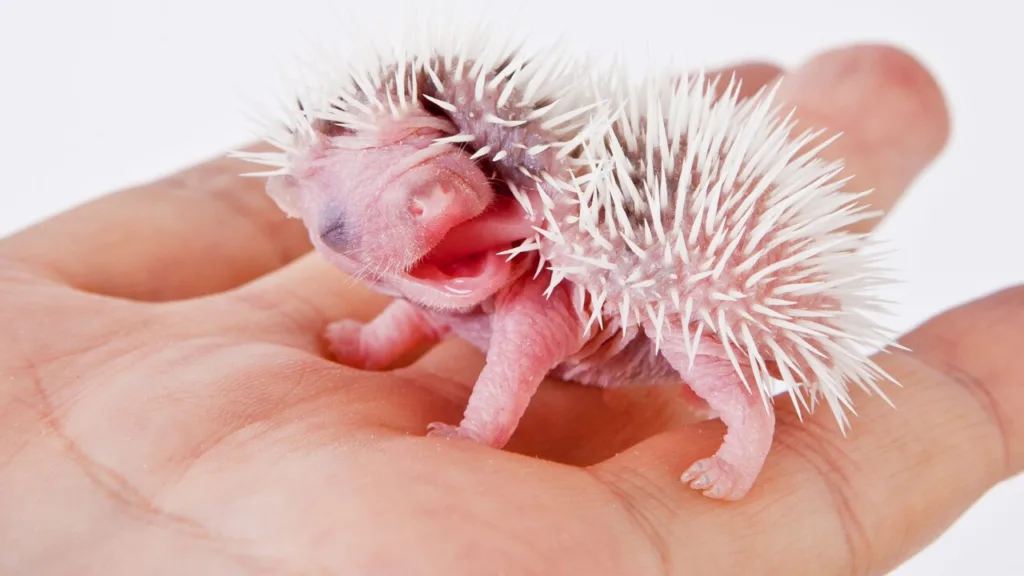
Baby hedgehogs are called hoglets. They are born blind and helpless. Their spines are soft when they are born, but they harden as the hoglets grow.
Where Do Hedgehogs Live?
Hedgehogs are found in parts of Europe, Asia, and Africa, and they also live in New Zealand, where they were introduced. They are not native to Australia or the Americas.
Hedgehogs can live in many habitats, including:
- Woodlands
- Grasslands
- Gardens
- Parks
- Farmland
- Hedge rows
- Dry areas and deserts, depending on the species
Different hedgehog species live in different environments. For example, European hedgehogs are often found in gardens and woodlands, while desert hedgehogs live in much drier places.
What Do Hedgehogs Eat?
Hedgehogs mostly eat small creatures found on or near the ground. Their diet can include:
- Beetles
- Caterpillars
- Earthworms
- Slugs
- Snails
- Flies
- Frogs
- Small eggs
- Carrion in some cases
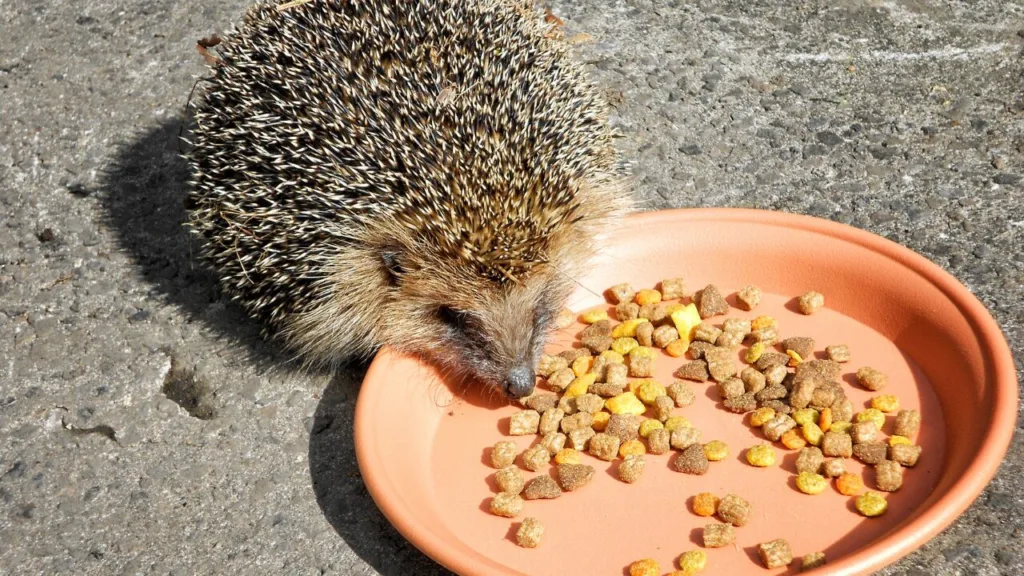
Hedgehogs are often called insectivores because insects and other invertebrates are a major part of their diet. However, they are also opportunistic feeders, which means they may eat different foods if they find them.
They may also eat fallen fruits or berries, but these are not their main food. Hedgehogs are most active at night, when they forage, sniff, dig, and search for food.
Hedgehog Behavior
Hedgehogs are usually nocturnal, which means they are active at night and rest during the day. They are also normally solitary animals, meaning they usually live alone except during breeding season.
Common hedgehog behaviors include:
- Building nests from leaves and grass
- Searching for food at night
- Sniffing and exploring
- Grooming and scratching
- Curling into a ball when threatened
- Caring for hoglets after birth
Hedgehogs may look slow and quiet, but they can travel surprisingly far at night while searching for food.
Hedgehog Babies
Baby hedgehogs are called hoglets. The breeding season can vary, but in places like the UK, it usually happens from spring to late summer. Female hedgehogs are pregnant for about four to five weeks, and they often give birth to a litter of around three to seven hoglets.
Hoglets are born blind and helpless. Their spines are soft at first, then become harder as they grow. The mother cares for the babies until they are old enough to leave the nest. Male hedgehogs do not help raise the young.
How Hedgehogs Survive
Hedgehogs survive by using their sharp spines, strong smell, good hearing, and nighttime habits. Their best defence is curling into a ball and protecting their soft belly.
Hedgehogs can also run faster than many people expect, and they can swim if needed. However, swimming can be dangerous if they fall into ponds or pools and cannot climb out, so wildlife-friendly gardens should have safe escape ramps.
Hedgehogs do not have very strong eyesight, but they make up for it with a strong sense of smell and hearing.
Hibernation
Hibernation is a state of deep rest that helps some animals survive when food is hard to find and the weather is cold.
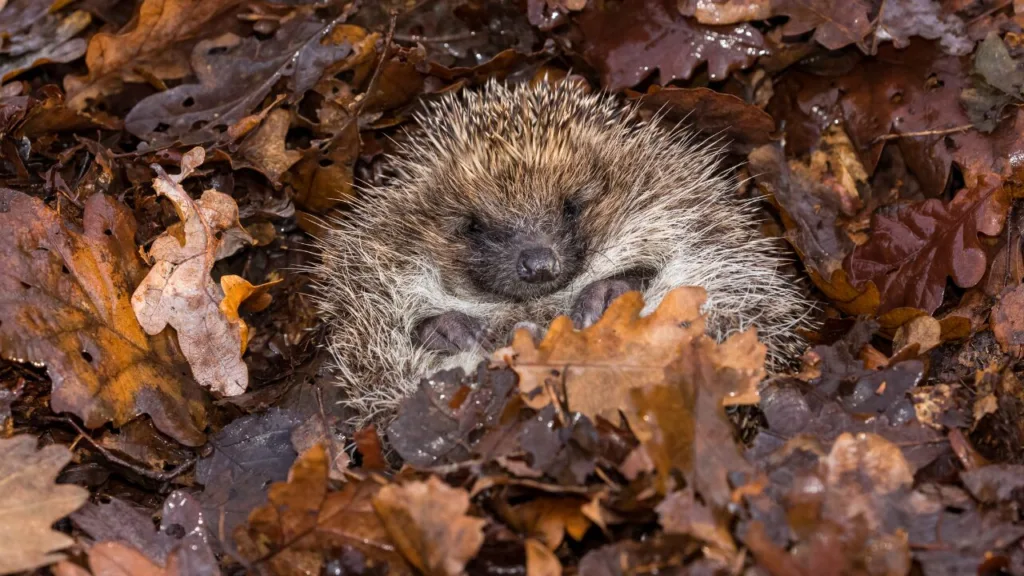
In colder regions, hedgehogs may hibernate during winter. Hibernation can happen anytime from October to April, depending on the weather and food availability. In warmer winters, some hedgehogs may wake up or remain active for longer.
Before hibernation, hedgehogs eat more food to build up fat. They also make nests using leaves, grass, and other natural materials. During hibernation, their body temperature drops, and their breathing and heart rate slow down to save energy.
Not all hedgehog species hibernate, and even among hibernating species, timing can vary depending on climate and conditions.
Hedgehogs in Gardens
Hedgehogs can be helpful visitors in gardens because they eat many insects, slugs, snails, and other small invertebrates. However, gardens can also be dangerous for them if there are chemicals, blocked fences, ponds without escape ramps, litter, or garden tools left carelessly.
To make a garden safer for hedgehogs, families can:
- Leave a shallow bowl of clean water
- Avoid giving hedgehogs milk or bread
- Create log piles or leaf piles for shelter
- Make small holes at the bottom of fences so hedgehogs can move between gardens
- Check long grass before mowing or using a strimmer
- Keep ponds safe with a ramp or sloped edge
- Avoid using pesticides where possible
Hedgehogs should not be given milk because they are lactose intolerant. Bread is also not useful because it has little nutritional value for them. Clean water is much better. The RSPCA also advises that meat-based cat or dog food, or crushed cat or dog biscuits, can be offered if extra food is needed.
Hedgehog Senses
Hedgehogs have poor eyesight, but they have a strong sense of smell and good hearing. These senses help them find food, detect danger, and explore at night.
Their pointed noses are always busy sniffing the ground. This is why hedgehogs are such active nighttime foragers.
Predators of Hedgehogs
Hedgehogs have good protection, but they still face danger from predators. Their predators can include:
- Badgers
- Foxes
- Owls
- Eagles
- Polecats
- Weasels
- Domestic dogs in some cases
In the UK, badgers are one of the main natural predators of hedgehogs. However, habitat loss, roads, garden hazards, and human activity are also major threats.
Different Species of Hedgehogs
There are 17 recognised species of hedgehogs. Here are some common examples:
| Species | Scientific Name | Primary Habitat | Size | Unique Feature |
|---|---|---|---|---|
| European Hedgehog | Erinaceus europaeus | Woodlands, gardens, grasslands | 20–30 cm | Common in Europe |
| African Pygmy Hedgehog / Four-Toed Hedgehog | Atelerix albiventris | Savannas and grasslands | 15–22 cm | Often has four toes on the back feet |
| Long-Eared Hedgehog | Hemiechinus auritus | Dry steppes and deserts | 12–27 cm | Large ears help release heat |
| Desert Hedgehog | Paraechinus aethiopicus | Desert regions | 14–25 cm | Adapted to dry environments |
Hedgehogs as Pets
Some hedgehog species, especially African pygmy hedgehogs, are kept as pets in some countries. However, hedgehogs are not simple pets and they are not suitable for very young children.
Pet hedgehogs need:
- A warm and safe enclosure
- Proper food
- Clean bedding
- Gentle handling
- Space to move and explore
- Veterinary care from someone familiar with exotic pets
Wild hedgehogs should never be taken from nature and kept as pets. If a wild hedgehog looks injured, sick, underweight, or is out during the day, it is better to contact a wildlife rescue or local expert.
Fun Hedgehog Facts
- Hedgehogs have thousands of spines on their backs.
- There are 17 recognised species of hedgehogs.
- Hedgehogs are found in parts of Europe, Asia, and Africa.
- Hedgehogs were introduced to New Zealand.
- Hedgehogs are not native to Australia or the Americas.
- Hedgehogs have poor eyesight but a strong sense of smell.
- Hedgehogs are mostly active at night.
- Baby hedgehogs are called hoglets.
Conclusion
Hedgehogs are interesting small mammals known for their sharp spines and clever defence technique. They play an important role in nature by eating insects and other small creatures. Learning about hedgehogs helps children understand why wildlife should be respected and protected.
By keeping gardens safe, avoiding harmful foods, and giving hedgehogs space to move, people can help these spiky little animals survive.
External Links
- San Diego Zoo – Hedgehog
- WWF – Top 10 Facts About Hedgehogs
- RSPCA – Attracting Hedgehogs to Your Garden
- Woodland Trust – Hedgehog Hibernation
- Hedgehog Street – Hedgehog Biology
- Wildlife Trusts – European Hedgehog
Keep learning
Continue with Box Jellyfish Facts for Kids and Giant Panda Facts For Kids – Learn All About Pandas.
Did you know? They belong to the subfamily Erinaceinae , and there are 17 recognised species of hedgehogs found in parts of Europe, Asia, Africa, and New Zealand, where they were introduced.
Try it
Create a labelled sketch or fact card about Animals. Include three details from this guide and explain how one feature helps the animal survive.
Knowledge check
What is one important fact about Animals?
Show answer
They belong to the subfamily Erinaceinae , and there are 17 recognised species of hedgehogs found in parts of Europe, Asia, Africa, and New Zealand, where they were introduced.