People quick facts
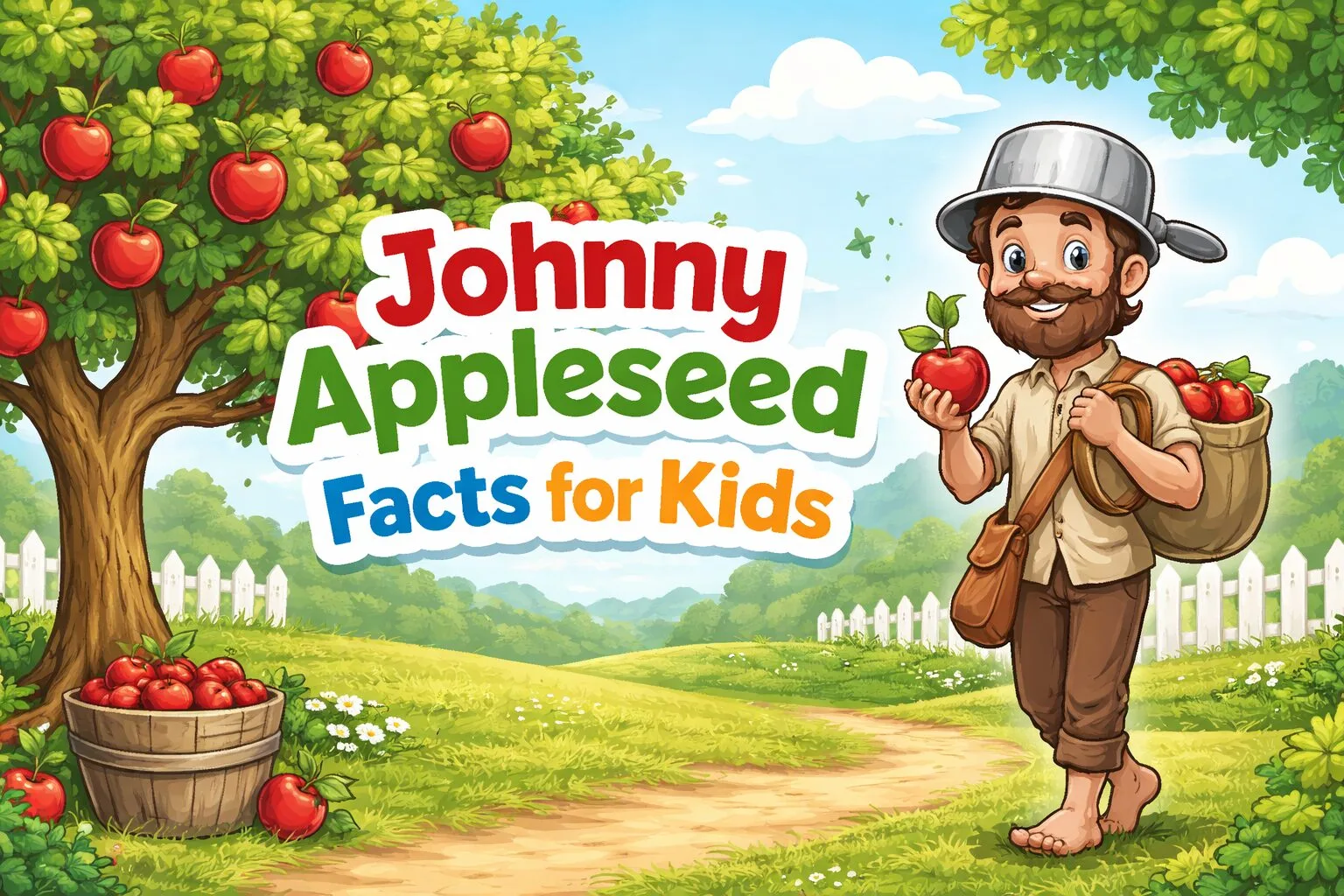
- His real name was John Chapman and he did not wear a pot on his head as a hat!
- Keep reading to learn about the achievements and facts about Johnny Appleseed.
- John Chapman (nicknamed Johnny Appleseed) was born on September 26, 1774 , in Leominster, Massachusetts.
- He was the second child of Nathaniel and Elizabeth Chapman.
Who Was Johnny Appleseed (John Chapman)?
John Chapman (nicknamed Johnny Appleseed) was born on September 26, 1774, in Leominster, Massachusetts. He was the second child of Nathaniel and Elizabeth Chapman. He was a missionary of the New Church (Swedenborgian) and carried small religious pamphlets to spread Christianity. John was known for his kind and caring personality, he cared a lot about animals and became vegetarian later in his life.
Short Timeline of Johnny Appleseed’s Life
- 1774 – Born September 26 in Leominster, Massachusetts Wikipedia
- 1792 – At age 18, he headed west with his younger half-brother Nathaniel
- Early 1800s – Around 1800, he started collecting apple seeds from cider presses in western Pennsylvania and began planting apple nurseries from the Alleghenies to central Ohio and beyond Encyclopedia Britannica
- 1845 – Died on March 18, 1845 Wikipedia
What Did Johnny Appleseed Do?
Johnny Appleseed is known for planting trees from seeds and not the grafted varieties. Many of the seed trees yielded tart apples or cider apples (that were not always for eating). He didn’t just scatter seeds randomly, he had an entire process of:
- Establishing nurseries or orchards and fencing them
- Left them in care of neighbors
- Returned periodically to check on the seedlings
Did you know he collected seeds from cider mills in Pennsylvania and even further? He traveled across Pennsylvania, to:
- Ohio
- Indiana
- Illinois
- Parts of Ontario
- Parts of West Virginia
At the time of Johnny Appleseed’s death he owned or managed over 1,200 acres of orchards and land. He used planting as a way to claim frontier land and then later sold or developed the land.
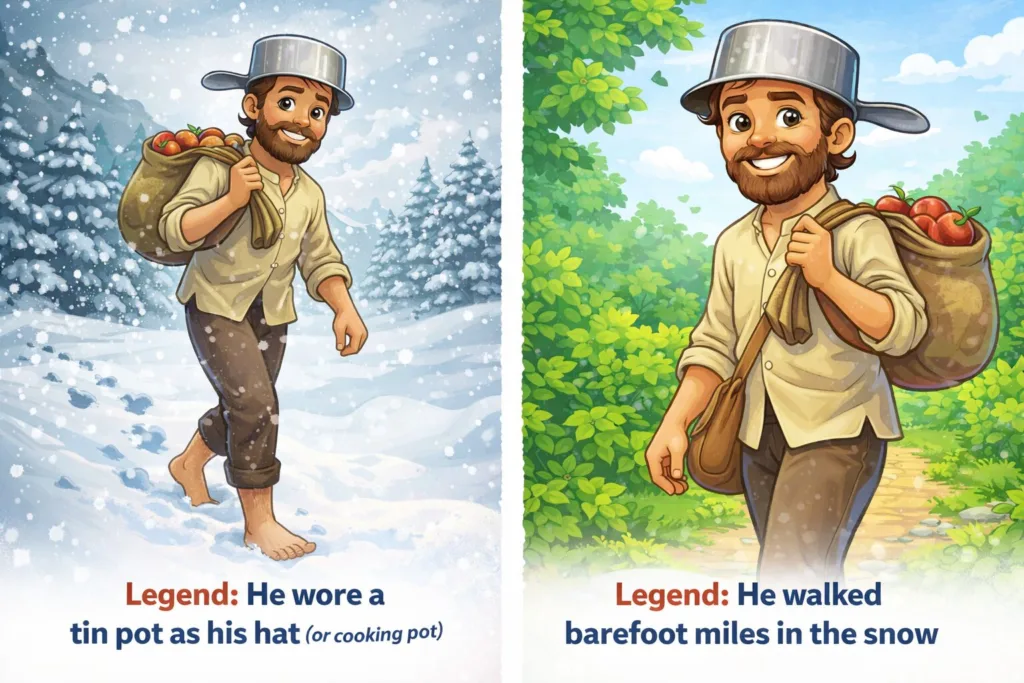
Common Legends & Myths About Johnny Appleseed
- Legend: He wore a tin pot as his hat (or cooking pot)
- Legend: He walked barefoot miles in the snow.
Later Years & Death
Johnny Appleseed in later life established more permanent bases for his orchards and plantations, especially in Indiana, Allen County. He bought land near the Maumee River, East of Fort Wayne and had a nursery with 15,000 trees! Johnny Appleseed passed away on March 18, 1845 (though some sources differ) near Fort Wayne, Indiana. His gravesite is part of Johnny Appleseed Park in Fort Wayne.
Legacy & Impact of Johnny Appleseed
Over time Johnny Appleseed became a symbol of the love of nature and generosity. His story appears in children’s books, festivals, songs, and folklore collections. There are memorials to honor him like the Johnny Appleseed Park, Fort Wayne, Indiana and his gravesite is registered on the National Register of Historic Places.
Fun Trivia & Surprising Facts
- Did you know his apples were mostly for cider, not sweet eating?
- Johnny Appleseed was vegetarian
- He planted medicinal plants and gave seeds or small plants to Native Americans.
- Some of his land holdings got sold for taxes or went unrecorded.
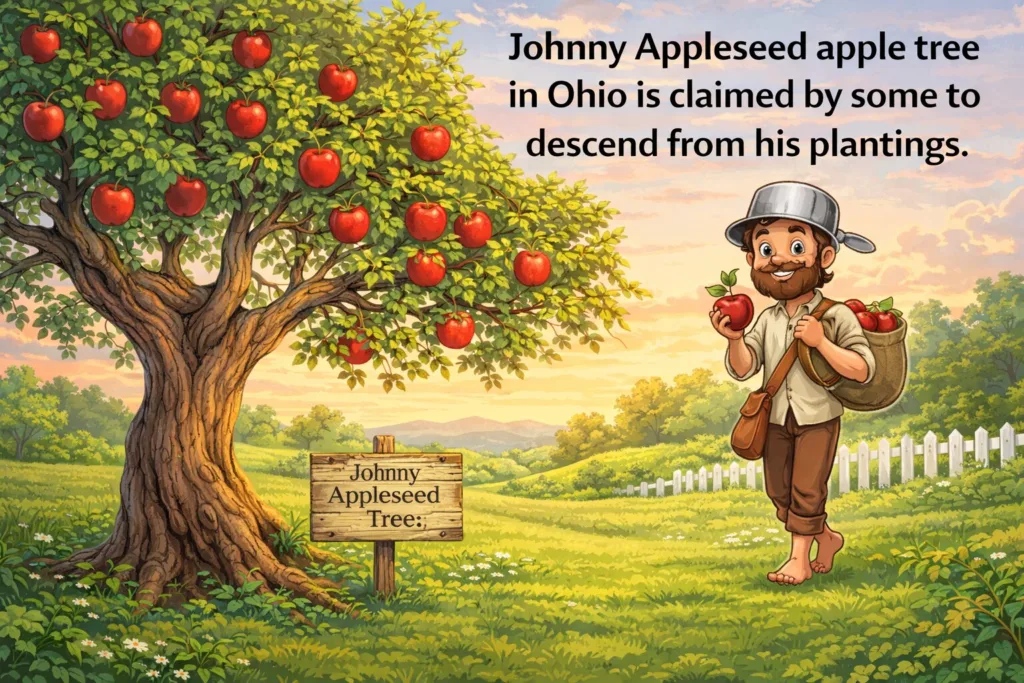
- A surviving “Johnny Appleseed” apple tree in Ohio is claimed by some to descend from his plantings.
Conclusion
John Chapman, also known as Johnny Appleseed, was a legendary person and he teaches us about generosity and respect for nature. We hope that reading about Johnny Appleseed teaches you about why caring for trees is important and you get inspired to do so yourself!
Keep learning
Continue with Hundertwasser Facts – Hundertwasser For Kids – Hundertwasser Biography and Neil Armstrong Facts For Kids – Neil Armstrong Biography – All About Neil Armstrong.
Did you know? His real name was John Chapman and he did not wear a pot on his head as a hat!
Try it
Build a short timeline or concept map for People using four important details from this guide.
Knowledge check
What is one important fact about People?
Show answer
His real name was John Chapman and he did not wear a pot on his head as a hat!