
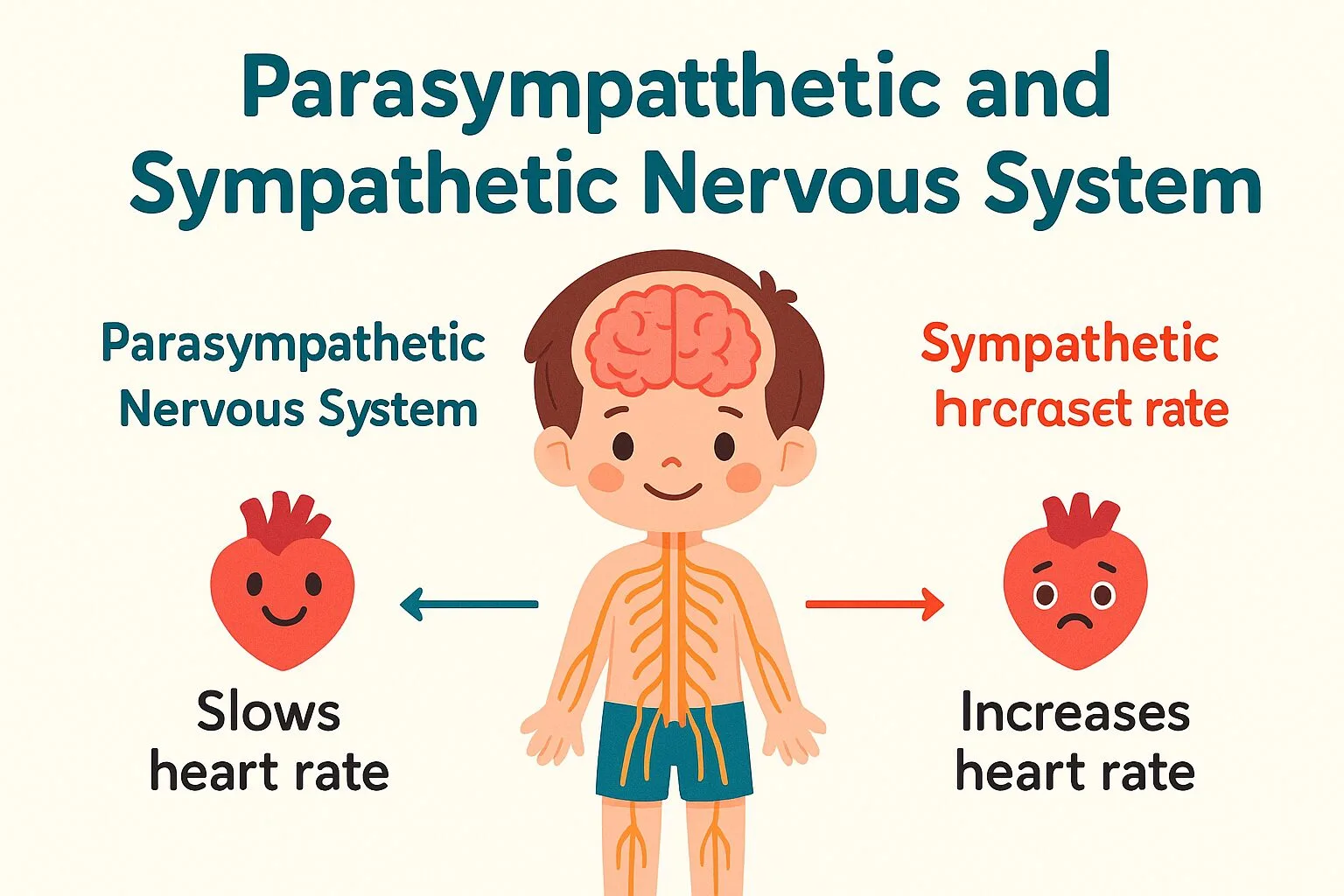
Have you ever wondered how your nervous system is in action? Think about your heart racing and your breathing speeding up when you run, afterwards your body slows down and is ready to rest, this is your nervous system working to slow you down. Keep on reading if you want to learn more about the sympathetic and parasympathetic nervous system for kids.
What Is the Nervous System?
Let’s dive into exploring the special and hidden team inside your body, your nervous system.
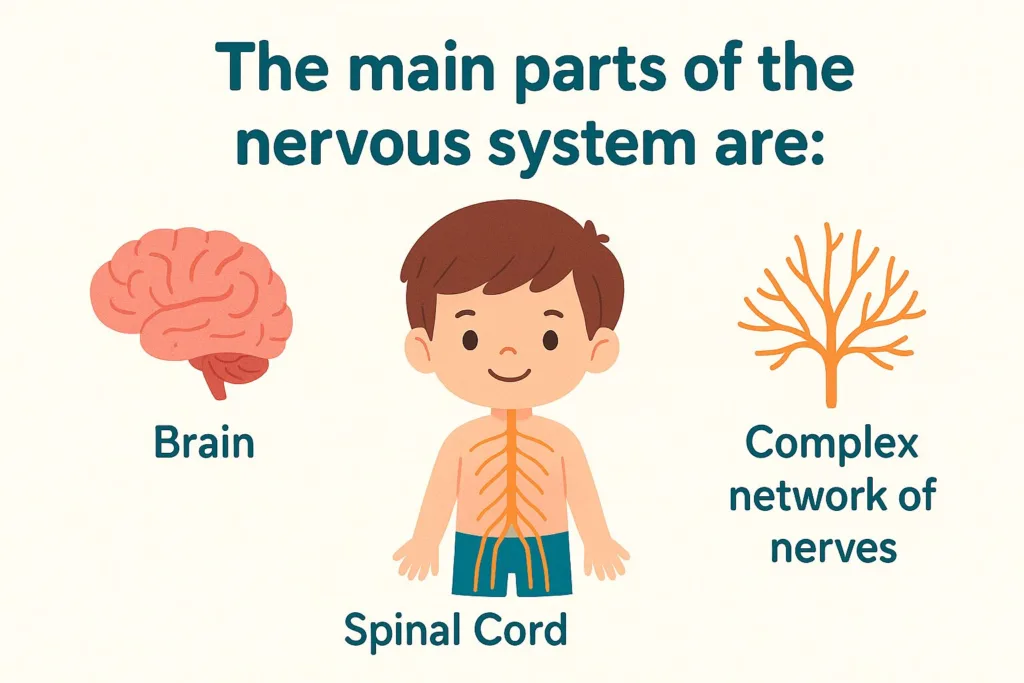
The nervous system is defined as your body’s control center which sends messages back and forth. The main parts of the nervous systems are:
- Brain
- Spinal Cord
- Complex network of nerves
There are two subdivisions of the Nervous system:
- Central nervous system (CNS): The CNS includes the brain and spinal cord along with various centers that integrate all the sensory and motor information in the body.
- Peripheral nervous system (PNS): The PNS is a vast network of nerves that links the body to the brain and the spinal cord.
Meet the Autonomic Nervous System
The Peripheral nervous system (PNS) is further subdivided into the Autonomic nervous system (ANS). The ANS has involuntary control of:
- Internal organs
- Blood vessels
- Smooth and cardiac muscles.
The Autonomic Nervous systems are further divided into 2 other main branches:
- Sympathetic Nervous System: This system is responsible for activities like “fight-or-flight”. This system engages and acts in activities to fight back against danger or escape danger.
- Parasympathetic Nervous System: This system is responsible for the body’s “rest and digest” activities, like: salivation, tears, urination, digestion etc.
Sympathetic Nervous System
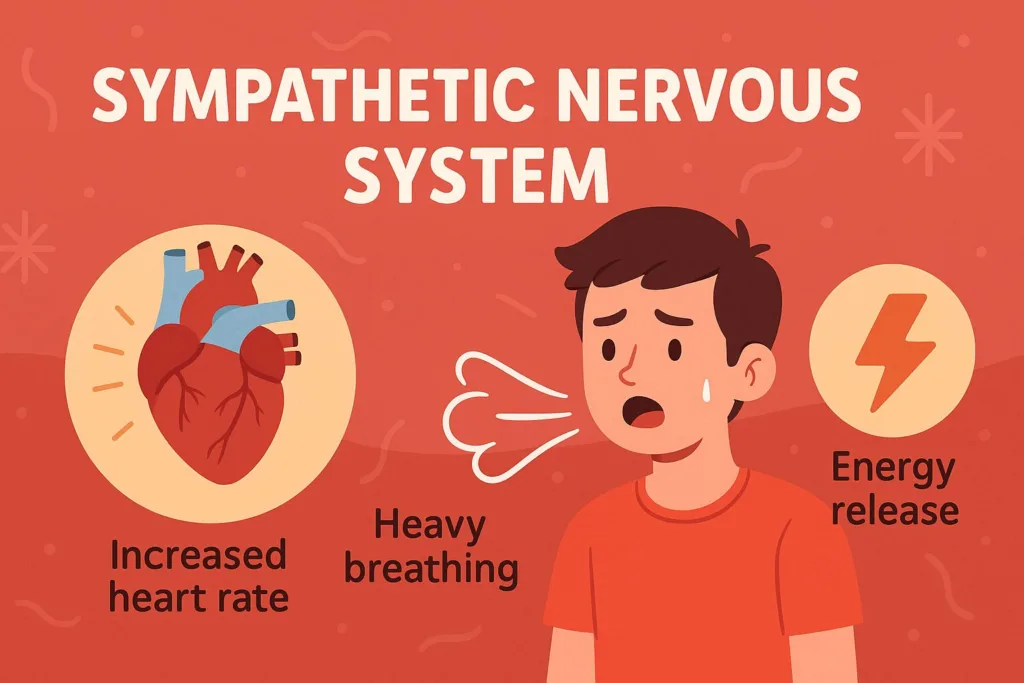
Let’s further define the body’s Sympathetic nervous system for kids! According to science the sympathetic nervous system is responsible for stimulating activities associated with the fight-or-flight response which means it prepares the body for action. You might notice these things happen to your body when your sympathetic nervous system activates:
- Increased heart rate
- Heavy breathing
- Energy release
This system can trigger when a test is due and your body needs more energy to focus or you visit a haunted house that causes your heart rate to increase.
Parasympathetic Nervous System
Now let’s discuss the Parasympathetic nervous system functions that are responsible for the stimulation of “rest-and-digest” activities. The nervous system calms your body down through these actions:
- Slowing your heart rate
- Relaxing your muscles
- Helping with digestion
Other activities that activates this part of the nervous system are:
- Feeling sleepy after eating food
- Your muscles relaxing after yoga
Sympathetic vs Parasympathetic
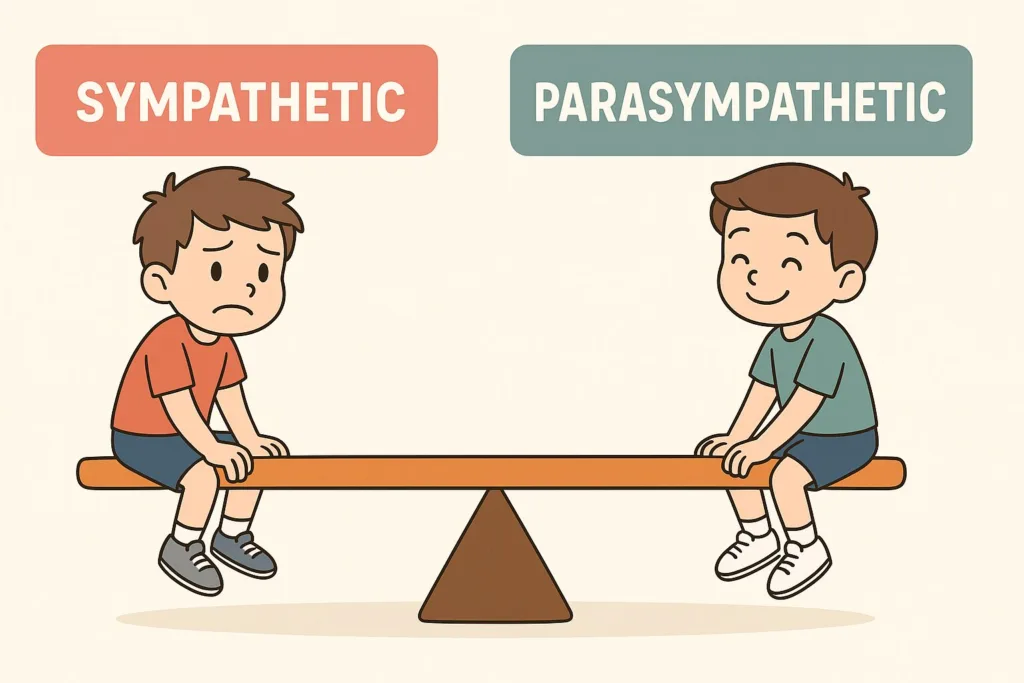
Think of these two functions as two kids on two ends of a seesaw, they balance each other. This table will show you how these systems come to work together
| Function | Sympathetic | Parasympathetic |
| Heart Rate | Speeds Up | Slows Down |
| Breathing | Faster | Slower |
| Digestion | Pauses | Starts Again |
| Pupils | Widen | Shrink |
Fun Experiments to Feel Your Nervous System
Here is a list of fun and safe experiments to feel your nervous system:
- Heart Rate Test: Run around safely and then feel your heart speed up, which will activate your sympathetic nervous system. When you sit down and rest your heart rate will slow down which is your parasympathetic nervous system.
- Breathing Exercise: When you take deep breaths it slows down your heart rate which activates your parasympathetic nervous system.
- Scary Movie Effect: Try to watch a scary movie with your family and when you get scared during scary scenes your sympathetic nervous system activates.
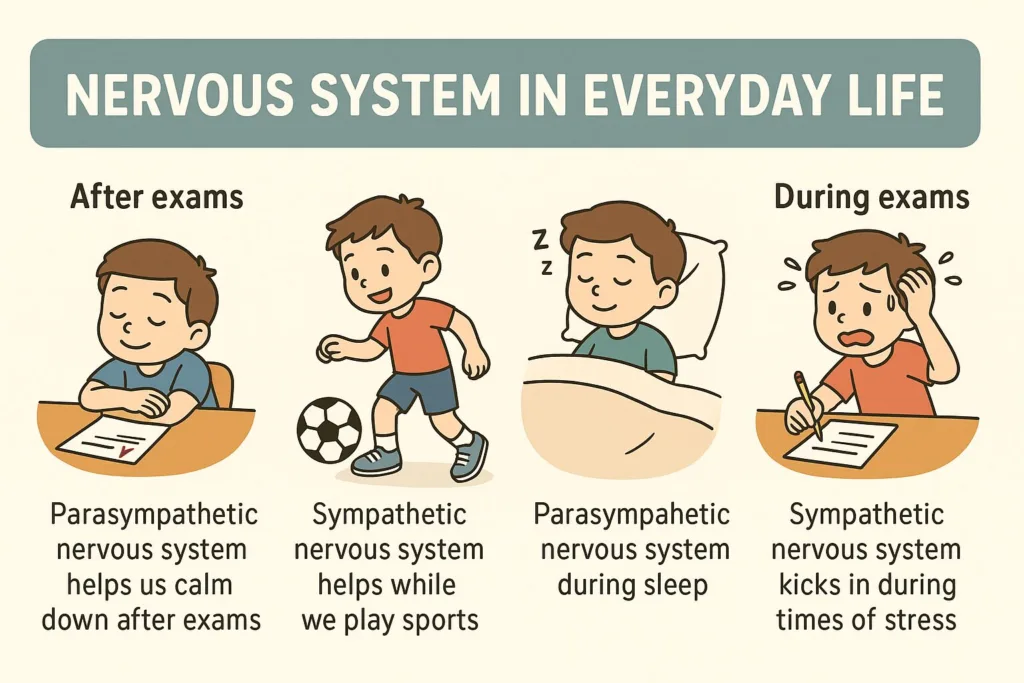
Nervous System in Everyday Life
Here is how the nervous system is used in everyday life:
- After exams: Parasympathetic nervous system helps us calm down after exams.
- During sports: Sympathetic nervous system helps while we play sports.
- During sleep: Parasympathetic nervous system helps during sleep.
- During exams: Sympathetic nervous system kicks in during times of stress.
Frequently Asked Questions
Why do we sweat when nervous?
We sweat when we are nervous because our sweat glands are activated by the Sympathetic nervous system which helps to cool down the body.
Why does my stomach hurt before a test?
Your stomach hurts before a test due to your digestion slowing when Sympathetic nervous system is active.
Can I control my nervous system?
Yes! You can control your nervous system through breathing and meditation as it helps activate the Parasympathetic nervous system.
Conclusion
Your body is amazing at its balancing act, if you are confused with the functions of the nervous system, think of it simply this way:
- The Sympathetic Nervous System: Your body’s gas pedal that speeds up your heart rate etc.
- The Parasympathetic Nervous System: Your body’s brake pedal that slows your heart rate etc.
Now next time you feel sleepy after eating, try to remember your nervous system working hard to protect and keep you safe.