
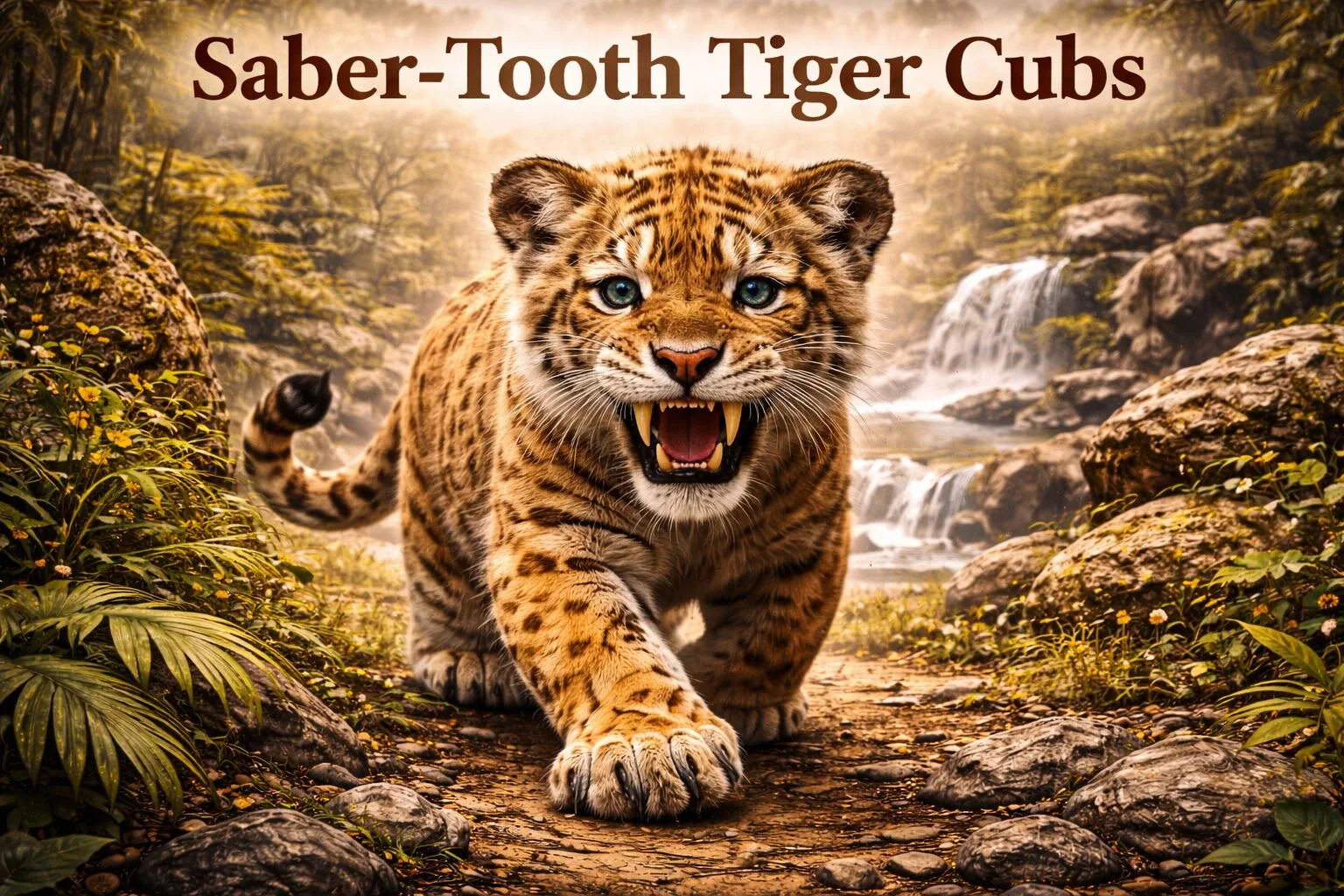
Can you picture a baby Saber-tooth tiger? With its tiny paws, fuzzy fur, and the faintest hint of fangs that would one day transform into Ice Age’s most feared hunter. The so-called “Saber-tooth tiger” is actually scientifically known as Smilodon, an extinct big cat, not related to modern tigers. Keep reading to learn more about Saber-Tooth Tiger cubs!
What Was a Saber-Tooth Tiger?
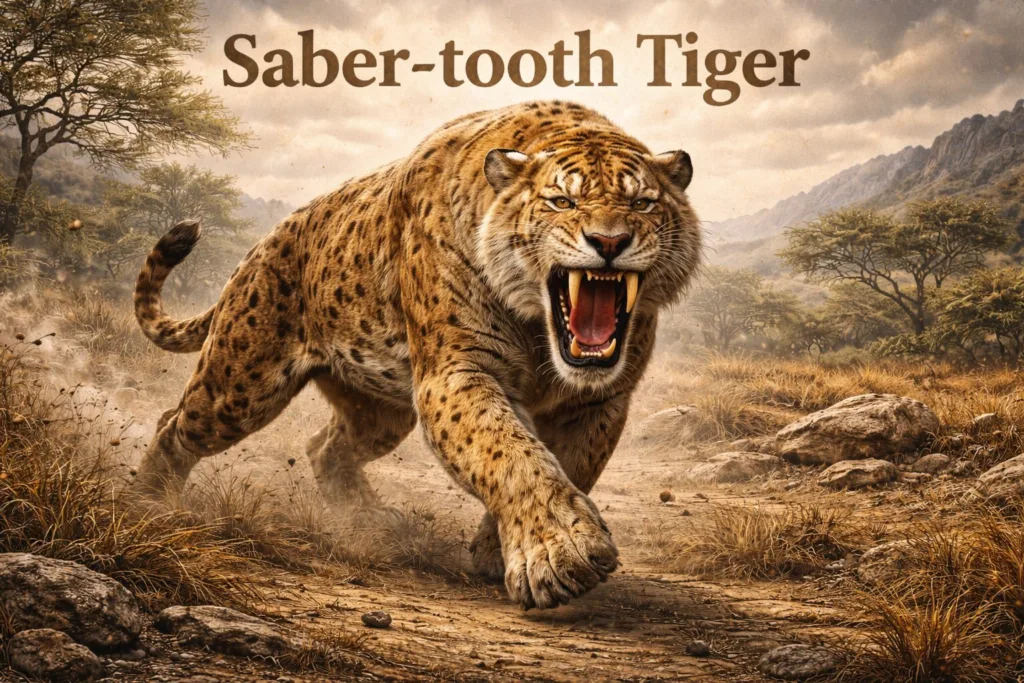
Despite the creature’s name, the Saber-tooth tiger is not related to tigers or lions. Scientifically they belong to a genus called “Smilodon” which belongs to the family Felidae (true cats) and the now-extinct subfamily Machairodontinae. This group included other distinct saber-toothed predators, such as Homotherium and Megantereon, which were not true tigers but shared the distinctive dental adaptation of long, curved canine teeth. There were 3 primary species of Smilodons:
- Smilodon gracilis is referred to as the smallest specie which weighed between 55-100 kilograms (121 to 220 lb)
- Smilodon fatalis weighed between 160 to 280 kg (350 to 620 lb)
- Smilodon populator is referred to as the largest specie which weighed between 220 to 436 kg (485 to 961 lb)
These mighty creatures lived during the Pleistocene and early Holocene epochs (a particular period of time in history) before becoming extinct roughly 10,000 years ago.
How Do We Know About Saber-Tooth Tiger Cubs?
We know about Saber-Tooth Tiger cubs through the fossils of juvenile Smilodon fatalis, fossils which were found at the La Brea Tar Pits, California. Archaeologists studied these fossils which revealed growth patterns and tooth development, while scientists used bone size, tooth eruption, and isotopic analysis (a scientific technique that measures the varying ratios of isotopes in a sample, revealing its origin, history, diet, or environmental conditions). They were able to estimate cub ages and diet according to the analysis, but it’s important to note that Saber-tooth tiger cub fossils are rare but extremely valuable.
How Were Saber-Tooth Tiger Cubs Born?
Due to the lack of viable DNA of Saber-tooth tigers, scientists estimate that these extinct mammals cubs were likely born after a 3-4 month gestation period, similar to modern big cats. The Saber-tooth tiger cubs are predicted to be blind and helpless in the beginning and they rely on their mothers for nourishment, warmth, protection, and learning essential survival skills. A litter is estimated to contain 2-4 cubs and mothers gave birth in dens or caves for protection from extreme weather conditions and other predators like Dire wolves, etc. Similar to lionesses and tigresses, which often give birth to their cubs in caves or other secluded areas. This behavior is primarily to protect their vulnerable newborn cubs from predators and harsh environmental conditions.
What Did Saber-Tooth Tiger Cubs Look Like?
According to unearthing of fossils we know that the Saber-tooth tiger had long curving canines, which means the canines of the cubs would grow slowly over a period of several months. The cubs are likely to have spotted or striped fur for camouflage, which would grow thicker over time in order to adapt to the cold climate of the Ice-age. The cubs have small round faces, short limbs, and large eyes that were built for stealth and learning.
When Did They Grow Their Famous Fangs?
Fossils of the Saber-tooth tiger reveal that canines started growing at 6 months old and continued to grow until about 3 years. The teeth grew continuously and were very fragile when the cubs were young. It is predicted that mothers likely protected cubs until they were strong enough to hunt and go off on their own.
How Did Saber-Tooth Tiger Cubs Learn to Hunt?
The Saber-tooth tigers learned to hunt through observation and play, similar to lions. Fossil evidence even suggests there was a possible social structure, where mothers or small family groups taught the young survival skills. It is estimated that cubs practiced stalking and pouncing in play and gradually joined adults on hunts between 2–3 years old as their fangs started to grow out during this time.
Challenges of Growing Up in the Ice Age
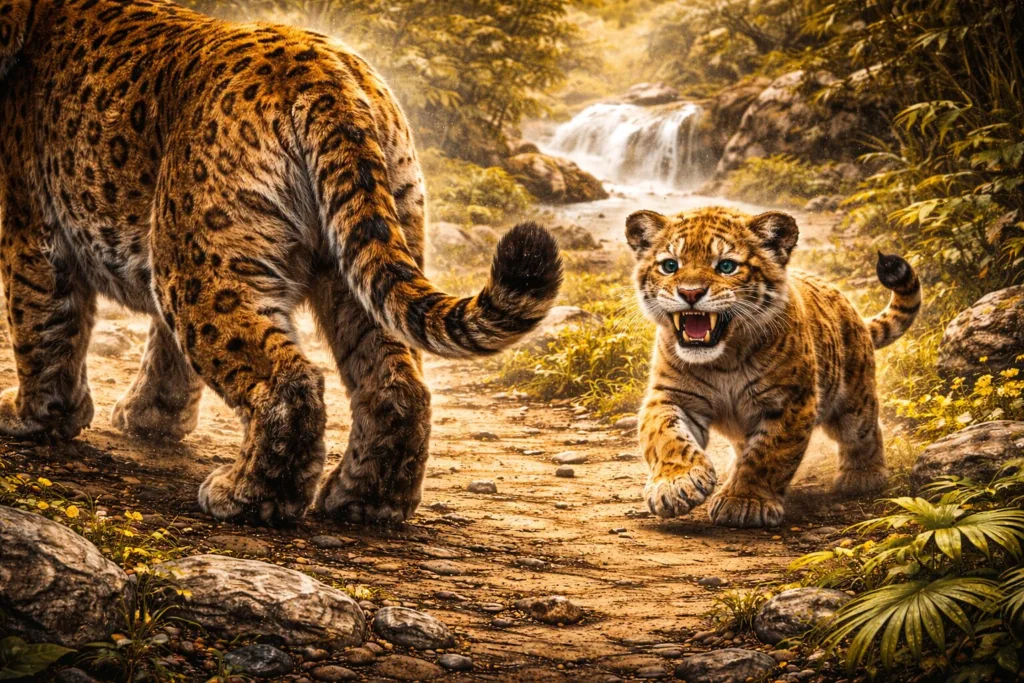
The Ice Age was a cruel geological period, where many species had to face challenges in order to survive. Species like Saber-tooth tigers, Dire wolves, Woolly Mammoths, etc. had to face the harsh climate and predators that constantly pushed the food chain. Saber-tooth tigers although were strong predators, their bite could not break bone neither were they fast runners, which meant species like Dire wolf packs could easily take on a solo Saber-tooth tiger. The cubs relied heavily on their mothers the way modern big cats do, they faced threats from large predators like bears, and other saber-toothed cats as they all competed for food. It is predicted that the cubs faced high mortality rates and only the strongest reached adulthood.
What Happened to Saber-Tooth Tiger Cubs When the Species Went Extinct?
When the Ice-age was coming to an end, so did the Saber-tooth tigers start to disappear and it is estimated that 10,000 years ago these creatures went extinct. Grown Saber-tooth tigers were struggling for survival due to prey like woolly mammoths, giant sloths, etc. disappearing and habitat loss due to melting glaciers pushing prey to extinction. The cubs being dependent on their mothers were among the first to perish during the decline and fossil record shows fewer juvenile remains near the end of their timeline. We understand that with the Ice age so did the new generation of Saber-tooth tigers perish.
Fun Facts About Saber-Tooth Tiger Cubs
- They were born without saber teeth, the teeth eventually grew out!
- Scientists have found cub teeth marks on fossil bones — they practiced biting!
- Mother Smilodons may have shared food with cubs as the cubs were entirely dependent on their mothers (just like you are as a baby)!
- According to research cubs’ first roars might have sounded more like growls or purrs.
Conclusion & Key Takeaways
Saber-tooth tiger cubs were born as small, fangless creatures just like modern big cats. They lived during the Ice Age and depended on strong mothers and their litter for learning survival skills, how to hunt, etc. Though these creatures have long gone extinct, their fossils help us imagine how life once thrived in the frozen world and how studying about extinct creatures can help us understand modern creatures like tigers and lions, to help preserve their species. Although Saber-tooth tigers will never roar again (scientists do not know if the Smilodon roared or not), every fossil tells us a story of resilience and history of a creature long gone.