
Introduction – What and Where Is The Asteroid Belt?
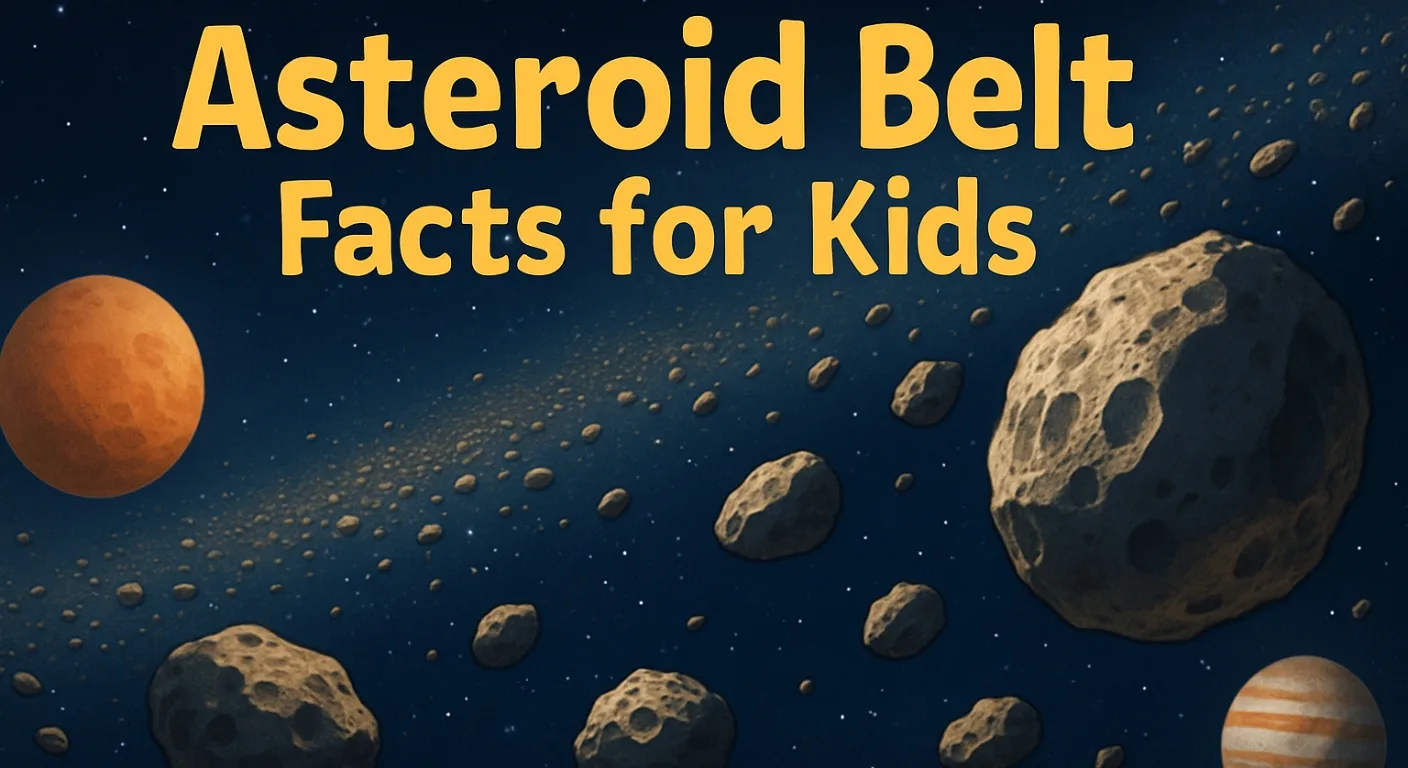
The asteroid belt is defined as a region in the Solar system which is found between the planets; Mars and Jupiter. The asteroid belt is torus-shaped (like a thin belt) and is centered around the Sun. The belt contains millions of pieces of rocks that are referred to as asteroids (also called planetoids).
What Is Inside the Asteroid Belt?
The asteroid belt consists of millions of asteroids. Asteroids are defined as minor planets and according to NASA these rocks orbit the sun between Mars and Jupiter (location of the asteroid belt). According to NASA the largest asteroid in the belt is called Ceres and it is 473 kilometers in diameter but still the largest asteroid present in the belt. The smallest asteroid that is recorded is 33 feet (10 meters). This means there are many small and large asteroids floating in the asteroid belt.
Why Does the Asteroid Belt Exist?
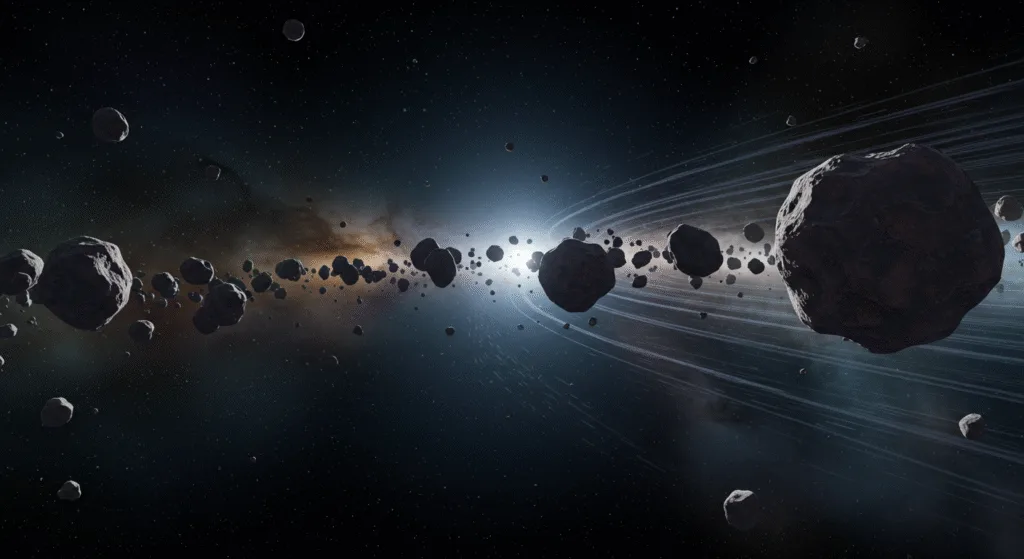
The theory that is widely accepted by astronomers is that; the asteroid belt consists of rocks and dust that was left over from the early solar system. This debris never combined to form a planet due to Jupiter’s gravitational force, this is why the asteroid belt exists.
3 Famous Asteroids in the Belt
Here are a few famous asteroids in the belt:
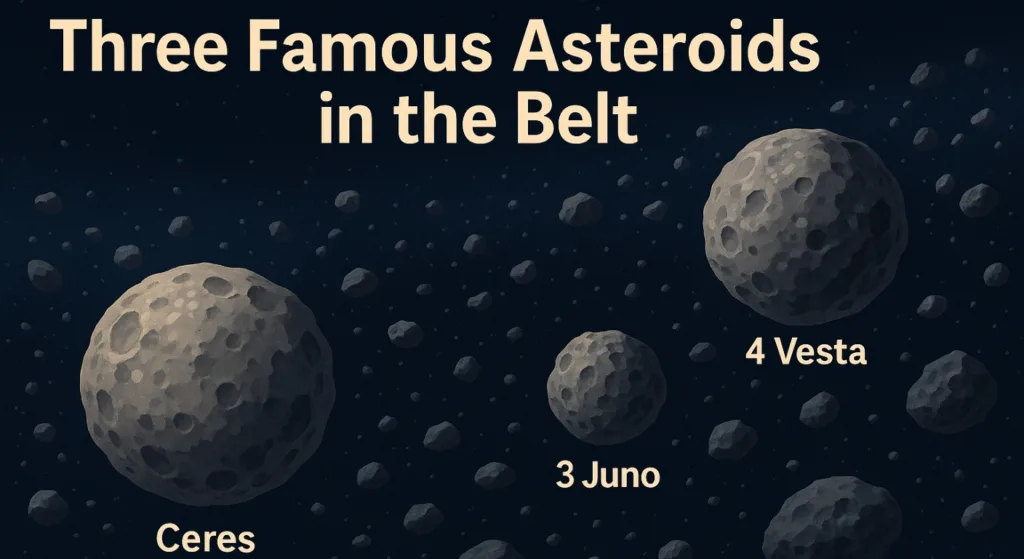
- Ceres (dwarf planet) is the first asteroid that was discovered in the asteroid belt in 1801. The asteroid is roughly 473 kilometers (293.9 miles) in diameter.
- 4 Vesta is the largest object located in the asteroid belt. The asteroid is 525 kilometres (326 miles) in diameter.
- 3 Juno is the third asteroid that was discovered in the belt in 1804. The asteroid is roughly 247 kilometers (153.4 miles) in diameter.
- 107 Camilla is also considered to be a large object floating in the asteroid belt, it is found floating in the outermost edge of the asteroid belt. The asteroid is roughly 250 kilometres (155.3 miles) in diameter.
How Do We Study The Asteroid Belt?
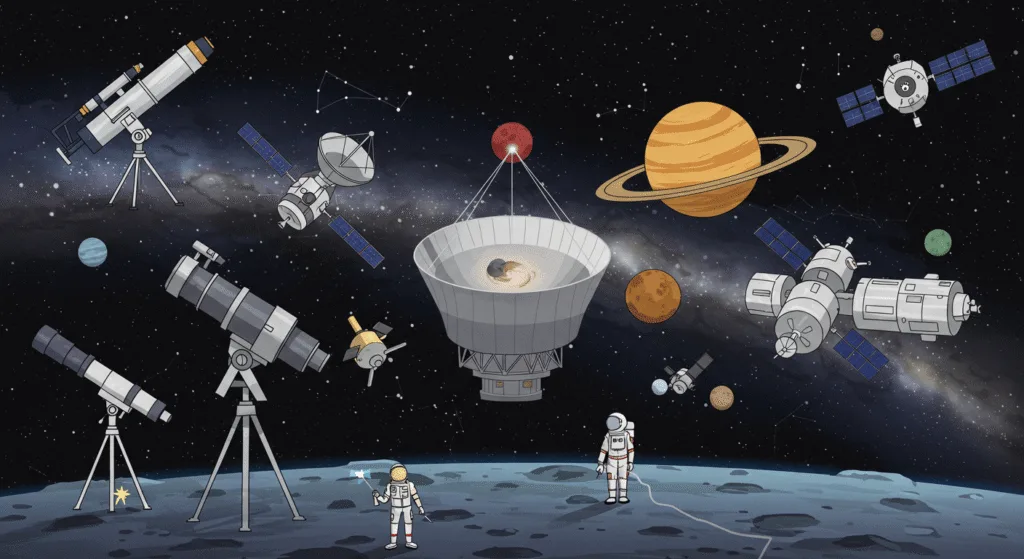
There are a couple of methods that are employed by astronomers that study the asteroid belt:
- Telescopes: Astronomers use radio and optical telescopes that are set on Earth and as well as in space. The astronomers determine composition or rotation of the asteroids present in the belt.
- Space missions:
- Dawn mission: This spaceship was launched in 2007 by NASA to study the two asteroids 4 Vesta and Ceres in.
- Pioneer 10: In 1972 NASA launched the spacecraft pioneer 10, which marked it as the first spacecraft to enter the asteroid belt. It closely studied Jupiter and its surroundings.
Can Asteroids Hit Earth?
According to NASA it is unlikely that Earth will be hit with an asteroid large enough to cause huge damage in the next 100 years. Center for Near Earth Objects Studies (CNEOS) tracks asteroids and comets, to determine if they are dangerous to Earth. Most asteroids stay in the asteroid belt, but when they enter Earth’s atmosphere they burn and are referred to as meteors. A Few notable meteors that entered the Earth’s atmosphere are :
- The Arizona Meteor Crater hit the planet Earth, 50,000 years ago and left a huge crater!
- Chelyabinsk Metro exploded in the air before crashing. This occurred in 2013, Chelyabinsk, Russia.
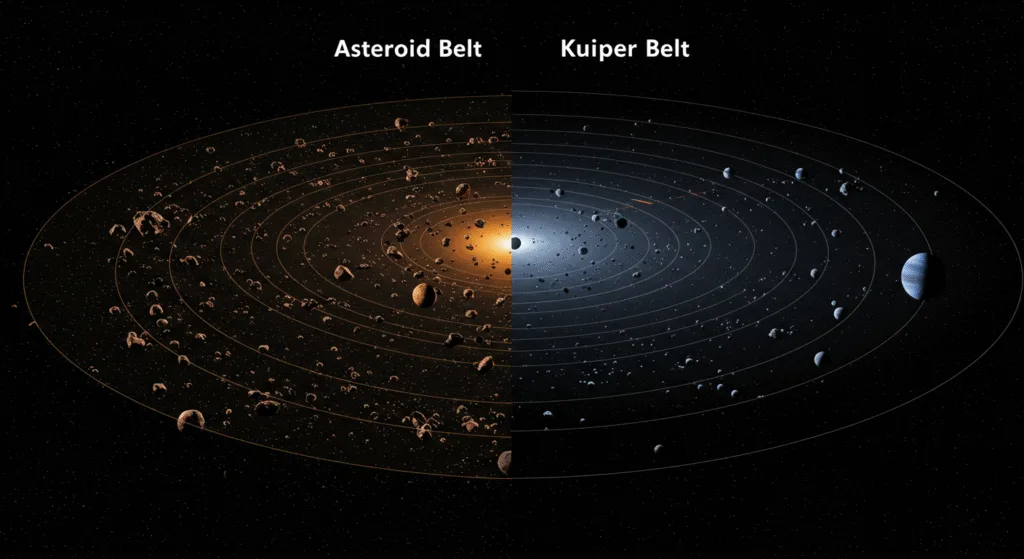
Asteroid Belt vs. Kuiper Belt
| Asteroid Belt | Kuiper Belt |
| Location: Between the planets, Mars and Jupiter | Location: Beyond the orbit of Neptune |
| Thickness: Approximately 1 astronomical unit | Thickness: Approximately 10 astronomical units |
| Consists of: Asteroids that are made of rock or stone, some contain iron or nickel as well. | Consists of: The belt consists of millions of ice bodies that are in different shapes and sizes. |
| Shape: Torus shaped (like a thin belt) | Shape: Torus shaped as well (but thick like a donut ) |
Facts About The Asteroid Belt
- Did you know the asteroid belt’s mass is 4% of the Moon’s mass?
- Did you know C-type (chondrite) asteroids are rich in carbon?
- The asteroid belt is between 2.2-3.2 astronomical units away from the sun.
- NASA spacecrafts have safely entered and exited the asteroid belt multiple times!
- There is a rock in space that is called Mr. Spock, it is a memorial for a cat.
- Asteroids have various shapes and sizes.
Conclusion
In this article we talked about the asteroid belt and I hope it sparked your interest in learning about the vast solar system. The asteroid belt is just a small part of the solar system and we should always be eager to learn about different topics. Keep reading and keep learning!
Frequently Asked Questions About the Asteroid Belt
Can a planet form in the asteroid belt?
No, a planet can not form in the asteroid belt due to there not being enough mass in the belt.
Is it dangerous for astronauts in the asteroid belt?
The asteroid belt is not dangerous! In 1972 NASA’s spacecraft entered the belt and successfully exited in 1973. Expeditions into the asteroid belt have still not been executed by scientists.
Where is the asteroid belt located?
The asteroid belt is located between the planets; Jupiter and Mars.
How thick is the asteroid belt?
It is estimated that the asteroid belt is roughly 92 million miles or 1 astronomical unit thick.
External Links
CNEOS – Center for Near Earth Objects Studies