History quick facts
- This action changed the world forever as humans learned to farm, settle, and make polished tools and weapons.
- The New Stone Age (Neolithic Period), began around 12,000 years ago , (10,000 BC to 2,000 BC ) after the Old Stone Age (Paleolithic Period).
- Keep reading to learn how these inventions built the foundations of modern life and how new stone age tools and weapons developed.
- The Neolithic (New Stone Age) begins around 10,000 BCE in Southwest Asia and spreads at different times to other regions.
What Was the New Stone Age (Neolithic Period)?
The Neolithic (New Stone Age) begins around 10,000 BCE in Southwest Asia and spreads at different times to other regions. It generally follows the Mesolithic/Epipaleolithic and is often followed by the Chalcolithic (Copper Age) where that sequence applies. From the Old Stone Age to the New Stone age major innovations had been brought to the world through:
- Farming
- Permanent homes
- Pottery
- Animal domestication
- Tools became smoother, sharper, and more specialized for example the bow and arrow became more precise and efficient with sharper flints being produced with polishing and grinding of stones being invented.
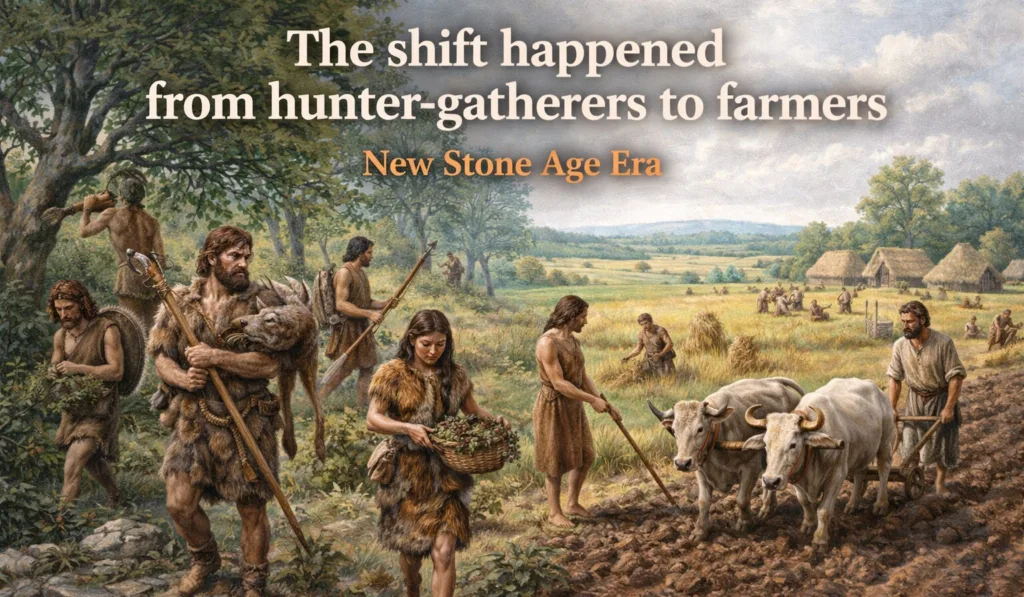
The shift happened from hunter to gatherers to farmers.
What Were New Stone Age Tools Made Of?
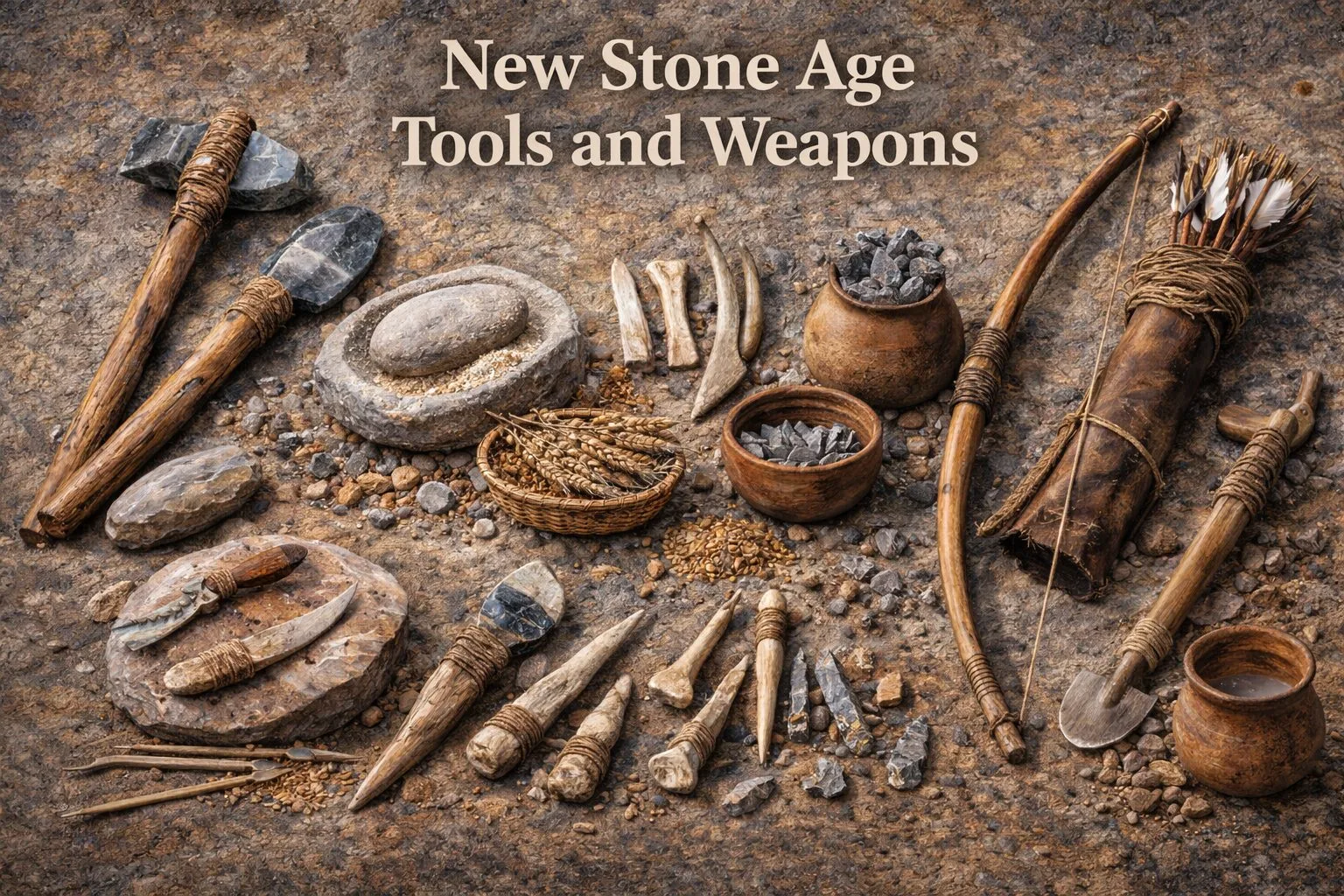
New Stone Age tools were made to similar materials as the old stone age tools and weapons for example:
- Stones were used in both new stone age and old stone age but the difference was that polished stones were invented during this time
- Different animal bones like antlers, horses, cattle, etc.
- Various types of woods were used to create axe handles, hammers, etc.
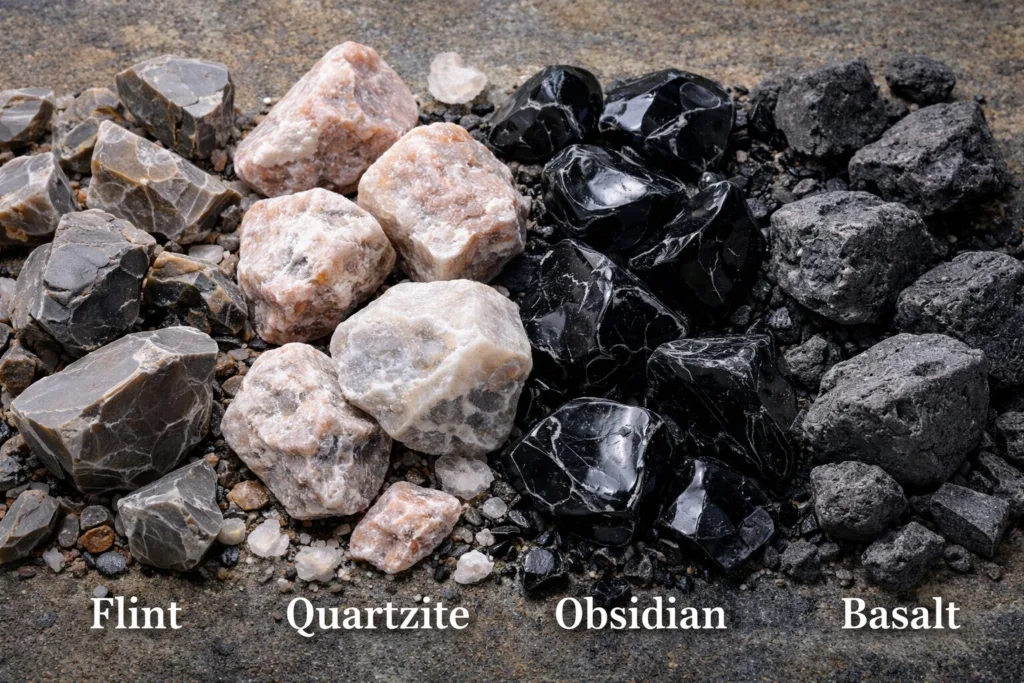
The primary stones used in the tools and weapons during the new stone age were:
- Flint
- Obsidian
- Basalt
- Jadeite
Common New Stone Age Tools and Their Uses
Here is a list of common New Age tools and their uses:
- Polished Stone Axe: Like before stone axes were used to cut trees and crush bones but other innovations were added to the list for this multi-purpose tool. It was used to construct complex houses, clear land for farming and it was better than before due to the process of being polished.
- Sickle: This was a curved blade made from flint or obsidian and was used to harvest crops like wheat and barley
- Adze: This tool was used for shaping wood, hollowing logs for canoes and for creating smooth wooden surfaces
- Chisels & Scrapers: This tool was used for carving, smoothing hides, and shaping stone or bone.
- Awls & Needles: These tools were made from bone or antler and were used for sewing leather and weaving materials.
- Grindstones & Querns: These tools were used to crush wheat grains into flour!
New Stone Age Weapons and Hunting Tools
Here is a list of New Stone Age weapons and hunting tools:
- Flint or Obsidian Blades: These were sharper, more durable blades made out of flint or obsidian, these were often fitted into wooden handles and were used for cutting meat or for combat purposes.
- Bows and Arrows: These were a major innovation in the Old Stone Age era, made for long-distance hunting and defense. These developed further in the New Stone Age era with heat treated tips made from obsidian and smoother shafts skillfully made from reeds or wood.
- Spears and Javelins: These were lighter and more balanced than their version in the Paleolithic period, which meant they could support better combat and hunting.
- Slings and Clubs: These were simple yet effective weapons, they used stones or hardened wood to shoot at small animals and birds.
How New Tools Changed Human Life
Tools and advancements created in the New Stone Age period made farming efficient which led to food surplus and eventually led to population growth! With population growth, life became more of a civilized system instead of a fight for survival. Creation of advanced weapons allowed defense of land and resources and eventually led to trade being established, like obsidian tools which were highly valued. The New Stone Age period led to specialisation of tools and not everyone hunted anymore and sparked the development of villages and civilization.
How Were Tools Made and Sharpened?
Tools were polished through the use of sand and water. While processes like hafting, which was attaching blades to wooden handles with resin or sinew, developed. The people of that time also started to heat-treat flint to make it easier to shape. For example, obsidian blades and flint were heat-treated and sharper than what they were in the Old stone age.
Art, Ritual, and Symbolic Tools
Here is a list of art, ritual, and symbolic tools in the New stone age era:
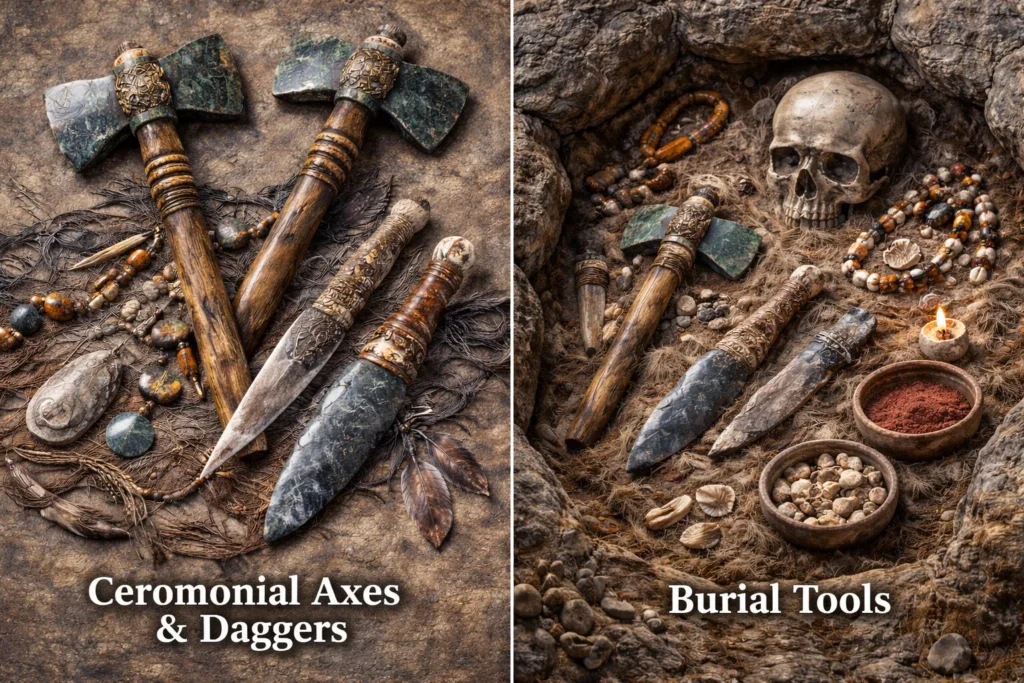
- Ceremonial Axes & Daggers: These were used in rituals, not in daily work which displays the belief of rituals and spiritualism in the New Stone Age era
- Carvings and decorations: Many carvings have been found on stones using tools, these display early art in the New Stone Age period
- Burial tools: There were tools used in burials that displayed the proof of spiritual beliefs
Famous Archaeological Finds & Locations
Here is a list of famous archaeological finds and locations that teach us a lot about the early civilizations:
- Çatalhöyük (Turkey): An early farming city was discovered here, with polished axes and obsidian blades.
- Skara Brae (Scotland): Stone houses with domestic tools were found here
- Mehrgarh (Pakistan): Here early evidence of farming and tool workshops were discovered.
- Stonehenge (England): Here polished axes and antler picks were found!
Fun Facts About New Stone Age Tools and Weapons
- New Stone Age tools developed for dual use, for hunting as well as farming!
- Did you know some stone axes were traded over hundreds of miles for their quality?
- Archaeologists could tell an ancient person’s job by the wear marks on their tools!
- Harpoons were developed later in the Neolithic period to hunt large marine animals
- Use of wood developed during this stage as it was used widely in making furniture, coffins, fire, etc.
Conclusion & Key Takeaways
The New Stone Age was a time of innovation that introduced farming to humans, which became a very important part of civilization. With ancient tools becoming better like polished stones used in axes, sickles, and bows, hunters had a higher chance of surviving brutal and dangerous encounters with wildlife. Tools and weapons evolved for both protection and warfare, and the act of survival slowly changed into civilization. It is important to note that each polished blade carried the spark of human progress and eventually turned survival into a beautiful society.
Keep learning
Continue with Miami Tribe Facts for Kids and Stone Age Facts For Kids – Learn All About Stone Age.
Did you know? This action changed the world forever as humans learned to farm, settle, and make polished tools and weapons.
Try it
Build a short timeline or concept map for History using four important details from this guide.
Knowledge check
What is one important fact about History?
Show answer
This action changed the world forever as humans learned to farm, settle, and make polished tools and weapons.