
October is the tenth month, with 31 days, but its name comes from the Latin word octo, meaning eight, because it was the eighth month of the old Roman calendar. Its birthstones are opal and tourmaline, and its birth flowers are the marigold and cosmos. It is autumn in the northern hemisphere and spring in the southern hemisphere.
October quick facts
- October’s name comes from octo, the Latin word for eight.
- October has two birthstones: opal and tourmaline.
- October’s full moon is often called the Hunter’s Moon.
- World Space Week runs from 4 to 10 October.
- In the southern hemisphere, October is a spring month.
All about October
October is the tenth month of the year, and it has 31 days. In the northern hemisphere, it is right in the middle of autumn, when leaves turn red and gold. In the southern hemisphere, October is a spring month.
October is packed with interesting things: a name with a surprising meaning, two sparkling birthstones, a week all about space, famous dates in history and, at the very end, Halloween.
| October at a glance | |
|---|---|
| Month number | 10th |
| Days | 31 |
| Birthstones | opal and tourmaline |
| Birth flowers | marigold and cosmos |
| Full moon name | the Hunter’s Moon |
| Northern hemisphere | autumn |
| Southern hemisphere | spring |
Where the name comes from
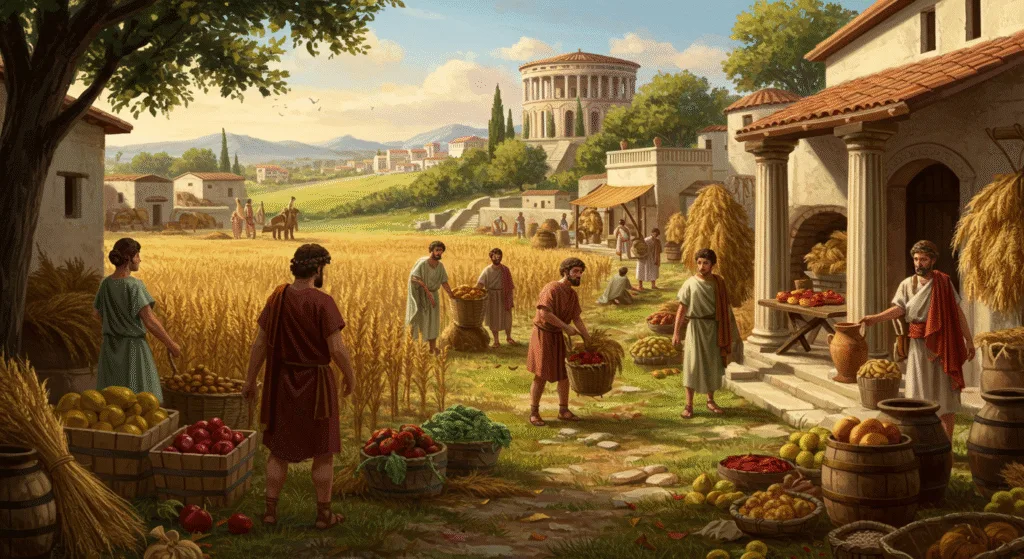
Here is a puzzle. October is the tenth month, but its name means “eight”. The Farmers’ Almanac says October comes from the Latin word octo, meaning eight.
That is because of the ancient Romans. The Farmers’ Almanac says the earliest Roman calendar had only 10 months and began in March, so October really was the eighth month.
Later, January and February were added to the start of the year. October became the tenth month, but it kept its old name. September, November and December have the same problem: their names mean seven, nine and ten.
Royal Museums Greenwich says two other months were later renamed after Roman leaders: July after Julius Caesar, and August after the emperor Augustus.
October’s two birthstones
People born in October have two birthstones. The Gemological Institute of America (GIA), a gem research organisation, says they are opal and tourmaline.
Opals are famous for flashing rainbow colours as you move them. GIA calls this effect “play-of-colour”. The name opal probably comes from upala, an old Sanskrit word meaning “precious stone”.
GIA says the ancient Greeks believed opals could help people see the future and protect them from disease. Today, Australia produces most of the world’s opal, and a place called Lightning Ridge is famous for rare black opal.
Tourmaline comes in almost every colour. GIA says its name comes from the Sinhalese word toramalli, meaning “stone with mixed colours”, because one crystal can have several colours at once.
One famous red gem in the Russian crown jewels, called “Caesar’s Ruby”, turned out to be a red tourmaline, GIA says. Most tourmaline today is mined in Brazil.
Tourmaline is the tougher stone. On the Mohs scale of hardness, GIA says opal scores 5 to 6.5, while tourmaline scores 7 to 7.5.
Flowers and the Hunter’s Moon
October has two birth flowers. The Farmers’ Almanac says they are the marigold and the cosmos.
The marigold stands for warmth, happiness and hope. The cosmos is a light, daisy-like flower that keeps blooming well into autumn.
October’s full moon has a special name too. The Farmers’ Almanac says it is often called the Hunter’s Moon.
Autumn in the northern hemisphere
In places like the UK, the USA and Canada, October is autumn. The Met Office, the UK’s weather service, says weather experts count autumn from 1 September to 30 November, which makes October the middle month.
Astronomers count it differently. The Met Office says their autumn starts at the autumn equinox, around 22 or 23 September. The equinox very rarely falls on 24 September: it last did in 1931, and will not again until 2303.
After the equinox, nights are longer than days in the northern hemisphere. The Met Office says October often brings more rain and wind to the UK from the Atlantic Ocean.
Animals get busy too. The Met Office says many birds migrate to warmer places in autumn, and squirrels gather nuts for the winter. It is also harvest time, when farmers bring in crops such as pumpkins.
People in the UK call this season autumn, while in North America they often call it fall, after the falling leaves, the Met Office says.
Why leaves change colour
Leaves are green because of a chemical called chlorophyll, which helps plants make food from sunlight. In autumn, trees stop making it.
As the green fades, other colours that were hiding in the leaf show through. The Met Office says a chemical called carotene gives yellows and oranges, while another, called anthocyanin, gives some leaves their reds.
Some years are more colourful than others. The Met Office says the brightest autumn colours come after a dry summer, followed by sunny autumn days and cold, but not freezing, nights.
Why seasons happen
Many people think autumn comes because Earth moves further from the Sun. It does not. The Met Office says seasons happen because Earth’s axis is tilted by about 23.5 degrees.
As Earth travels around the Sun, first one half, then the other, leans towards the Sun and gets more direct sunlight. The Met Office says the northern hemisphere is actually closest to the Sun in winter.
October in the southern hemisphere
Because the two halves of Earth tilt opposite ways, they have opposite seasons. NASA says that when it is autumn in the north, it is spring in the south.
NASA says the September equinox marks the start of spring in the southern hemisphere, and from then on the days get longer there. So in countries such as Australia, New Zealand and South Africa, October is a spring month, with flowers blooming and weather warming up.
World Space Week
Every year, from 4 to 10 October, the world celebrates World Space Week. The United Nations says it was created on 6 December 1999 and calls it the “largest annual space event in the world”.
The dates are special. The UN says 4 October marks the launch of Sputnik 1 in 1957, the first artificial satellite, and 10 October marks the day in 1967 when the Outer Space Treaty came into force. The 2025 theme was “Living in Space”.
NASA says Sputnik weighed 184 pounds (about 83 kg) and circled the Earth every 90 minutes. Its batteries ran out on 26 October 1957. A year later, on 1 October 1958, NASA itself opened for business. Explore more in our space facts and our Cold War facts.
Famous October dates
21 October 1805: the Battle of Trafalgar. Royal Museums Greenwich says Admiral Nelson’s 27 British ships beat 33 French and Spanish ships, but Nelson was killed on his flagship, HMS Victory.
24 October 1945: the United Nations was born, when its charter came into force. The UN says that is why 24 October is UN Day, and 2025 marked its 80th anniversary.
Last Sunday in October: in the UK, the clocks go back one hour at 2 a.m. Royal Museums Greenwich says that in 2026, this happens on Sunday 25 October, giving everyone an extra hour in bed. British Summer Time began in 1916.
Halloween and other celebrations
October ends with Halloween on 31 October, when children dress up in costumes and carve pumpkins. Discover spooky facts in our Halloween facts, and find out how it began in our Halloween history.
In the United States, Hispanic Heritage Month runs from mid-September into mid-October. Learn more in our Hispanic Heritage Month facts.
More October facts
How warm is autumn? The Met Office says the UK’s average autumn temperature is 9.71 °C, based on the years 1991 to 2020.
Tourmaline is found all over the world. GIA says that as well as Brazil, it comes from Afghanistan, Pakistan, Kenya, Madagascar and Mozambique.
World Space Week was set up by the United Nations General Assembly in a decision called resolution 54/68. It is now celebrated in countries all around the world.
Sputnik did not stay in space for long. NASA says that after its batteries ran out in October 1957, it kept circling the Earth until it fell back into the atmosphere on 4 January 1958.
The clocks change because of one man’s idea. Royal Museums Greenwich says a builder called William Willett campaigned from 1907 for clocks to change in summer. After he died, the Summer Time Act of 1916 made it law.
Opals were once thought to be magical. GIA says the ancient Greeks believed opals gave people the power to see into the future.
October is a busy month for nature. As the days shorten in the north, many birds set off on long journeys to warmer places, while in the south, spring flowers begin to bloom.
Three things people get wrong
October does not mean ten. Octo means eight, because it was the eighth Roman month.
Autumn is not caused by Earth moving away from the Sun. Seasons come from Earth’s tilt.
October is not autumn everywhere. In the southern hemisphere, it is spring.
Did you know? A famous red gem in the Russian crown jewels, called Caesar’s Ruby, is really a red tourmaline, one of October’s birthstones.
Try it
Collect fallen autumn leaves of different colours. Sort them into greens, yellows, oranges and reds, and count which colour you find most.
Knowledge check
Why is October called October?
Show answer
From octo, meaning eight; it was the eighth Roman month.
What are October’s birthstones?
Show answer
Opal and tourmaline.
Frequently asked questions
Why is October called October if it is the tenth month?
The name comes from octo, Latin for eight. The earliest Roman calendar began in March, so October was the eighth month.
What is the birthstone for October?
October has two birthstones: opal, famous for its rainbow flashes, and tourmaline, which comes in almost every colour.
What is October’s birth flower?
The marigold and the cosmos. The marigold stands for warmth, happiness and hope.
Why do leaves change colour in October?
Trees stop making green chlorophyll in autumn, so yellow, orange and red chemicals that were hidden in the leaves show through.
Is October autumn everywhere?
No. In the southern hemisphere, in places like Australia and New Zealand, October is spring.
What special events happen in October?
World Space Week (4 to 10 October), UN Day on 24 October, the clocks going back in the UK, and Halloween on 31 October.
Sources
- Farmers’ Almanac: October birth month symbols and facts — the name, the Roman calendar, birth flowers and the Hunter’s Moon
- GIA (Gemological Institute of America): October birthstones — opal and tourmaline
- Met Office: autumn — autumn dates and why leaves change colour; its 2025 and 2026 blog posts on autumn and the seasons were also used
- NASA Space Place: what causes the seasons? — opposite seasons in the two hemispheres; NASA pages on the September equinox and Sputnik were also used
- United Nations: World Space Week — dates, history and theme; its UN Day page was also used
- Royal Museums Greenwich: when do the clocks go back? — UK clocks and British Summer Time; its pages on the months and the Battle of Trafalgar were also used