Stone Age tools quick facts
- Stone tools were made by knapping: striking stone so that sharp flakes break away in a controlled pattern.
- The Acheulean hand axe was made almost unchanged for over a million years, longer than any other human technology.
- A freshly struck obsidian flake is sharper than a modern steel scalpel.
- The throwing spears from Schöningen in Germany are the oldest complete wooden hunting weapons in the world, about 200,000 years old.
- Scrapers, used to clean hides for clothing, were probably the most-used tools of the whole Stone Age.
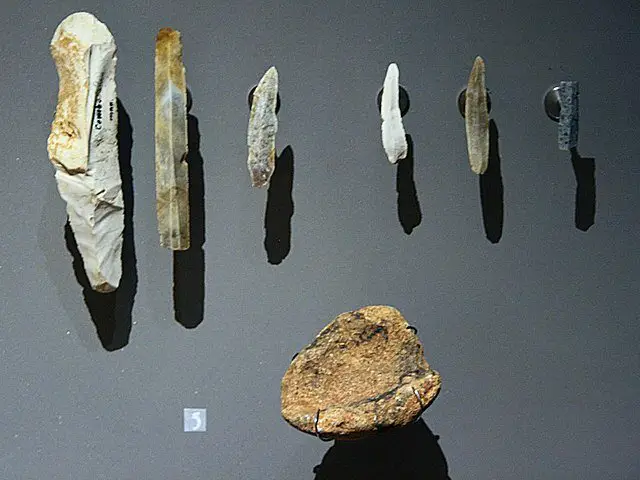
Every tool you have ever used began with a sharp piece of rock. More than three million years ago, someone worked out a trick. Hit one stone against another at the right angle, and a flake breaks off. It leaves an edge that cuts. That was the beginning of technology. People spent the next three million years getting better at it.
Stone Age tools were not crude. Some are genuinely hard to make. Modern archaeologists spend years learning to copy them, and many still produce worse work than the originals.
How stone tools were made
The craft is called knapping. You need a rock that breaks in a predictable way. That mostly means flint, chert or obsidian. These rocks fracture in smooth, curved sheets instead of crumbling. Strike one at the right spot and angle, and a flake peels away. Its edge is sharper than most kitchen knives.
Two things matter, and both are skills, not luck. First, you must read the stone before you strike and judge where it will break. Second, you must picture the finished shape while it is still hidden inside the block. Then you remove exactly the right flakes to reach it. Get one strike wrong and hours of work shatter.
The hammerstone
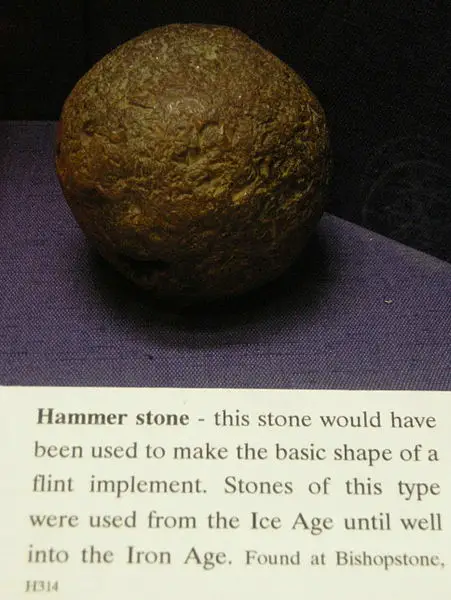
The hammerstone is the simplest tool of all, and you need it before any other. It is a rounded, tough stone used to strike flakes off another stone. It is a tool for making tools. That is a surprisingly advanced idea, and one of the oldest things humans ever did.
Later knappers used softer hammers of antler or bone for fine work. A soft hammer removes thin, controlled flakes. A stone hammer would smash straight through.
Tools got better in stages
| Toolkit | From about | What was new |
|---|---|---|
| Lomekwian | 3.3 million years ago | The oldest known tools. Big, heavy, roughly struck flakes and cores from Kenya. |
| Oldowan | 2.6 million years ago | Simple choppers and sharp flakes. Good for cutting meat off bone and cracking it open for marrow. |
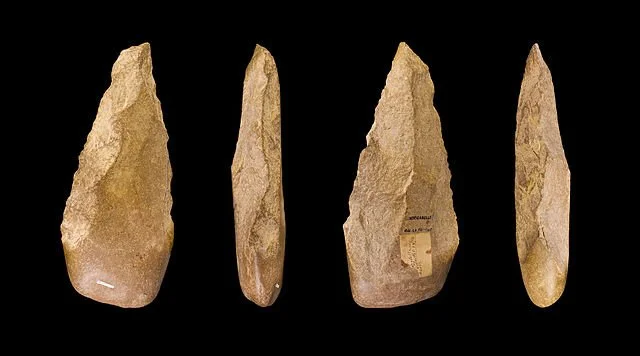
| Acheulean | 1.76 million years ago | The teardrop hand axe, worked on both faces and symmetrical. The same design was used for over a million years. |
| Mousterian | 300,000 years ago | Neanderthal toolkits. Flakes struck from a carefully prepared core, so the maker knew the shape before striking. |
| Microliths | from about 71,000 years ago | Tiny sharp blades set into wood or bone with resin to make arrows, sickles and barbed spears. |
The Acheulean hand axe is worth pausing on. The same basic design was made across Africa, Europe and Asia for more than a million years, with barely any change. No other human technology has lasted that long. Compare it with the mobile phone, which is redesigned roughly every year.
Stone Age Toolkits in Order
- Lomekwian Big, heavy, roughly struck flakes and cores, found in Kenya.
- Oldowan Simple choppers and sharp flakes for cutting meat and cracking bones.
- Acheulean The teardrop-shaped hand axe, carefully worked on both sides.
- Mousterian Neanderthal tools, struck from a core prepared so the maker knew the shape in advance.
- Microliths Tiny sharp blades glued into wood or bone to make arrows, sickles and barbed spears.
Cutting and chopping tools
The chopper
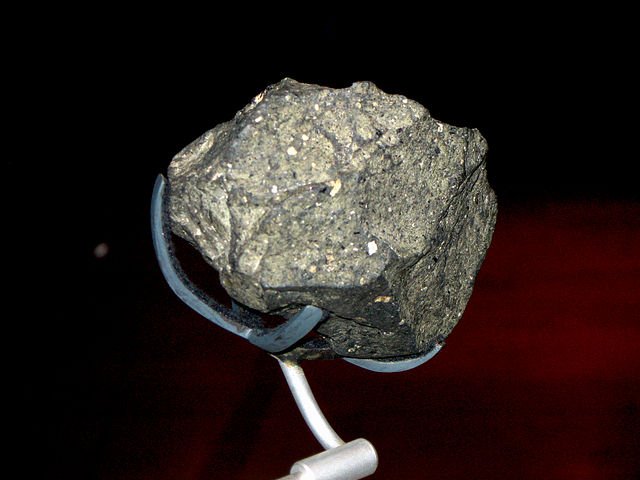
A chopper is a pebble with flakes knocked off one end to make a rough working edge. Choppers are among the oldest tools we can recognise. They did the heavy jobs: breaking bones, splitting wood and hacking through tough hide.
The cleaver
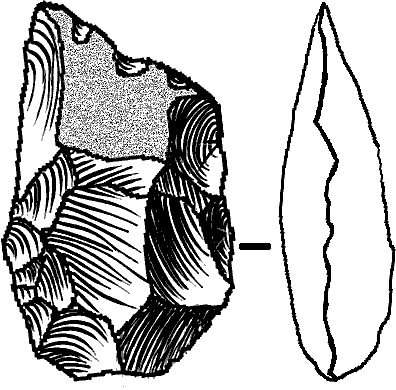
The cleaver is related to the hand axe, but it ends in a broad, straight edge instead of a point. It works like a stone version of a butcher’s cleaver. It was useful for chopping through joints and heavy plant material.
The axe
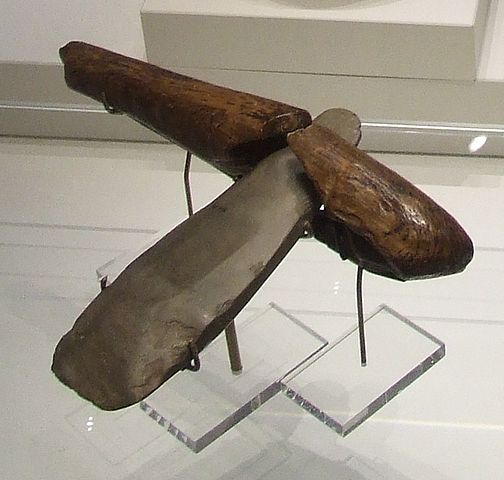
Early hand axes were held in the hand, with no handle at all. That is why the name confuses people. The hafted axe, with its head bound to a wooden shaft, came much later, in the Neolithic, or New Stone Age. It changed the landscape. Ground and polished stone axes let Neolithic farmers clear whole forests to make fields.
Experiments show that a polished Neolithic axe can fell a small tree in well under an hour. These were not feeble tools.
Hunting weapons
Sharpened sticks and spears

The oldest complete hunting weapons we have are wooden throwing spears from Schöningen in Germany. Scientists used to think they were 300,000 years old. In 2025, tests on tiny snail shells buried alongside them showed they are about 200,000 years old. The spears survived only because they lay in waterlogged ground, where wood does not rot. They are carefully shaped and balanced towards the front, like a modern javelin. Their makers understood aerodynamics without having a word for it.
Later, spears got stone tips, bound on with sinew and resin. That made them far more deadly.
Harpoons
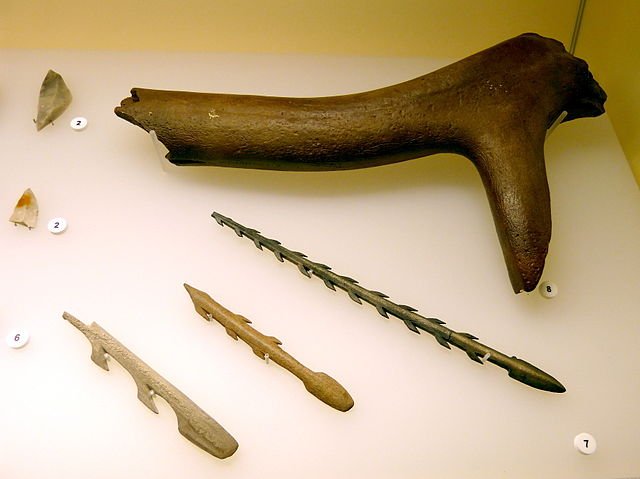
Harpoons were carved from antler or bone, with backward-facing barbs. Once the point went in, it could not slide out. People used them for fish, seals and river prey. They show a real understanding of the problem: catching an animal is easy compared with keeping hold of it.
Nets and traps
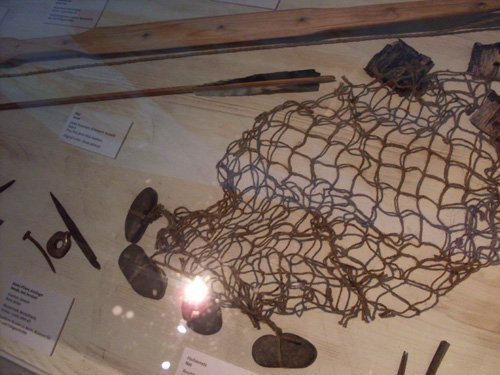
Nets almost never survive, because plant fibre rots. So they are badly under-represented in museums. But impressions of netting have been found pressed into ancient clay, and fragments turn up at waterlogged sites.
This matters, because nets and traps catch food while you sleep. They probably fed more Stone Age families than dramatic hunts ever did. Making cord and netting was likely far more important daily work than chipping flint.
Bows and arrows
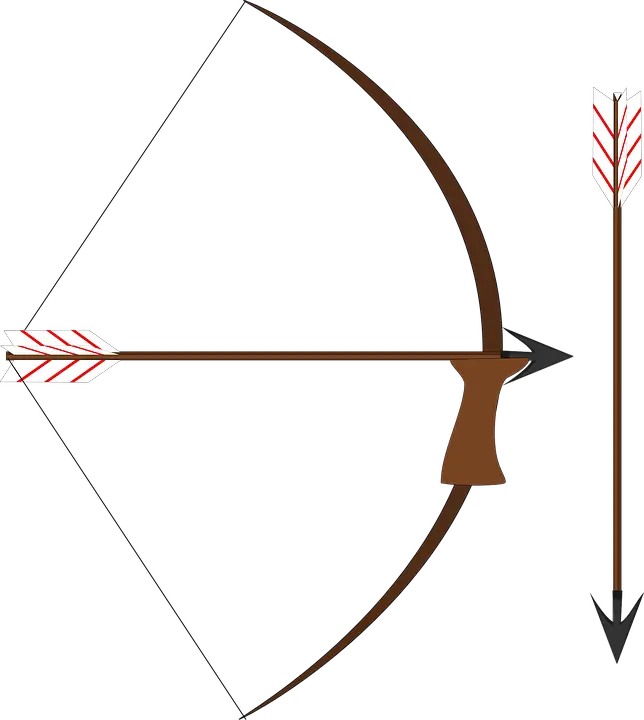
The bow is a machine. It stores the energy of your pulling arm in bent wood, then releases it in an instant. That is far faster than an arm alone can move. It let people hunt from a distance, from cover, without the danger of getting close.
Stone arrowheads had to be small, light and very sharp. Making them well is one of the hardest knapping jobs of all.
How Did Each Weapon Work?
- Schöningen spear — Thrown like a javelin, heavier towards the front
- Stone-tipped spear — A sharp stone point tied on with sinew and resin
- Harpoon — Backward-facing barbs so the point could not slide out
- Nets and traps — Caught food even while people were asleep
- Bow — Stored the pull of an arm in bent wood, then let it go in an instant
The everyday tools nobody talks about
Weapons get the attention, but most stone tools were for ordinary work:
- Scrapers for cleaning fat and flesh off hides, so they could be turned into clothing and shelter. They were probably the most-used tool of the whole Stone Age.
- Awls and burins for punching holes and engraving bone or antler.
- Needles, carved from bone with an eye drilled through. They meant fitted, sewn clothing, and so surviving cold winters.
- Grindstones for crushing seeds and grain into flour.
- Adzes, like an axe turned sideways, for hollowing out logs into canoes.
The bone needle deserves more credit than it gets. Without sewn clothing, humans could not have spread into the freezing north. A small piece of carved bone helped put people across most of the planet. Read more about how they lived in our guide to Stone Age people, and what they ate in Stone Age food.
What the tools were made from
- Flint: the favourite in Britain and much of Europe. It is common, and it breaks beautifully.
- Obsidian: volcanic glass, and the sharpest natural material on Earth. An obsidian edge can be finer than a modern steel scalpel. Some surgeons have even experimented with obsidian blades.
- Chert and quartzite: used where flint was scarce.
- Antler and bone: for soft hammers, harpoons, needles and handles.
- Wood, sinew, resin and plant fibre: the parts that almost never survive. They were probably most of what actually existed.
Good stone was worth travelling for. Flint and obsidian have been found hundreds of miles from where they were quarried. So Stone Age people were trading, or at least passing valuable stone along, over long distances.
Stone Age tools list: names and uses
Here are the Stone Age tools and weapons in one place. The table shows what each was made from and what it was used for. It makes a handy checklist for a KS2 project.
| Tool | Made from | Used for |
|---|---|---|
| Hammerstone | a rounded, tough stone | striking flakes off other stones to make tools |
| Hand axe | flint or similar stone, held in the hand | butchering, digging and woodworking |
| Chopper | a pebble with a rough edge | breaking bones, splitting wood, cutting tough hide |
| Cleaver | stone, with a broad straight edge | chopping through joints and heavy plants |
| Scraper | a stone flake | cleaning hides for clothing and shelter |
| Awl and burin | stone | punching holes and engraving bone or antler |
| Needle | bone, with an eye | sewing fitted clothes |
| Spear | wood, later with a stone tip | hunting |
| Harpoon | antler or bone, with barbs | catching fish, seals and river prey |
| Bow and arrow | wood, with small stone arrowheads | hunting from a distance |
| Net and trap | plant fibre and cord | catching animals and fish |
| Grindstone | stone | crushing seeds and grain into flour |
| Polished axe | ground stone on a wooden handle | felling trees to clear land for farms (New Stone Age) |
| Adze | a stone blade set sideways | hollowing out logs into canoes |
Things people get wrong about Stone Age tools
- “They were crude.” A well-made hand axe is symmetrical in three dimensions. It takes an experienced knapper a long time to make. People who train for years still struggle to match the best originals.
- “A hand axe is an axe with a handle.” It is held in the bare hand. Axes with handles arrived much later.
- “Stone tools are blunt.” A fresh obsidian flake is sharper than surgical steel.
- “Only stone was used.” Wood, bone, antler, sinew, resin and plant fibre were used all the time. They just rot, so museums are full of stone and nearly empty of everything else.
- “Tool design improved steadily.” The Acheulean hand axe stayed almost unchanged for over a million years.
Once people learned to smelt metal, stone tools were slowly replaced. To see what came next, read our guide to Iron Age tools, or go back to the beginning with Stone Age facts.
Which Tool Did the Job?
- Hammerstone — Knocking flakes off other stones
- Chopper — Breaking bones and splitting wood
- Scraper — Cleaning fat and flesh off animal skins
- Awl — Punching holes
- Bone needle — Sewing fitted clothes
- Grindstone — Crushing seeds and grain into flour
- Adze — Hollowing out logs to make canoes
Common questions
Which Stone Age tool came first?
The hammerstone. You need a hard stone to strike flakes off other stones before you can make anything else. The oldest known stone tools, from Kenya, are about 3.3 million years old.
What weapons did Stone Age people use?
Wooden spears, later tipped with stone, barbed harpoons for fish and seals, and bows and arrows. Nets and traps caught animals too, and they probably fed more families than hunting did.
Why do museums have so few wooden Stone Age tools?
Wood, plant fibre and sinew rot away in most ground. They survive only in waterlogged places, like the site where the Schöningen spears were found. Stone lasts, so it fills the museum cases.
Did Stone Age people trade tools?
Probably. Flint and obsidian turn up hundreds of miles from where they were quarried. That means good stone was traded, or at least passed along, over long distances.
Did you know? The bone sewing needle may be the most important Stone Age tool of all. Without fitted, sewn clothing, people could not have survived in the freezing north, so a small piece of carved bone helped humans spread across the planet.
Stone Age Tools: Fact or Myth?
- A stone hammer is the best choice for knocking off thin, careful flakes.
- Flint, chert and obsidian were chosen because they break into smooth, sharp edges instead of crumbling.
- Stone arrowheads were big and heavy.
- Scrapers were probably the most-used tool of the whole Stone Age.
- A polished Neolithic stone axe could chop down a small tree in well under an hour.
- Good stone was so easy to find that nobody ever carried it far.
- Some surgeons have tried using obsidian blades.
- Choppers were among the newest tools of the Stone Age.
Try it
Look closely at a modern kitchen knife, a pair of scissors and an axe. For each one, work out which Stone Age tool did the same job, and what material it would have been made from.
Knowledge check
What is flint knapping?
Show answer
The craft of shaping stone by striking it so that flakes break off in a controlled way. The knapper has to predict how the stone will fracture before each strike.
Were Stone Age tools blunt and crude?
Show answer
No. A freshly struck obsidian flake is sharper than a modern surgical scalpel, and a well-made hand axe is symmetrical in three dimensions and hard to copy even after years of practice.
Frequently asked questions
How were Stone Age tools made?
By knapping: striking one stone against another at a precise angle so that sharp flakes break away in a controlled pattern. It takes real skill. You must read the stone to judge where it will break, and picture the finished shape while it is still inside the block. One wrong strike shatters hours of work.
What were Stone Age tools made from?
Mostly flint, chert and obsidian, because those rocks fracture in smooth curved sheets rather than crumbling. People also used bone, antler and wood. Antler and bone made good soft hammers for fine work, because they remove thin controlled flakes where a stone hammer would smash straight through.
How old are the oldest stone tools?
About 3.3 million years. The oldest known examples come from Lomekwi in Kenya and were made before our own genus, Homo, existed. That means tool-making is older than modern humans.
Were stone tools sharp?
Extremely. A freshly struck obsidian flake is sharper than a modern steel surgical scalpel, because its edge can be just a few molecules thick. Stone tools were not crude: archaeologists who spend years learning to copy them still produce worse work than the originals.
What was the most common Stone Age tool?
Probably the scraper, used to clean animal hides so they could be made into clothing. It is not the tool people picture, but preparing skins was constant work, and scrapers turn up in enormous numbers at Stone Age sites.
What is a hand axe?
A teardrop-shaped tool worked on both faces to give a cutting edge all the way round. The Acheulean hand axe was made almost unchanged for over a million years, which makes it the longest-lasting human technology ever. It was used for butchering, digging and woodworking.
Sources
- Nature: 3.3-million-year-old stone tools from Lomekwi 3, Kenya — the date of the oldest known tools.
- Smithsonian Human Origins Program: stone tools — the Oldowan, Acheulean and later toolkits.
- The British Museum — hand axes, blades and Stone Age collections.
- English Heritage: prehistoric England — Neolithic axes and forest clearance in Britain.
- University of York: the Schöningen spears are 100,000 years younger than thought — the 2025 re-dating of the spears to about 200,000 years.
- Nature: an early and enduring advanced technology originating 71,000 years ago in South Africa — when microliths first appear.
Stone Age Tools Final Challenge
- How old are the oldest known stone tools?
- For how long was the Acheulean hand axe made with barely any change?
- Why did the wooden spears from Schöningen survive when most ancient wood rots away?
- When did axes with wooden handles appear?
- Why does the article say the bone needle helped people spread across the planet?
- Which stone was the favourite for tools in Britain?
- Why are museums full of stone tools but nearly empty of wooden ones?
- What finally replaced stone tools?