Stone Age food quick facts
- The Stone Age began about 3.3 million years ago with the first stone tools.
- Stone Age hunter-gatherers ate wild animals, fish, fruits, nuts and berries.
- Farming began in south-west Asia about 9500 BCE.
- The first farmers grew wheat and barley and kept sheep and goats.
- At Durrington Walls near Stonehenge, 90% of feast bones were from pigs.
What did Stone Age people eat?

Stone Age people ate whatever they could hunt, catch or gather. For most of the Stone Age, that meant wild animals, birds and fish, plus wild fruits, nuts, berries, roots and seeds.
Later, at the very end of the Stone Age, people began to farm. They grew grain and kept animals such as sheep, goats, cattle and pigs.
The Stone Age lasted a very long time. Britannica says it began about 3.3 million years ago, when the oldest known stone tools were made. So Stone Age food changed a lot over time and from place to place.
| Stone Age period | How people got food |
|---|---|
| Old Stone Age (Palaeolithic) | hunting, fishing and gathering wild plants |
| Middle Stone Age (Mesolithic) | hunting and gathering, as the Ice Age ended |
| New Stone Age (Neolithic) | farming crops and keeping animals |
| First farming | south-west Asia, about 9500 BCE |
| Farming reaches Britain | about 4000 BCE, finished after 3000 BCE |
Three Stone Ages
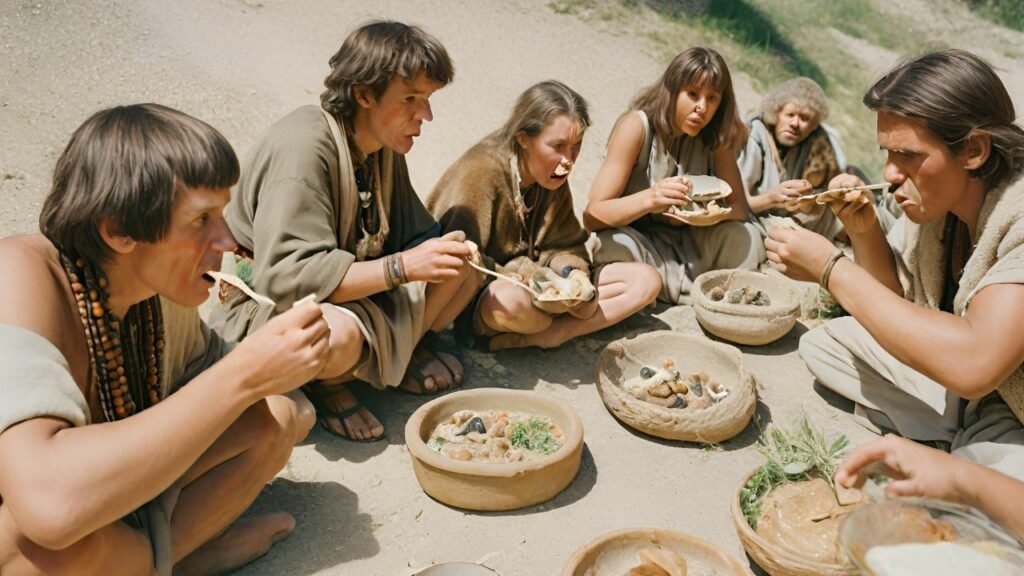
Britannica says the Stone Age is divided into three periods. They are named after the kinds of tools people made.
The Old Stone Age, or Palaeolithic: the longest period by far. It lasted from the first stone tools until about 11,700 years ago, at the end of the last Ice Age.
The Middle Stone Age, or Mesolithic: a time when people adapted to the warmer world after the Ice Age. They still hunted and gathered, but found more ways to collect food.
The New Stone Age, or Neolithic: the time when people began to farm, settle in villages and make pottery.
Hunters and gatherers
For almost all of the Stone Age, people did not farm. Britannica says that throughout the Palaeolithic, people depended on hunting wild animals and birds, fishing, and collecting wild fruits, nuts and berries.
People who live like this are called hunter-gatherers. They usually moved from place to place, following the animals they hunted and the plants that were ripe in each season.
Life depended on knowing the land well. Stone Age people had to know which plants were safe to eat, where animals went to drink, and when fruits and nuts would be ready.
Hunting for food
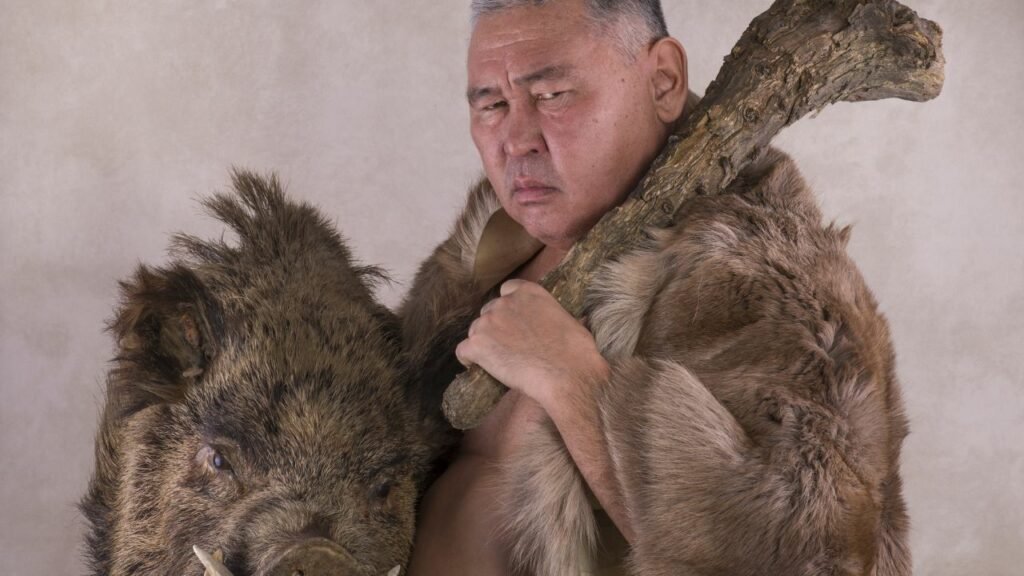
Meat was an important food, because it is packed with energy. Stone Age hunters used spears and other weapons made from wood, bone and stone.
They made sharp stone tools to cut up the animals they caught. The tools helped them scrape meat off bones and cut through tough skin.
Nothing was wasted. People ate the meat, used the skins for clothing and shelter, and turned bones into tools and needles.
Fire and cooking
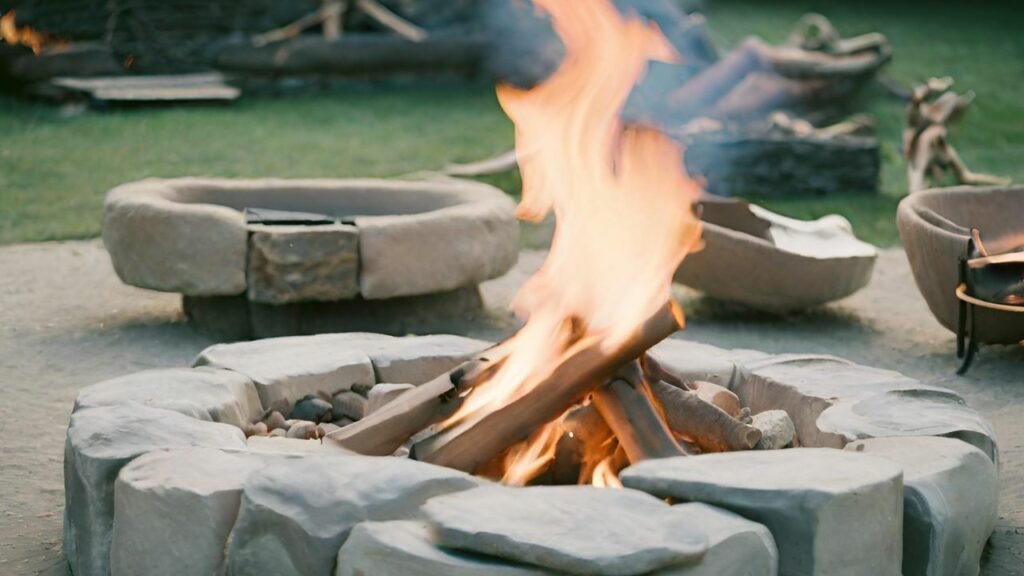
Learning to control fire was one of the biggest steps in human history. Britannica says the Middle Palaeolithic, from about 250,000 to 30,000 years ago, was a time of widespread use of fire.
Fire changed food. Cooking makes meat and many plants softer, easier to chew and safer to eat. It also kills germs.
Fire gave people warmth and light, and it kept wild animals away at night. Families could gather around the fire to cook, eat and share stories.
Pots and cooking
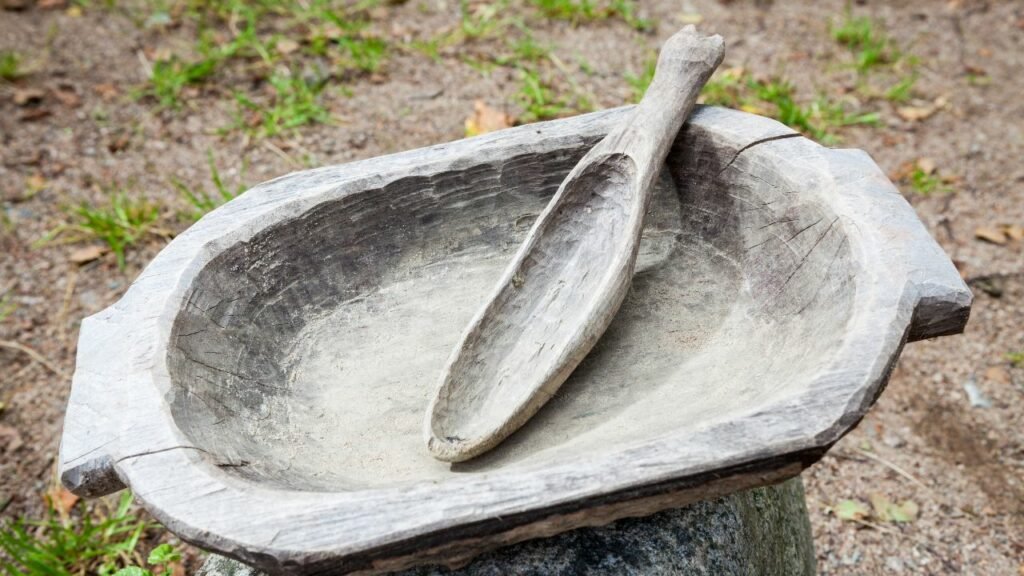
For most of the Stone Age, people had no pots. They roasted food over open fires, or cooked it on hot stones.
Pottery came much later. Britannica says making pottery was one of the new crafts of the Neolithic, or New Stone Age.
Clay pots let people boil food, make stews and store food for later. Scientists can even test the insides of ancient pots to find out what was cooked in them.
What was on the menu?
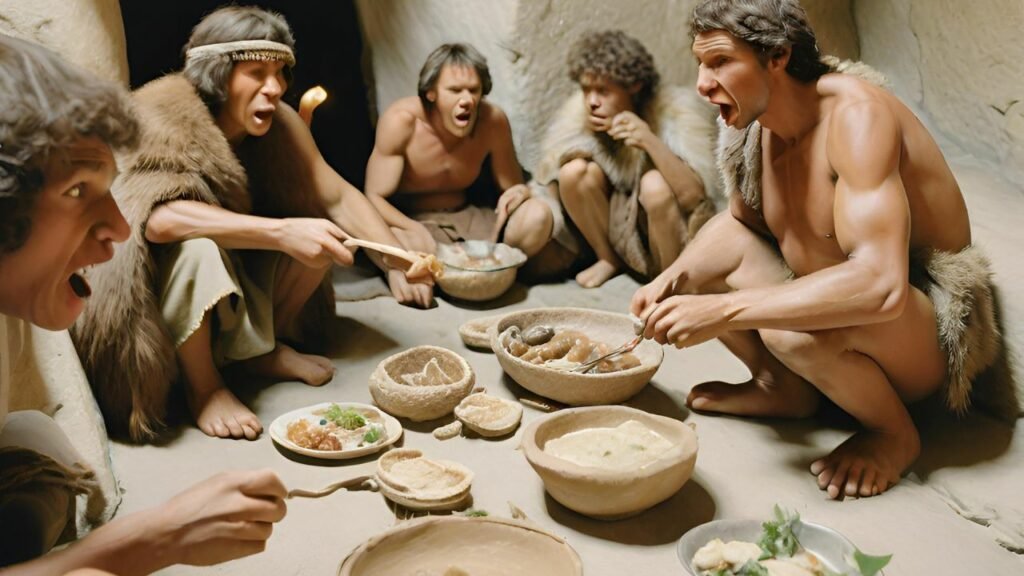
Stone Age people did not only eat meat. English Heritage says early humans ate a wide range of plants, including roots, seeds and wild grasses.
Scientists have studied the remains of early humans to learn about their meals. English Heritage says tests on one Neanderthal showed that it had eaten mushrooms, pine nuts and even moss.
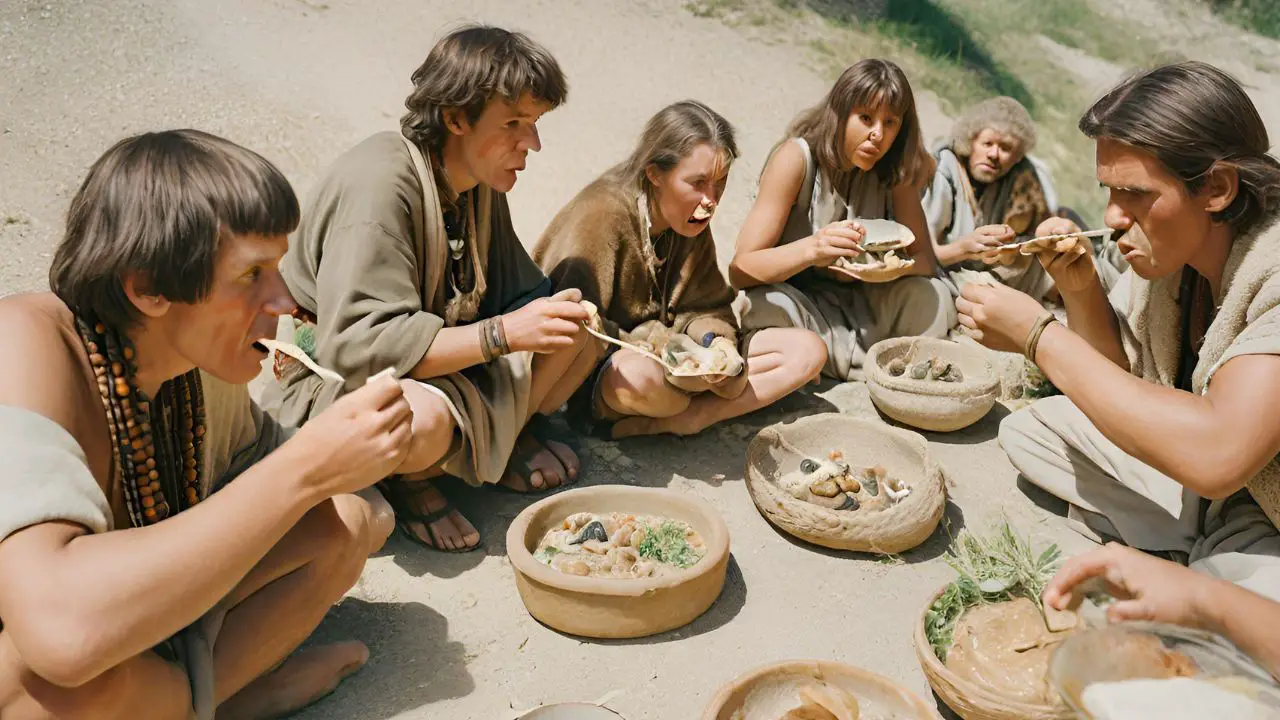
A Stone Age menu might include deer or wild boar, fish from rivers, birds’ eggs, hazelnuts, berries, wild greens and roots, depending on the place and the season.
Food in cave art
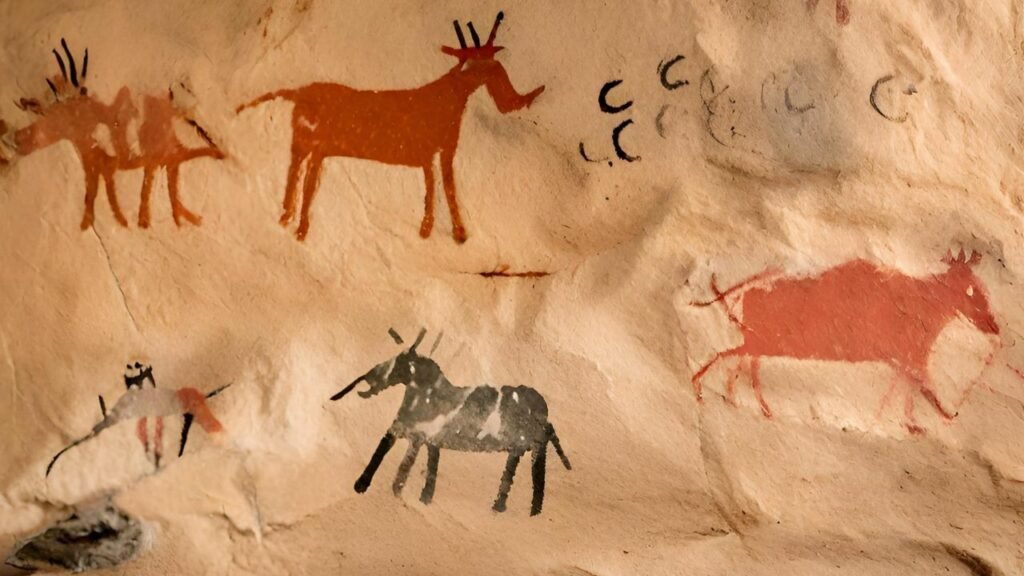
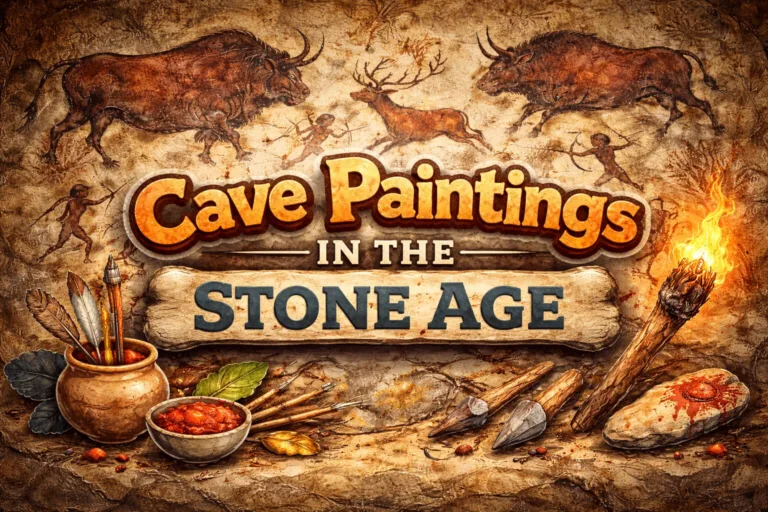
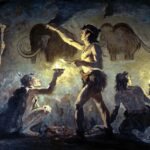
Some of the most famous cave paintings show animals that Stone Age people hunted, such as horses, deer and bison.
Britannica says some experts think these pictures of people and animals may have been part of magic ceremonies to bring success in hunting.
You can make your own cave painting. Draw an animal on brown paper using charcoal, or paints in earthy colours like red, yellow and black.
Stone Age food in Britain
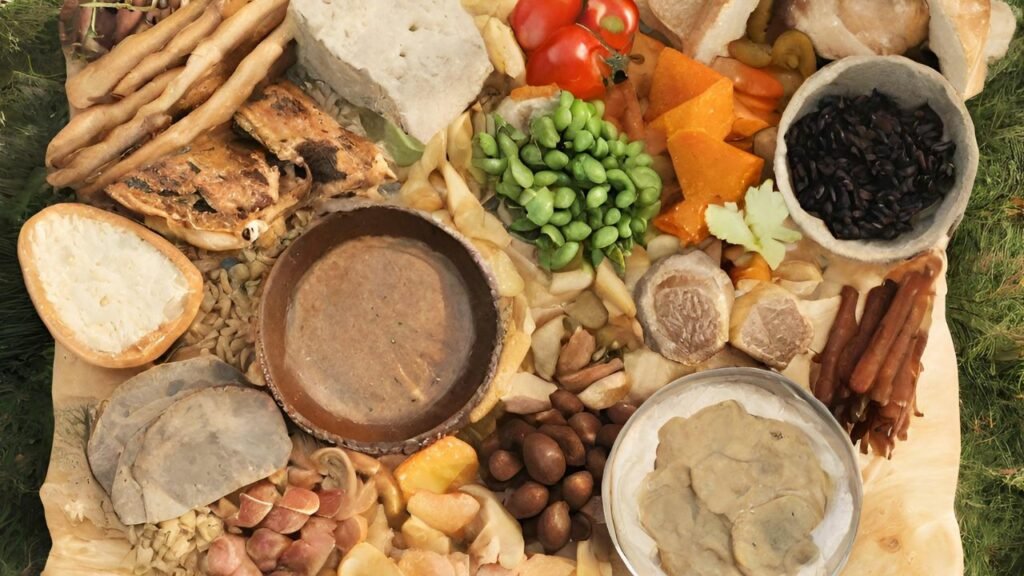
In Britain, people hunted and gathered for thousands of years. Britannica says farming spread slowly across Europe, and the change was not complete in Britain until after 3000 BCE.
English Heritage says that by the time Stonehenge was built, people in Britain had been farming for more than 1,000 years. They grew and processed cereal grains.
But they did not stop gathering wild food. English Heritage says they still collected mushrooms, berries and wild plants.
Hunting big animals
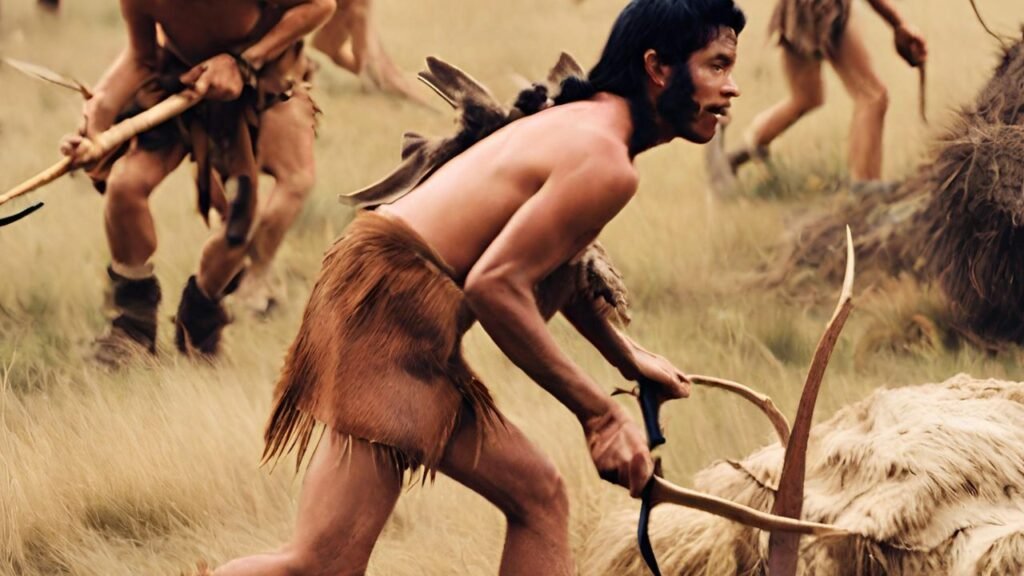
During the Ice Age, some of the animals people hunted were huge. In Europe and Asia, Stone Age hunters lived alongside woolly mammoths, giant deer and woolly relatives of today’s rhinos.
Hunting a big animal was dangerous, so people worked together in groups. One large animal could feed a whole group for a long time.
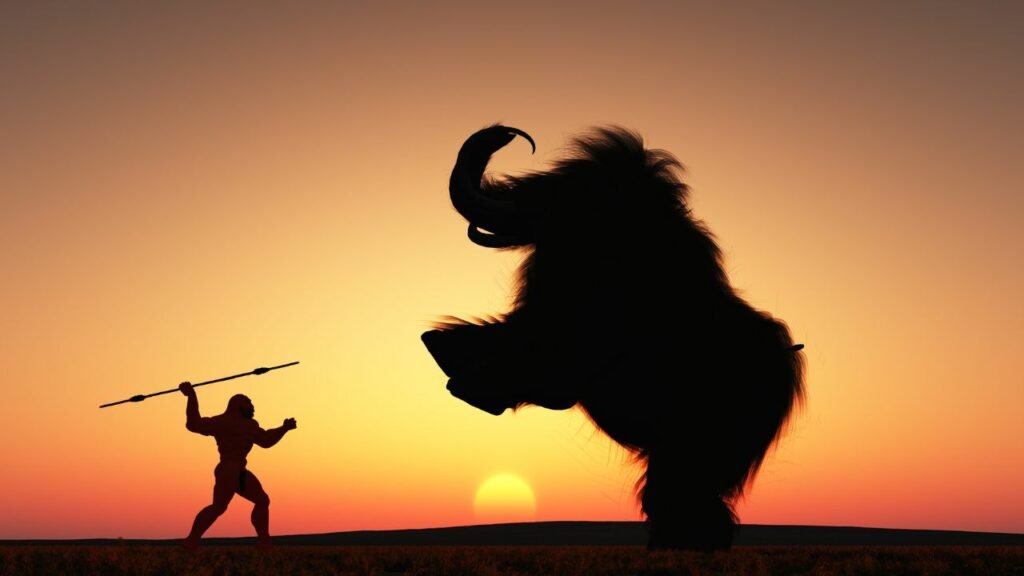
Mammoth bones and tusks were useful too. In some places, people even used them to build shelters.
Gathering and foraging
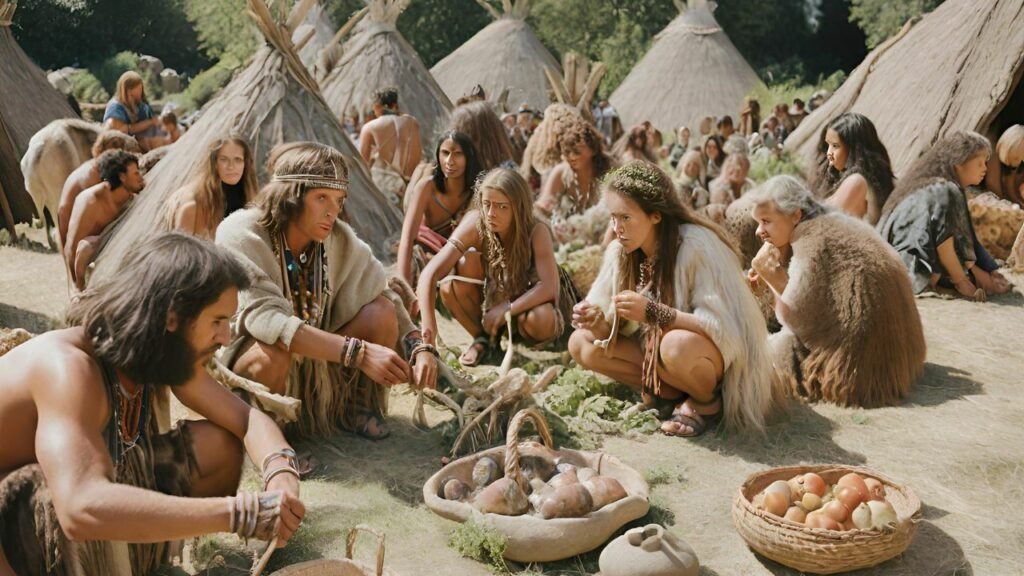
Gathering, or foraging, meant collecting wild plant foods. Britannica says Stone Age people collected wild fruits, nuts and berries.
Plant foods were a steady part of the diet. Unlike hunting, gathering did not usually fail, so it gave people food they could rely on.
In Britain, hazelnuts were an important food. They were easy to store for the winter, and people roasted them over the fire.
The first farmers
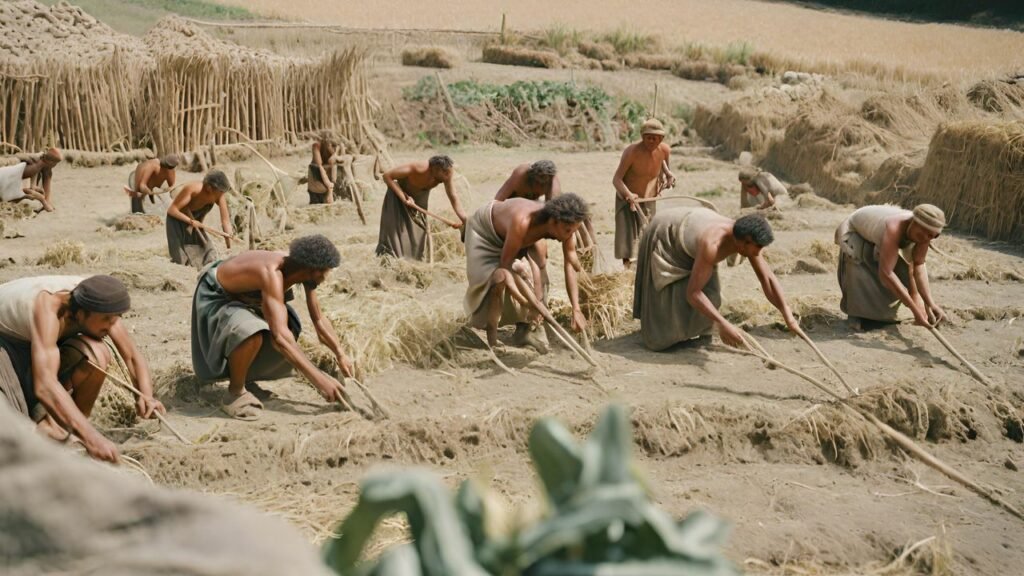
The biggest change in Stone Age food came with farming. Britannica says the Neolithic began in the Middle East about 10,000 BCE, and the first signs of growing crops and taming animals there date to about 9500 BCE.
Britannica says the earliest farmers grew barley and wheat, and kept sheep and goats. Later, they kept cattle and pigs too.
Farming spread slowly around the world. Britannica says farming villages appeared in Greece by 7000 BCE and in the Indus River valley of India by 5000 BCE. People in China grew millet and rice by about 3500 BCE.
In the Americas, farming began separately. Britannica says people in Mexico and Central America began growing maize, beans and squash from about 6500 BCE.
Farming changed everything
Once people could grow food, they did not need to keep moving. Britannica says Neolithic people built permanent homes and lived together in villages.
They made new stone tools for grinding grain into flour, by grinding and polishing hard rocks.
Growing extra food meant that not everyone had to farm. Britannica says some people were free to become skilled at crafts, such as making pottery or weaving cloth.
Feasting at Stonehenge
Some of the best evidence about Stone Age food comes from a site near Stonehenge, called Durrington Walls. English Heritage says people held great feasts there around 2500 BCE.
Archaeologists found more than 38,000 animal bones there, from at least 1,000 animals. English Heritage says 90% of the bones came from pigs, and most of the rest from cattle.
The pigs were about nine months old, and all were killed in midwinter. This suggests that people gathered for big midwinter feasts.
English Heritage says burnt pig bones show that pigs were often roasted over open fires. Cut marks on cattle bones show that beef was chopped up with flint tools.
Food from far away
Some of the pigs eaten at Durrington Walls came from a long way away. English Heritage says scientists tested the pigs’ teeth to find out where they grew up.
The tests showed that some pigs were raised in west Wales, some in northern England, and some as far away as north-east Scotland. People drove their animals hundreds of miles to join the feasts.
Milk, cheese and yoghurt
Neolithic farmers also used milk. English Heritage says about a quarter of the pots tested at Durrington Walls held traces of dairy foods, such as milk, butter, yoghurt or cheese.
There was a problem, though. English Heritage says Neolithic people could not digest fresh milk well. So they turned it into foods like cheese and yoghurt, which were easier for their bodies to handle.
How do we know?
Stone Age people did not write anything down, so scientists use clues. They study animal bones, cut marks from tools, burnt remains from fires, and stone tools.
English Heritage says scientists test the fats left in ancient pots to find out whether they held pork, beef or milk. They even study ancient human poo, more than 4,000 years old, to see what people ate.
Three things people get wrong
Stone Age people did not eat only meat. Plants, nuts, seeds and berries were a big part of their diet.
Stone Age people did not all live the same way. The first farmers lived very differently from earlier hunter-gatherers.
Farming did not start everywhere at once. It began in the Middle East and took thousands of years to spread.
Did you know? Scientists study Stone Age poo, more than 4,000 years old, to find out what people ate.
Try it
Make a Stone Age snack menu using only foods people could gather or hunt, such as nuts, berries, fish and roots. Which foods would you miss?
Knowledge check
What is a hunter-gatherer?
Show answer
Someone who gets food by hunting animals and gathering wild plants.
What did the first farmers grow?
Show answer
Wheat and barley.
Frequently asked questions
What did Stone Age people eat?
They ate wild animals, birds and fish, and gathered wild fruits, nuts, berries, roots and seeds. Later, farmers grew grain and kept animals.
Did Stone Age people cook their food?
Yes. Fire was widely used from about 250,000 years ago. People roasted meat over fires and later cooked in clay pots.
When did Stone Age people start farming?
Farming began in south-west Asia about 9500 BCE and spread slowly. In Britain, the change was not complete until after 3000 BCE.
What animals did the first farmers keep?
Britannica says the earliest farmers kept sheep and goats, and later cattle and pigs. They also used milk for cheese and yoghurt.
Did Stone Age people eat only meat?
No. They ate many plants too, including roots, seeds, wild grasses, nuts, mushrooms and berries, as well as meat and fish.
How do we know what Stone Age people ate?
Scientists study animal bones, tool cut marks, burnt remains, food traces left in pots and even ancient human poo.
Sources
- Encyclopaedia Britannica: Stone Age — the three periods, the first tools and how Palaeolithic people got food
- Encyclopaedia Britannica: Neolithic — the first farming, crops and animals, villages, grinding tools, pottery and how farming spread
- Encyclopaedia Britannica: Paleolithic Period — the widespread use of fire and hunting in cave art
- English Heritage: food and feasting at Stonehenge — Durrington Walls feasts, pigs and cattle, where animals came from, dairy, cereals, wild foods and how scientists know