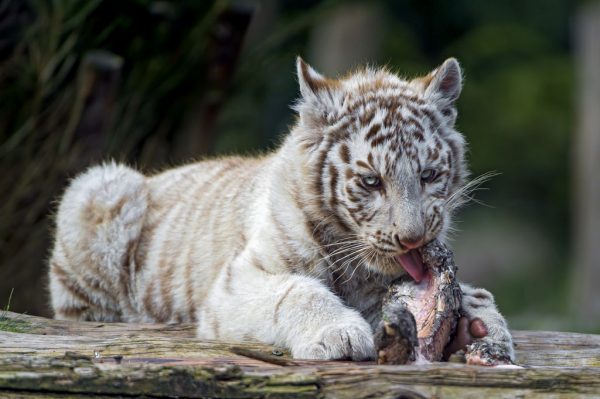
White tiger quick facts
- A change to just one letter of DNA, in a gene called SLC45A2, turns a tiger’s orange fur white. Scientists found it in 2013.
- The same gene affects colour in people, horses and chickens.
- Two orange tigers can have a white cub if both of them secretly carry the white gene.
- The last white tiger known in the wild was shot in India in 1958.
- In 1960 a white tigress called Mohini of Rewa was presented to US President Eisenhower on the White House lawn.
A Bengal tiger with a missing colour
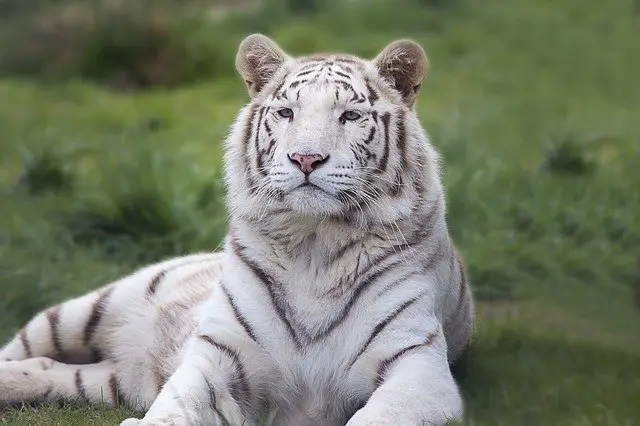
A white tiger is a tiger with creamy white fur and dark stripes. It is not a different animal from an orange tiger. It belongs to the same species, Panthera tigris, and scientists describe it as a variant of the Bengal tiger of India.
A variant is an ordinary animal that happens to look different from most of its kind. Think of a person with red hair, or one ginger kitten in a litter of tabbies. The difference is real, but it is only skin deep.
Underneath the fur, a white tiger is a tiger in every way. It has the same body, the same teeth and the same need for meat. Most facts about tigers are true of white tigers too.
So what makes one tiger white and another orange? For a long time, nobody could say.
The gene that turns orange fur white
In 2013 a team led by Luo Shu-Jin at Peking University in China found the answer. They published it in the science journal Current Biology.
The team studied a family of 16 zoo tigers, some white and some orange. They read the whole DNA of the three parents. Then they checked their result in 130 more tigers that were not related to one another.
They found one tiny change in a gene called SLC45A2. A gene is a set of instructions, written in DNA, for building one part of the body. This gene helps to make pigment, the natural colouring in fur, skin and eyes.
The change is just one letter of DNA. It swaps one building block in a protein for a different one. That protein is made of about 560 building blocks, so a white tiger and an orange tiger differ by a single swap.
Tigers make two kinds of pigment. One kind is red and yellow, and it gives the fur its orange. The other kind is black, and it colours the stripes and the eyes. The changed gene blocks the red and yellow pigment but leaves the black alone. The orange disappears, and the dark stripes stay.
The same gene affects colour in people, horses and chickens. In people, it is one of the genes that help decide the colour of skin and hair.
How two orange tigers can have a white cub
Every tiger has two copies of the SLC45A2 gene. One comes from its mother and one from its father. The white version is recessive, which means it only shows when a cub gets the white version from both parents.
A tiger with one white copy and one orange copy looks completely orange. It is called a carrier, because it carries the white gene without showing it. When two carriers have cubs, each cub has a one in four chance of being white.
| Parents | Chance that each cub is white |
|---|---|
| Two orange tigers with no white gene | none |
| One carrier and one tiger with no white gene | none, but about half the cubs will be carriers |
| Two orange carriers | 1 in 4 |
| One white tiger and one carrier | 1 in 2 |
| Two white tigers | every cub |
This is why white tigers were so rare in the wild. A carrier had to meet and mate with another carrier, and even then most of their cubs were orange.
It is also how people made more of them. Close relatives often carry the same genes, so breeders paired white tigers with their own family members. That shortcut worked, but it came at a cost, which you can read about further down.
Not an albino: blue eyes and dark stripes
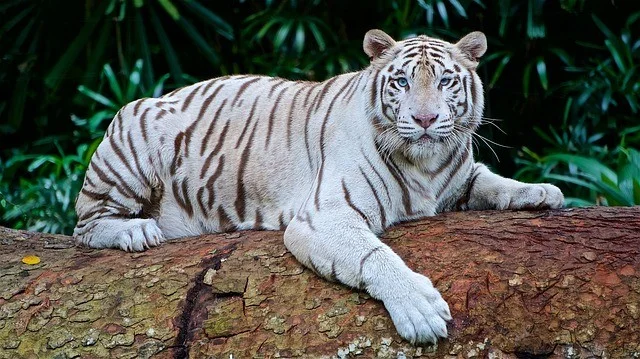
Many people think a white tiger is an albino. It is not. An albino animal makes little or none of the dark pigment called melanin, so it has pale fur and pink eyes.
A white tiger still makes dark pigment. You can see it in the stripes and in the eyes. San Diego Zoo Wildlife Alliance describes white tigers as white and tan with blue eyes, and points out that true albinos have pink eyes.
| White tiger | Orange tiger | Albino animal | |
|---|---|---|---|
| Fur | white to pale cream | orange, with a white belly | white or very pale |
| Dark stripes or markings | yes | yes | no |
| Eyes | usually blue | yellow to amber | pink or red |
| Cause | two copies of the changed SLC45A2 gene, which blocks red and yellow pigment | ordinary genes | genes that stop almost all dark pigment |
The stripes are the easiest clue. They are made of the very pigment an albino cannot make, so an animal with dark stripes cannot be an albino.
Colour variants turn up in other big cats as well. Some leopards and jaguars are born almost black, and people often call them black panthers. Like white tigers, they are not a separate species.
What a white tiger looks like
A white tiger’s coat ranges from bright white to pale cream. Its stripes are dark grey, brown or black, and no two tigers have the same pattern. Most white tigers have blue eyes. The Smithsonian described the white tigress Mohini as “ice-blue eyed” when she arrived in Washington in 1960.
How big is a white tiger? White, orange and Siberian tigers compared
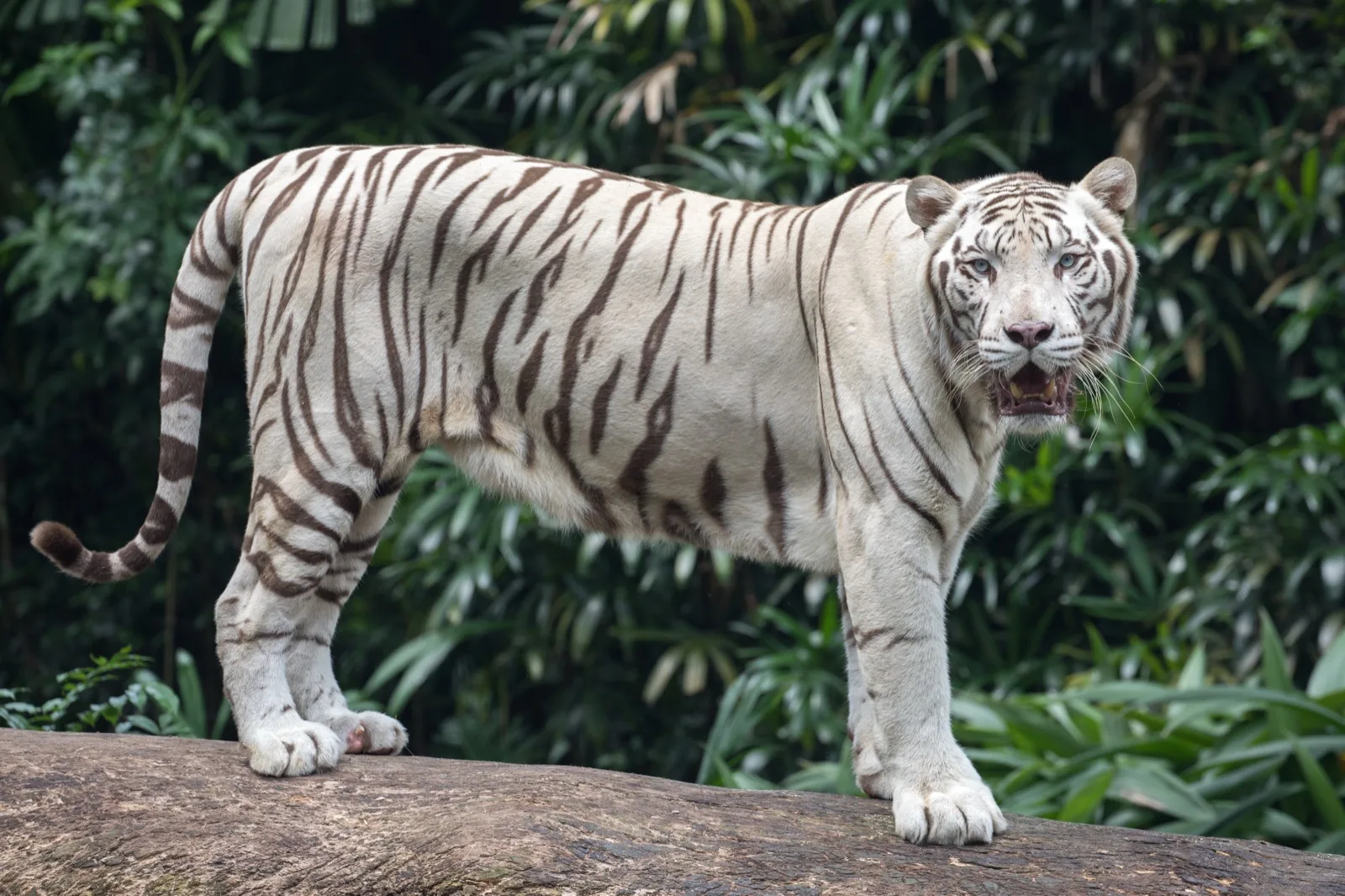
A white tiger is exactly as big as an orange Bengal tiger, because it is one. San Diego Zoo Wildlife Alliance says a male Bengal tiger can be up to 3.2 metres (10.5 feet) long and weigh up to 295 kg (650 pounds). That is about as heavy as four grown men. Females are smaller.
The biggest tigers of all are Siberian tigers, also called Amur tigers. A male can be 3.7 metres (12 feet) long and weigh up to 423 kg (933 pounds). Many white tigers in zoos have some Siberian ancestors, so their size can vary.
| White tiger | Orange Bengal tiger | Siberian (Amur) tiger | |
|---|---|---|---|
| Longest males | up to about 3.2 m (10.5 ft) | up to 3.2 m (10.5 ft) | up to 3.7 m (12 ft) |
| Heaviest males | up to about 295 kg (650 lb) | up to 295 kg (650 lb) | up to 423 kg (933 lb) |
| Coat | white to cream, with dark stripes | orange, with brown or black stripes | paler orange, fewer stripes, long thick fur |
| Where it lives | zoos and safari parks; none known in the wild since 1958 | forests and wetlands of India, Bangladesh, Bhutan and Nepal | snowy forests of eastern Russia and north-eastern China |
Some websites claim that white tigers grow bigger or faster than orange ones. We could not find good evidence for that, so treat it with care.
How long do white tigers live?
Nobody has published a study of how long white tigers live, so the best guide is tigers in general. San Diego Zoo Wildlife Alliance says tigers live about 16 years on average.
A tiger cub weighs about 1 kg (2.2 pounds) at birth, about the same as a bag of sugar. It is grown up at 3 to 6 years old.
White tigers have one extra worry. Most were bred by pairing close relatives. The AZA’s 2011 paper lists a shorter lifespan and cubs born dead among the risks of heavy inbreeding. Nobody has measured how often that happens in white tigers.
Our guide to how long tigers live explains why some tigers live much longer in zoos than in the wild.
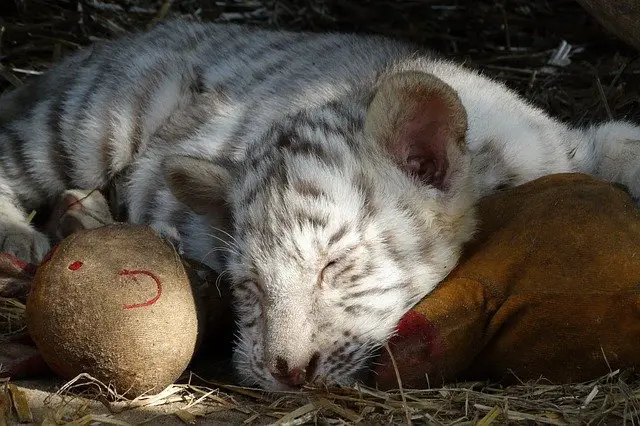
Mohan, the white tiger of Rewa
The most famous white tiger of all was called Mohan. His story begins in Rewa, a former kingdom in central India that is now part of the state of Madhya Pradesh.
On 27 May 1951, the Maharaja of Rewa, Martand Singh, caught a white tiger in the Bargadi forest, in what is now Sidhi district. The tiger was taken to Govindgarh Palace in Rewa.
He did not stay long. The Rewa district government says he escaped the very next day. He was found again near Mukundpur, about 26 km (16 miles) away.
Mohan became the start of a family line. Breeders paired his relatives with one another to keep the white gene going, and the district government says his descendants gradually spread to other parts of the world. Many of the white tigers in zoos today can trace their family tree back to him.
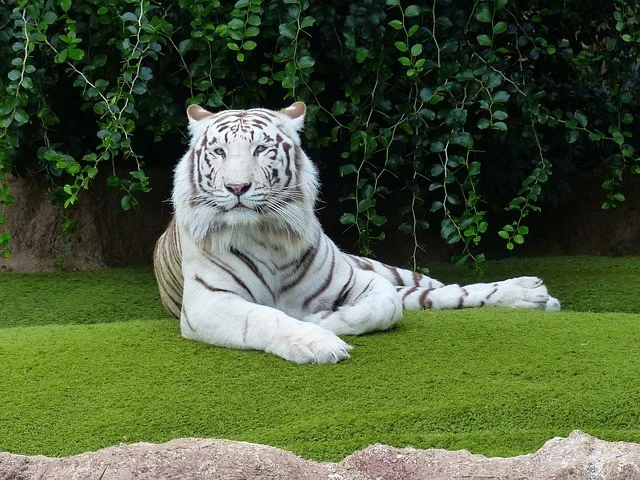
One of those tigers went a long way. On 4 December 1960, a white tigress called Mohini of Rewa arrived at the Smithsonian’s National Zoo in Washington, D.C. She was a gift from a New York broadcasting company and a man named Ralph Scott. The company’s president, John Kluge, presented her to President Dwight D. Eisenhower on the White House lawn.
If you are looking for names of white tigers, Mohan and Mohini are the two that history remembers best.
Where white tigers live today
Today white tigers live only where people look after them: in zoos, wildlife parks, safari parks and private collections around the world. None is known to live wild. No wild white tiger has been confirmed since 1958.
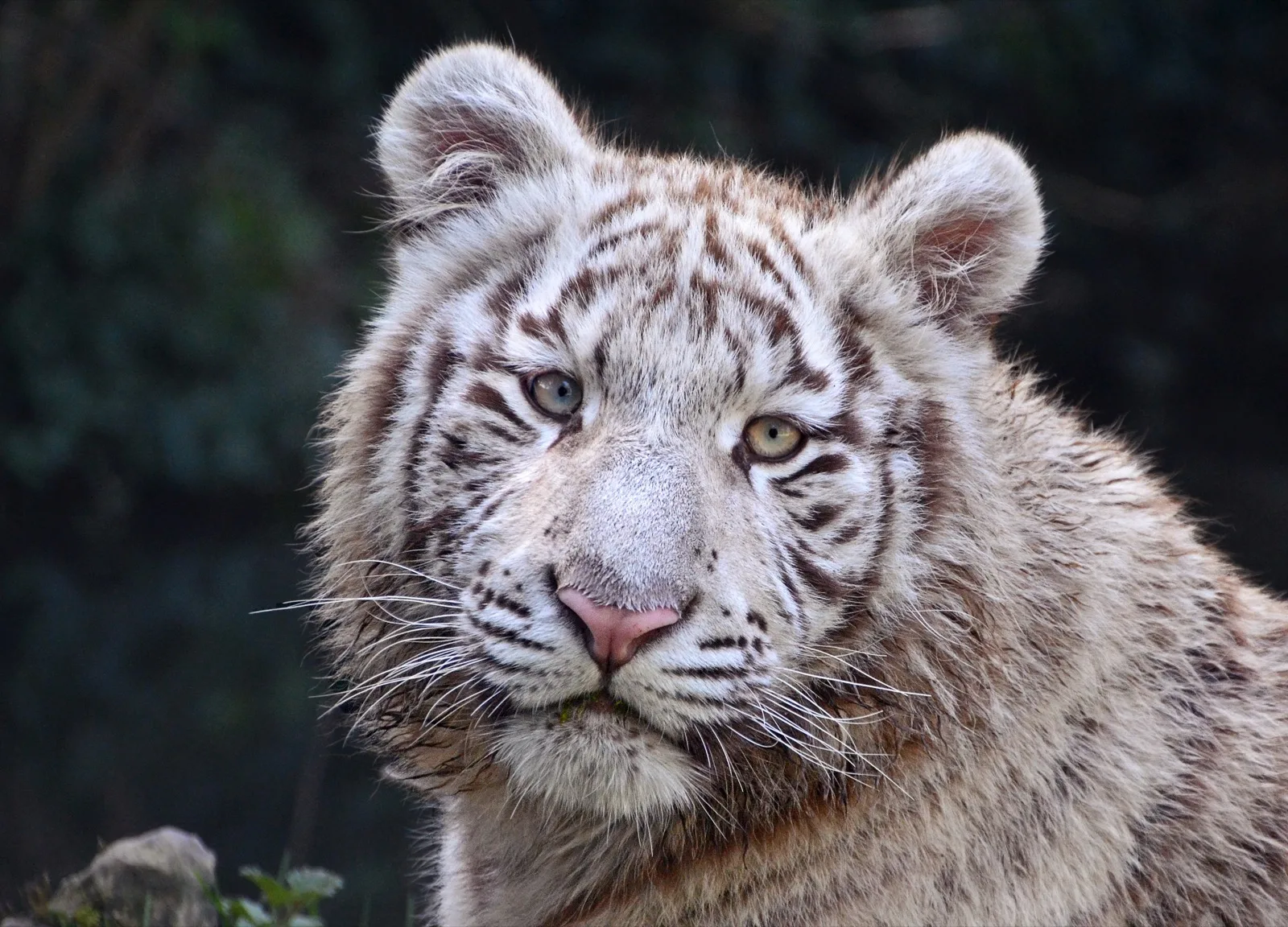
In India you can still visit Mohan’s home ground. The Rewa district government lists a White Tiger Safari at Mukundpur, the area where Mohan was found after his escape. He lived there for more than twenty years, and his descendants spread from there to other parts of the world.
If white tigers still lived wild, they would share the home of orange Bengal tigers. San Diego Zoo Wildlife Alliance says Bengal tigers live in the forests and wetlands of India, Bangladesh, Bhutan and Nepal.
| Place | Are there white tigers? |
|---|---|
| The wild, in India, Bangladesh, Bhutan and Nepal | none known since 1958 |
| White Tiger Safari, Mukundpur, India | yes, on the ground where Mohan lived |
| Zoos accredited by the AZA, mostly in the United States | only white tigers rescued from elsewhere; they are no longer bred there |
| Other zoos, safari parks and private collections | yes, in many countries, but nobody keeps a full count |
White tigers in the wild
White tigers were always rare in the wild. The Association of Zoos and Aquariums, known as the AZA, says the white colour appeared only rarely in wild tigers. Old hunting records from India mention more of them, but those records are hard to check.
The last white tiger known in the wild was shot in 1958, according to National Geographic. No wild white tiger has been confirmed since then. Every white tiger known today was born in captivity.
Could white tigers live wild again? Scientists disagree. The Peking University team called the white colour a natural variation that can survive in the wild. They even suggested that white tigers could help to rebuild wild Bengal tiger populations. Other experts are doubtful, for reasons that start with hunting.
Does white fur make hunting harder?
A tiger hunts by ambush. It creeps close, keeps still in cover, and then rushes out in a short burst. San Diego Zoo Wildlife Alliance says a tiger may stalk its prey for 20 or 30 minutes before it attacks.
You might expect a white coat to spoil all that. A polar bear is white because it lives on snow and ice. A white tiger has no snow to hide in, so it ought to stand out in a green forest.
It may not be that simple. The Peking University team pointed out that tigers hunt prey that is colour-blind. Deer do not see colours the way we do, so to a deer, a white tiger may not look very different from an orange one.
Other scientists worry about the tiger’s own eyes. National Geographic reported the view of the geneticist Greg Barsh. People and animals with changes in SLC45A2 often have poor eyesight, and white tigers have unusual connections between their eyes and brain. Barsh thought this probably did make life harder for white tigers in the wild.
The AZA adds that many white tigers have crossed eyes, which makes it hard to judge distance. A tiger that misjudges its pounce goes hungry. The honest answer is that nobody knows how well white tigers hunted, because too few were ever studied in the wild.
What a white tiger eats is no mystery, though. It needs meat, exactly like an orange tiger. Our guide to what white tigers eat covers wild prey and zoo meals in detail.
What inbreeding did to white tigers
Because the white gene is rare, the quickest way to get more white cubs was to breed relatives together. This is called inbreeding. It means breeding animals that are closely related, such as brothers and sisters, or parents and their own grown-up cubs.
Inbreeding brings out rare genes, and not only the ones breeders want. Every animal carries a few harmful recessive genes that do no damage while there is only one copy. Inbreeding makes it much more likely that a cub gets two copies of them.
The AZA’s 2011 paper lists health problems that have been found in white tigers. They include:
- crossed eyes, known as strabismus, which spoil a tiger’s sense of distance
- a ring of blood vessels around the windpipe and food pipe, which can make swallowing difficult
- changes to the shape of the skull
- cleft palate, a gap in the roof of the mouth
National Geographic mentioned other problems reported in inbred white tigers, including club feet and hip or spine trouble.
Scientists still argue about the cause. Some blame the white gene itself, because changes in the same gene cause eye problems in other animals. The Peking University team think most of the harm comes from inbreeding, not from the colour. Both sides agree that heavy inbreeding is bad for tigers.
Is a white tiger a snow tiger?
People sometimes call white tigers snow tigers. It is a nickname, not a scientific name, and it mixes up two different kinds of tiger.
The tigers that really live in snow are Siberian tigers, also called Amur tigers. San Diego Zoo Wildlife Alliance says they live in the snowy forests of eastern Russia and north-eastern China. Their coats are paler orange, with fewer stripes, which helps them blend in. Their fur grows long and thick, and a layer of fat keeps them warm.
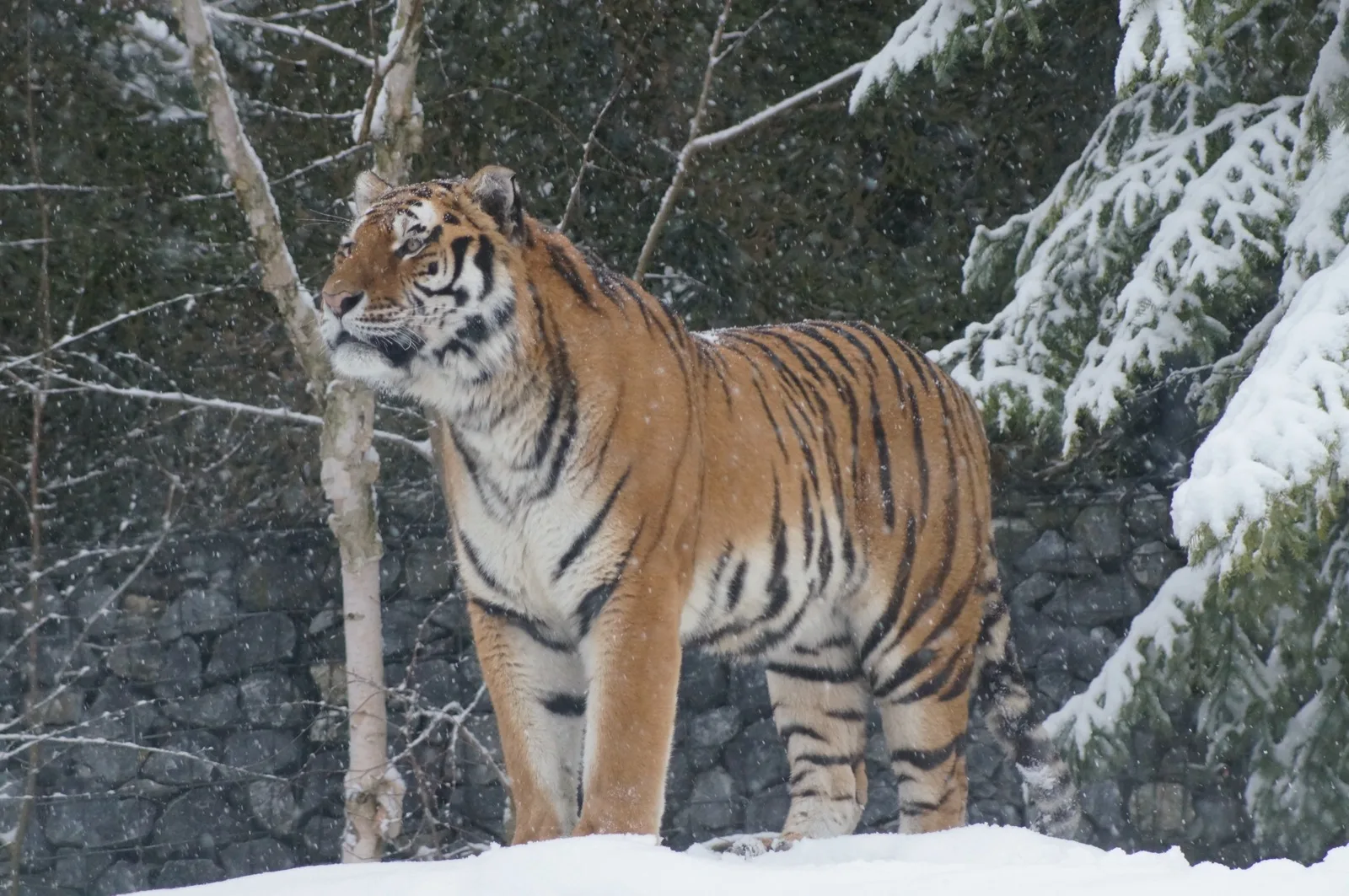
A white tiger’s coat has nothing to do with snow. It comes from one changed gene, and Bengal tigers live in warm forests and wetlands.
There is a twist, though. The AZA says most white tigers in captivity are Amur–Indian hybrids. That means they have both Bengal and Siberian tiger ancestors, so many “white Bengal tigers” are not purely Bengal at all.
So in one way, many white tigers in zoos really are part snow tiger. Their white coat came from the Bengal side of the family, not the Siberian one.
Why most major zoos stopped breeding white tigers
In June 2011 the board of the AZA approved a paper about breeding animals for rare colours. The AZA accredits zoos and aquariums, most of them in the United States. Its paper built on a policy it had agreed in 2008 about how zoo animals should be shown to the public.
The paper said accredited zoos should not breed animals on purpose to produce rare colours or other unusual looks. White tigers are its main example. It also discusses white lions, white alligators and king cheetahs, which have blotches in place of spots.
It gave three kinds of reason. The first is welfare: inbred animals can suffer from the health problems above. The second is genetics. Zoos need to keep as much genetic variety as possible, and breeding for one colour uses it up fast. The third is education. The AZA said white tigers send a confusing message, and that some visitors wrongly believe they are a separate endangered species.
The paper did not tell zoos to get rid of white tigers. AZA zoos may still care for white tigers rescued from elsewhere, as long as they explain to visitors how these animals came to exist.
Not every zoo belongs to the AZA. The paper notes that breeders outside it still produce animals with rare colours, and some of those animals later need rescuing.
Counting white tigers: why there is no real number
Nobody knows how many white tigers there are. White tigers live in zoos, safari parks and private collections in many countries, and no single list records them all.
National Geographic reported in 2013 that there were hundreds of white tigers in captivity. Many websites give a figure of about 200. We could not find where that number comes from, and it may be decades old.
What we can say is that none are known in the wild. And because white tigers are not a species of their own, they have no separate place on the IUCN Red List, the world list of threatened animals. Tigers of every colour are counted together.
So what tigers are white? Only tigers that inherit the white gene from both parents. Almost all of them live in captivity, and most are related to one another.
Interesting facts about white tigers
Here are ten facts about white tigers to take away. Each one is explained in a section above.
- A white tiger’s colour comes from one letter of changed DNA, in a gene called SLC45A2. Scientists found it in 2013.
- The same gene helps to decide skin and hair colour in people. It affects horses and chickens too.
- Two orange tigers can have a white cub if both secretly carry the white gene. Each of their cubs has a 1 in 4 chance of being white.
- White tigers are not albinos. They have dark stripes and usually blue eyes.
- No two tigers have the same stripe pattern, whatever their colour.
- The last white tiger known in the wild was shot in 1958.
- The most famous white tiger, Mohan, was caught in India on 27 May 1951. He escaped the very next day.
- In 1960 a white tigress called Mohini of Rewa was presented to US President Eisenhower on the White House lawn.
- Most white tigers in zoos are part Siberian tiger, the biggest kind of tiger.
- In 2011 the AZA told its accredited zoos not to breed animals for rare colours such as white.
Three things people get wrong
1. “White tigers are albinos.” They are not. Albino animals have almost no dark pigment and have pink eyes. White tigers have dark stripes and usually blue eyes, because their gene change removes only the red and yellow pigment.
2. “White tigers are a separate species.” They are not a species or a subspecies. A white tiger is a Bengal tiger, or often a Bengal and Siberian mix, that inherited two copies of one changed gene. Its orange brothers and sisters are the same kind of animal.
3. “Breeding white tigers helps to save an endangered animal.” The AZA calls this a misconception. White tigers cannot be endangered as a separate kind, because they are not a separate kind. Wild tigers of every colour are the ones in danger, and breeding white tigers in zoos adds none of them to the wild.
Did you know? Many white tigers in zoos are not pure Bengal tigers. The Association of Zoos and Aquariums says most white tigers in captivity are Amur–Indian hybrids, so Siberian tigers are in their family tree too.
Try it
Model the white tiger gene with two coins. Each coin is one orange parent that carries the white gene: heads means it passes on the orange version, tails means the white version. Flip both coins together to make one cub. Only two tails makes a white cub. Make 20 cubs and count the white ones. You should get about five, or one in four, though real litters are small, so luck plays a big part.
Knowledge check
Two orange tigers have a white cub. What must be true about both parents?
Show answer
Both parents carry one copy of the white version of the SLC45A2 gene, and each passed that copy to the cub.
How can you tell that a white tiger is not an albino?
Show answer
It still has dark stripes and usually blue eyes. An albino animal has almost no dark pigment and has pink eyes.
Frequently asked questions
What is a white tiger called?
A white tiger is usually called a white tiger or a white Bengal tiger. Scientists describe it as a colour variant of the Bengal tiger, Panthera tigris tigris. The most famous white tigers are Mohan, caught in India in 1951, and Mohini of Rewa, who went to the National Zoo in Washington, D.C. in 1960.
Are white tigers albino?
White tigers are not albino. Albino animals have almost no dark pigment and have pink eyes, but white tigers keep their dark stripes and usually have blue eyes. A change in the SLC45A2 gene removes only the red and yellow pigment from the fur.
Why are white tigers white?
White tigers are white because both of their copies of a gene called SLC45A2 carry a one-letter change. A 2013 study led by Peking University found that the change blocks red and yellow pigment but not black, so the orange fur turns white while the stripes stay dark.
How many white tigers are there in the world?
Nobody knows how many white tigers exist, because no single register counts the white tigers kept in zoos, safari parks and private collections. National Geographic reported in 2013 that there were hundreds in captivity. None are known in the wild.
Are there white tigers in the wild?
No white tigers are known in the wild today. The last wild white tiger on record was shot in India in 1958, and every white tiger known since then has been born in captivity.
Are white tigers endangered?
White tigers are not endangered as a separate kind of animal, because they are not a separate species or subspecies. Tigers as a whole are endangered, and breeding white tigers in zoos adds no tigers to the wild.
Why did zoos stop breeding white tigers?
In June 2011 the Association of Zoos and Aquariums said its accredited zoos should not breed animals to produce rare colours. Making white tigers needed inbreeding, which has been linked to crossed eyes, cleft palates and other health problems, and it wastes the genetic variety zoos need.
Sources
- Xu and others, Peking University: The genetic basis of white tigers (Current Biology, 2013), on PubMed — the SLC45A2 gene, the 16-tiger family and the check in 130 more tigers, the white tiger as a Bengal tiger variant, inbreeding in captivity, the same gene in people, horses and chickens, and the colour being viable in the wild
- Association of Zoos and Aquariums: Welfare and conservation implications of intentional breeding for the expression of rare recessive alleles (approved June 2011) — the AZA position and its reasons, the 2008 policy behind it, health problems found in white tigers, Amur–Indian hybrids, shortened lifespan and stillbirth as risks of heavy inbreeding, how a recessive gene is inherited, and the mistaken idea that white tigers are an endangered species
- National Geographic: Tiger, tiger, burning bright, just one gene to make it white (Ed Yong, 2013) — the one-letter change, why white tigers are not albinos, the last wild white tiger in 1958, reported health problems, the debate over eyesight and hunting, and the hundreds of white tigers in captivity
- District Rewa, Government of Madhya Pradesh: White Tiger Safari — Mohan’s capture on 27 May 1951, his escape and recapture near Mukundpur, his two decades there, the White Tiger Safari at Mukundpur and the spread of his descendants
- Smithsonian Institution: 4 December 1960, Mohini of Rewa arrives at the National Zoo — Mohini’s arrival, her blue eyes, her donors and her presentation to President Eisenhower
- San Diego Zoo Wildlife Alliance: tiger — white tigers’ blue eyes and albinos’ pink eyes, the size of Bengal and Siberian (Amur) tigers, where each lives, cub weight, age of maturity, lifespan, how tigers stalk prey, stripe patterns and tigers’ endangered status