how long lions live quick facts
- Wild lionesses can live up to about 16 years.
- Wild male lions rarely live past 12.
- Lions in zoos may live into their late teens or early 20s.
- Up to 80% of lion cubs die in their first two years.
- About 20,000 to 25,000 wild lions remain.
How long do lions live?
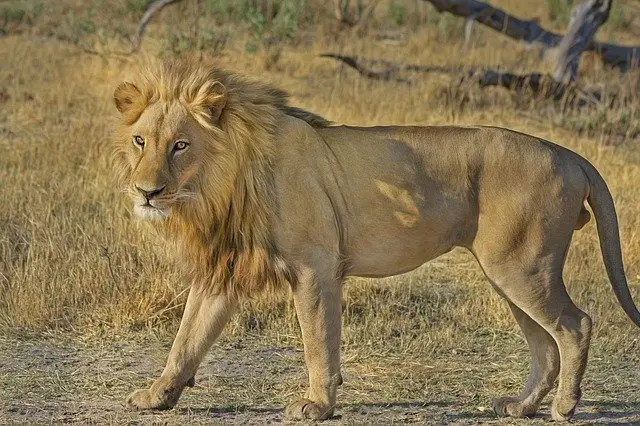
Lions in the wild usually live for about 10 to 16 years, and females tend to live longer than males. The Smithsonian’s National Zoo says wild lionesses can live up to 16 years, but males rarely live past the age of 12.
Lions in zoos often live longer, because they are safe from rivals, never go hungry and get care from vets. The National Zoo says lions in zoos may live into their late teens or early 20s.
Experts give slightly different numbers, because lifespans vary a lot from one lion to the next. The table below shows what three wildlife organisations say.
| Where the lion lives | How long it may live | Source |
|---|---|---|
| Wild lioness | up to about 16 years | Smithsonian’s National Zoo |
| Wild male lion | rarely past 12 years | Smithsonian’s National Zoo |
| Wild lions in general | 10 to 18 years | African Wildlife Foundation |
| Lions in zoos | late teens or early 20s | Smithsonian’s National Zoo |
| Lions in zoos | about 17 years on average | San Diego Zoo Wildlife Alliance |
| Lions in human care | up to 30 years | African Wildlife Foundation |
What a lifespan number really means
When you read that lions live “10 to 16 years”, that does not mean every lion reaches 10. The figure describes lions that survive the dangerous early years.
Many lions die long before they grow old. The National Zoo says up to 80% of lion cubs die within their first two years. If you counted every cub that was born, the average lifespan would be much shorter.
So a lifespan figure is really a guide to how long a healthy adult lion can expect to live if nothing goes wrong.
A dangerous start
Lion cubs face many dangers. A mother usually has one to four cubs after a pregnancy of about three and a half months, according to the National Zoo.
Newborn cubs are small and helpless. While their mother is away hunting, they can be caught by hyenas, leopards and other predators. They can also starve if the pride cannot find enough food.
Another danger comes from other lions. When new males take over a pride, they may kill young cubs that were fathered by the old males. The lionesses then have new cubs with the new males.
A cub that survives its first two years has a much better chance of growing into a healthy adult.
Why male lions die younger
Male lions have tougher lives than females. San Diego Zoo Wildlife Alliance explains that mothers raise their male cubs until they are about two years old, then send them away from the pride.
Young males often wander in small groups, called coalitions, until they are strong enough to take over a pride of their own. This can take years, and they must find food by themselves along the way.
Once a male has a pride, he has to defend it. Other males are always looking for a chance to take over, and fights can leave lions badly hurt. An injured lion may not be able to hunt, and his wounds can become infected.
After a few years, a younger, stronger male usually drives him out. An old male that has lost his pride often struggles to survive alone.
Why lionesses live longer
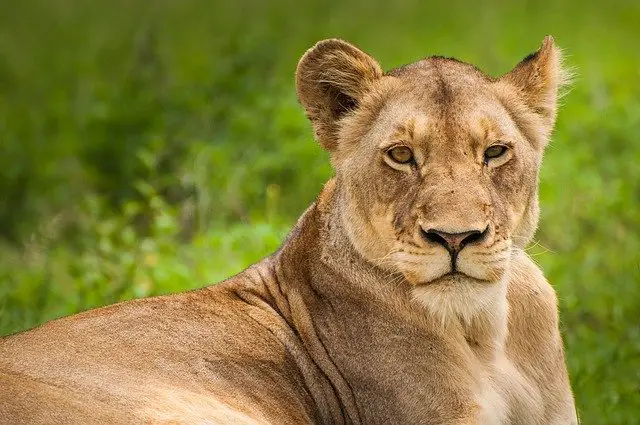
Female lions usually stay in the pride where they were born, living with their mothers, sisters and cousins. San Diego Zoo Wildlife Alliance says female cubs typically remain with their birth pride.
Living with family has big advantages. Lionesses hunt together, share food and help look after each other’s cubs. They rarely have to fight for their place the way males do.
The African Wildlife Foundation says females do 85 to 90% of a pride’s hunting. Hunting is risky, because big prey such as buffalo can kick or gore a lion, but working as a team makes it safer.
Growing old in the wild
As a wild lion gets older, its teeth wear down and can break. Old lions often find it harder to catch and eat big prey.
A lioness in a pride can still share the food her sisters catch, which helps her live longer. An old male on his own has no one to help him.
In the wild, few lions die peacefully of old age. Most die from hunger, injuries or fights long before their bodies wear out.
Why lions may live longer in zoos
In a zoo, a lion gets regular meals, clean water and a safe place to sleep. It does not have to chase dangerous prey or fight rivals for a territory.
Vets check zoo lions and treat illnesses and injuries that would be serious in the wild. Keepers can also change a lion’s food and home as it grows old, for example by giving softer food to a lion with worn teeth.
That is why zoo lions often live into their late teens or early 20s, while wild lions usually do not.
Big cats with big needs
Lions are the second-largest cats in the world, after tigers. The National Zoo says lions stand 1 to 1.2 m (3.5 to 4 feet) tall at the shoulder.
Males can be 3 m (10 feet) long, including a tail of 60 to 91 cm (2 to 3 feet), and weigh 150 to 250 kg (330 to 550 pounds). Females are smaller, at about 2.7 m (9 feet) long and 120 to 180 kg (265 to 395 pounds).
A body that big needs a lot of food. Staying fed is one of the biggest challenges a wild lion faces, and a lion that cannot hunt well does not live long. Find out more in our guide to what lions eat.
Life in a pride
Lions are the only cats that live in big family groups, called prides.
The National Zoo says a pride can have anywhere from several lions to as many as 40. San Diego Zoo Wildlife Alliance says 3 to 30. The African Wildlife Foundation says the average pride has about 15, with five to 10 females, their young and two or three males.
A lion’s roar helps the pride stay in touch and warns other lions to keep out. The National Zoo says a roar can be heard up to 8 km (5 miles) away, while San Diego Zoo Wildlife Alliance puts it at up to 4.8 km (3 miles).
What shortens a lion’s life?
Losing their homes: as farms, towns and roads spread into lion country, lions have less space to live and hunt.
Losing their prey: when wild animals such as antelope and zebras become scarce, hungry lions may attack cattle and goats instead.
Conflict with people: farmers sometimes kill lions, often by poisoning, after they attack livestock.
Hunting: the African Wildlife Foundation says lions are killed as trophies, in rituals and for body parts that some people believe have special powers.
Disease: the National Zoo says illnesses such as distemper, spread by pet dogs, can kill lions.
How many lions are left?
Lions are in trouble. The African Wildlife Foundation says lion numbers fell by 43% over 21 years, and lions have died out completely in 15 African countries.
Estimates of how many are left vary. The National Zoo says about 20,000 wild lions remain, while the African Wildlife Foundation says as few as 23,000. San Diego Zoo Wildlife Alliance gives 22,000 to 25,000 in Africa.
Lions are listed as Vulnerable, which means they face a high risk of dying out in the wild if things do not change.
Lions in India
Not all wild lions live in Africa. A small group of Asiatic lions lives in and around the Gir Forest in western India.
The National Zoo says only about 250 lions live in the Gir Forest. San Diego Zoo Wildlife Alliance gives a figure of just under 700 lions living in India.
How scientists study lion lifespans
Scientists learn how long wild lions live by following the same lions for many years. They recognise each one by its scars, torn ears and the pattern of spots at the base of its whiskers, which is different for every lion.
By recording when cubs are born, when lions leave the pride and when they die, researchers can work out how long lions really live, and why some die young.
How lions compare with tigers
Tigers are the lion’s biggest cousins. Wild tigers usually live about 10 to 15 years, much like wild lions. Read more in our guide to how long tigers live.
Long ago, other big cats shared the world with lions. See how an Ice Age hunter measures up in our saber-tooth tiger vs lion guide, and meet the whole family in our lion facts for kids.
Three things people get wrong
Lions do not all live the same length of time. Wild males rarely pass 12, while wild females can reach about 16.
Male lions are not the main hunters. Lionesses do 85 to 90% of the hunting.
Wild lions do not only live in Africa. A small population lives in and around the Gir Forest in India.
Did you know? Scientists can recognise individual lions by the pattern of spots at the base of their whiskers, which is different for every lion.
Try it
Make a timeline of a lion’s life from birth to 16 years. Mark when cubs are born, when young males leave the pride and when lions become adults.
Knowledge check
Which live longer in the wild, male or female lions?
Show answer
Female lions.
Why do lions often live longer in zoos?
Show answer
They get regular food, vet care and safety from rivals.
Frequently asked questions
How long do lions live in the wild?
Wild lions usually live about 10 to 16 years. The Smithsonian’s National Zoo says lionesses can reach 16, but males rarely live past 12.
How long do lions live in zoos?
Lions in zoos may live into their late teens or early 20s, according to the National Zoo. San Diego Zoo Wildlife Alliance gives an average of about 17 years.
Why do male lions die younger than females?
Young males are sent away from the pride at about two, must fight rivals to win and keep a pride, and are often injured or driven out.
How many lion cubs survive?
Many do not. The Smithsonian’s National Zoo says up to 80% of lion cubs die within their first two years, from hunger, predators and other lions.
How many lions are left in the wild?
Estimates vary from about 20,000 to 25,000 lions in Africa, plus a small population in India. Lions are listed as Vulnerable.
What is the oldest a lion can live?
The African Wildlife Foundation says lions can live up to 30 years in captivity. In the wild, few lions live beyond their mid-teens.
Sources
- Smithsonian’s National Zoo: lion — lifespans in the wild and in zoos, cub survival, size, prides, roar, population and threats
- San Diego Zoo Wildlife Alliance: lion — zoo lifespan, young males leaving the pride, females staying, roar and population
- African Wildlife Foundation: lion — lifespans, pride size, hunting by females, population decline and threats