what lions eat quick facts
- Lions mainly eat prey weighing 45 to 453 kg, such as zebras and wildebeest.
- Lionesses do 85 to 90% of the hunting.
- A male lion can eat up to 63 kg of meat in one meal.
- Scavenged food can make up more than half a lion’s diet.
- Lions sometimes eat crocodiles, rodents, reptiles and insects.
What do lions eat?
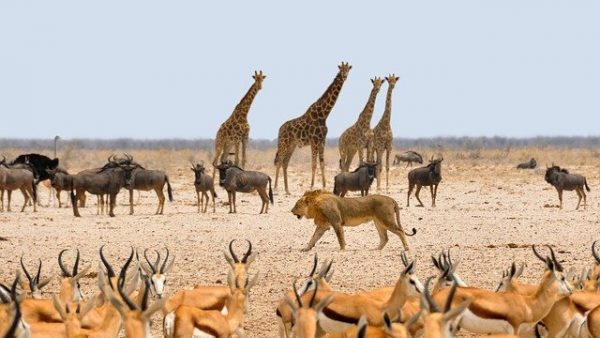
Lions eat meat. They are carnivores, and they mostly hunt large plant-eating animals such as zebras, wildebeest, antelope and buffalo.
The Smithsonian’s National Zoo says lions mainly eat large animals weighing from 45 to 453 kg (100 to 1,000 pounds). They also scavenge, eating animals that are already dead or stealing kills from other hunters.
Lions are not fussy. San Diego Zoo Wildlife Alliance lists prey ranging from antelope and baby elephants to rodents, reptiles, insects and even crocodiles.
| Food | How often lions eat it |
|---|---|
| Zebras and wildebeest | common prey |
| Antelope | common prey |
| Buffalo, giraffes and hippos | sometimes, when a pride works together |
| Young elephants and rhinos | sometimes |
| Rodents, reptiles and insects | small extra meals |
| Crocodiles | occasionally |
| Animals already dead | often; more than half the diet in some places |
Their favourite prey
The African Wildlife Foundation says antelope, zebras and wildebeest are the most common prey. These animals live in big herds on the grasslands of Africa, the same places where lions live.
A zebra or a wildebeest is big enough to feed several lions, which makes it a good target for a pride.
When the whole pride hunts together, lions can bring down much bigger animals, such as buffalo, hippos and giraffes. These are dangerous prey, because they can kick, gore or trample a lion.
Lions also eat small animals when they get the chance, including rodents, reptiles and insects. A small meal like this will not fill up a hungry lion, but it helps between big hunts.
How lions hunt
Lions are not built for long chases. They are powerful but heavy, so they rely on getting close to their prey without being seen.
A lion creeps forward slowly, keeping low in the grass. When it is close enough, it bursts out in a short, fast rush and knocks the animal down.
Lionesses often hunt as a team. San Diego Zoo Wildlife Alliance describes how smaller, faster females chase prey towards bigger lionesses, which wait in ambush to catch it.
Lions often hunt at night or in the cool of dawn and dusk, when the darkness helps them sneak up on their prey.
Who does the hunting?
Most of the hunting is done by the females. The African Wildlife Foundation says lionesses do 85 to 90% of the hunting, and San Diego Zoo Wildlife Alliance says males hunt less than 10% of the time.
Male lions are big and heavy, and their thick manes make them easy to spot. Their main job is to guard the pride’s territory and protect the cubs.
Males do sometimes join a hunt, especially when the prey is large and strong, such as a buffalo. A male that lives alone, without a pride, has to hunt for himself.
How much does a lion eat?
Lions eat a huge amount at once. San Diego Zoo Wildlife Alliance says a male lion can eat about a quarter of his body weight, as much as 63 kg (140 pounds), in a single meal.
That would be like a 40 kg child eating 10 kg of food in one sitting!
After a big meal, lions rest and digest for a long time. They do not need to eat every day, and they can go several days between kills.
Big prey, big risks
Hunting large animals is dangerous work. A zebra can kick hard enough to injure a lion’s jaw, and a buffalo can gore or trample a lion that gets too close.
Many hunts fail. The prey spots the lions, runs away, or fights back. That is one reason lions work as a team and choose weak, young or sick animals whenever they can.
Teeth and tongues made for meat
Like all cats, lions have bodies built for eating meat. Their long, pointed canine teeth grip and hold prey, and their back teeth work like scissors to slice meat into chunks.
A lion’s tongue is covered in tiny, backward-pointing hooks that make it feel like sandpaper. These help it scrape meat off bones.
Lions do not chew their food much. They cut off large pieces and swallow them.
Sharing the kill
When a pride makes a kill, the lions do not share politely. There is often a lot of snarling and pushing as each lion tries to get its share.
The biggest lions, usually the males, often eat first, even though they did not do the hunting. Lionesses eat next, and cubs usually get what is left. When food is scarce, cubs may go hungry.
Scavengers and thieves
Lions do not only eat what they catch. They are also scavengers, eating animals that have died from illness or injury.
The African Wildlife Foundation says scavenged food makes up more than half of a lion’s diet. San Diego Zoo Wildlife Alliance says lions will even eat spoiled food.
Lions also steal. They chase leopards, cheetahs, hyenas and African wild dogs away from their kills and take the food for themselves. Learn more about one of these rivals in our cheetah facts and our guide to what cheetahs eat.
Hyenas steal from lions too. Around a carcass, lions and hyenas often fight over who gets to eat.
Who else is waiting at a kill?
A lion kill attracts a crowd. Vultures circle overhead and land nearby, waiting for a chance to feed.
Jackals and hyenas hang around the edges too. When the lions have eaten their fill and wandered off to rest, these scavengers move in and clear up what is left, right down to the bones.
In this way, one lion kill can feed many different animals.
Do lions drink water?
Yes. Lions drink from rivers, pools and waterholes when they can, and they often go to drink after a meal.
In very dry places, lions can go for a long time without drinking, because they get some of the water they need from the bodies of the animals they eat.
What do lion cubs eat?
Newborn lion cubs drink their mother’s milk. In a pride, cubs may also drink milk from other lionesses that have young at the same time.
As they grow, cubs start eating meat from the pride’s kills. They also watch the adults and join in with hunts, learning the skills they will need as adults.
What do lions eat in zoos?
Zoo lions cannot hunt, so keepers give them meat, often with bones, which helps keep their teeth and jaws strong. Keepers sometimes hide food or hang it up high, so the lions have to work for it, a bit like hunting.
Many zoos also have fasting days, when the lions are not fed. This copies the way wild lions eat, with big meals followed by days without food.
Why lions matter to the food chain
As top predators, lions help keep the numbers of plant-eating animals in check. Without predators, herds of grazers could grow so big that they eat too much of the grass and other plants.
By taking weak, sick or old animals, lions also help keep herds healthy.
Lions, livestock and people
When wild prey becomes scarce, hungry lions may attack cattle and goats. The African Wildlife Foundation says this can lead farmers to kill lions in revenge.
Protecting the wild animals that lions eat, and helping farmers keep their animals safe at night, gives both lions and people a better chance to live side by side. Find out how long lions live in our guide to how long lions live, or meet them properly in our lion facts for kids.
Long ago, lions shared the Ice Age world with other big hunters. See how one compares in our saber-tooth tiger vs lion guide.
Do lions eat plants?
Lions do not eat fruit, vegetables or other plants as food. Their bodies are built to get everything they need from meat.
A lion may sometimes chew on grass, but this is not a proper meal. Wild lions get almost all of their food, and much of their water, from the animals they catch or scavenge.
Three things people get wrong
Lions do not only eat what they kill. They scavenge and steal a lot of their food.
Male lions are not the main hunters. Lionesses do most of the hunting.
Lions do not eat every day. They eat huge meals, then may go several days without food.
Did you know? When lionesses hunt together, smaller, faster females chase prey towards bigger lionesses waiting in ambush.
Try it
Work out a quarter of your own weight in kilograms. Compared with his size, that is how much a male lion can eat in one meal.
Knowledge check
Who does most of the hunting in a pride?
Show answer
The lionesses.
What does it mean when a lion scavenges?
Show answer
It eats animals that are already dead, or steals other hunters’ kills.
Frequently asked questions
What do lions eat?
Lions are carnivores. They mainly eat large plant-eaters such as zebras, wildebeest, antelope and buffalo, plus smaller animals and food they scavenge or steal.
How much does a lion eat in one meal?
San Diego Zoo Wildlife Alliance says a male lion can eat about a quarter of his body weight, as much as 63 kg (140 pounds), in a single meal.
Do male lions hunt?
Male lions hunt less than 10% of the time. Lionesses do 85 to 90% of the hunting, while males mainly guard the territory and the cubs.
Do lions eat other predators’ food?
Yes. Lions steal kills from leopards, cheetahs, hyenas and African wild dogs, and scavenged food can make up more than half their diet.
How often do lions eat?
Lions do not eat every day. After a big meal they rest and digest, and they can go several days before they need to hunt again.
What do lions eat in zoos?
Zoo lions are fed meat, often with bones. Many zoos also have fasting days, which copy the feast-and-wait way lions eat in the wild.
Sources
- Smithsonian’s National Zoo: lion — prey sizes and who hunts
- San Diego Zoo Wildlife Alliance: lion — prey list, team hunting, meal size, scavenging and hunting by males
- African Wildlife Foundation: lion — common prey, large prey, share of scavenged food, hunting by females and conflict with farmers