
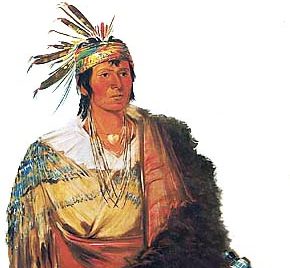
The Miami Tribe of Oklahoma is a federally recognised Native nation whose people call themselves the Myaamia, meaning “the downstream people”. Their homeland is in Indiana, Ohio, Illinois and Michigan, but they were forced west in 1846 and now have their headquarters in Oklahoma. Their language stopped being spoken in the mid-1900s and has since been brought back from written records.
The Miami Tribe quick facts
- The tribe’s own name is Myaamia, which means “the downstream people”.
- Their homeland is Indiana and Ohio. They were forced west to Kansas in 1846, then to Oklahoma.
- The Myaamia language had no speakers left by the mid-1900s. Children speak it again today.
- The tribe calls the language “sleeping” rather than extinct, because it could be woken.
- Daryl Baldwin, who led the language work, received a MacArthur Fellowship in 2016.

For about thirty years, nobody on Earth spoke the Miami Tribe’s language.
Children speak it again today. Few nations anywhere have done anything like it in the last fifty years.
Who are the Miami Tribe?
They call themselves the Myaamia, which means “the downstream people”. “Miami” is how English speakers wrote that word down.
The Miami Tribe of Oklahoma is a nation with its own government. It is one of the 575 tribal nations the United States recognises.
| Own name | Myaamia (plural Myaamiaki) |
| Homeland | Indiana, Ohio, Illinois and Michigan |
| Headquarters today | Miami, Oklahoma |
| Language | Myaamiaataweenki, an Algonquian language |
| Status | federally recognised nation |
Notice something odd there. The tribe is based in Oklahoma. The homeland is a thousand kilometres away. There is a hard reason for that.
The homeland
Myaamia people have lived in the Great Lakes region for a very long time. Their villages sat along rivers in what is now Indiana and Ohio.
Their very first story tells how the Myaamia came out into their homeland, which they call Myaamionki, the Place of the Miami. In the story they build their first village at a place called Saakiiweeyonki, and later spread out into many villages along the Wabash River.
Families lived by the seasons. They hunted, grew corn, made maple sugar and moved to winter camps.
They farmed a special white corn. They also hunted, fished and traded. Many towns and rivers in Indiana still carry Myaamia names. The Wabash River is one. So is the city of Kokomo.
The word “Miami” in Ohio and Indiana comes from the tribe. Miami in Florida does not. That name comes from a different language, far to the south.
Myaamia words and places
- Myaamia — the tribe's own name for itself: the downstream people
- Myaamionki — the Place of the Miami, the tribe's homeland
- Myaamiaataweenki — the tribe's language, one of the Algonquian languages
- Saakiiweeyonki — where the first village is built in the tribe's own first story
- The Wabash River — an Indiana river that still carries a Myaamia name
- Kokomo — an Indiana city whose name comes from the Myaamia

Why they live in Oklahoma
In the 1800s the United States government forced many Native nations off their land. The Cherokee were among the nations forced to move west in the same period. The Myaamia were among them.
In 1846 a large group was taken from Indiana to Kansas. About twenty years later they were moved again, into what is now Oklahoma.
It began in October 1846. The United States government forced Myaamia men, women and children into holding pens, then onto canal boats. Over half of the roughly 600 Myaamia left at the time, about 330 people, were sent west.
In Oklahoma they found themselves living alongside the Quapaw and Osage. Nearby were other nations that had also been forced out of the Great Lakes region, including the Wyandot, Peoria, Ottawa, Seneca-Cayuga and Shawnee.
In 2021, 175 years after the removal, people at Miami University marked the day. They tied 330 pieces of coloured fabric to trees along a walking route, one for each person who was taken.
Those moves split families apart. Some Myaamia people stayed in Indiana. Their families still live there today.
Being moved so far from home is a large part of why the language later fell silent.
Mihšihkinaahkwa, Little Turtle
The best-known Myaamia leader is Mihšihkinaahkwa, whose name means Little Turtle. He led in the late 1700s.
He was a gifted leader in war. In 1791 the Native forces he helped lead beat a United States army. It is still one of the heaviest defeats US forces have ever suffered against Native nations.
Later he argued for peace. He believed his people could not win a long war. Historians still argue about that choice, which is what makes him interesting.
A sleeping language
By the middle of the 1900s, the last people who grew up speaking the language had died.
Outsiders called the language extinct. The tribe does not use that word. They say it was sleeping. The difference matters. Something extinct is gone. Something sleeping can wake.
It could wake because it had been written down. Over the years, visitors had recorded word lists, stories and grammar. Those papers sat in libraries, waiting.
How they woke it up
In 1991 a Myaamia man called Daryl Baldwin began studying those old papers. Then he and his wife Karen did something bold. They raised their four children speaking the language at home.
Their children became the first people in about a hundred years to grow up speaking Myaamia.
In 2001 the tribe and Miami University in Ohio set up the Myaamia Center. It runs summer camps, makes learning materials, and trains young Myaamia researchers.
In 2016 Daryl Baldwin won a MacArthur Fellowship for that work. People sometimes call it the “genius grant”.
Nations around the world with sleeping languages now study what the Myaamia did.
The Miami Tribe today
Today the Miami Tribe of Oklahoma has more than 7,000 citizens. They live in all 50 US states, but most are in north-eastern Oklahoma, eastern Kansas and northern Indiana.
The tribe is run by an elected Business Committee: a Chief, a Second Chief, a Secretary-Treasurer and two Councilpersons. From its headquarters in Miami, Oklahoma, it runs services such as child care, health programmes, education and its own police. The nation owns land in five states, provides jobs for its citizens and offers scholarships.
A university and a tribe working together
Miami University in Oxford, Ohio, takes its name from the Myaamia. In the early 1970s, the tribe and the university began working together, and the first Miami Tribe students enrolled there in the early 1990s.
The partnership has kept growing. In May 2021 the university celebrated its 100th Myaamia graduate, and that autumn it welcomed its largest group of new Myaamia students yet. The Myaamia Heritage Award Program supports tribal students who study there.
The Myaamia Center works from Bonham House on the university’s campus as the tribe’s research arm. Its work means anyone can now look up Myaamia words in an online dictionary.
The nation today
- More than 7,000 — citizens of the Miami Tribe of Oklahoma
- The Business Committee — the tribe's elected government
- Miami, Oklahoma — where the tribe has its headquarters
- Five states — where the nation owns land
- Bonham House — where the Myaamia Center works, on the Miami University campus
- The Myaamia Heritage Award Program — supports tribal students studying at Miami University
Three things people get wrong
The Miami Tribe is not gone. It is a working nation today. It has a government, thousands of citizens and its own schools and programmes.
Miami, Florida is not named after them. That name comes from another language. But the Miami River and Miami University in Ohio do come from the tribe.
The language was never truly lost. It was sleeping in written records, and the tribe woke it up. Calling it extinct gets the story backwards.
Read about the wider picture in our guide to Native American nations.
Did you know? The Myaamia language survived in paperwork. Missionaries, traders and linguists had written down word lists, stories and grammar over centuries, and those documents sat in archives for decades. When Myaamia people went looking, everything they needed to rebuild the language was still there.
Try it
The tribe says its language was sleeping, not extinct. Think about why those two words tell such different stories, and which one you would want used about something belonging to your own family.
Knowledge check
Why does the Miami Tribe live in Oklahoma if its homeland is Indiana?
Show answer
Because the United States government forced them off their land. A large group was removed from Indiana to Kansas in 1846, and moved again to what is now Oklahoma about twenty years later. Some Myaamia families stayed in Indiana, and their descendants still live there.
How did the Myaamia language come back?
Show answer
It had been written down over centuries by missionaries, traders and linguists. In 1991 Daryl Baldwin began studying those records and raised his four children speaking Myaamia at home. In 2001 the tribe and Miami University created the Myaamia Center to continue the work.
Frequently asked questions
Who are the Miami Tribe?
They are a Native nation who call themselves the Myaamia, meaning the downstream people. The Miami Tribe of Oklahoma is federally recognised, with its own government, and its homeland is the Great Lakes region of Indiana, Ohio, Illinois and Michigan.
What does Myaamia mean?
It means the downstream people. Myaamia is what the tribe calls itself, and Myaamiaki is the plural. The English word Miami is simply how English speakers wrote that name down.
Is Miami in Florida named after the Miami Tribe?
No. That name comes from a different Indigenous language in Florida. Places named after the tribe are in the Great Lakes region instead, including the Miami River and Miami University in Ohio, and the town of Miami in Oklahoma.
What happened to the Myaamia language?
The last people who grew up speaking it died in the mid-twentieth century, and for about thirty years nobody spoke it. The tribe describes it as sleeping rather than extinct, because it had been recorded in writing and could be brought back.
Who was Little Turtle?
Mihšihkinaahkwa, known in English as Little Turtle, was a Myaamia leader in the late 1700s and a gifted military commander. In 1791 the allied Native forces he helped lead defeated a United States army. He later argued for peace, believing a long war could not be won.
Does the Miami Tribe still exist today?
Yes. The Miami Tribe of Oklahoma is a working nation with its own government, thousands of citizens, and programmes in language, education and culture. The Myaamia Center at Miami University in Ohio has been running since 2001.
How many people are in the Miami Tribe today?
The Miami Tribe of Oklahoma has more than 7,000 citizens. They live in all 50 US states, with most in north-eastern Oklahoma, eastern Kansas and northern Indiana.
When was the Miami Tribe removed from Indiana?
The forced removal began in October 1846. About 330 Myaamia people, over half of the tribe at the time, were put into holding pens and onto canal boats and sent to Kansas. In the 1860s and 1870s many were forced to move again, to what is now Oklahoma.
Is Miami University named after the Miami Tribe?
Yes. Miami University in Oxford, Ohio, takes its name from the Myaamia. The tribe and the university have worked together since the early 1970s, and they created the Myaamia Center together in 2001.
Sources
- Miami Tribe of Oklahoma, official website — the nation’s own account of its name, history and government.
- Myaamia Center, Miami University — the language revitalisation work and its programmes.
- MacArthur Foundation: Daryl Baldwin — his 2016 fellowship and the language work it recognised.
- US Bureau of Indian Affairs — what federal recognition means for a tribal nation.
- Miami University Libraries: the forced removal of the Myaamia — the emergence story, the 1846 removal and the later move to Oklahoma
- Miami Tribe of Oklahoma: about us — citizens, government, headquarters, services and traditions
- Miami University (2021): Day of Reflection marks 175 years since the removal — the removal, the 330 people taken and the university partnership
The Miami Tribe Final Challenge
- What does the name Myaamia mean?
- Which family of languages does Myaamiaataweenki belong to?
- Is Miami, Florida named after the Miami Tribe?
- How many tribal nations does the United States recognise?
- What kind of corn did Myaamia families farm in the homeland?
- Why does the tribe call its language sleeping rather than extinct?
- Why was it possible to wake the language?
- In which year did the tribe and Miami University set up the Myaamia Center?
- What did Daryl Baldwin receive in 2016 for the language work?
- When did the tribe and Miami University first begin working together?
- Who study what the Myaamia did with their language today?


