Native Americans quick facts
- The United States recognises 575 tribal nations. The Lumbee Tribe became the 575th in December 2025.
- About 9.7 million people identified as American Indian or Alaska Native in the 2020 census.
- Nearly 200 Indigenous languages were still spoken in the early 2000s, from many separate language families.
- Tipis belong to the Plains nations. Elsewhere people built pueblos, longhouses and plank houses.
- Maize, potatoes, tomatoes, beans, squash, peanuts, vanilla and chocolate were all first grown in the Americas.
There is no such thing as “the Native American way of life”. There are hundreds of them.
The United States recognises 575 tribal nations, each with its own government, history and language. Millions of Native American people are alive today.
Hundreds of nations, not one people
This is the most important thing to understand, and most books get it wrong.
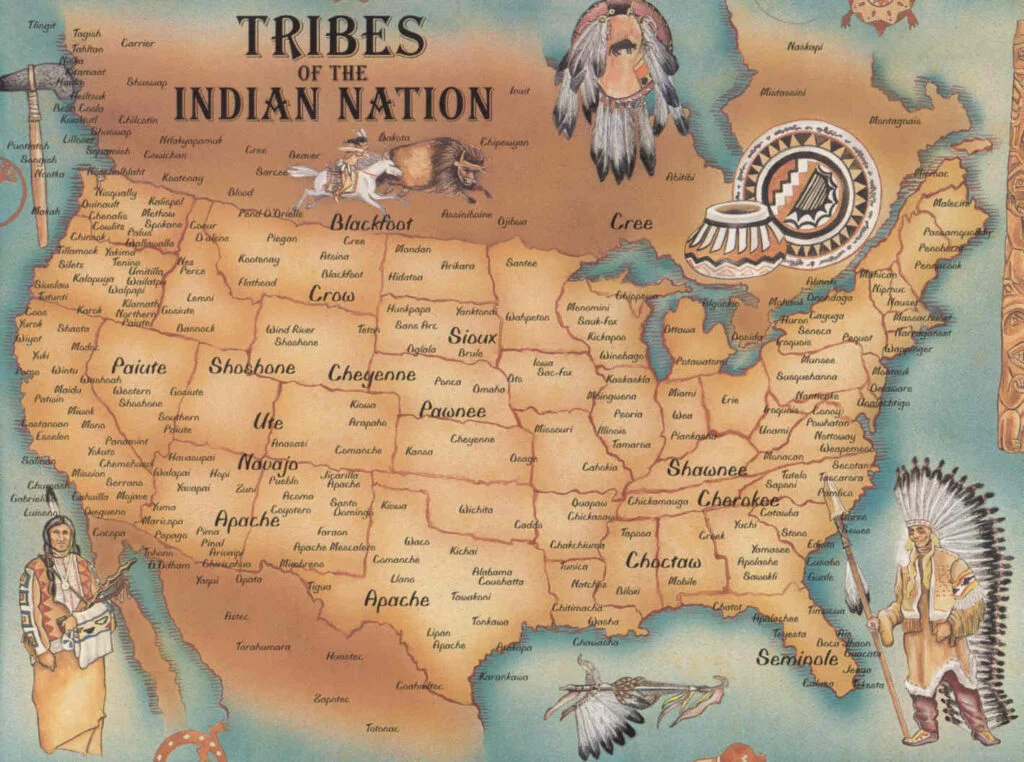
Think of the Diné, the Lakota, the Cherokee and the Tlingit. They differ as much as Norway differs from Egypt. Different languages. Different beliefs. Different foods and different houses.
Writing about “Native Americans” as one group is like writing about “Europeans” as one group. Where you can, name the actual nation.
| Federally recognised tribal nations | 575 |
| In Alaska | 228 |
| Newest recognition | the Lumbee Tribe, December 2025 |
| People in the US, 2020 census | about 9.7 million |
| Indigenous languages still spoken | nearly 200 in the early 2000s |
They are here now
Native American history is nearly always taught in the past tense. It can sound as though these peoples existed and then stopped.
They did not stop. About 9.7 million people in the United States identified as American Indian or Alaska Native in the 2020 census.
They are teachers, doctors, farmers, artists and engineers. Most live in ordinary towns and cities, not on tribal land.
Nations within a nation
A tribal nation is not a club or a community group. It is a government.
These nations have their own leaders, laws, courts and schools. They deal with the United States government nation to nation.
That is what “federally recognised” means. The list still changes. The Lumbee Tribe became the 575th in December 2025.
Reservations and land
There are about 326 Indian reservations in the United States. Around 56.2 million acres of land are held in trust by the United States for tribes and individual Native people.
Held in trust means the US government holds the legal title, but the land is kept for the use and benefit of the tribe or the person it belongs to.
The biggest reservation belongs to the Navajo Nation. It covers 16 million acres across Arizona, New Mexico and Utah, which makes it bigger than the whole state of West Virginia.
Nations and Land
- Tribal nation — A government with its own leaders, laws, courts and schools
- Federally recognised — Dealing with the US government nation to nation
- Held in trust — The US holds the title, but the land is kept for the tribe
- Navajo Nation — Has the biggest reservation, larger than West Virginia
- Reservations — There are about 326 of them in the United States
Not everybody lived in a tipi
The tipi is the picture almost every child is shown. It belongs to the Plains nations. It suited their life perfectly, because it was quick to pack and easy to move with the buffalo herds.
Elsewhere, people built completely different things, because they lived in completely different places.
- Pueblos in the south-west: villages of stone and adobe, several storeys high. Some have been lived in for over 800 years.
- Longhouses in the north-east: long wooden buildings holding several families at once.
- Plank houses on the north-west coast: big cedar buildings, built to last, in a region full of huge trees.
- Wigwams in the woodlands: domed frames covered with bark or reed mats.
The languages
In the early 2000s, nearly 200 Indigenous languages were still spoken in the United States. Before Europeans arrived, about 300 were spoken across what is now the United States and Canada.
They are not dialects of one language. They come from separate families, as unrelated as English is to Chinese.
Many are endangered, with only older speakers left. Tribal nations are working hard on this. Some run schools where children learn their own language from the start.
Food the world took
A great deal of what the world eats was first grown by Indigenous farmers in the Americas.
Maize, potatoes, tomatoes, beans, squash, peanuts, vanilla and chocolate all began here. Before these crops crossed the Atlantic there was no Italian tomato sauce and no Irish potato.
Many nations grew maize, beans and squash together in one plot. They called them the Three Sisters. The maize gives the beans a pole to climb. The beans feed the soil. The squash leaves shade out weeds. Scientists still study it.
The Three Sisters and the Food the World Took
- Maize — Gives the beans a pole to climb
- Beans — Put nutrients back into the soil
- Squash — Its broad leaves shade out weeds
- Potatoes — Before them, there was no Irish potato
- Tomatoes — Before them, there was no Italian tomato sauce
Citizens, voters and taxpayers
For a long time, many Native Americans were not treated as citizens of the United States. That changed with the Indian Citizenship Act of 1924, which gave full citizenship to American Indians and Alaska Natives.
Today they have the right to vote in elections just like other Americans, and they pay federal, state and local taxes too. There are a few exceptions: for example, federal income tax is not charged on income that comes from trust land.
The code talkers
During the Second World War, the US Marines needed a code the enemy could not crack. They found one in the Navajo language. The idea was put forward in 1942 by a man named Philip Johnston.
The programme started with about 30 Navajo recruits. By the end of the war, 420 Navajo men had served as code talkers, passing secret messages in battles across the Pacific, including Guadalcanal, Bougainville, Guam, Peleliu and Okinawa.
According to the US National Park Service, the Navajo language was one American code that the enemy never deciphered during the whole war. Navajo was not the only language used, either. Members of the Sioux nation served as code talkers too.
What words to use
You will see Native American, American Indian and Indigenous all used. Native people use all three. Different people prefer different ones.
The word “Indian” comes from a mistake. Columbus thought he had reached the Indies, and the name stuck for five centuries.
The safest choice is always the specific one. If you are writing about the Cherokee, say Cherokee. If you know someone’s nation, use it.
From a Mistaken Name to the 575th Nation
- The word Indian Columbus thinks he has reached the Indies, and the name Indian sticks.
- Citizenship A new law makes every American Indian born in the United States a citizen.
- Code talkers The US Marines start using the Navajo language as a secret code.
- The census About 9.7 million people say they are American Indian or Alaska Native.
- The 575th nation The Lumbee Tribe of North Carolina becomes the 575th federally recognised tribal nation.
Four things people get wrong
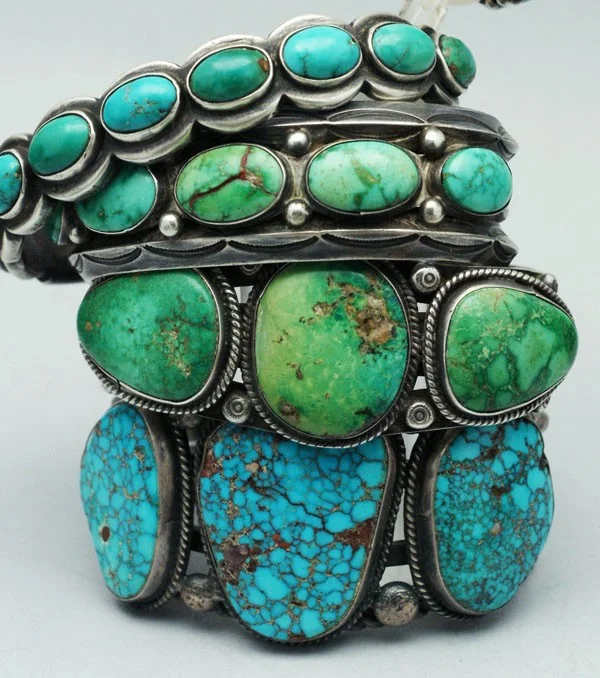
They are not one culture. There are 575 recognised nations and hundreds of languages. Ways of life differ completely from one region to the next.
They are not only history. Millions of Native American people are alive today, and their nations still govern themselves.
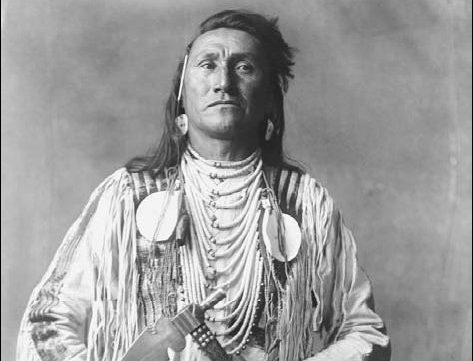
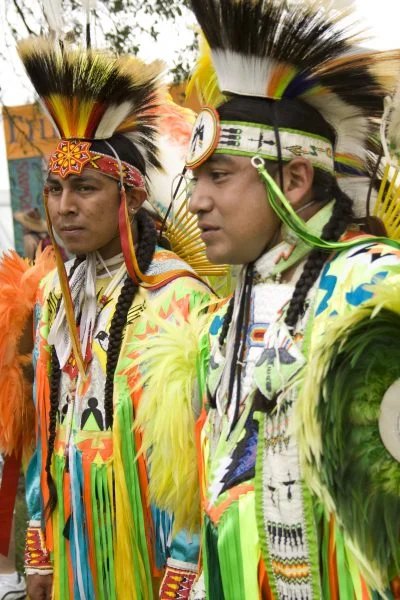
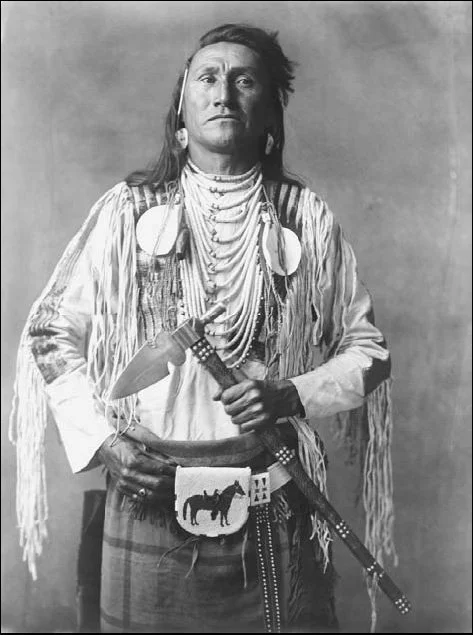
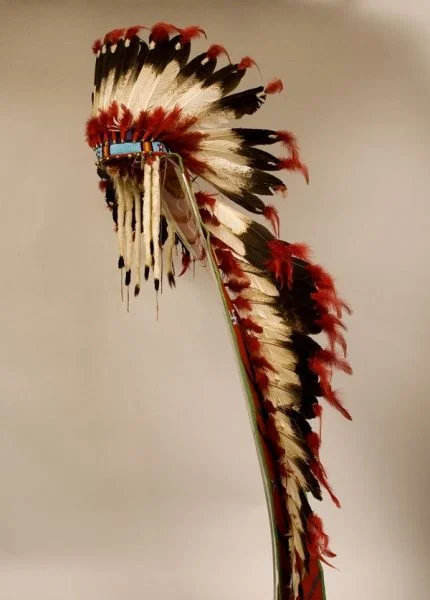
Not everyone lived in tipis or wore feathered headdresses. Both belong to particular Plains nations. A headdress is earned. It is not decoration.
They did not simply “disappear”. Disease, war and forced removal from their lands did enormous harm over centuries. That is recorded history, not a mystery.
Read about one nation in detail in our guide to the Cherokee, or the Miami Tribe.
Did you know? Many nations grew maize, beans and squash together in the same plot and called them the Three Sisters. The maize gives the beans a pole to climb, the beans put nutrients back into the soil, and the broad squash leaves shade out weeds and keep the ground damp. Agricultural scientists still study the method today.
Native Americans: True or False?
- Most Native Americans today live on tribal land.
- Feathered headdresses belong to particular Plains nations, and a headdress is earned.
- Native American languages are all dialects of one language.
- Native Americans pay federal, state and local taxes.
- Only Navajo men served as code talkers.
- In the Second World War, the enemy never broke the Navajo code.
- Native American nations belong only to history.
- Native people use the words Native American, American Indian and Indigenous.
Try it
Pick one nation — the Diné, the Lakota, the Wampanoag, the Tlingit — and find out three things about it: the language, the land it comes from, and something people from that nation are doing right now. Notice how much of what you find would not be true of any other nation on the list.
Knowledge check
Is there one Native American culture?
Show answer
No. The United States recognises 575 separate tribal nations, each with its own government, language, beliefs and history. They differ from one another as much as European countries do, so wherever possible it is better to name the specific nation.
Did all Native Americans live in tipis?
Show answer
No. Tipis belong to the Plains nations, where they suited a life that moved with the buffalo herds. Elsewhere people built stone and adobe pueblos, wooden longhouses, cedar plank houses and bark-covered wigwams, depending on where they lived.
Frequently asked questions
How many Native American tribes are there?
The United States federally recognises 575 tribal nations. 228 of them are in Alaska. The most recent addition was the Lumbee Tribe of North Carolina, recognised in December 2025, so many older books and websites still say 574.
Are there still Native Americans today?
Yes, millions. About 9.7 million people in the United States identified as American Indian or Alaska Native in the 2020 census. Most live in ordinary towns and cities, and tribal nations still run their own governments, courts and schools.
What is a tribal nation?
A government, not a community group. Federally recognised tribes have their own leaders, laws, courts and police, and they deal with the United States government nation to nation. That relationship is what federal recognition means.
What kind of homes did Native Americans build?
It depended entirely on where they lived. Plains nations used tipis, which could be packed up and moved. In the south-west people built pueblos of stone and adobe, some lived in for over 800 years. The north-east had wooden longhouses, the north-west coast had cedar plank houses, and woodland nations built wigwams.
What foods came from Native American farmers?
Maize, potatoes, tomatoes, beans, squash, peppers, peanuts, vanilla and chocolate all came from the Americas. Many nations grew maize, beans and squash together as the Three Sisters, a farming method that helps all three crops at once.
Should you say Native American or American Indian?
Both are widely used, along with Indigenous, and different people prefer different terms. The word Indian comes from Columbus mistakenly thinking he had reached the Indies. The clearest and most respectful option is to name the specific nation, such as Cherokee or Diné, whenever you know it.
What is the largest Native American reservation?
The largest reservation belongs to the Navajo Nation. It covers 16 million acres across Arizona, New Mexico and Utah. There are about 326 Indian reservations in the United States altogether.
When did Native Americans become US citizens?
The Indian Citizenship Act of 1924 gave full US citizenship to American Indians and Alaska Natives. Today they vote like other Americans and pay federal, state and local taxes, with a few exceptions for income from trust land.
Who were the Navajo code talkers?
The Navajo code talkers were Navajo men who served with the US Marines in the Second World War, sending secret messages in their own language. About 420 served, and the enemy never broke their code.
Sources
- US Bureau of Indian Affairs — federal recognition, tribal sovereignty and the government-to-government relationship.
- Bureau of Indian Affairs: frequently asked questions — reservations, trust land, the Navajo Nation, citizenship, voting and taxes, and what federal recognition means
- Federal Register: Indian entities recognized by the United States — the official published list of federally recognised tribal nations.
- US National Park Service: legacy of the Navajo code talkers — how the code talker programme began, how many served, where, and the Sioux code talkers
- Encyclopaedia Britannica: American Indian languages — how many Indigenous languages were spoken before Europeans arrived and in the early 2000s, and their separate families.
Native Americans Final Challenge
- What do Native American people work as today?
- Who lived in a longhouse in the north-east?
- How long have some pueblos in the south-west been lived in?
- Which of these foods began with a crop first grown in the Americas?
- Why are many Native American languages endangered?
- What are some tribal nations doing to keep their languages alive?
- About how many Navajo men had served as code talkers by the end of the Second World War?
- About how much land does the United States hold in trust for tribes and individual Native people?