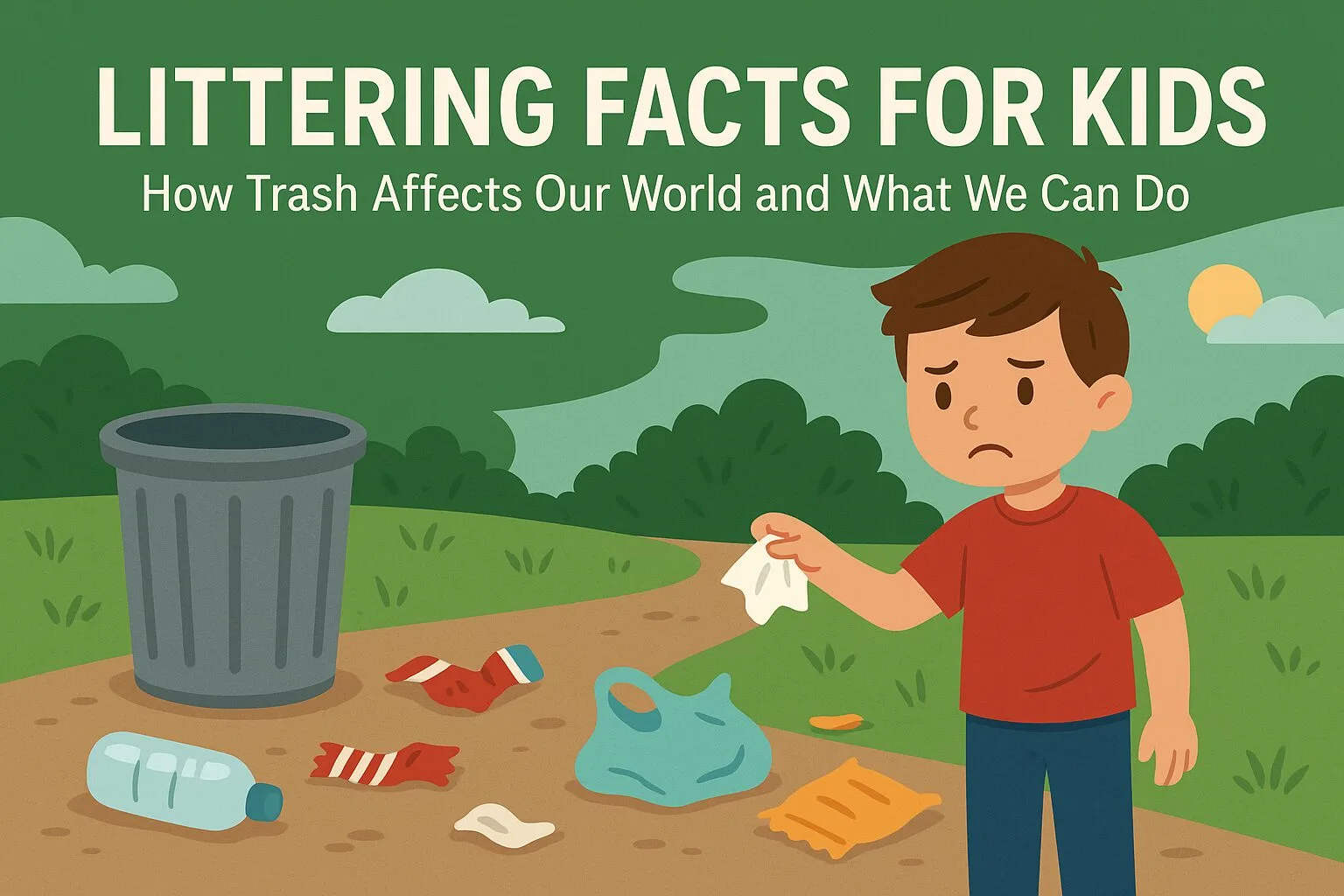
Littering means leaving rubbish in the wrong place instead of a bin. In the UK, more than two million pieces of litter are dropped every day. Litter harms animals, pollutes rivers and the sea, and costs money to clean up. Plastic litter can take 20 to 500 years to break down, and even then it never fully disappears.
littering quick facts
- More than two million pieces of litter are dropped in the UK every day.
- About one in six adults in a UK survey said they had littered in the past year.
- Plastic can take 20 to 500 years to break down.
- Only 9% of all the plastic thrown away so far has been recycled.
- Only nine in every 100 places surveyed in England were free of litter.
Imagine walking into your favourite park. The flowers are out, the grass is green and the birds are singing. Then you notice sweet wrappers, crisp packets and plastic bottles scattered across the grass. That is litter, and it spoils places for everyone. The good news is that we can all do something about it.
What is littering?
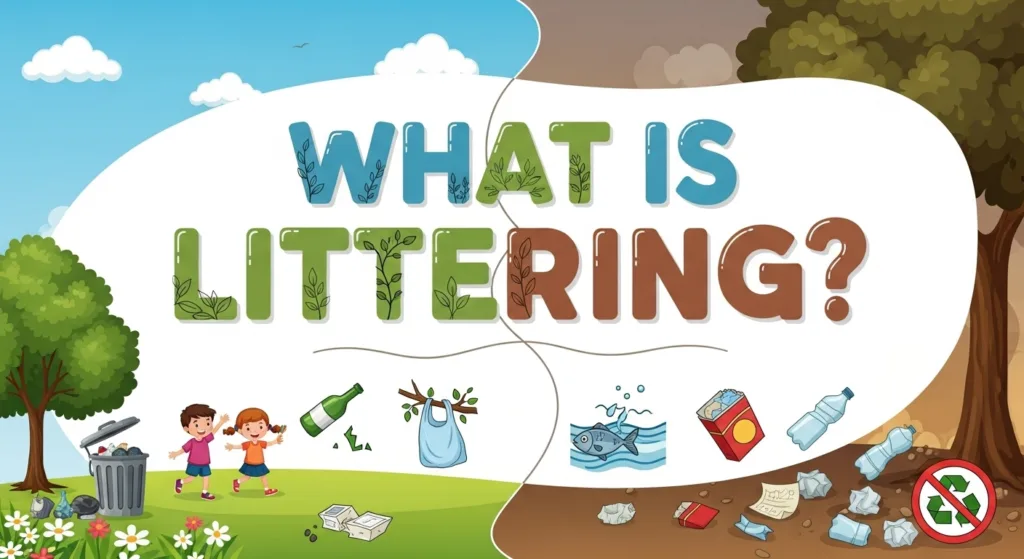
Littering means dropping rubbish and leaving it in the wrong place, instead of putting it in a bin. Litter can be anything from a sweet wrapper or a drinks can to a cigarette end or a plastic bag.
Litter can end up in streets, parks, beaches, rivers and the sea. Some of it is dropped on purpose. Some blows out of bins that are too full, or falls out of lorries and cars.
Wherever it comes from, litter does not simply go away. Someone has to pick it up, or it stays in the environment for a very long time.
How much litter is there?
Litter is a huge problem. In the UK, more than two million pieces of litter are dropped every single day.
In a survey of 2,000 adults for the charity Keep Britain Tidy, nearly one in six said they had littered in the past year. Across the country, that adds up to about eight million people admitting that they drop litter.
Most people hate it, though. In the same survey, 85% of adults said they hate seeing rubbish in their communities, and about three quarters said litter made them feel sad and angry.
Litter is almost everywhere
In 2025, Keep Britain Tidy published a report based on ten years of checking streets, parks and countryside across England.
Its surveyors found litter at more than 90% of the 1,140 miles of sites they checked. In the latest survey, only nine out of every 100 places in England were completely free of litter.
People have noticed. More than three quarters of people in England think the litter problem has got worse in recent years, and seven in ten see litter where they live every day.
The most common kind of litter was smoking litter, such as cigarette ends. Next came packaging from food and drinks eaten on the go. Sweet and chocolate wrappers were found at more than half of the places surveyed.
Why do people litter?
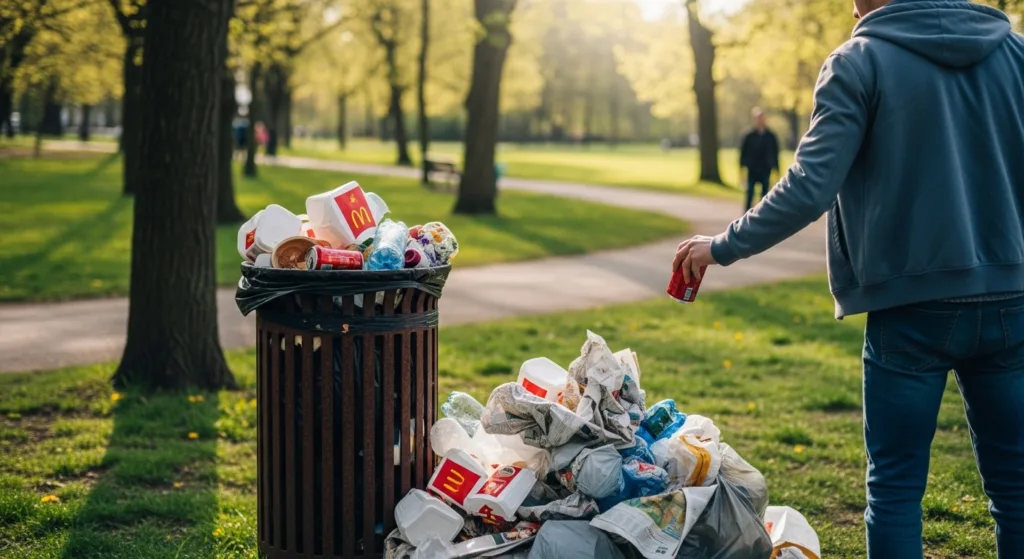
People give different reasons for dropping litter. In the Keep Britain Tidy survey, 25% of people who littered said they were in a rush.
Another 24% said they assumed someone else would clean up after them. And 17% did not think littering was a big problem.
Many people know it is wrong. Three quarters of those who litter try to hide it from their family and friends.
Littering is often a habit. People who drop litter without thinking may not realise how much harm it does, or how long it lasts.
| Reason given for littering | Share of litterers |
|---|---|
| Being in a rush | 25% |
| Thinking someone else will clean up | 24% |
| Not thinking it matters | 17% |
How long does litter last?
Some litter rots away fairly quickly. Fruit peel, for example, breaks down within weeks or months. But much of our litter lasts far longer.
Plastic is the biggest problem. The United Nations says plastic waste can take anywhere from 20 to 500 years to break down. Even then, it never fully disappears. It just breaks into smaller and smaller pieces, called microplastics.
That means a plastic bottle dropped today could still be around when your great-great-great-grandchildren are grown up.
How litter harms the environment
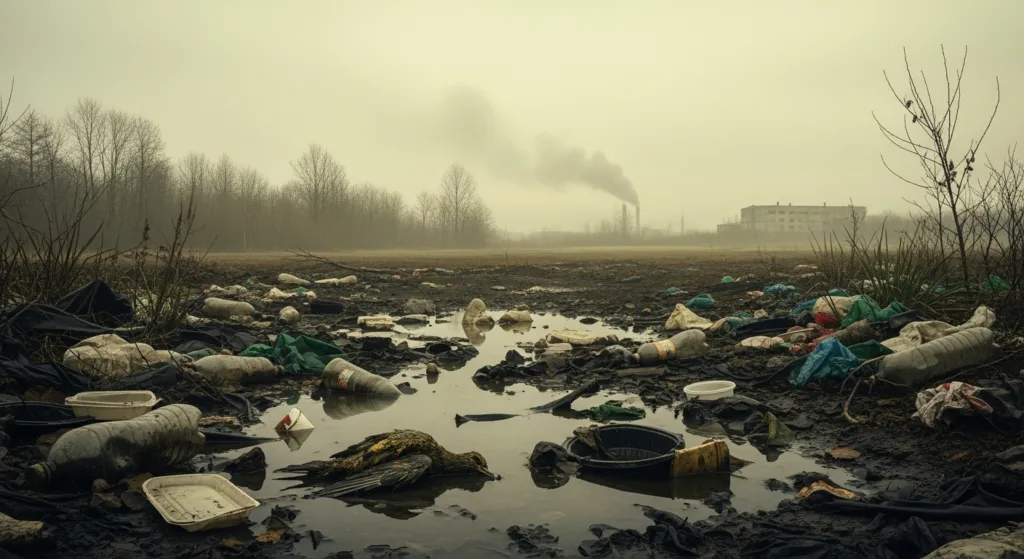
It harms animals: birds, foxes, hedgehogs and other animals can get trapped in cans, bottles and plastic rings, or cut themselves on broken glass. Many animals eat litter by mistake, thinking it is food.
It pollutes the sea: litter dropped in streets can be washed into drains and rivers, and from there into the ocean. The United Nations has shown pictures of sea turtles tangled in plastic, and manta rays swallowing as many as 137 pieces of plastic in an hour.
It gets into our food: tiny pieces of plastic end up in water and food. Scientists have estimated that people may swallow as much plastic as a credit card every week.
It spoils places: litter makes streets, parks and beaches ugly and unpleasant, and it costs a lot of money to clean up, money that could be spent on other things.
Litter is not fair
Litter does not affect every place equally. Keep Britain Tidy found almost three times as much litter in the poorest areas of England as in the richest.
That matters, because litter changes how people feel about where they live. When people were shown a picture of a street covered in litter, two thirds said they would not feel safe walking there at night, and 86% said they would feel embarrassed to live there.
So picking up litter is not just about tidiness. It helps make every neighbourhood a place people can be proud of.
The plastic problem
People have made about 8.3 billion tonnes of plastic in total, and half of it has been made in just the last 13 years or so.
Only a small amount of it is recycled. The United Nations says that of all the plastic thrown away so far, only 9% has been recycled and 12% has been burned. The rest has gone into landfill sites or into the environment.
That is why cutting down on plastic, reusing things and never dropping litter all matter so much.
Recycling or littering?
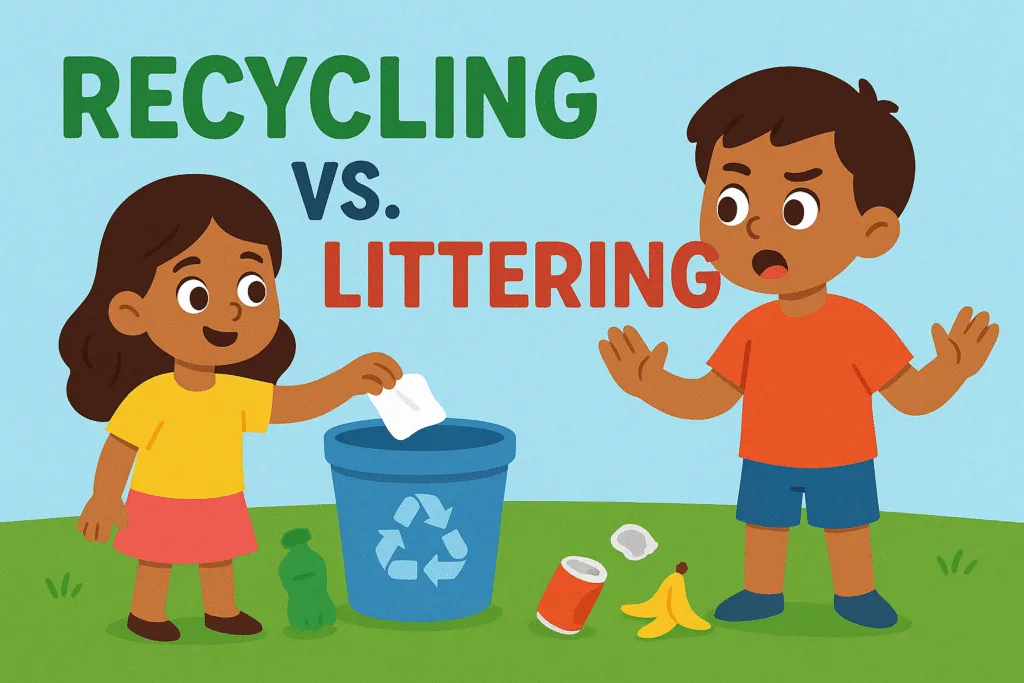
Recycling means turning used things, like paper, glass, cans and some plastics, into new products. It saves materials and energy, and it keeps rubbish out of landfill sites and the environment.
Littering is the opposite. Instead of being used again, the rubbish is wasted, and it can harm wildlife for years.
Before you throw something away, ask: can this be reused or recycled? If there is no recycling bin nearby, take it home and recycle it there.
What kids can do
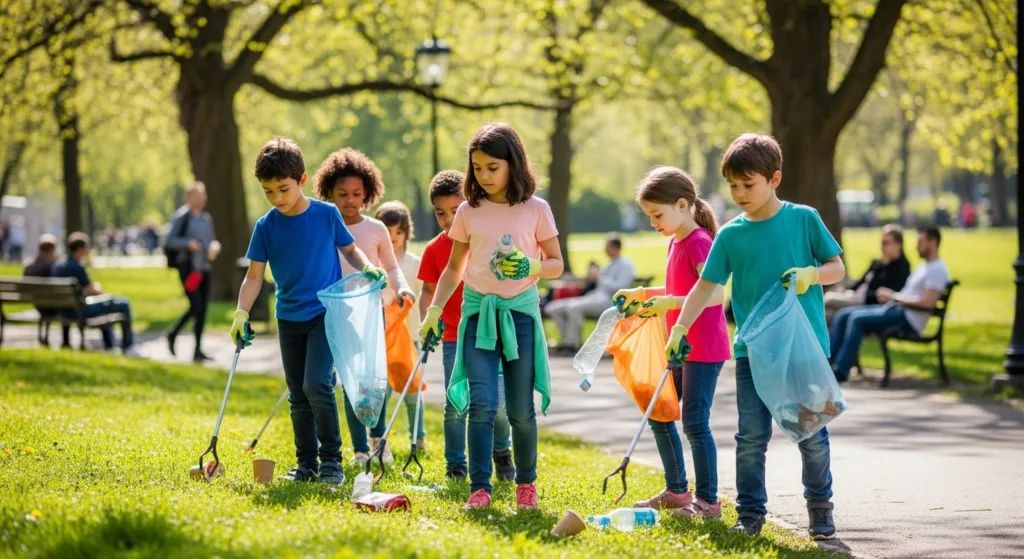
You can make a real difference, and you can start today.
Bin it or take it home: always put your rubbish in a bin. If the bin is full, or there isn’t one, carry your rubbish home.
Pick up litter safely: join a litter pick with your school, club or family. Always wear gloves or use a litter picker, and never touch broken glass, needles or anything sharp. Ask an adult to deal with those.
Reduce and reuse: use a refillable water bottle and a reusable lunch box instead of throwaway packaging.
Speak up: in the Keep Britain Tidy survey, 41% of adults said they would not do anything if they saw someone littering. You can help change that, by politely reminding friends and family to use a bin.
Spread the word: make posters for your school about why litter matters, or start a litter-free lunch challenge in your class.
A litter project for school
Here is a simple project you could try. With an adult, pick a small area, such as your school playground or a street near your home.
Spend 15 minutes picking up litter, wearing gloves. Sort what you find into groups: plastic, paper, cans, food wrappers and other things. Count each group and make a bar chart.
What was the most common kind of litter? Where do you think it came from? What could stop it being dropped? Your answers could help your school come up with a plan to keep the area tidy.
Three things people get wrong
Litter does not just disappear. Plastic can take 20 to 500 years to break down, and even then it only breaks into tiny pieces.
Someone else will not always clean it up. Clearing litter costs a lot of money, and much of it is never collected at all.
Small bits of litter do matter. More than two million pieces are dropped in the UK every day, and they add up to a huge problem.
Did you know? Scientists have estimated that people may swallow about as much plastic as a credit card every week, from tiny pieces in food and water.
Try it
With an adult and wearing gloves, collect litter from a small area for 15 minutes. Sort it into plastic, paper, cans and wrappers, then draw a bar chart of what you found.
Knowledge check
How long can plastic take to break down?
Show answer
From 20 to 500 years, and even then it only breaks into tiny pieces.
What is the most common reason people give for littering in the UK survey?
Show answer
Being in a rush.
Frequently asked questions
What is littering?
Littering means dropping rubbish and leaving it in the wrong place, such as streets, parks, beaches or rivers, instead of putting it in a bin.
Why is littering bad for the environment?
Litter harms animals that get trapped in it or eat it, pollutes rivers and the sea, breaks down into tiny plastic pieces, spoils places and costs money to clean up.
How much litter is dropped in the UK?
More than two million pieces of litter are dropped in the UK every day, and about eight million adults admit to littering.
How long does plastic litter last?
Plastic litter can take anywhere from 20 to 500 years to break down, according to the United Nations. Even then it does not fully disappear; it breaks into microplastics.
Why do people litter?
In a UK survey, people who littered said they were in a rush, thought someone else would clean up, or did not think littering mattered.
How can children stop littering?
Children can always bin their rubbish or take it home, join safe litter picks, use reusable bottles and lunch boxes, and politely remind others to use a bin.
Sources
- Letsrecycle.com: 8m Brits admit to littering (Keep Britain Tidy survey) — how many people litter, why they do it and how people feel about litter
- United Nations: in images, plastic is forever — how long plastic lasts, how much has been made and recycled, and harm to wildlife
- Keep Britain Tidy: a rubbish reality (2025 report) — how much of England is littered, what people think, the most common litter and its effect on poorer areas