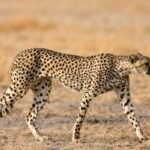
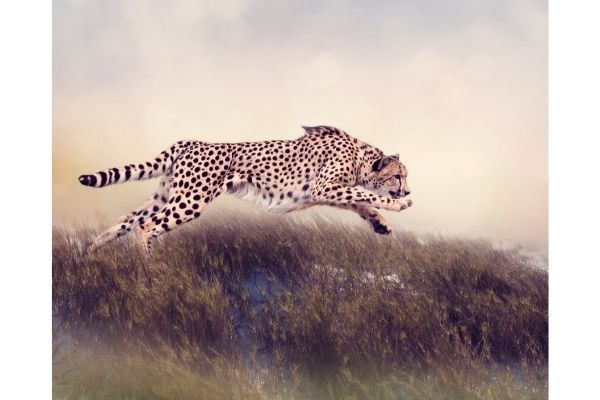
A cheetah can run at up to about 60 to 70 mph (96 to 112 km/h) in short bursts, making it the fastest land animal. The fastest measured runs were about 61 mph at a zoo and 58 mph in the wild. It can reach 45 mph in about 2.5 seconds, but keeps up top speed for only about 20 seconds.
how fast a cheetah can run quick facts
- The cheetah is the fastest land animal.
- A cheetah can go from 0 to 45 mph in about 2.5 seconds.
- One cheetah stride can cover about 7 m (23 feet).
- Sarah the cheetah ran 100 m in 5.95 seconds in 2012.
- A cheetah can keep up top speed for only about 20 seconds.
How fast can a cheetah run?
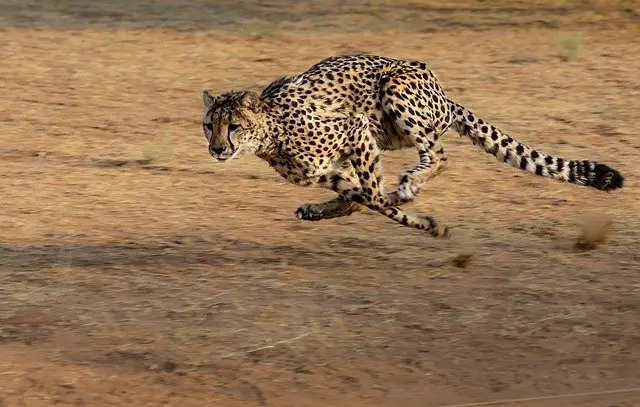
A cheetah can run at up to about 60 to 70 mph (96 to 112 km/h) in short bursts. The Smithsonian’s National Zoo says that makes it the fastest land animal on Earth.
Scientists have also measured real cheetahs with radar and tracking collars. The fastest measured speeds are about 61 mph (98 km/h) for a cheetah at a zoo, and 58 mph (93 km/h) for cheetahs hunting in the wild.
But a cheetah cannot keep going for long. It is a sprinter, not a long-distance runner. Learn more about this amazing cat in our cheetah facts for kids.
| Cheetah speed at a glance | |
|---|---|
| Top speed (zoo figures) | about 60 to 70 mph (96 to 112 km/h) |
| Fastest measured in a zoo | about 61 mph (98 km/h), Sarah, 2012 |
| Fastest measured in the wild | 58 mph (93 km/h) |
| 0 to 45 mph | about 2.5 seconds |
| One stride | up to about 7 m (23 feet) |
| Strides per second | about 4 |
| Top-speed sprint | about 20 seconds |
Faster than a sports car
A cheetah’s speed-up is even more amazing than its top speed. The National Zoo says a cheetah can go from standing still to about 45 mph (72 km/h) in about 2.5 seconds.
The Cheetah Conservation Fund says a cheetah can reach its full speed in just over three seconds. Few cars can speed up that quickly.
Scientists at the Royal Veterinary College found that cheetahs can speed up and slow down almost twice as hard as polo horses, which are bred for fast starts and stops.
Giant strides
A running cheetah covers a lot of ground with every step. The National Zoo says one stride can cover about 7 m (23 feet), about the length of a small bus.
It also takes about four strides every second. The Cheetah Conservation Fund says that during each stride, a cheetah is completely off the ground twice. San Diego Zoo Wildlife Alliance says it spends more than half of its running time in the air.
A body built for speed
Everything about a cheetah’s body helps it run fast. The Cheetah Conservation Fund explains how.
A bendy spine: the cheetah’s spine is very flexible. It stretches out and bends back like a spring, adding power to every stride.
Loose shoulders: its shoulder blades are not joined to its collarbone, so its front legs can swing freely. Its hips pivot, so its back legs can stretch far forward.
Running-shoe claws: a cheetah’s claws only partly pull in, more like a dog’s than a cat’s. They grip the ground like the spikes on a sprinter’s shoes.
Tough paw pads: its pads are hard and less rounded than other cats’, and they grip like the tread on a tyre.
A rudder tail: its long, flat tail works like a boat’s rudder, helping it balance and steer during sharp turns.
Big lungs and heart: large nostrils, big lungs and a big heart pull in and pump oxygen fast during a sprint.
A cheetah is also light for a big cat. The National Zoo says it weighs about 34 to 64 kg (75 to 140 pounds) and stands about 77 cm (30 inches) tall at the shoulder.
The speed record
In June 2012, a cheetah called Sarah set a record at Cincinnati Zoo. National Geographic reported that she ran 100 m in just 5.95 seconds, reaching a top speed of about 61 mph (98 km/h).
Sarah was chasing a lure on a proper running track, and her speed was timed with radar. She was 11 years old at the time.
The fastest human ever over 100 m is Usain Bolt, with a world record of 9.58 seconds. Sarah beat that time by more than 3.6 seconds.
Measuring wild cheetahs
Zoo cheetahs are one thing, but how fast do wild cheetahs run when they hunt? To find out, scientists from the Royal Veterinary College fitted collars with GPS and motion sensors to five wild cheetahs in Botswana.
ScienceDaily reports that over 17 months, the collars recorded 367 hunting runs. The fastest was 58 mph (93 km/h).
The scientists found that most chases happened at fairly modest speeds. National Geographic says speeding up, slowing down and turning mattered more than top speed. A cheetah can brake hard, turn sharply and sprint off in a new direction.
For its size, a cheetah is incredibly powerful. National Geographic says it produced about 120 watts for every kilogram of its body, compared with about 25 for Usain Bolt and 60 for a greyhound.
Why cheetahs sprint so briefly
Running at top speed uses a huge amount of energy and makes a cheetah very hot. The National Zoo says a cheetah can keep up its top speed for only about 20 seconds, covering about 274 m (300 yards).
In the wild study, the average hunting run was only about 173 m long. The longest runs were about 400 to 560 m.
That is why a cheetah sneaks up first. The National Zoo says it creeps to within about 91 m (100 yards) of its prey before it starts to sprint.
Is fast enough?
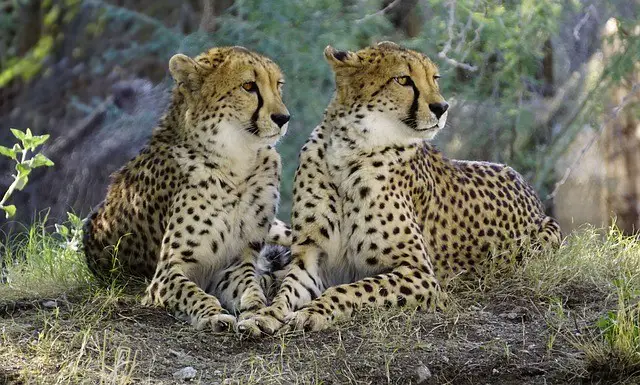
Even the fastest land animal does not always win. The National Zoo says only about half of a cheetah’s chases end in a catch.
And catching a meal is not the end of the story. The National Zoo says cheetahs lose about half of the food they catch to bigger predators, such as lions and hyenas. Find out what they hunt in our guide to what cheetahs eat.
In the Botswana study, the wild cheetahs made about 1.3 hunting runs a day, and impala made up about three-quarters of their prey.
The fastest runners compared
The pronghorn is North America’s fastest land animal. The National Park Service says it can run at about 55 mph (89 km/h).
A pronghorn cannot match a cheetah’s top speed, but it can keep going much longer. The National Park Service says it can hold about 55 mph for half a mile, and about 45 mph over much longer distances.
Scientists think pronghorn became so fast to escape the “American cheetah”, a predator that lived in North America until about 12,000 years ago.
Cheetahs in danger
The Cheetah Conservation Fund says cheetahs are the most endangered big cat in Africa. About 100,000 cheetahs lived in 1900, the National Zoo says, but only about 7,000 to 10,000 are left in the wild.
Cheetahs now live in only about 9% of their old range. The Cheetah Conservation Fund says fewer than 50 Asiatic cheetahs survive, in Iran. Read about another rare kind in our Northwest African cheetah facts, or visit the Cheetah Conservation Fund and the Smithsonian’s National Zoo.
Zoo races
Sarah was not the only cheetah tested at Cincinnati Zoo. National Geographic reported that five cheetahs ran more than 30 races, called heats, over the same 100 m course.
Their times ranged from Sarah’s record of 5.95 seconds to 9.97 seconds for a young male. Even the slowest cheetah was about as quick as the fastest human sprinters.
The races were a fun way to keep the zoo cheetahs fit, and a careful way to measure their speed. Each cheetah chased a lure pulled along the track, a bit like a greyhound race.
Could wild cheetahs be even faster?
The wild cheetahs in Botswana ran a little slower than Sarah did. But the scientist who led the collar study told National Geographic that cheetahs living in more open places, such as the Serengeti plains, might run a bit faster.
In thick bush, a cheetah has to dodge trees and change direction all the time. On open grassland, it has more room to reach its full speed.
The Cheetah Conservation Fund says a cheetah must catch its prey within about 30 seconds. After that, it is too hot and tired to keep going, and the chase is lost.
Built for a long race
The pronghorn has a different kind of speed. The National Park Service says it has long legs, a light body, a very large windpipe and cushioned hooves.
These features help it breathe hard and run far without getting worn out. So while a cheetah is the champion sprinter, the pronghorn is more like a marathon runner.
Learning to run
Cheetahs are not born fast. San Diego Zoo Wildlife Alliance says cubs weigh only about 150 to 300 g at birth, about as much as a small apple.
Life is dangerous for them. San Diego Zoo Wildlife Alliance says up to 70% of cheetah cubs are killed by lions and hyenas. The cubs that survive spend many months with their mother, practising chasing and learning how to hunt.
Three things people get wrong
No wild cheetah has been measured at 70 mph. The fastest measured wild run was 58 mph.
Cheetahs cannot run fast for long. They sprint for only about 20 seconds.
Top speed is not the secret to hunting. Speeding up and turning matter more.
Did you know? A sprinting cheetah is completely off the ground twice in every stride.
Try it
Measure 7 metres on the ground. That is how far a cheetah can travel in one stride. How many of your steps does it take?
Knowledge check
What is the fastest speed measured for a wild cheetah?
Show answer
58 mph (93 km/h).
How does a cheetah’s tail help it run?
Show answer
It works like a rudder, helping it balance and turn.
Frequently asked questions
How fast can a cheetah run?
A cheetah can run at up to about 60 to 70 mph (96 to 112 km/h) in short bursts. The fastest measured runs were 61 mph in a zoo and 58 mph in the wild.
How long can a cheetah run at top speed?
Only about 20 seconds, covering about 274 m (300 yards). Running flat out makes a cheetah very hot and tired.
How fast does a cheetah speed up?
A cheetah can go from standing still to about 45 mph in about 2.5 seconds, faster than most cars.
What is the cheetah speed record?
In 2012, Sarah the cheetah ran 100 m in 5.95 seconds at Cincinnati Zoo, reaching about 61 mph.
Why can cheetahs run so fast?
A bendy spine, free-swinging shoulders, gripping claws, hard paw pads, a rudder-like tail and big lungs and heart all help.
Is a cheetah faster than a pronghorn?
Yes, over a short sprint. But a pronghorn can keep running at about 45 mph for much longer than a cheetah.
Sources
- Smithsonian’s National Zoo: cheetah — top speed, acceleration, stride, sprint length, size, hunting and numbers
- Cheetah Conservation Fund: about cheetahs — speed and how the body is built for it, and numbers; its kids’ page was also used
- San Diego Zoo Wildlife Alliance: cheetah — stride and time in the air
- National Geographic: Sarah the cheetah’s record — the 2012 zoo speed record; its 2013 report on wild cheetahs was also used
- ScienceDaily: Royal Veterinary College cheetah study — the collar study of wild cheetahs in Botswana
- National Park Service: pronghorn — pronghorn speed and the American cheetah