
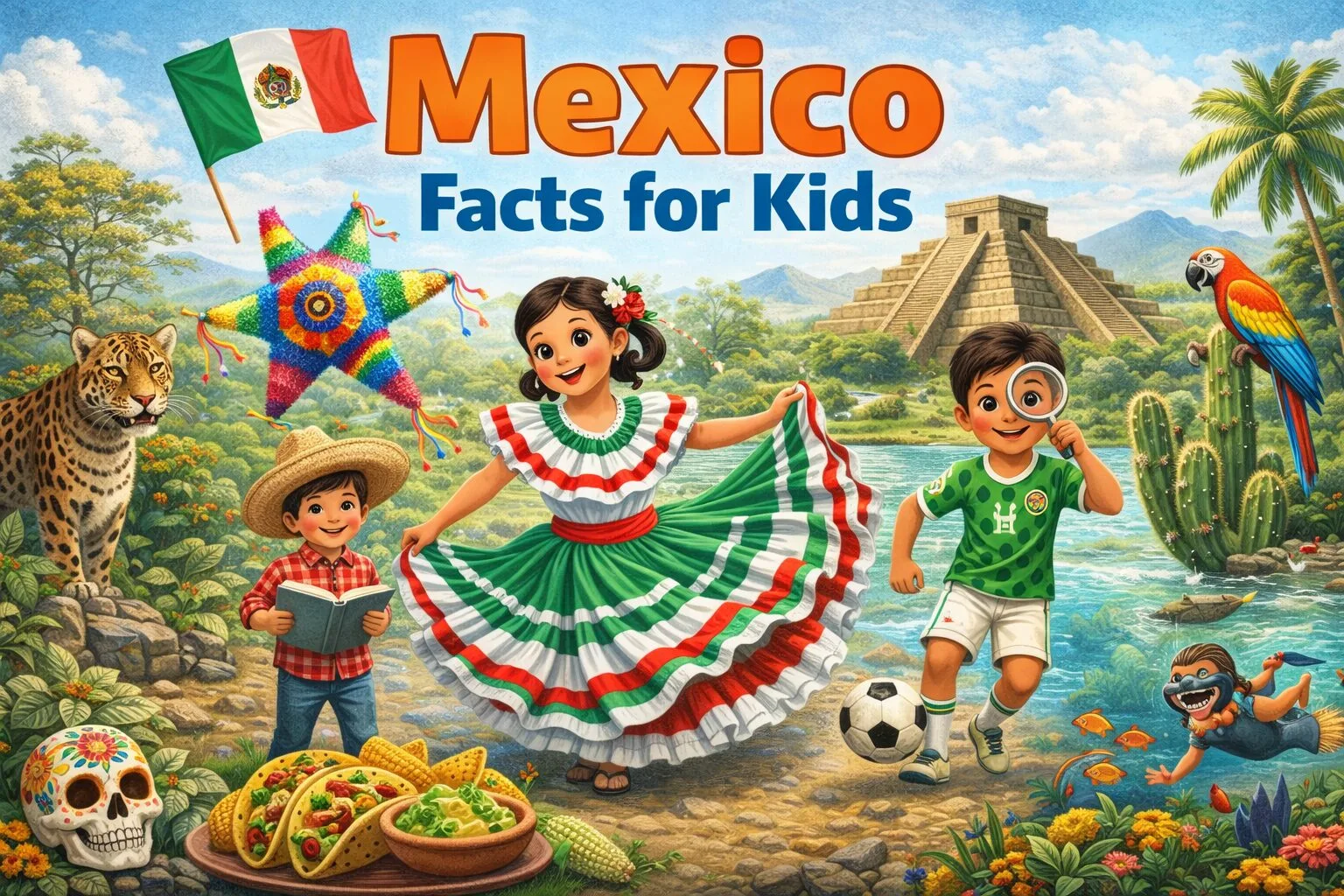
Can you imagine a country made up of diverse terrain, with deserts, rainforests, volcanoes and mountains? The country of Mexico not only contains diverse terrain but also many historic sites! Keep reading to learn fascinating facts about Mexico for kids.
Location & Geography of Mexico
Have you wondered where Mexico and its borders are? Mexico is in southern North America, and it shares borders with:
- The United States to the North
- Guatemala & Belize to the southeast
According to the CIA Mexico covers 1,964,000 km² of total land & water area. The country is made up of diverse terrain and even a volcanic zone, like:
- Mountains like Sierra Madre
- Plateaus
- Deserts in the north like Sonoran Desert
- Rainforests in the south like Lacandon Jungle
- Coastal plains like the Gulf of Mexico
- Active volcano like the Popocatépetl near Mexico City
Climate & Ecosystems of Mexico
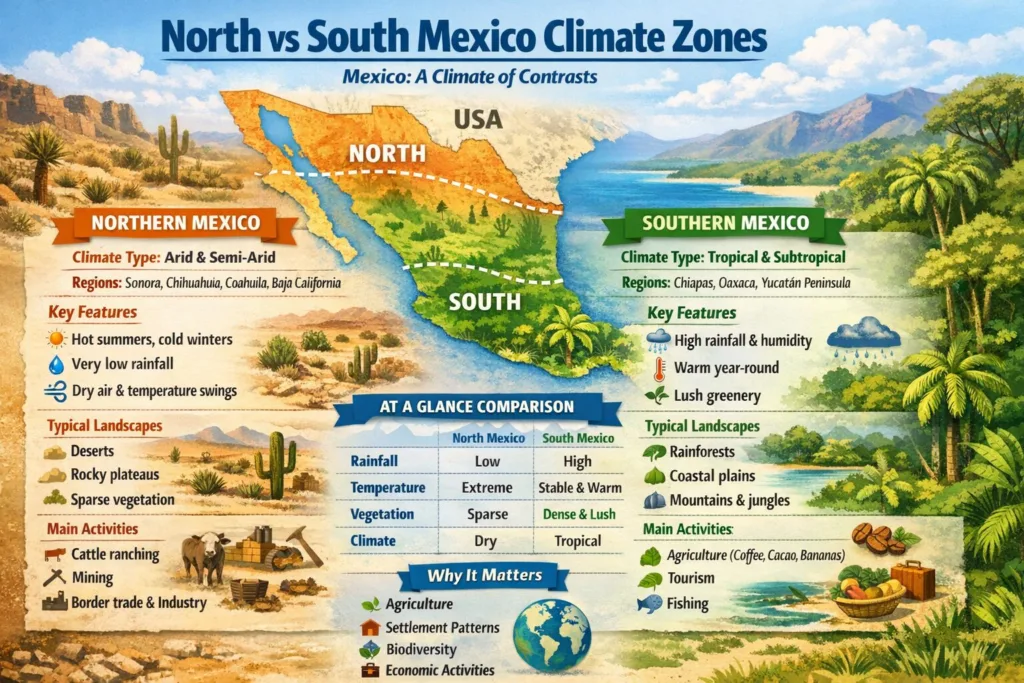
Mexico has a varied climate due to the difference in terrain as there are:
- Deserts in the north
- Tropical & humid zones in the south
- Highlands with cooler climates
The Ecosystem of Mexico is diverse as the land is made up of:
- Forests
- Jungles
- Mangroves
- Deserts
- High mountain zones
The variation in landscape makes the country rich in natural resources like:
- Petroleum
- Minerals like: silver, copper, gold
- Timber
What Is the Culture of Mexico Like? (For Kids)
The recent estimated population of Mexico is 131,946,900 which makes it a very populous country. The top 3 languages spoken in Mexico are:
- Spanish
- Nahuatl (also known as Aztec or Mexicano)
- Yucatec Maya
The ethnic distribution of Mexico is mixed between Indigenous groups, Afro-Mexicans and Europeans. There are many indigenous groups like:
- Nahuatl
- Maya
- Zapotec, etc.
Cultural Traditions & Heritage of Mexico
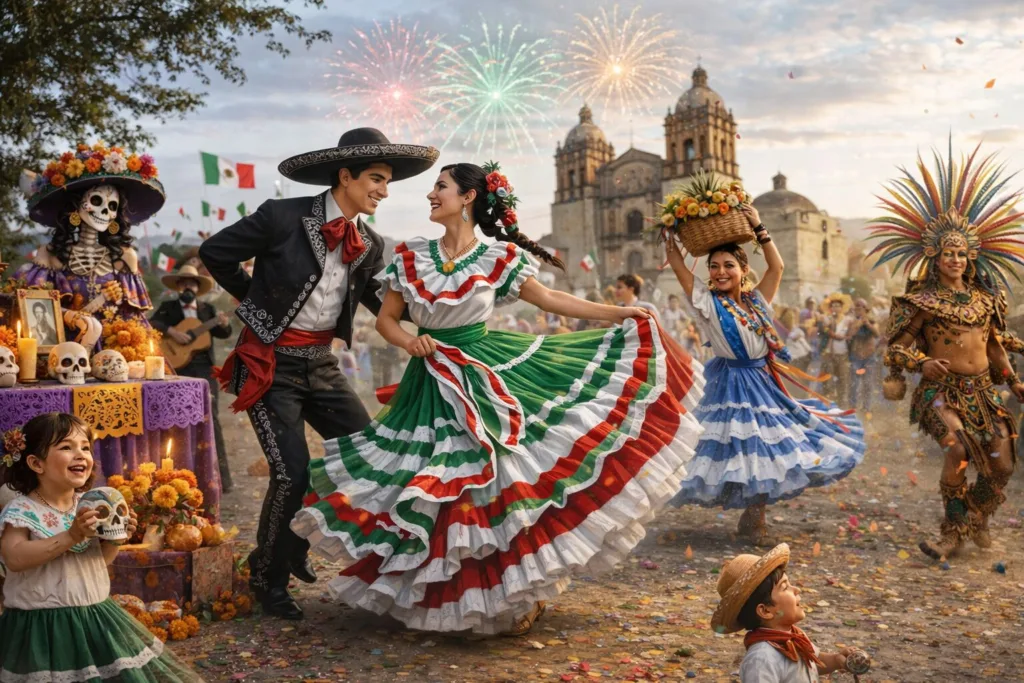
The cultural traditions of Mexico are very unique and respected throughout the world. There are many festivals that represent the culture for example:
- Día de los Muertos (Day of the Dead), celebrated from November 1–2. This festival honors those who passed away.
- Carnivals take place in many towns before Lent. These carnivals have parades, and people dressed up wearing costumes and masks.
- Cinco de Mayo (in Mexico it is a regional celebration) this festival is linked to the Battle of Puebla commemoration.
Music and dance are a very integral part of celebrations, while folk art like papel picado (cut paper banners) are widely used for decorations.
Traditional Mexican Foods Kids Should Know
Let’s make a list of a famous Mexican foods:
- Tacos
- Tamales
- Enchiladas
- Mole
- Quesadillas
- Chiles rellenos
There are many regional staples as well, like:
- Yucatán (cochinita pibil)
- Oaxaca (mole negro)
- Veracruz (seafood)
Here is a list of snacks, sweets & drinks that are famous in Mexico:
- Traditional snacks: Tortilla based foods, salsas, guacamole
- Traditional sweets: churros, pan dulce, cajeta
- Drinks: aguas frescas (hibiscus, tamarind), atole, chocolate caliente
Mexico’s History Explained Simply (For Students)
Mexico has a rich history and it stretches back to thousands of years!
- The pre-Columbian civilization dates back to the Olmec, who laid down the cultural foundations of Mesoamerican societies.
- The Maya and Aztec Civilization continued the legacy and made great developments in various fields like astronomy and architecture. They created the pyramids of Teotihuacan and Chichen Itza.
These civilizations paved the way for many discoveries like:
- Development of writing systems
- Complex calendars
- Astronomical observations
- Temple complexes
Spanish colonizers started to arrive in the early 1500s and under the leadership of Hernán Cortés the Aztec Empire collapsed. Eventually during the colonial period the blending of Indigenous and Spanish culture began, this cultural fusion would become central to Mexico’s character. Independence from Spanish rule was gained on September 16, 1810. Miguel Hidalgo’s famous “Grito de Dolores” (Cry of Dolores) was a call to rebellion that motivated the population for the independence movement.
Landmarks & Places to See in Mexico
Ancient Pyramids & Archaeological sites in Mexico
- Great Pyramid of Cholula
- Teotihuacan near Mexico City — Pyramids of the Sun & Moon
- Tenochtitlán / Templo Mayor in Mexico City
- Maya sites: Palenque, Uxmal, Tulum
Cities in Mexico
- Mexico City (is the capital)
- Guadalajara
- Monterrey
- Cancún
- Mérida
Natural sites in Mexico
- Copper Canyon
- Cenotes (sinkholes)
- Beaches (Cancún, Riviera Maya)
- Volcanoes (Popocatépetl)
- Mountains (Sierra Madre)
Wildlife & Nature of Mexico
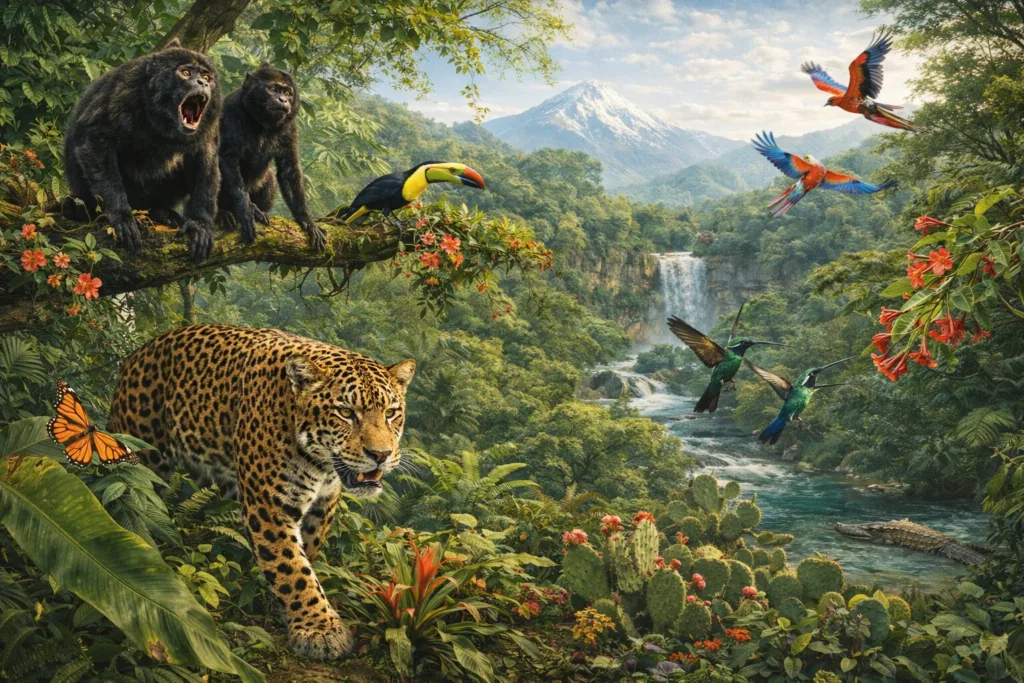
Here is a list of animals native to Mexico:
- Land Animals:
- Jaguars
- Ocelots
- Howler monkeys
- Coatis
- Peccaries
- Marine Life:
- Sea turtles
- Whales (during migration seasons)
- Reef fish
- Birds:
- Quetzal
- Hummingbirds
- Egrets
Plants & Forests of Mexico
The terrain of Mexico is very diverse which means there are tropical rainforests in the south and deserts in the north. There are cloud forests as well that contain plants like:
- Cacti
- Agave
- Mangroves
- Orchids
These forests are facing threats and are going through Conservation phases due to issues like:
- Deforestation
- Habitat loss
- Endangered species
Fun & Surprising Facts about Mexico
- The world’s largest pyramid is The Great Pyramid of Cholula in Mexico!
- You probably didn’t know that Mexico introduced chocolate, corn (maize), vanilla, and many chili peppers to the world!
- Piñatas originate from Mexican tradition
- Día de Muertos (Day of the Dead) is a festival that honours those who passed away.
- Did you know Mexico has over 35 UNESCO World Heritage Sites?
Frequently Asked Questions
How tall is Mexico’s highest mountain?
Mexico’s highest mountain is Pico de Orizaba / Citlaltépetl 5,636 meters
Which ancient civilization built Chichén Itzá?
The Maya Civilization created the Chichén Itzá
Name one example of a native animal found in Mexico’s jungles.
Jaguars are an example of a native animal found in Mexico’s Jungle
What holiday in Mexico honors the dead
Día de los Muertos (Day of the Dead), honors the dead and this holiday is celebrated from November 1–2.
What is Papel Picado used for?
Papel picado (cut paper banners) are widely used for decorations.
Conclusion
Mexico matters like every other country in the world, this country has been a huge influence on the world due to its beautiful customs and yummy foods! The language of the people and the geographic beauty of this country teaches us a lot about appreciating and respecting cultures and places. If you ever travel to Mexico or hear about it on the internet, try to recall the facts that you learnt today.