
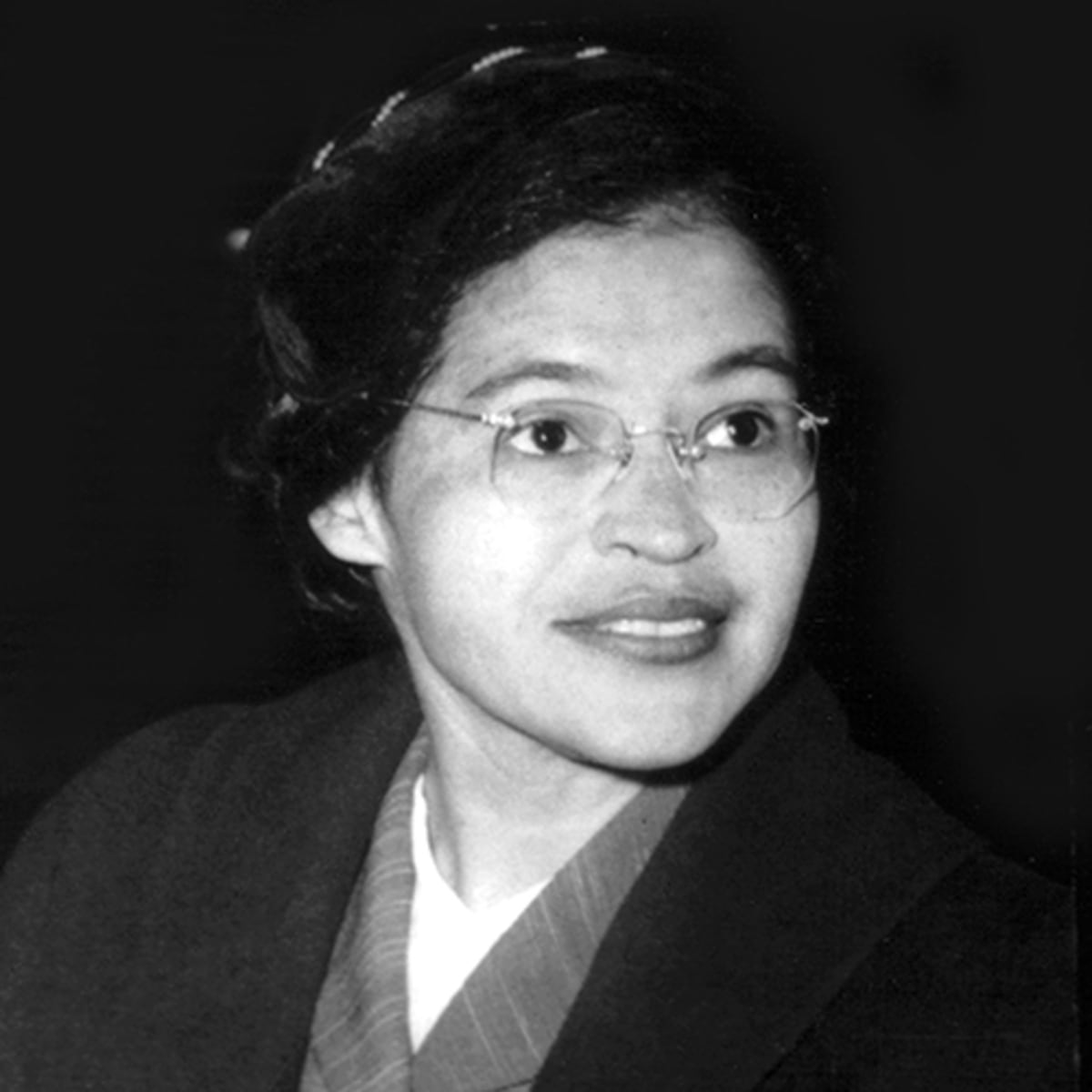
Rosa Parks is one of the most prominent American activist in the civil rights movement. She is well known for her role in the Montgomery bus boycott. We have gathered Rosa Parks Facts For Kids that will help you in learning all about Rosa Parks. This is brief Rosa Park biography for kids where you will learn who she is, why she is famous, what are her achievements, her family life, childhood, education, her legacy, books, her life story, timeline and many other interesting facts about Rosa Parks
Rosa Parks Facts For Kids
Who Is Rosa Parks
Rosa Parks was an American activist born in Alabama. She helped to start the Civil Rights Movement in America with her refusal to give up her seat to a white man on a Montgomery bus, in 1955. Her actions became an inspiration for the local Black Community leaders to organize the Montgomery Bus Boycott.Due to her struggle to end the ingrained racial segregation in the United States, she became a National Symbol of strength and dignity.
The United States Congress called her “the mother of the freedom movement” and “the first lady of civil rights”.
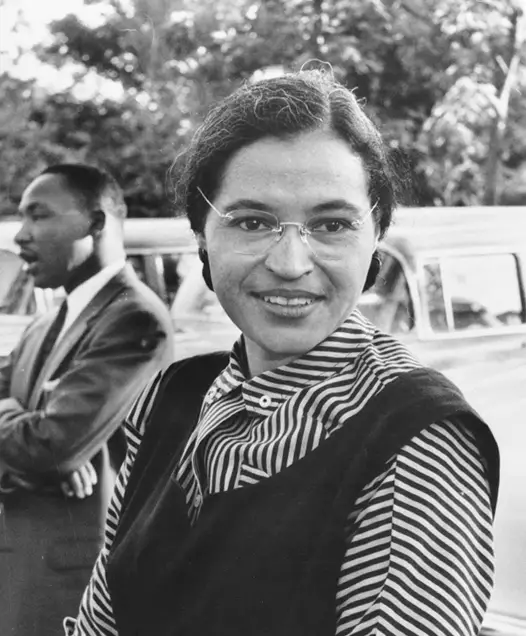
What Is Rosa Parks Full Name
The full name of Rosa Parks is Rosa Louise McCuley Parks.
What Did Rosa Parks Do
Rosa Parks revitalized the struggle for racial equality when she refused to leave her seat for a white man. She was arrested on 1 December 1955. The action led to the Montgomery Bus Boycott, in which about 40,000 black citizens participated. Due to the boycott, the Supreme Court ruled on 20 December 1956 that segregation in the public transport system was unconstitutional.
What Inspired Rosa Parks
Claudette Colvin inspired Rosa Parks. She was a 15 years old girl who was arrested when she refused to give up her seat to a white man in a segregated bus in Montgomery.
What Is Rosa Parks Famous For – What Is Rosa Parks Known For
Rosa Parks is famous for refusing to leave her seat for a white man. Due to her actions, the local community leaders of the Black people became inspired to organize the Montgomery Bus Boycott. Her actions made her a nationally recognized symbol of strength and dignity in the struggle for racial equality in the United States.

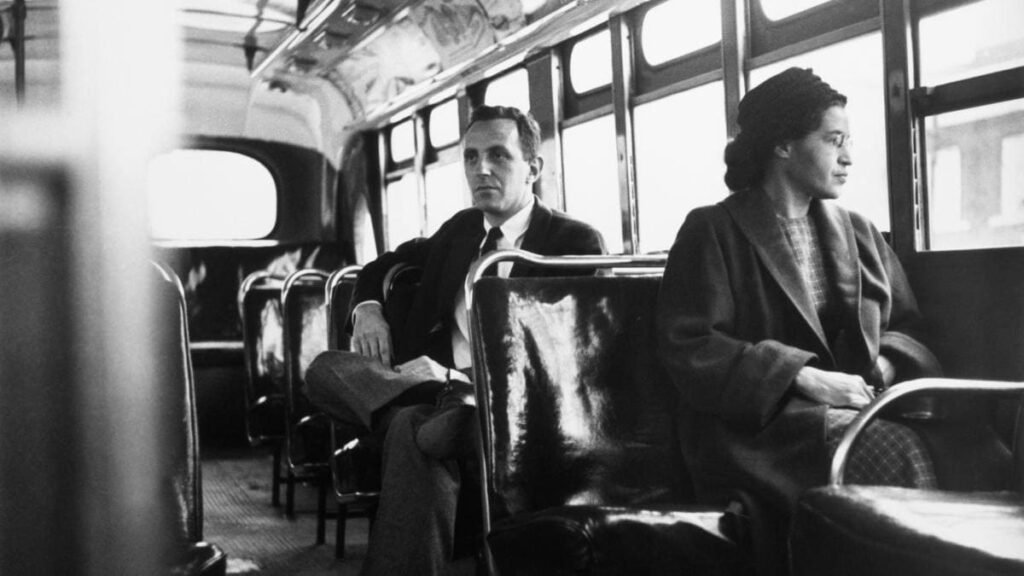
- Parks on a Montgomery bus on December 21, 1956, the day Montgomery’s public transportation system was legally integrated.
Why Rosa Parks Is Important
Rosa Parks is important because her actions played a key role in the fight for civil rights. Her brave act of refusing to give up her bus seat to a white man invigorated the struggle for equal racial rights throughout the United States. She serves as a role model for those who struggle for racial equality and equal human rights.
What Did Rosa Parks Do For Society
Rosa Parks did a lot for society as she stood up against racial injustice and oppression. That is why she is known as the mother of the civil rights movement in the United States.
How Did Rosa Parks Change The World
Rosa Parks changed the world through her brave acts and valuable lessons. She spent her entire life in the struggle for racial equality and equal civil rights for black people in the United States.
Once she said: “We can fight for our beliefs by not tolerating everyday acts of injustice and oppression”.
Rosa Parks Legacy And Honors
- In 1963, activist Paul Stephenson started a similar bus boycott like that of the Montgomery Bus Boycott in Bristol, England. It was a protest against a color bar set up by a bus company there.
- In 1976, the name of 12th Street in Detroit was changed into ‘Rosa Parks Boulevard’ in the honor of Rosa Parks.
- She received the highest honor of the NAACP (Spingarn Medal), the Presidential Medal of Freedom, and the Congressional Gold Medal.
- In 2013, her posthumous statue was installed in the National Sanctuary Hall of the United States Capitol.
- In 1993, she was included in the inductees of the National Women’s Hall of Fame.
- The states of California and Missouri celebrate her birthday (4 February) as Rosa Parks Day.
- The states of Ohio, Oregon, and Texas celebrate her arrest anniversary on 1 December.
What Awards Did Rosa Parks Win
The following are the major awards that Rosa Parks won:
- NAACP’s Spingarn Medal (1979)
- Martin Luther King Jr. Award (1980)
- Candace Award (1984)
- Golden Plate Awards (1995)
- Presidential Medal of Freedom (1996)
- Congressional Gold Medal (1999)
When Was Rosa Parks Born – Rosa Parks Birthday
Rosa Parks was born on February 4, 1913.
Where Was Rosa Parks Born – Rosa Parks Birthplace
The birthplace of Rosa Parks was Tuskegee, Alabama, United States.

Where Is Rosa Parks From – Rosa Parks Hometown
The hometown of Rosa Parks was Tuskegee, Alabama.
What Nationality Was Rosa Parks – Nationality Of Rosa Parks
Rosa Parks was of American Nationality.
Rosa Parks Background
Rosa Parks was the daughter of a teacher mother Leona and a skilled carpenter father. The ancestry of Rosa Parks was African with Scots-Irish (from one of her great-grandfathers) and part-Native American slave (from one of her great-grandmothers).
What Is Rosa Parks Education – Rosa Parks Education – What Did Rosa Parks Study
The mother of Rosa Parks educated her at home during much of her childhood. At a young age, she attended a segregated one-room school in Pine Level, Alabama. At the age of eleven, she enrolled in the Industrial School for Girls in Montgomery.After the completion of school, she enrolled for her secondary education in a laboratory school established by the Alabama State Teachers College for Negroes.
However, she never graduated and dropped out to take care of her ill grandmother and later of her mother. She also attended the Highlander Research and Education Center (formerly known as Highlander Folk School) for a two-week workshop.
What Was Rosa Parks Childhood Like – Rosa Childhood Facts – Rosa Parks Facts As A Child
The childhood of Rosa Parks was full of suffering and illness. She was a small child with poor health and had chronic tonsillitis even during her youth. Her parents separated when she was only two years old. She and her brother moved with their mother to Pine Level, where they lived on the farm of their maternal grandparents.
She helped in the routine work on the farm and also learned cooking and sewing, as her mother and grandmother were quilt makers. As her mother was a teacher, she educated Rosa Parks at home during much of her childhood. She experienced racial discrimination from her early childhood. Once she saw her grandfather standing at the front of their house with a shotgun while the members of the Ku Klux Klan were marching down the street.
What Was Rosa Parks Religion – Rosa Parks Religion
Rosa Parks was strongly involved in the African Methodist Episcopal Church (AME). She and her family were members of this church.
Rosa Parks Ethnic Background – Rosa Parks Ethnicity
Rosa Parks had African ancestry. In addition, one of her great-grandfathers was Scots-Irish. While one of her great-grandmothers was a Native American slave.
Rosa Parks School
Rosa Parks Elementary School is an Environmental Science Magnet school located at 920 Allston Way, Berkeley, California, United States.
Rosa Parks High School
Rosa L. Parks Arts High School is a public school of fine and performing arts. It is a four-year public high school located in Paterson City, Passaic County, New Jersey, USA. It offers education from 9th to 12th grades as part of the Paterson Public Schools.
What Was Rosa Parks Job – What Was Rosa Parks Occupation – Rosa Parks Occupation
Rosa Parks did numerous jobs from a domestic worker to a hospital aid and a dressmaker. She also served as secretary in the National Association for the Advancement of Colored People (NAACP’s) programs. She was a civil rights activist and a human rights activist.
What Did Rosa Parks Accomplish – Rosa Parks Achievements
The following are some of the major accomplishments or achievements of Rosa Parks:
- Rosa Parks contributed to many protests and demonstrations. She made a lot of efforts to organize and defend African-Americans. She also contributed to Martin Luther King’s dream that all Americans will be equal one day. Her efforts made her one of the most influential figures of the 20th century.
- Her refusal to give her bus seat to a white man led to the well-known Montgomery Bus Boycott, which is considered the first biggest exposition against segregation in the United States.
- Rosa Parks is also known as the mother of the Civil Rights Movement in the United States. She started work as an activist in the decade of 1930s. Her civil leadership and her persistence for freedom and racial equality made her an icon of the American Civil Rights Movement.
- Rosa Parks joined the Montgomery Division of the National Association for the Advancement of Colored People (NAACP) in 1943, which was a leading organization for the civil rights of African-Americans. Soon, she was elected as secretary of the NAACP.
- She helped to defend Scottsboro Boys, the nine African-American boys who were accused of raping two white women. Rosa Parks worked hard to raise money for their defense, however, seven of them were sent to prison in the end.
- In 1944, six white men gang-raped an African-American girl named Recy Taylor. Rosa Parks worked hard to seek justice for her. She used her position as a secretary of the NAACP and spread the truth about Mrs. Taylor’s case. Due to her efforts, the case achieved national support, and the accused men admitted to rape.
- In 1987, Rosa Parks founded the Rosa and Raymond Parks Institute for Self Development together with Elaine Eason Steele.
- In 1993, Rosa Parks was inducted into the Michigan Women’s Hall of Fame for her achievements and contributions to civil rights.
- In 1999, she received the highest civil awards of the United States; the Presidential Medal of Freedom and the Congressional Gold Medal. Both of these awards were given to her by President Bill Clinton.

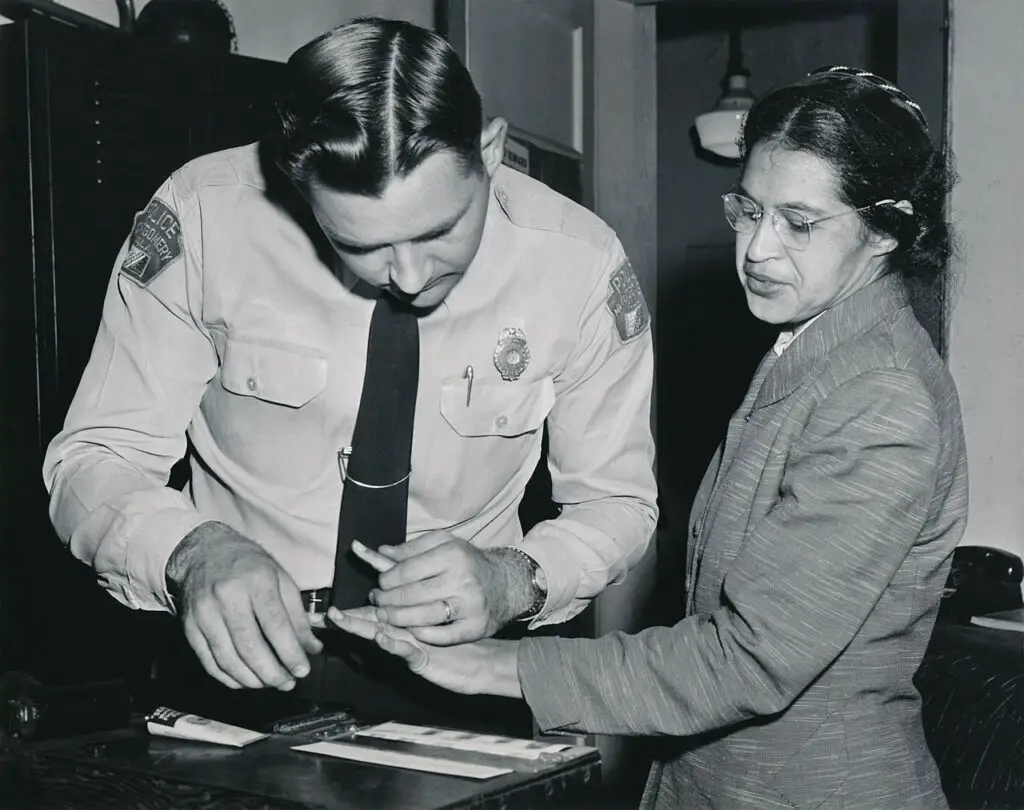
- Parks being fingerprinted by Lieutenant D.H. Lackey on February 22, 1956, when she was arrested again, along with 73 other people, after a grand jury indicted 113 African Americans for organizing the Montgomery bus boycott.
Family Of Rosa Parks – Rosa Parks Family Information
Rosa Parks belonged to an African-American family. Her parents were farmers who also did other jobs. Her father also worked as a carpenter while her mother was a teacher. Her parents divorced when she was only two years old.
Rosa Parks and her newborn younger brother (Sylvester) moved with their mother to the farm of their maternal grandparents in Pine Level, Alabama. Like other African-Americans, Rosa Parks’ grandparents were also formerly enslaved people. That is why they were strong advocates of racial equality in the United States.
Rosa Parks Family Life
The family life of Rosa Parks was full of struggles. She grew up on the farm of her maternal grandparents. Her grandmother and mother were quilt makers. So she began piecing quilts at the age of only about 6 years. At the age of eleven, she attended rural schools. Before that, she learned sewing from her mother. She married Raymond Parks in 1932.
Rosa Parks Family Members
The family members of Rosa Parks were:
- Raymond Parks (husband)
- Leona McCauley (mother)
- James McCauley (father)
- Sylvester McCauley (brother)
- Louisa McCauley (grandmother)
Does Rosa Parks Have A Child –
Does Rosa Parks Have A Daughter
No, Rosa Parks has no child and no daughter.
Who Is Rosa Parks Husband – Who Did Rosa Parks Marry
Rosa Parks married Raymond Parks, who was a barber and an active member of the NAACP from Montgomery. They married in 1932 and never had any children.
What Was Rosa Parks Interested In – Rosa Parks Interests
Rosa Parks was interested in the activism for racial equality in the United States.
Rosa Parks Children’s Book – Rosa Parks Books For Kids
A lot of books have been written on Rosa Parks for children. Some of them are:
- Rosa Parks by Lisbeth Kaiser
- I Am Rosa Parks by Brad Meltzer
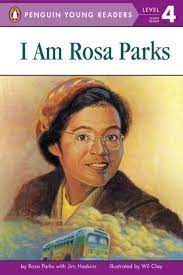
- I Am Rosa Parks by James Haskins and Rosa Parks
- Who Was Rosa Parks? by Yona Z. McDonough
- The Story Of Rosa Parks by Patricia Pingry
- National Geographic Readers: Rosa Parks by Kitson Jazynka
- If A Bus Could Talk: The Story Of Rosa Parks by Faith Ringgold
- Rosa by Nikki Giovanni
- Rosa’s Bus: The Ride To Civil Rights by Sue King
- The Bus Ride That Changed History by Pamela Duncan
When Did Rosa Parks Died –
How Did Rosa Parks Die – Rosa Parks Death
Rosa Parks died on October 24, 2005. She died of natural causes. She was 92 years old at the time of her death.
Rosa Parks History – Life Story Of Rosa Parks – Rosa Parks Life Summary
The following is a short life summary or life story of Rosa Parks:
- Rosa Parks was born on 4th February 1913 in Tuskegee, Alabama to African American parents.
- Her father was a carpenter while her mother was a teacher who home-schooled her until the age of eleven.
- The parents of Rosa Parks separated when she was only two years old.
- She grew up with her mother, younger brother, and maternal grandparents on a farm.
- She started attending Pine Level segregated schools in 1919.
- She learned sewing and quilt making from her mother and grandmother.
- At the age of eleven, she enrolled in the Industrial School for Girls in Montgomery.
- For her secondary education, she then attended a laboratory school that was established by the Alabama State Teachers College for Negroes, however, she dropped out to take care of her grandmother.
- She married a barber from Montgomery, Raymond Parks, in 1932.
- Rosa Parks joined the NAACP (National Association for the Advancement of Colored People) in 1943 and was elected the secretary to E. D. Nixon. Her husband was already an active member of the group.
- The well-known incident of her life occurred in December 1955, when she refused to give up her bus seat to a white passenger for which she was arrested.
- Her arrest led to the Montgomery bus boycott that became successful and put a new life into the Civil Rights Movement.
- In 1957, she moved to Detroit along with her husband because her life was threatened in Montgomery and she also lost her job due to the economic sanctions against activists.
- In 1965, Senator John Conyers offered Rosa Parks to be his secretary. She worked together with him to foster change not only in the United States but worldwide.
- Rosa Parks achieved many awards for her efforts, including the NAACP Spingarn Medal (1979), the Presidential Medal of Freedom (1996), and the Congressional Gold Medal (1999).
- She died of natural causes in 2005.
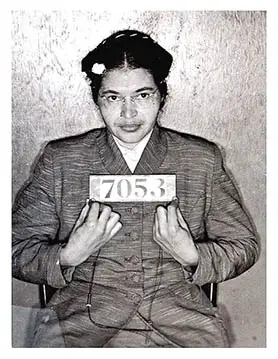
Rosa Parks Timeline – Rosa Parks Important Events – Rosa Parks Events
The following is a brief timeline of Rosa Parks’s life and achievements:
| Date | Event |
| 1913 | Rosa Parks born |
| 1919 | Started going to Pine Level segregated school |
| 1932 | Married to Raymond Parks |
| 1943 | She joined the NAACP (National Association for the Advancement of Colored People) |
| 1955 | The incident of Montgomery Alabama Bus occurred when she refused to give up her seat to a white man |
| 1956 | Her arrest led to the Montgomery Bus Boycott. The boycott became successful and the movement for black equality began. |
| 1957 | She moved to Detroit, where she found a job at the Detroit Stockton Sewing Company. |
| 1963 | She took part in the March on Washington along with Martin Luther King Jr. and other well-known Black leaders. |
| 1965 | She became the secretary of Senator John Conyers. |
| 1979 | She was awarded /*the NAACP’s highest honor, the Spingarn Medal. |
| 1987 | Along with Elaine Eason Steele, she founded the Rosa and Raymond Parks Institute for Self Development. |
| 1992 | She wrote her autobiography Rosa Parks: My Story. |
| 1996 | She was honored with the Presidential Medal of Freedom, given to her by President Bill Clinton. |
| 1999 | She was awarded the Congressional Gold Medal. |
| 2005 | Rosa Parks died. |
Rosa Parks Books – Books On Rosa Parks
The following are books on Rosa Parks, in which some she wrote herself and some with other authors:
- Rosa Parks (1992) by Rosa Parks
- I Am Rosa Parks (1997) by Jams Haskins and Rosa Parks
- Dear Mrs. Parks (1996) by Gregory Reed and Rosa Parks
- Reflection By Rosa Parks: The Quiet Strength and Faith of a Woman Who Changed a Nation by Rosa Parks
- Quiet Strength: The Faith, the Hope, and the Heart of a Woman (1994) by Gregory Reed and Rosa Parks
- I Shall Not Be Moved (1995) by Rosa Parks
- We Rise: Speeches by Inspirational Black Women
- Secrets of Inner Power, a Profile in Courage: A Dialogue Between Rosa Parks And Deepak Chopra (1999) by Deepak Chopra and Rosa Parks
Rosa Parks Civil Rights Movement – Rosa Parks Activism
Rosa Parks is also known as the mother of the Civil Rights Movement in the United States. She was a civil rights activist and an active member of the NAACP (National Association for the Advancement of Colored People). Her act of refusing to give up her seat to a white man in the Montgomery bus ignited the civil rights movement in the United States.
She was arrested for her actions, which led to the boycott of the Montgomery bus. Due to her case, the administration of Montgomery city was forced to permanently desegregate city buses. Before that she had worked with the NAACP on other cases of civil rights including the Scottsboro Boys case; nine black teenagers who were falsely accused of raping two white women, and the Recy Taylor case; an African-American woman gang-raped by six white men.
Rosa Parks Arrest And Bus Boycott – What Happened In Montgomery Bus Boycott
On December 1, 1955, Rosa Parks boarded the Clevender Avenue bus at around 6 p.m. The bus belonged to the Montgomery City Lines. She sat on an empty seat in the “colored” section of the bus, a section reserved for black people. As the bus traveled, all the seats for white people filled up.
When the driver noticed that white passengers are standing, he asked Parks and the other three black passengers to stand and give up their seats to white passengers. The other three passengers gave up their seats while Rosa Parks refused. Subsequently, she was arrested. However, she was bailed out of jail by the president of the Montgomery chapter of the NAACP, Edgar Nixon, and her lawyer friend Clifford Durr.
An Alabama State College professor and member of the Women’s Political Council, Ann Robinson, advised Nixon to seize this opportunity and announce a bus boycott. On December 4, 1955, planes were announced for the Montgomery Bus Boycott at churches of black people in the region. On Monday, December 5 (Parks’s trial day), people were asked to stay off the buses, stay at home from work or school, or take a cab or walk to work in protest against Rosa Park’s arrest and trial.
It was raining that day but the African-American Community persist in their boycott. Rosa Parks was fined $10 for the offense plus $4 in court costs. Even after that day, most of the African-Americans were not traveling in the buses. So the organizers believed that a boycott for a longer period might be successful.
The longer boycott became successful and lasted for 381 days. The boycott was ended on December 21, 1956, after the decision of the United States Supreme Court that declared that the Alabama and Montgomery laws of segregation on the buses are unconstitutional.
Rosa Parks Bus Quotes
The following are the most famous Rosa Parks’s bus quotes:
“I’d see the bus pass every day. But to me, that was a way of life; we had no choice but to accept what was the custom. The bus was among the first ways I realized there was a Black world and a white world.”
“People always say that I didn’t give up my seat because I was tired, but that isn’t true. I was not tired physically … No, the only tired I was, was tired of giving in.”
Interesting Facts About Rosa Parks
- Rosa Parks was not the first African-American, who refused to give up her seat on the Montgomery bus and was arrested. Nine months before Rosa Parks’s refusal and arrest, a 15 years old passenger Claudette Colvin was the first African-American who had been arrested for refusing to give up her seat to a white passenger.
- Rosa Parks was a member of the NAACP and a civil rights activist before her arrest.
- The life of Rosa Parks was threatened in Montgomery so she and her husband moved to Detroit.
- On the 50th anniversary of her arrest, seats on the bus were left empty in the honor of Rosa Parks.
- Rosa Parks was the first woman who lies in honor of the U.S. Capitol.
Fun Facts Rosa Parks
- The mother of Rosa Parks was a teacher and her father was a carpenter.
- Her parents separated when she was only 2 years old.
- Rosa Parks learned sewing from her mother.
- At the age of eleven, she sewed the first dress she could wear.
- She was involved in the Civil Rights Movement in 1943 when she joined NAACP.
- Due to the Montgomery Bus Boycott, Rosa Parks was recognized country-wise as an icon of the Civil Rights Movement.