
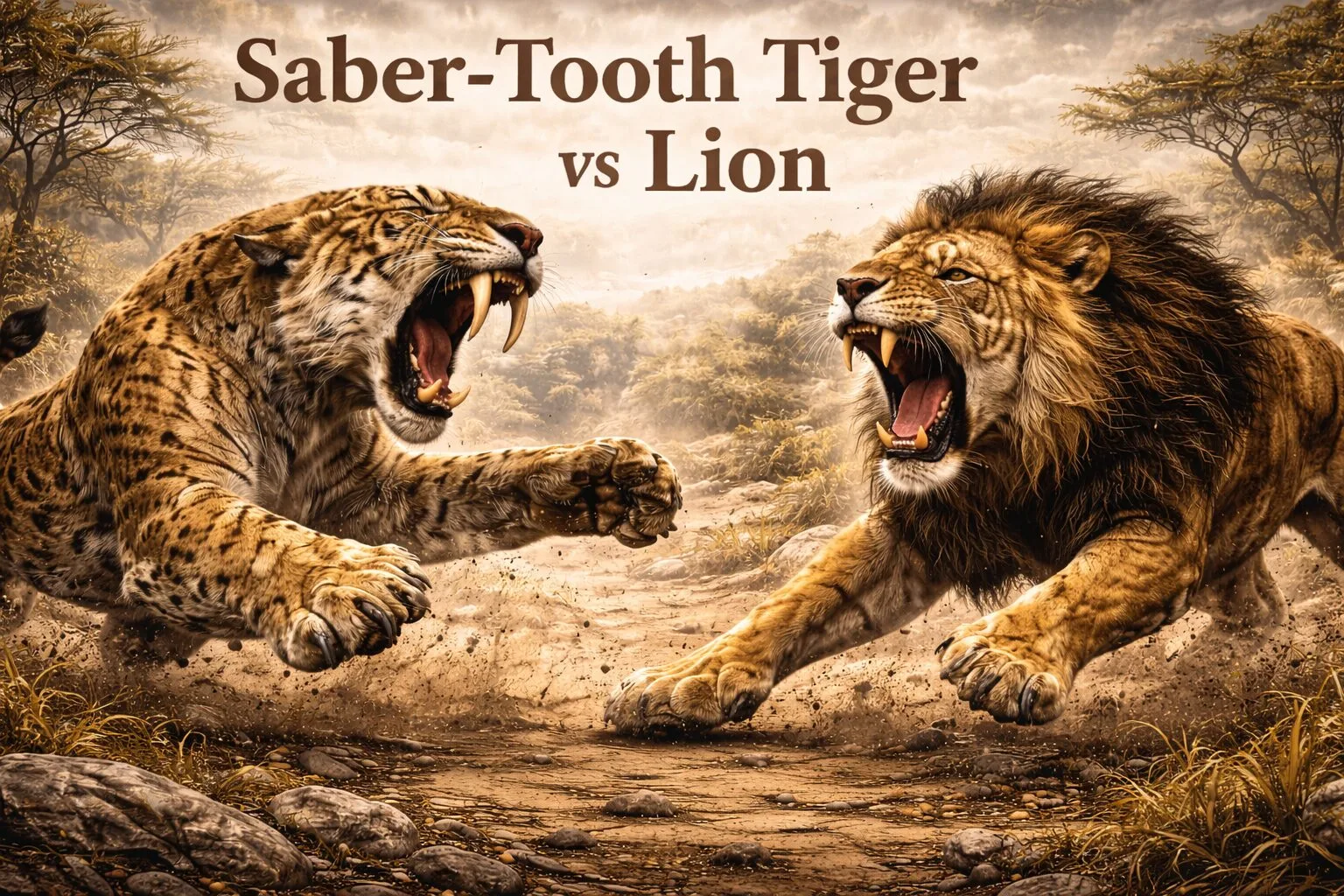
The Saber-tooth tiger and the modern Lion are two kings from different worlds, one roamed the Ice-Age America with fangs like daggers, the other rules Africa’s plains today with a bite force strong enough to crush bone. What if these two glorious creatures met? This is not a fantasy but instead a scientific comparison between the Saber-tooth tiger and the Lion. Keep reading to learn about Saber-Tooth Tiger vs Lion, their differences in size, strength, hunting style, etc.
Meet the Saber-Tooth Tiger (Smilodon)
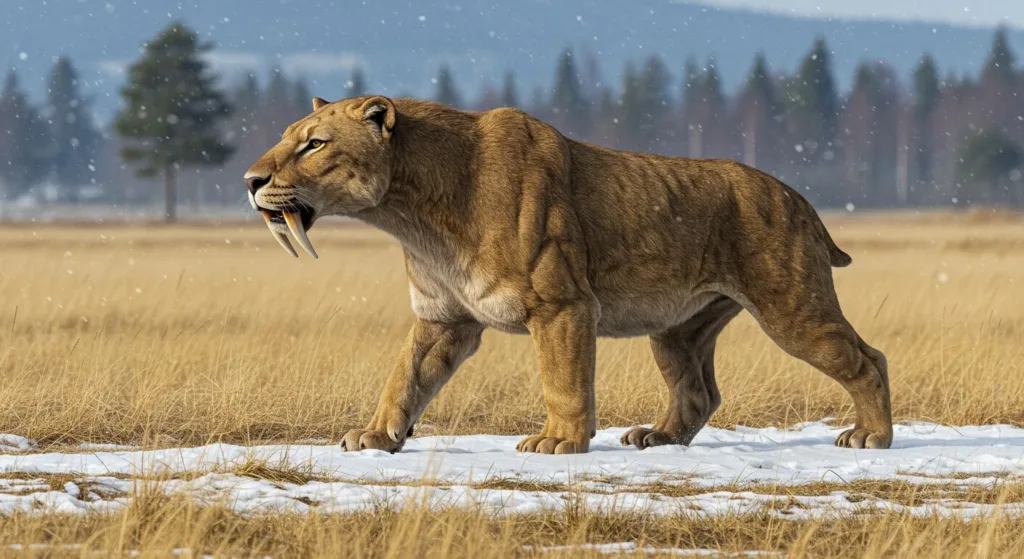
Did you know the Saber-tooth tiger is not related to tigers or lions? Scientifically they belong to a genus called “Smilodon” which belongs to the family Felidae (true cats). This group included other distinct saber-toothed predators, such as Homotherium and Megantereon, which were not true tigers but shared the distinctive dental adaptation of long, curved canine teeth. There were 3 primary species of Smilodons:
- Smilodon gracilis is referred to as the smallest specie which weighed between 55-100 kilograms (121 to 220 lb)
- Smilodon fatalis weighed between 160 to 280 kg (350 to 620 lb)
- Smilodon populator is referred to as the largest specie which weighed between 220 to 436 kg (485 to 961 lb)
These mighty creatures lived during the Pleistocene and early Holocene epochs (a particular period of time in history) before becoming extinct roughly 10,000 years ago.
Meet the Modern Lion (Panthera Leo)
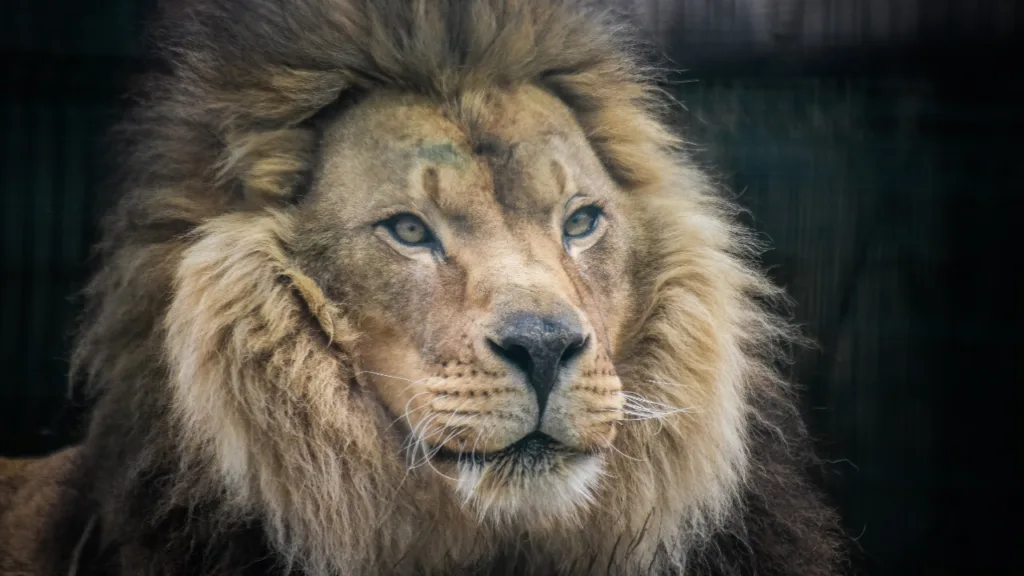
The modern Lion (Panthera Leo) refers to the living lion species, whose origins trace back to Sub-Saharan Africa. While its reign is confined to the diminishing wilds of sub-Saharan Africa and a single, small population in India’s Gir Forest, its ecological dominance and physical prowess draw direct and compelling parallels with extinct giants like Smilodon. Male lions’ typical weight can range between 180–200 kg, they are leaner than Smilodon’s but faster than them. Lions are social and cooperative hunters within their packs similar to Smilodon’s. Fun fact about lion’s bite force is that it can range between 650-1000 psi.
Size & Power Comparison Between the Saber-Tooth Tiger and Lion
| Features | Saber-Tooth Tiger (Smilodon populator) | Lion (Panthera leo) |
| Era | Ice Age (extinct) | Modern / Current Era |
| Weight | 350–420 kg | 180–200 kg |
| Length | 2.8 meter | 2.7 meter |
| Bite Force | 600 psi | 650-1000 psi |
| Fang Length | 28 centimeter | 7 centimeter |
| Speed | 35 km/h | 80 km/h |
This comparison chart helps us understand the main differences between these species. Smilodon may be heavier and stronger but lions in comparison are faster and more agile which allows them to catch fast prey and escape dangerous situations (like hunters or wolf packs, etc.).
Weapons & Anatomy
- Saber-tooth tiger: According to Smilodon’s anatomy they had long saber teeth which were used for slicing soft tissue, not bone. While the creature had a gigantic chest and shoulder muscles for grappling predators bigger than them. Archaeologists studied the fossils found in La Brea Tar Pits in Los Angeles, California, this enabled them to discover that the species had weak jaw hinge strength with a wide gape of 120°.
- Modern Lion: According to Panthera Leo anatomy they have short, conical canines which are used for bone-crushing, unlike Smilodon’s. They have long limbs paired with a flexible spine for pouncing at prey and running fast speeds, up to 80 km/h (in periods of short bursts). Another interesting fact that Lions and Smilodon’s share is that their claws are retractable which means they are ideal for fast multi-angle attacks.
Hunting Styles & Behavior
- Saber-tooth tiger: The Smilodon likely hunted giant herbivores like bison, sloths, and young woolly mammoths. They relied on ambushes from cover, using their weight to pin their prey. Archaeologists have studied that the Smilodon’s fossils reveal healed injuries which imply group care and sociable behavior, but this has yet been confirmed.
- The Modern Lion: The Panthera Leo are experienced and cooperative hunters, where the female lions coordinate chases. These majestic creatures target prey like zebras, buffalo, antelope, etc. They use their endurance and speed rather than brute force to attack prey and they are very sociable creatures. Lions live in family groups called prides, which allows them to cooperatively defend territory, raise cubs, and hunt large prey.
Hypothetical Battle – Who Would Win?
Lets try to imagine what would happen if these titans met on neutral ground, say an open savanna?
- Round 1 – Speed: Lion would win the first round as they can run up to 80 km/h (in short bursts) while Smilodons are slow and could run up to 35 km/h.
- Round 2 – Strength: The extinct creature Smilodon would win this round due to its body weight, muscle mass and upper-body strength being more than a lion’s.
- Round 3 – Weapons: The Lion would win this round. Both creatures have retractable claws but a Lions bite force is able to crush bone, while the Smilodons were unable to do that. A lion’s bite force is between 650-1000 psi, while the Saber-tooth tiger’s was 600 psi.
- Round 4 – Stamina: Lions would win this round as they have long limbs and an agile body which is made for running long distances, while Smilodons had short limbs and they were built for short ambush bursts.
Final Verdict: Lions won 3 out of 4 rounds against the Saber-tooth tiger which helps us understand that the Smilodons could dominate in one-on-one ambushes while the lions would win longer, mobile encounters.
Did Lions and Saber-Tooth Tigers Ever Meet?
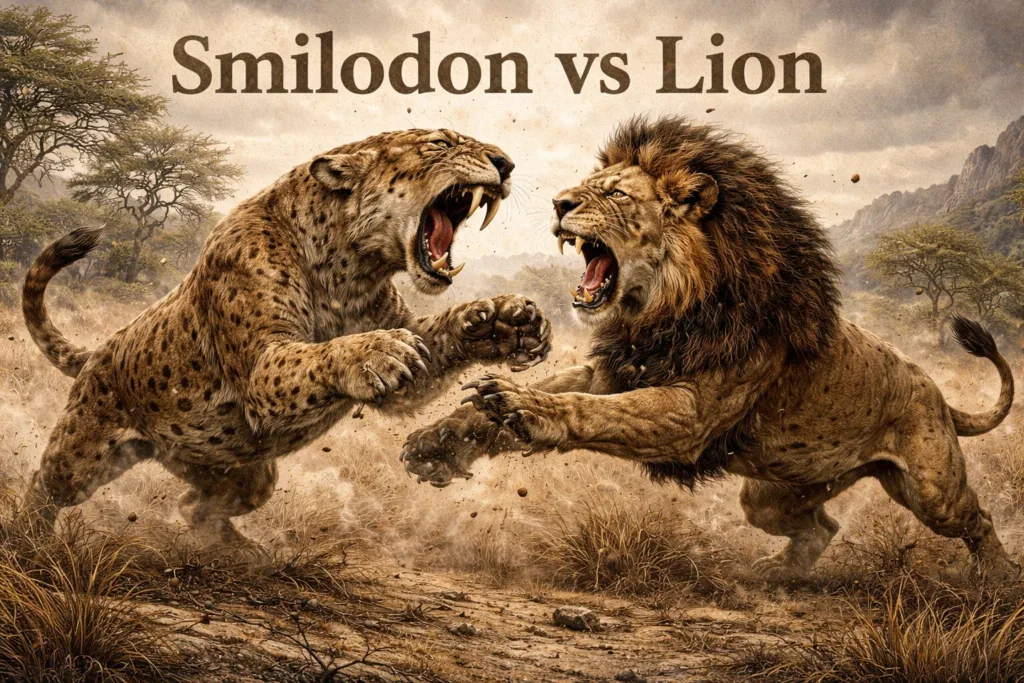
No, Lions and Saber-tooth tigers did not meet. Smilodons lived in the Americas whereas lions evolved in Africa and Asia, but relatives of lions (American lions, Panthera atrox) did coexist with Smilodon in North America. Scientists have found their fossils together at La Brea Tar Pits, California which gives us proof of the Ice-Age cat rivalry.
What Fossils of the Smilodon Reveal
So far scientists have learned from Saber-tooth tiger fossils:
- The diet of the species due to the tooth’s micro-wear. They predict that the Smilodon’s teeth show us the type of prey they consumed, like bison, sloths, etc. The bite marks also indicate different hunting styles than lions and DNA shows the Smilodon and the lion shared distant ancestors.
- Another important fact about the Saber-tooth tiger is revealed through the fossils which store ancient proteins and collagen. These were to reveal the habits of the extinct species as fossilized injuries that healed overtime and reveal social care behavior.
Why Smilodon Went Extinct but Lions Survived
The Saber-Tooth Tiger went extinct for various reasons and scientists have not pinned down a specific one. A huge reason for extinction is predicted to be Climate Change. According to research the time of extinction of the Smilodon is close to the time where the Ice age was ending. During the period glaciers and icecaps melted and flooded areas. This led to the reduction of habitat for the Smilodon and the prey it consumed. Due to habitat shrinking, other species of animals started to go extinct like woolly mammoths, bison, and other megafauna, which the Saber-tooth relied on for food. Scientists also predict that the early humans hunted the same prey as the Smilodon or possibly killed and hunted the species as well.
Modern lions (Panthera Leo) lineage diverged from extinct cave lions around 500,000 years ago and two main modern lion subspecies splitting even more recently, around 70,000 years ago. These creatures have been evolving for a very long time. Lions survived extinction due to faster adaptation than Smilodon’s as they adjusted to smaller and faster prey. Another important factor is adaptation despite habitat loss and human intervention; lions have been hunted for sport and due to fear in countries like India, but despite these factors they survived difficult conditions.
Fun Facts About Saber-Tooth Tigers & Lions
- We now know Smilodon was about a foot shorter than living lions but was nearly twice as heavy
- Smilodon couldn’t run fast but could leap short distances.
- According to the WWF, lions can eat up to 40 kgs of meat in one meal!
- Most male lions grow impressive manes the older they get. These manes grow up to 16cm long!
- Lions are the only known cat species where individuals roar together, often to mark their territory.
Conclusion & Key Takeaways
The extinct species of Saber-tooth tigers (Smilodon’s) represent raw Ice-Age strength and history, while the Modern lion (Panthera Leo) represent modern hunting power and high speed. Both of these animals are said to be sociable animals and fossils of Smilodon’s suggest dominance in similar areas. These creatures have never met in reality with one left behind in a frozen past, while the other controls the food chain and is on top of it, both are eternal kings in nature’s story and teach us about history and evolution of animals.
External Links
University of Kansas – Saber-Toothed Cat (Smilodon)
WWF – TOP 10 FACTS ABOUT LIONS
A-z-animals – The Bite Force of a Lion and How It Compares to Other Big Cats
Africa Safaris – Lion Bite Force: How Strong is a Lion’s Bite?