Polar bear quick facts
- Polar bear hair is not white. Each hair is a clear, hollow tube filled with air.
- A polar bear can eat more than 45 kg of seal blubber in one sitting.
- A newborn cub weighs little more than half a kilogram. A big male can weigh over 1,000 times as much.
- One satellite-tracked female walked 4,796 km, further than across the United States.
- One ringed seal gives a polar bear enough energy for about 11 days.
What kind of animal is a polar bear?
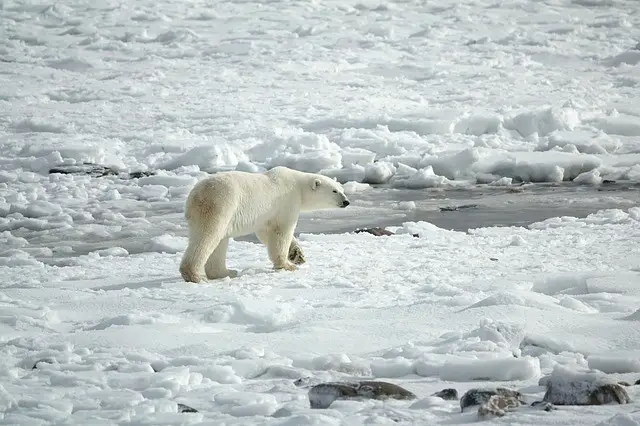
The polar bear is the largest bear alive today, and it is an unusual sort of bear. Most bears live on land. The polar bear spends much of its life on frozen sea.
Its scientific name, Ursus maritimus, means “sea bear”. Scientists count it as a marine mammal, like seals and whales, because it depends on the ocean for its food. It is part of an ocean ecosystem, not a land one.
That food is mostly seals, and seals live in the water under the ice. So a polar bear’s real home is not snow or rock. It is the sea ice floating on the Arctic Ocean.
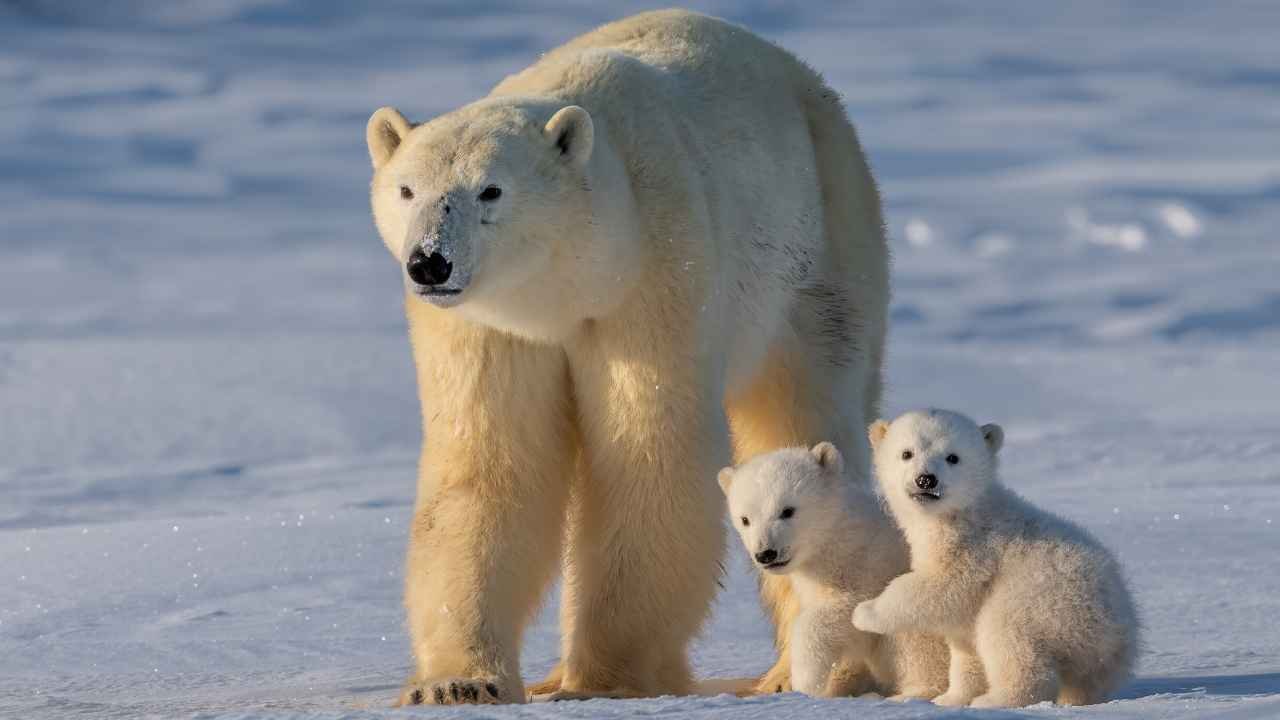
| Polar bear at a glance | |
|---|---|
| Scientific name | Ursus maritimus, the “sea bear” |
| Adult male weight | 350 to 590 kg |
| Adult female weight | 150 to 295 kg |
| Length, nose to tail | about 1.8 to 2.7 metres |
| Main food | ringed seals, then bearded seals |
| Wild population | about 26,000 (2023) |
| Countries | Canada, Greenland, Norway, Russia and the United States (Alaska) |
| Average lifespan in the wild | 15 to 18 years |
A big male standing on his back legs can reach about 3 metres. That is about as tall as a single-decker bus. He can weigh as much as eight grown men.
Females are much smaller. Most weigh between 150 and 295 kg, about half as much as a big male.
Built for Arctic cold
A polar bear’s fur looks white, but each hair is a clear, hollow tube filled with air. The air in the hairs helps trap warmth. The fur only looks white because of the way it reflects light.
Under the fur is a layer of fat 5 to 10 cm thick. It keeps the bear warm on the ice and in freezing water.
Its paws are huge. They spread the bear’s weight on thin ice and snow, and in the water they work like paddles. Its ears are small and its tail is short, so less heat escapes.
All that insulation has a downside. A polar bear that runs a long way can overheat, even in the Arctic. So polar bears usually walk, and save their bursts of speed for the end of a hunt.
Built for Arctic Cold
- Hollow hairs — Clear tubes filled with air that help trap warmth
- Fat layer — 5 to 10 cm thick under the fur
- Huge paws — Spread its weight on thin ice and paddle in water
- Small ears and a short tail — Let less heat escape
- Walking, not running — Stops it overheating
How a polar bear hunts
Polar bears mainly hunt ringed seals, and to a lesser extent bearded seals. Now and then they take much bigger animals, such as walruses and belugas.
Seals have to come up to breathe. They keep small breathing holes open in the ice, and that is where the bear waits. A polar bear can stay still for hours above a hole until a seal comes up. It also hunts along open leads, the long cracks of open water in the ice.
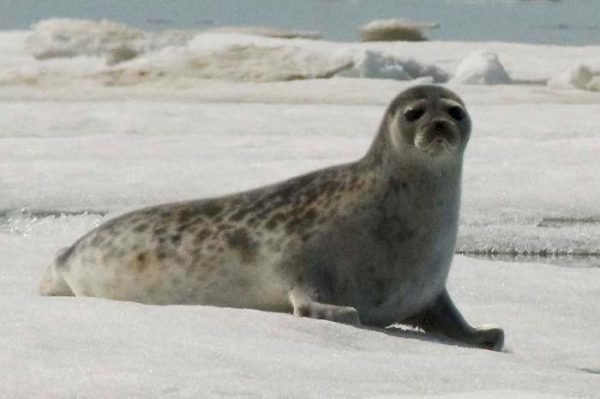
Its nose does much of the work. According to San Diego Zoo, a polar bear can smell a seal’s breathing hole up to 1.6 km away.
When hunting is good, a bear may eat only the seal’s fat, called blubber, and its skin. It can eat more than 45 kg of blubber in one sitting. That is about the weight of an average 13-year-old.
Blubber is packed with energy. One ringed seal gives a polar bear enough energy for about 11 days, and polar bears usually eat every four to five days.
This is why the ice matters so much. Seals are hard to catch in open water. Without ice to stand on, a polar bear loses its hunting ground. There is much more about this in our guide to what polar bears eat.
Hunting by Numbers
- About 1.6 km — How far away it can smell a seal's breathing hole
- For hours — How long it can wait, still, above a breathing hole
- More than 45 kg — The blubber it can eat in one sitting
- About 11 days — The energy it gets from one ringed seal
- Every 4 to 5 days — How often a polar bear usually eats
Swimmers and long-distance walkers
Polar bears are strong swimmers. They have been known to swim more than 100 km without a rest.
On the ice they walk at about 5 to 6 km an hour, roughly the speed of a brisk human walk. Mothers with small cubs go more slowly, at 2.5 to 4 km an hour.
Most polar bears stay within a home range a few hundred kilometres across. Some go much further. Scientists followed one female by satellite as she walked 4,796 km. That is further than from one side of the United States to the other.
A single bear may travel more than 1,000 km in one season, following the ice as it grows and shrinks.
From snow den to growing up
Polar bears mate on the sea ice between April and late June. Males find females by following the scent left by their footpads.
Then something unusual happens. The fertilised egg does not start growing straight away. It only settles into place in the autumn, and only if the mother has stored enough fat to last her through the long months in her den. Scientists call this delayed implantation.
In the autumn or early winter, the pregnant female digs a den in the snow. Her cubs are usually born in December. There are one to three of them, and twins are most common.
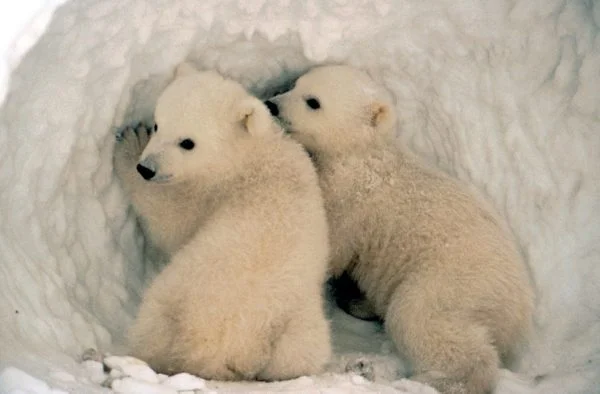
A newborn cub weighs little more than half a kilogram and is only 30 to 35 cm long. It is blind, it has no teeth and it is covered in short, soft fur.
The family comes out of the den in March or April, once the cubs are strong enough. By April a cub can weigh more than 9 kg.
Cubs stay with their mother for two and a half to three years, learning to hunt, swim and survive. Females usually have their first cubs between 4 and 6 years old, and then a litter about every three years. That slow pace means polar bear numbers take a long time to recover.
In the wild, polar bears live 15 to 18 years on average. Scientists have tagged a few bears in their early 30s.
A Polar Bear Family in Order
- Mating Polar bears mate on the sea ice, between April and late June.
- Waiting The fertilised egg waits, and starts to grow in autumn only if the mother is fat enough.
- The den In autumn or early winter, the mother digs a den in the snow.
- Birth The cubs are born, usually in December. Twins are most common.
- Out of the den In March or April, the family leaves the den.
- Growing up The cubs stay with their mother for two and a half to three years.
Where polar bears live
Polar bears live in five countries: Canada, Greenland, Norway, Russia and the United States, in Alaska. Scientists divide them into separate groups called subpopulations. The US Fish and Wildlife Service counts 19, and Polar Bears International now uses 20. Some groups are shared by more than one country.
Two of those groups reach into the United States: the Chukchi Sea and the Southern Beaufort Sea populations, off the coast of Alaska.
Polar bears do not live in Antarctica. You can read more about their range, and why the right kind of sea ice matters, in our guide to where polar bears live. And if you have ever wondered what would happen to one somewhere hot, we looked at whether polar bears could survive in a desert.
Polar bears and a warming Arctic
In 2023, the global polar bear population was estimated at about 26,000.
The biggest long-term danger is the loss of sea ice as the Arctic warms. Polar bears depend on the ice to hunt, and pregnant females need safe places to den. When the ice melts earlier and freezes later, bears get less time to catch seals and build up fat.
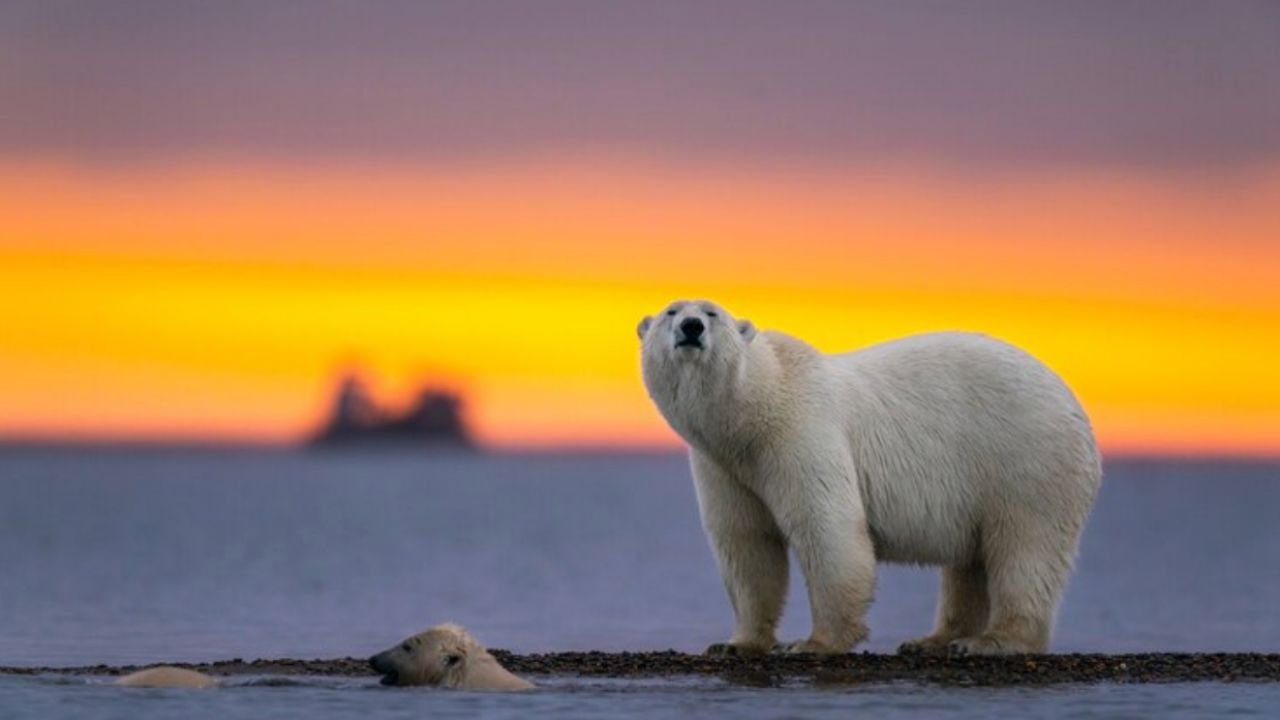
A study published in 2020 warned that, without action on climate change, all but a few polar bear populations could be lost by the end of this century.
Polar bears are protected by law. In the United States, the Marine Mammal Protection Act makes it illegal to hunt, harass, capture or kill them, with an exception for hunting by Alaska Native peoples. They are also protected under the Endangered Species Act.
The status of each subpopulation is different. One number, or one trend, does not describe every polar bear.
Three things people get wrong
Polar bears do not eat penguins. Polar bears live in the Arctic, at the top of the world. Penguins live in the southern half of the world. They never meet in the wild.
Polar bear fur is not really white. Each hair is a clear, hollow tube. The fur only looks white because of the way it reflects light.
There is not just one polar bear population. There are 19 or 20 separate groups, and each one is doing differently. Some are in trouble, and a single world total hides that.
Did you know? A polar bear’s fertilised egg only starts to grow if the mother has stored enough fat. If she is too thin in the autumn, no cubs are born that year.
Polar Bears: Fact or Myth?
- Polar bears hunt penguins.
- Scientists count polar bears as marine mammals, like seals and whales.
- All polar bears belong to one single population.
- The scientific name Ursus maritimus means sea bear.
- Polar bears chase their prey over long distances.
- Polar bears have been known to swim more than 100 km without a rest.
- A polar bear's hairs are pure white.
- Polar bears live in five countries.
Try it
Hold a small bag of sugar in your hand. A newborn polar bear cub weighs about half of that. Now think of a big male, who can weigh more than 1,000 times as much.
Knowledge check
Why is sea ice so important to a polar bear?
Show answer
Sea ice is the platform polar bears hunt from. Seals come up to breathing holes in the ice, and they are very hard to catch in open water.
How heavy is a polar bear cub when it is born?
Show answer
Little more than half a kilogram. It is blind, has no teeth and is only 30 to 35 cm long.
Frequently asked questions
How big is a polar bear?
Adult male polar bears usually weigh 350 to 590 kg and can stand about 3 metres tall on their back legs. Females are smaller, usually 150 to 295 kg. The polar bear is the largest bear alive.
What do polar bears eat?
Polar bears mainly eat ringed seals and, less often, bearded seals. They sometimes take walruses and belugas. A polar bear can eat more than 45 kg of seal blubber in one sitting.
How many polar bears are left in the world?
About 26,000 polar bears were estimated to live in the wild in 2023. They are split into 19 subpopulations across Canada, Greenland, Norway, Russia and the United States.
Is polar bear fur white?
Polar bear fur only looks white. Each hair is a clear, hollow tube filled with air, and the fur looks white because of the way it reflects light.
How long do polar bears live?
Wild polar bears live 15 to 18 years on average. Scientists have tagged a few wild polar bears in their early 30s.
Can polar bears swim?
Polar bears are strong swimmers. They have been known to swim more than 100 km without resting, and their huge paws work like paddles in the water.
Sources
- US Fish and Wildlife Service: polar bear — diet, the 2023 population estimate, the 19 subpopulations and legal protection
- Polar Bears International: adaptations and characteristics — size, blubber and how far bears travel in a season
- Polar Bears International: life cycle — mating, delayed implantation, dens, cubs and lifespan
- Polar Bears International: habitat — range countries, walking speed and the 4,796 km journey
- San Diego Zoo Wildlife Alliance: polar bear — hunting at breathing holes, sense of smell, energy from seals, swimming, fur and fat
- USGS Alaska Science Center: polar bear research — ongoing research on sea ice, movements and health
Polar Bear Final Challenge
- What are a polar bear's main prey?
- What is an open lead?
- About how fast does a polar bear usually walk on the ice?
- How far did one satellite-tracked female polar bear walk?
- Which two polar bear groups reach into the United States?
- What did a study published in 2020 warn?
- Which US law makes it illegal to hunt or harass polar bears, except for hunting by Alaska Native peoples?
- How do male polar bears find females in the mating season?