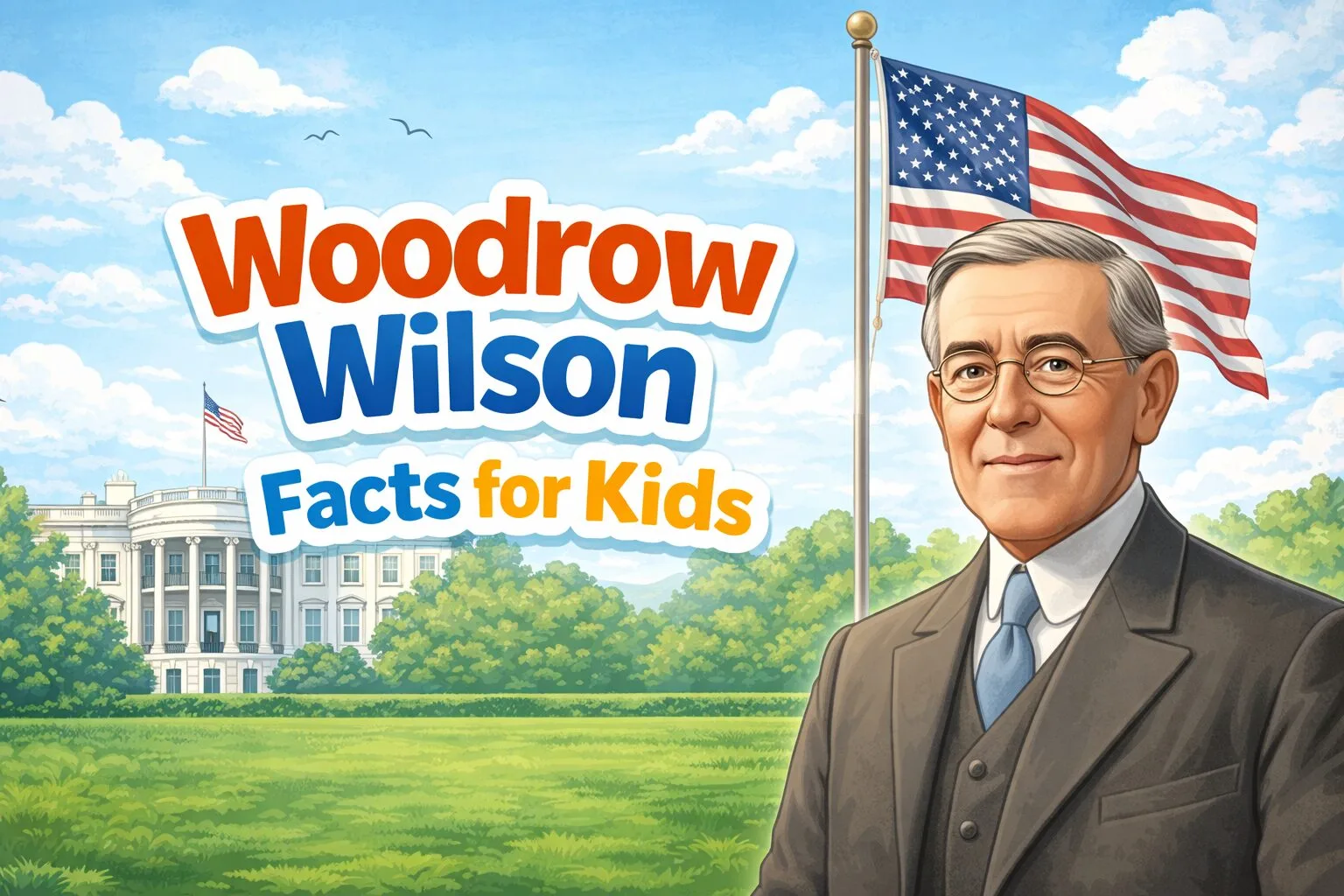
Woodrow Wilson quick facts
- in history and political science from Johns Hopkins University.
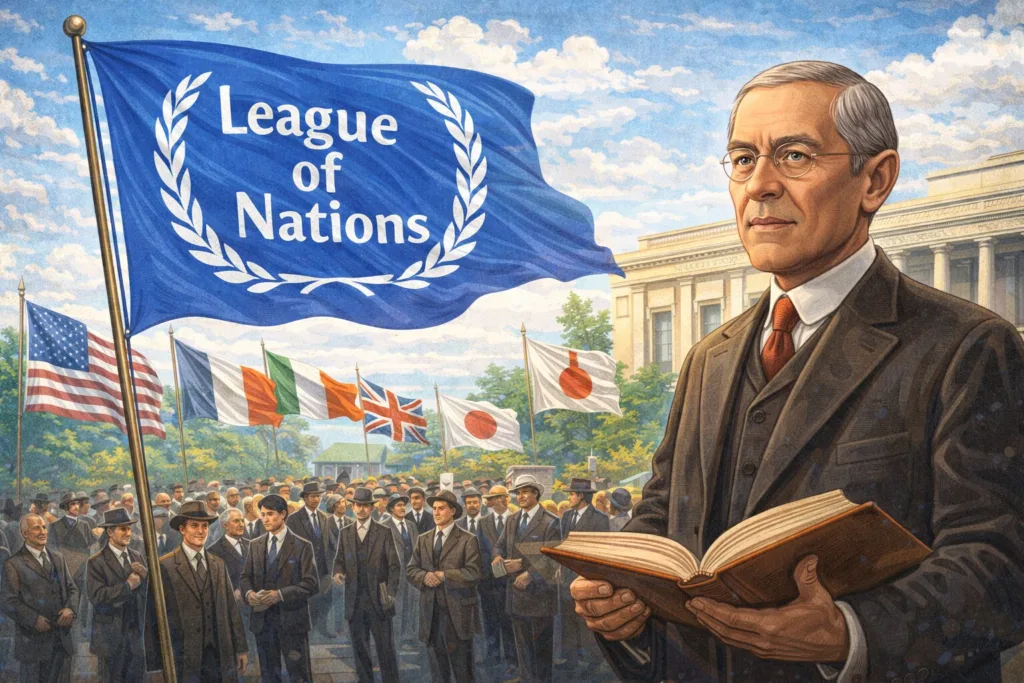
- The 28th president led a major role in involving the United States in world affairs and the creation of the League of Nations.
- Keep reading to learn interesting facts about president Woodrow Wilson!
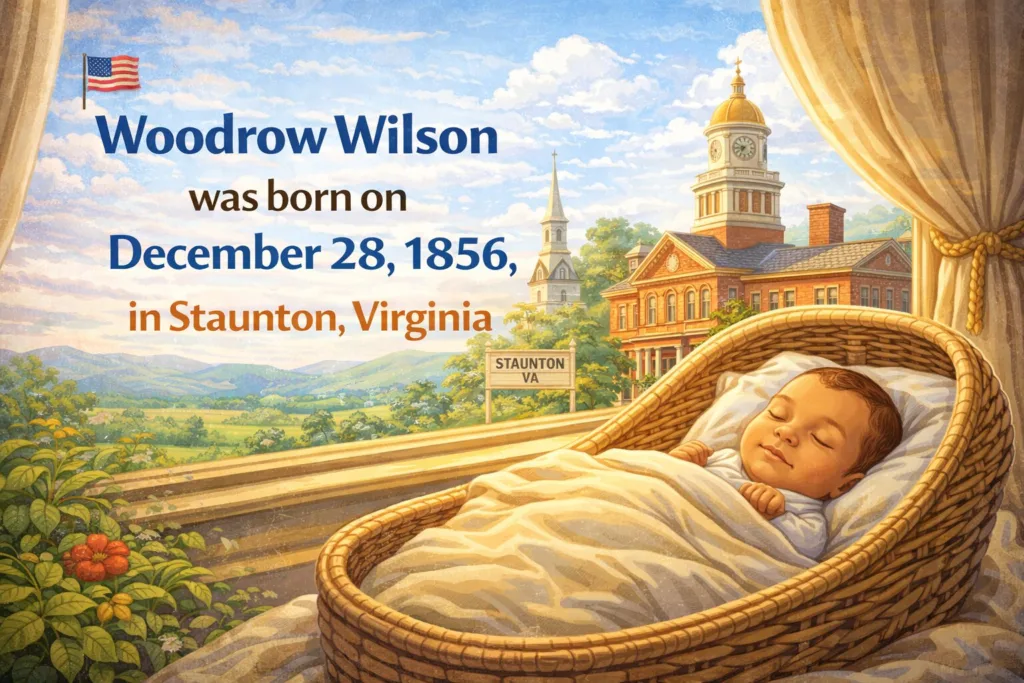
- Woodrow Wilson was born on December 28, 1856 , in Staunton, Virginia.
Early Life and Family of Woodrow Wilson
Woodrow Wilson was born on December 28, 1856, in Staunton, Virginia. His parents were Joseph Ruggles Wilson (a Presbyterian minister) and Janet Woodrow Wilson (a housewife). His family moved to Georgia and then South Carolina in his early years. Woodrow Wilson had exposure to the Civil War era as a child as he saw soldiers, and even encountered Robert E. Lee in person in Augusta, Georgia. Did you know as a teenager Woodrow Wilson stood in a procession beside General Lee?
Education & Academic Journey of Woodrow Wilson
Woodrow Wilson attended the college of Princeton and then the College of New Jersey, he graduated in 1879. He did his law studies from The University of Virginia law school and then his doctoral work at Johns Hopkins. Woodrow Wilson remains the only president in United States history with a Ph.D. in history.
Road to Political Life
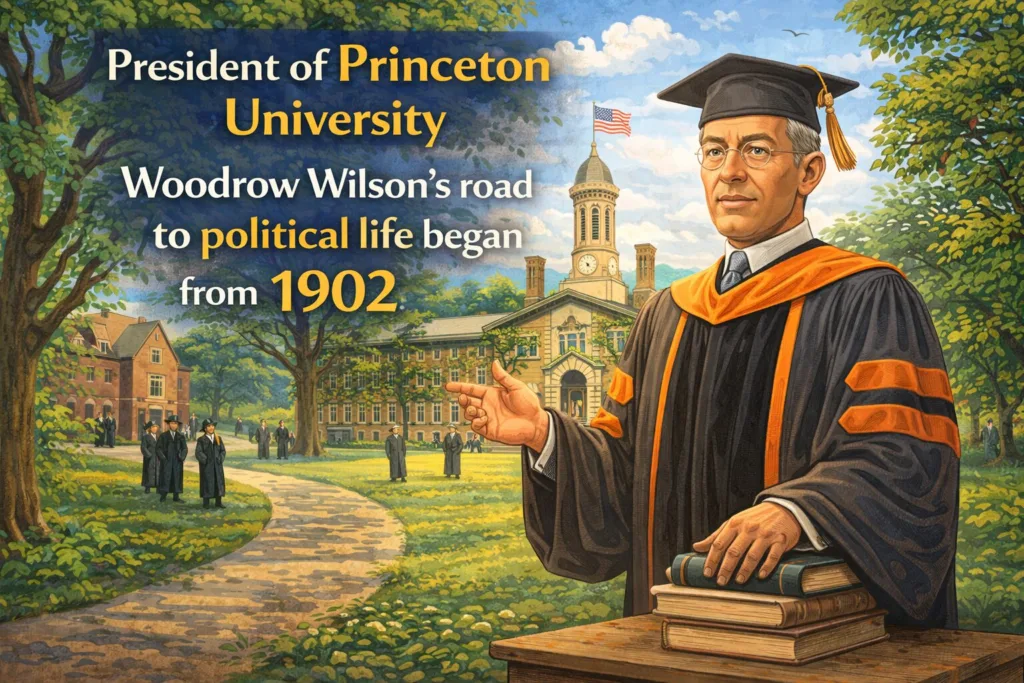
- President of Princeton University: Woodrow Wilson’s road to political life began from 1902, where he became the President of Princeton University, he instituted reforms like stricter admissions, etc. and attempted to modernize the universities governance and curricula.
- Governor of New Jersey: In 1910 Woodrow Wilson got elected as the Governor of New Jersey and took office in 1911. During his time as governor he brought major reforms in the state. His work focused on labor laws, factory inspections, education boards, child labor regulations, etc. This gained him the reputation of “a progressive” leader and reformer.
- Presidential Election & Victory: In 1912 Woodrow Wilson was nominated for the Presidential Election and he contested against Taft and Roosevelt. He was elected as the 28th President in 1912 and took office in March 1913. Woodrow Wilson was the first Southerner elected since the Civil War.
Presidency of Woodrow Wilson, 1913–1921
Woodrow Wilson became the president of The United States in 1913 and his presidency lasted for 8 years, till 1921. The 28th President did a lot for his country like:
- Wilson’s main domestic program was known as “New Freedom”. This policy focused on:
- Tariff reduction
- Banking reform
- Antitrust legislation
- A significant achievement made by the U.S. during Woodrow Wilson’s presidency is considered to be The Federal Reserve Act (1913). A central banking system was established in the United States which paved a path for the Nation’s finances becoming stabilised.
- In the 16th Amendment, Wilson established progressive income tax system and revenue laws.
- Wilson signed the Keating-Owen Act which restricted child labor
Foreign Policy, Neutrality & Road to War
President Wilson’s initial stance in World War 1 was neutrality from 1914–1916 and the U.S. stayed out of the war early on. However this position was challenged as Germany’s submarine warfare attacked U.S. ships, along with the inflammatory Zimmermann Telegram. This pushed President Wilson toward intervention and on April 2, 1917, Wilson asked the Congress to declare war and hence, the U.S entered World War 1.
During this time Wilson established wartime institutions including:
- The Food Administration
- War Industries Board
- Fuel control agencies
While he promoted war bonds and rationing. This era saw the rise of social tensions and strikes but Wilson directed his efforts towards peace efforts and stability for the nation and the world.
Peace & the League of Nations
President Wilson had a vision for peace and it shaped the aftermath of the war. In 1918 Wilson announced Fourteen Points and with his idealistic plan for lasting peace. At the Paris Peace Conference, Wilson led the American delegation in negotiating the Treaty of Versailles in 1919. According to Wilson’s vision for international peace the League of Nations aligned with his beliefs. However, the U.S. Senate rejected American membership in the League, which prompted Wilson to embark on an exhausting national tour to build public support. Eventually, in 1919 Wilson’s health collapsed and he suffered a stroke. Controversially his wife Edith Wilson started to handle the presidential affairs.
Later Life, Death & Legacy
After Wilson’s presidency, he attempted to practice law and public speaking. He continued his advocacy for The League of Nations, but the U.S. never joined. Woodrow Wilson passed away on February 3, 1924 in Washington, D.C. He was buried at Washington National Cathedral
Legacy & How Historians View Wilson
Woodrow Wilson left a legacy that has mixed views by historians. Wilson’s positive legacy is regarded due to his:
- Founder of the Federal Reserve System (The central banking system of the United States)
- Progressive reforms
- Advanced the idea of international cooperation
While his negative legacy is considered to be his racial policies and support of segregation in federal bureaucracy. This was a limitation of his peace idealism and hurtful towards the minorities.
Facts About Woodrow Wilson
- Did you know Woodrow Wilson was the only U.S. president with a Ph.D.?
- Woodrow met Robert E. Lee as a young boy
- He was President of Princeton before entering politics.
- President Woodrow Wilson led the U.S. through World War 1
- Woodrow Wilson won the Nobel Peace Prize in 1919 for his work on the League of Nations
- Woodrow Wilson was the 28th President of the United States of America
- Woodrow Wilson was married to Edith Wilson
Frequently Asked Questions
What number president was Woodrow Wilson?
Woodrow Wilson was the 28th President of United States.
What international organization did he help found?
Woodrow Wilson helped find the “League of Nations”
What was unique about him among U.S. presidents?
Woodrow Wilson is and remains the only president with a Ph.D.
External Links
Constitution Center – 10 fascinating facts about Woodrow Wilson
Keep learning
Continue with Hundertwasser Facts – Hundertwasser For Kids – Hundertwasser Biography and Neil Armstrong Facts For Kids – Neil Armstrong Biography – All About Neil Armstrong.
Did you know? in history and political science from Johns Hopkins University.
Try it
Build a short timeline or concept map for People using four important details from this guide.
Knowledge check
Woodrow Wilson: what is one important fact from this guide?
Show answer
in history and political science from Johns Hopkins University.