
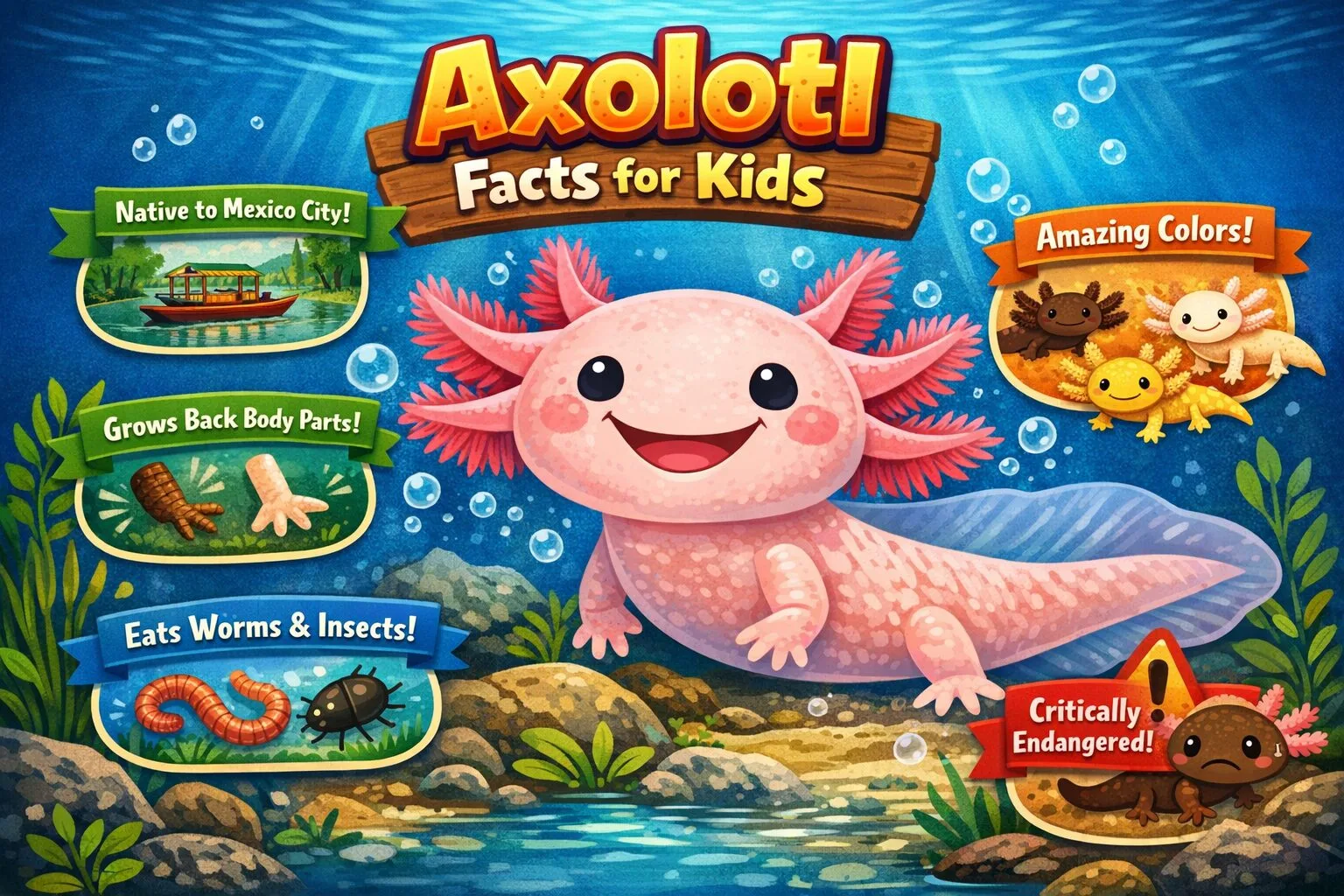
Have you ever seen an animal that looks like it is smiling all the time? Meet the axolotl, one of the strangest and coolest creatures on Earth. Axolotls are a type of salamander, but unlike most salamanders, they spend their whole lives underwater. Let’s explore what axolotls look like, what they eat, where they live, and why they are so special.
Quick Axolotl Overview
| Feature | Details |
| Scientific Name | Ambystoma mexicanum |
| Habitat | Freshwater canals of Xochimilco in Mexico City |
| Size | Can grow up to 1 foot long, but most are around 9 inches |
| Lifespan | Usually 10 to 15 years |
| Diet | Worms, insects, small fish, and tiny crustaceans |
What Do Axolotls Look Like?
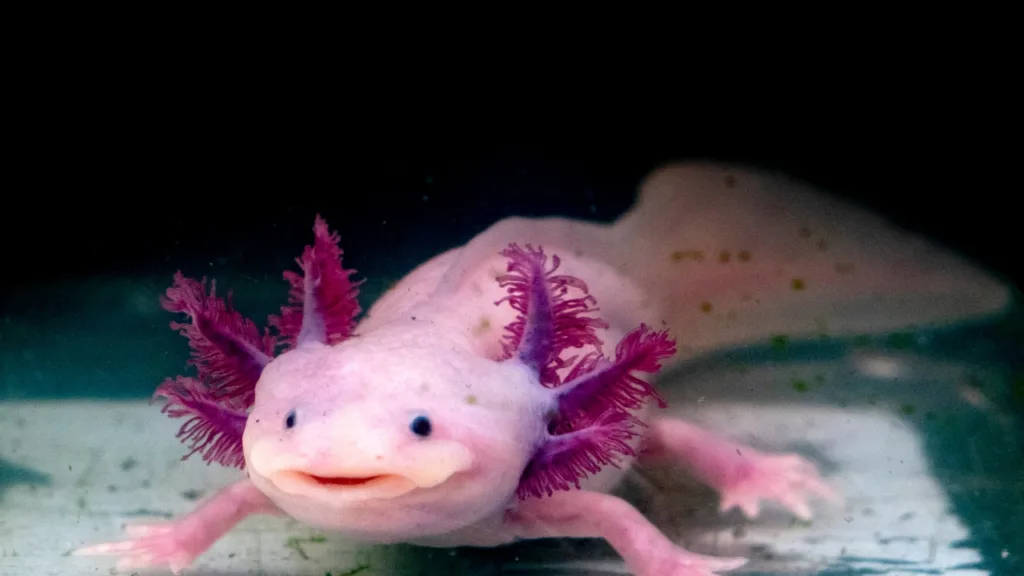
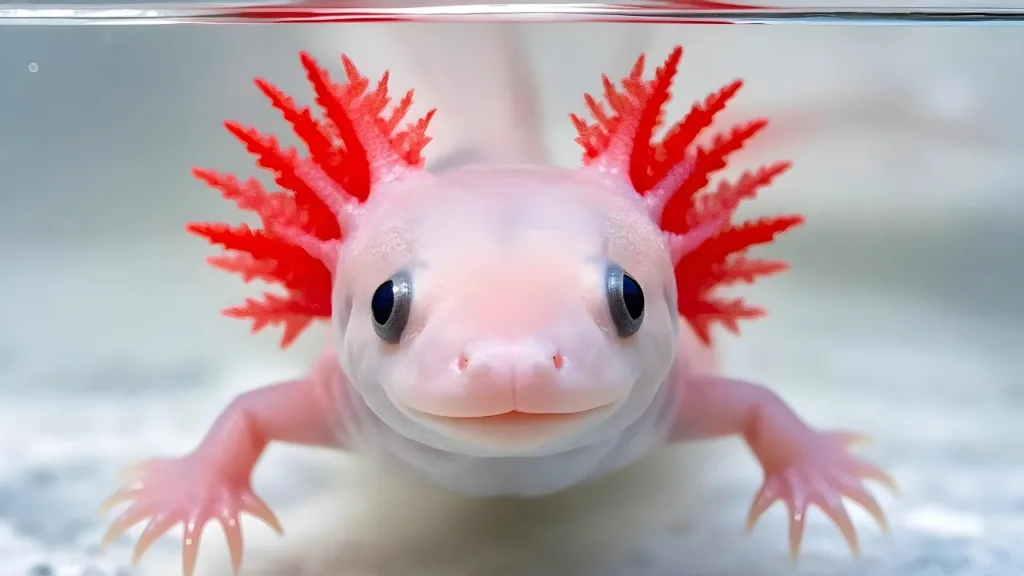
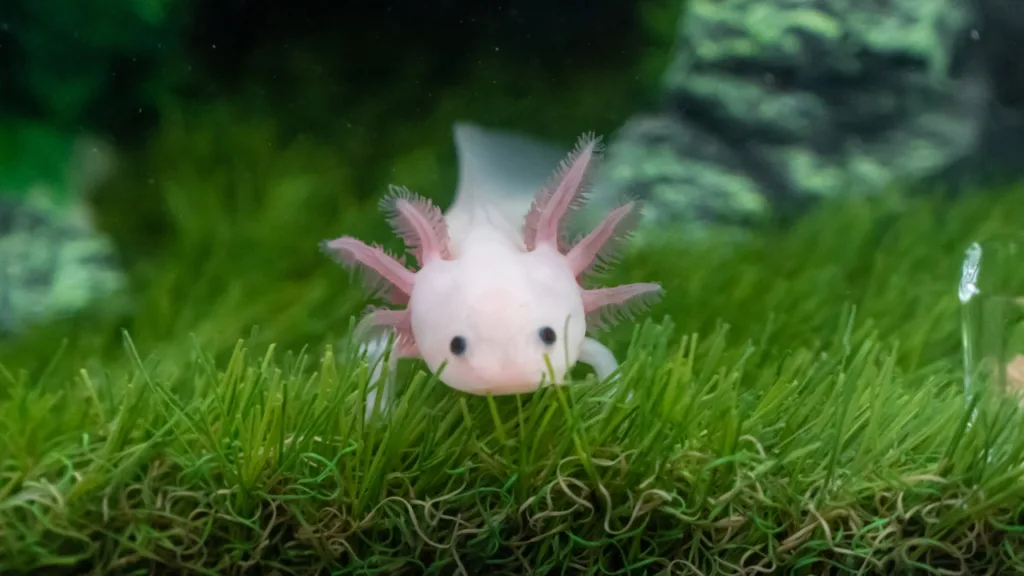
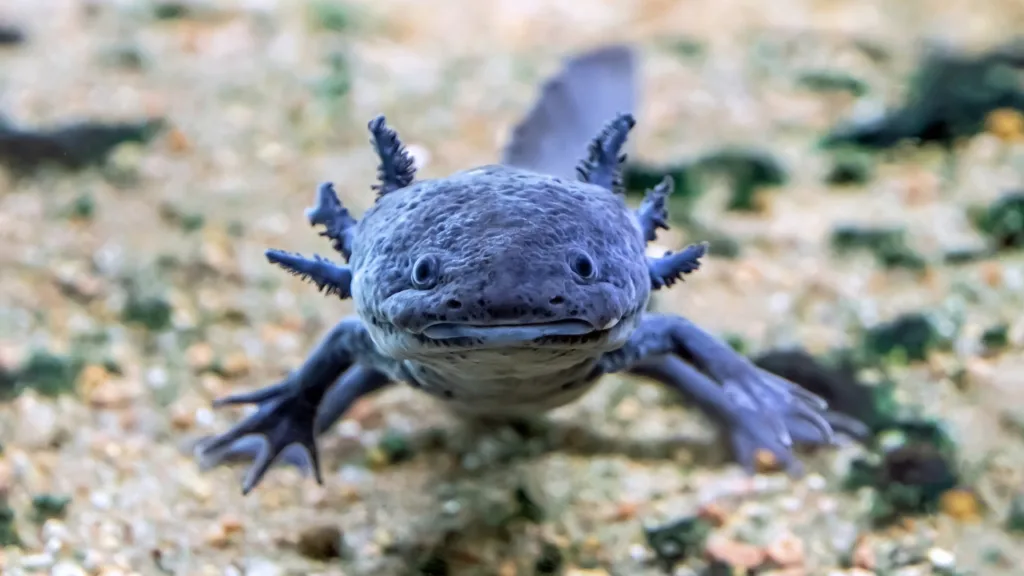
Axolotls have broad, flat heads and wide mouths that curve upward, which makes them look like they are always smiling. They have tiny lidless eyes that look like little dark beads. The feathery parts sticking out from the sides of their heads are their gills, which help them breathe underwater.
Axolotls also have long tails that make up nearly half their body length. Their tails are flattened from side to side, which helps them swim by swishing back and forth like a fish.
Where Do Axolotls Live?
Axolotls live in the canals of Xochimilco in Mexico City. They live in freshwater canals and wetland areas. Sadly, their habitat has been shrinking because the water has become polluted and many parts of their environment have been changed over time.
Why Are Axolotls So Special?
Most amphibians go through metamorphosis. That means they change from water-breathing babies into air-breathing adults. But axolotls are different. They keep many of their baby features, including their gills, even when they grow up. This is called neoteny.
That alone would make them unusual. But axolotls have another incredible ability too.
Axolotl Superpower: Regeneration
Axolotls can regrow lost body parts. If one loses a leg, it can grow a brand-new one with bones, muscles, nerves, and skin.
They can regrow:
- Their legs
- Their tail
- Parts of their spine
- Their jaw
- Some other tissues and body parts
Because of this amazing ability, scientists study axolotls to learn more about how regeneration works.
What Do Axolotls Eat?
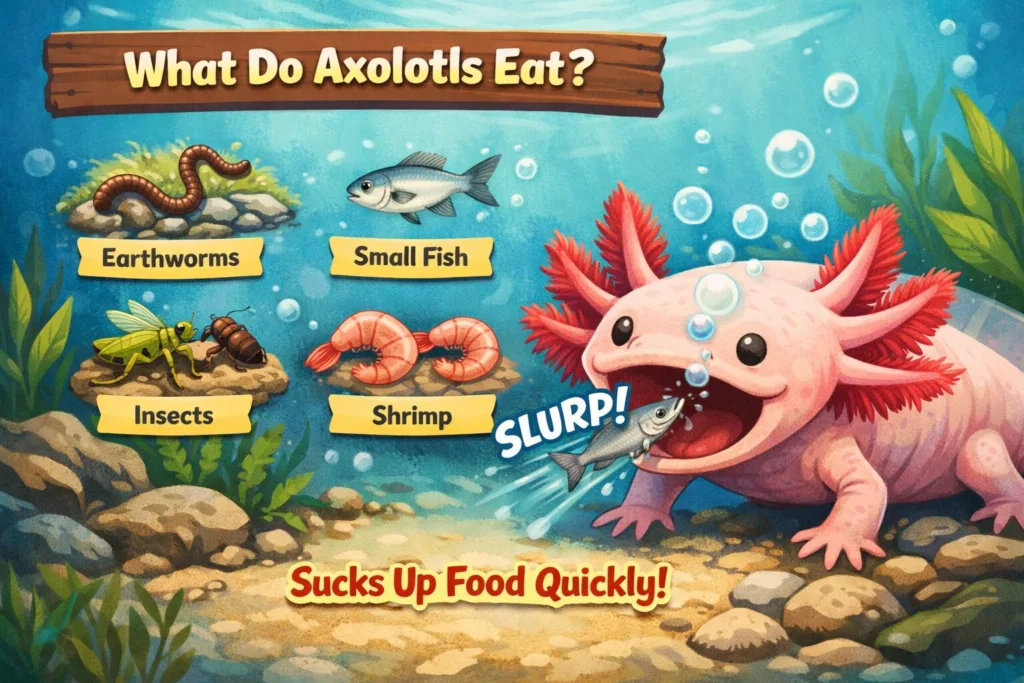
Axolotls are meat-eaters. They eat foods like:
- Earthworms
- Insects
- Small fish
- Shrimp
They usually suck in their food quickly from the water.
All About Axolotl Babies
A female axolotl can lay between 100 and 1,000 eggs at one time. The eggs stick to plants or rocks in the water and are covered in a jelly-like layer that helps protect them.
After about two to three weeks, the eggs hatch into tiny baby axolotls called larvae. Even as babies, they already have their feathery gills. As they grow, their colors begin to appear, and their bodies become less see-through.
By about six months old, they start to look like small adult axolotls. They usually reach full size and can reproduce when they are around 12 to 18 months old.
Common Axolotl Color Morphs
Axolotls come in some very cool colors, especially in captivity. These are usually called color morphs.
Wild Type:
This is the natural color in the wild. Wild-type axolotls are usually dark brown or black with golden, olive, or greenish speckles. This helps them blend in with the muddy bottom.
Leucistic:
These axolotls are pale pink with bright pink gills and black eyes.
Albino:
Albino axolotls are pale white or creamy yellow with pink or red eyes.
Golden Albino:
These have golden-yellow skin with shiny, sparkly patches.
Melanoid:
Melanoid axolotls are very dark and do not have shiny speckles.
Piebald and Rare Morphs:
Some axolotls have patches of different colors. Rare morphs include copper, mosaic, and chimera.
Are Axolotls Endangered?
Yes. Wild axolotls are critically endangered. Their numbers have dropped because their habitat is shrinking and becoming polluted. Invasive fish like carp and tilapia also eat axolotl eggs and babies.
People are working hard to help them. Scientists breed axolotls in captivity, and conservation groups in Mexico are cleaning canals, removing invasive fish, and protecting the places where wild axolotls still live.
Axolotls as Pets
Axolotls may look cute, but they are delicate animals. They should not be handled unless it is absolutely necessary, like during tank cleaning. Their skin is very sensitive, and human hands can hurt them.
They are better pets for older children and adults because they need careful care and specific water conditions. Their water must stay cool, around 60 to 64°F or 16 to 18°C, which is cooler than what most tropical fish need.
Pet axolotls usually eat:
- Earthworms
- Bloodworms
- Pellets made especially for axolotls
They are definitely more of a “look, don’t touch” pet.
Axolotl Facts for Kids
- Wild axolotls are critically endangered.
- Axolotls can be dark, pale pink, creamy yellow, or other unusual shades.
- A female axolotl can lay up to 1,000 eggs at a time.
- Habitat loss, pollution, and invasive species are the biggest reasons wild axolotls are disappearing.
Axolotls in Culture
The name axolotl is linked to Xolotl, an Aztec god connected with fire, lightning, death, and transformation. According to legend, Xolotl turned himself into an axolotl to escape sacrifice.
Because of their feathery gills and unusual look, some people also call axolotls “water dragons.” Fair enough. They do look like tiny fantasy creatures that forgot to leave the water.
Frequently Asked Questions About Axolotls
Where do axolotls live?
Axolotls live in the canals of Xochimilco in Mexico City.
What does “axolotl” mean?
It is usually translated as “water monster.”
What do axolotls eat?
They eat worms, insects, small fish, and other tiny aquatic animals.
Conclusion
Axolotls are fascinating animals. They can regrow body parts, keep their baby features for life, and have a long connection to ancient culture. They may look cute and funny, but they are also one of the most unusual animals in the world.
They remind us that even small creatures can be extraordinary. And they also remind us why protecting endangered animals matters. The more we learn about creatures like the axolotl, the better chance we have of helping them survive.
External Links