Neolithic Stone Age Houses quick facts
- Imagine waking up 9,000 years ago, not in a cave, but in a cozy clay hut with a fire in the center and your goats outside the door.
- During the Neolithic (New Stone Age) , humans stopped wandering and instead started constructing permanent homes and complex community life.
- This marked one of humanity’s greatest changes, from nomads to villagers.
- Keep reading to learn interesting facts about Neolithic Stone Age houses and how they developed!
What Was the Neolithic Stone Age?
The Neolithic Stone Age, also referred to as the New Stone Age, was roughly from 10,000 BCE to 2,000 BCE. This time marked the shift from hunters and gathers to farmers and herders. People began living in one place year-round instead of constantly moving shelters, during this time tools became polished, pottery was invented, and houses replaced caves. The New stone age brought innovation in every aspect of life and began the spark of a settled civilization.
From Caves to Houses – Why People Started Building Homes
For the first time, humans could truly call a place home; they started building houses instead of living in caves. The reason why people started building homes was due to the practice of farming developing during this time. Farming meant people no longer followed herds but instead domesticated animals like cattle and produced their own food resource like wheat, for this purpose they needed storage and shelter. In order to build a safe environment to practice farming they created houses which provided protection for food, tools and animals. This eventually led to people settling in one area for long periods of time and due to this communities grew larger, and created villages which were bustling with life.
What Were Neolithic Houses Made Of?
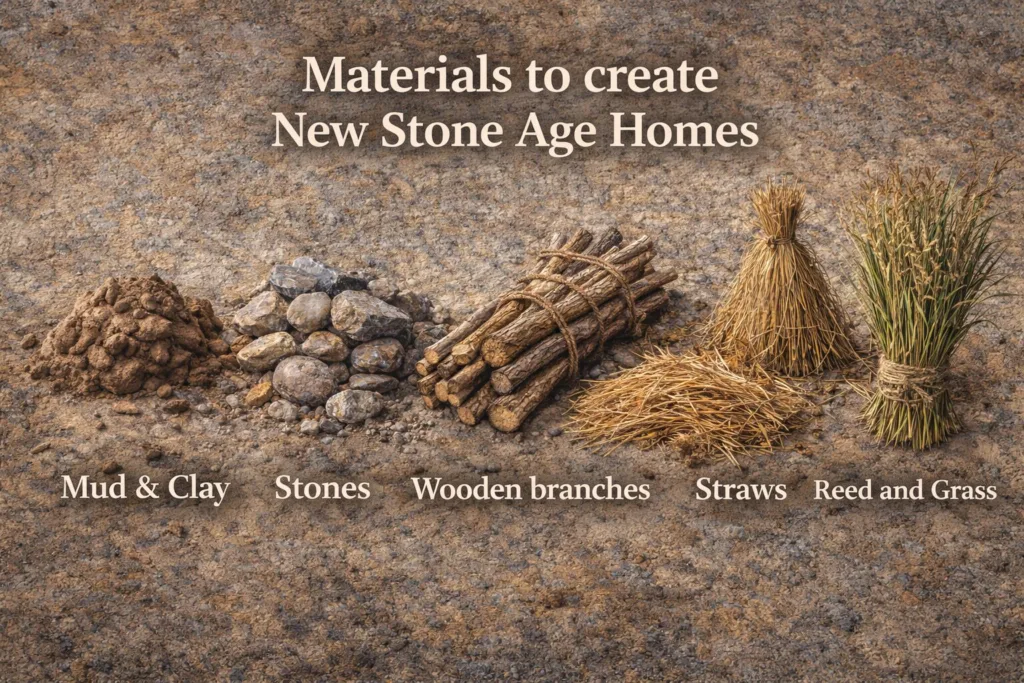
Neolithic houses varied according to regions, but they were usually created using natural resources found in forests or near rivers. For example many Neolithic houses used:
- Mud and clay: Which were packed or baked into bricks in order to create a strong structure of the house, In Jericho, houses were made from sun-dried mud bricks
- Stones: These were used in colder regions like Scotland to block out cold air from entering the home and it provided a strong base for the home as well.
- Wood and branches: These were used as frames or support beams to hold the house together firmly.
- Straw, reeds, or grass: These were used for thatched roofs and filling gaps in the clay or stone wall, to block cold air from entering the house
What Did Neolithic Houses Look Like?
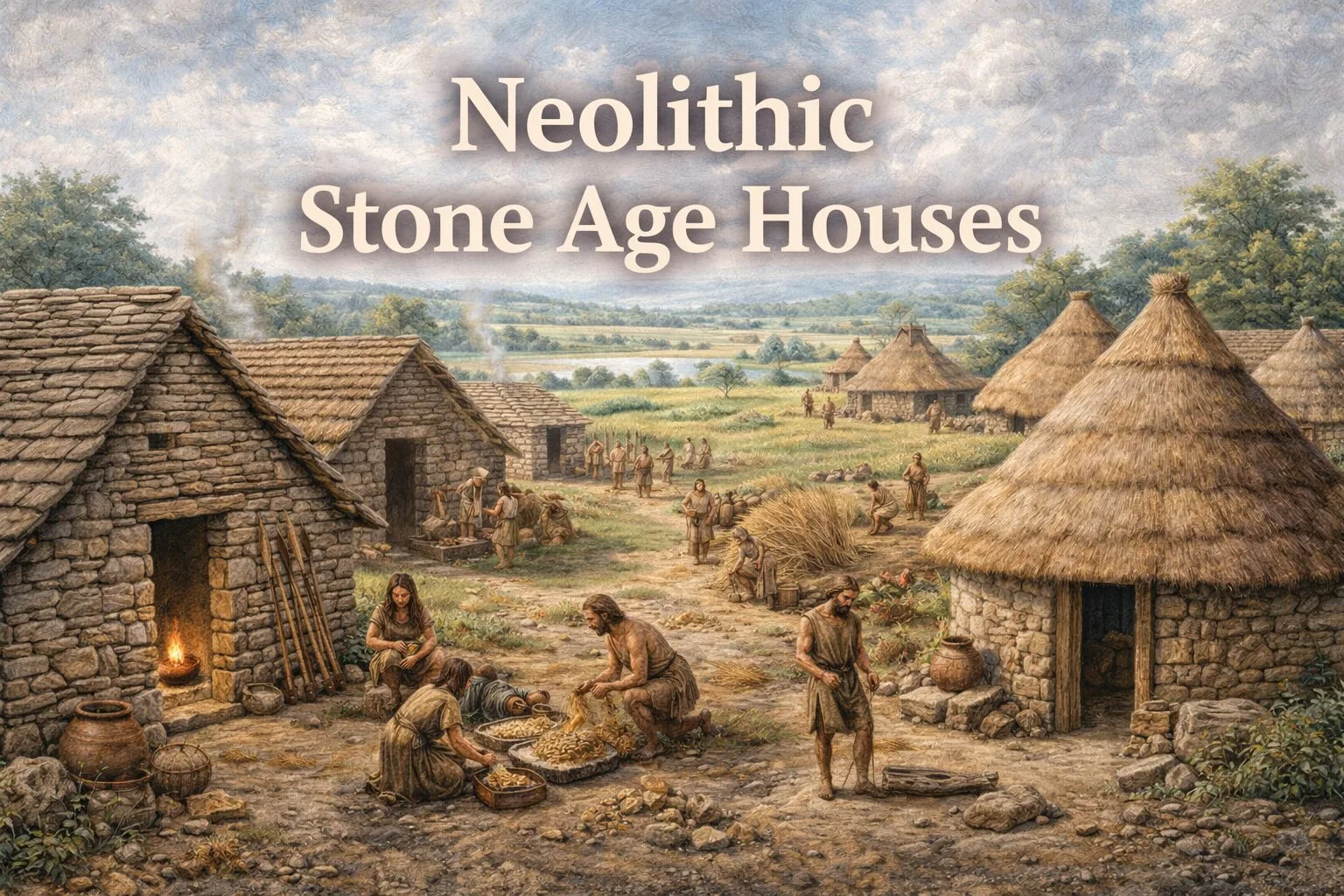
The Neolithic houses looked different depending on the region and the climate the area faced. It is studied that most Neolithic houses were either rectangular or circular in shape. The walls were either made of baked mud-bricks or stones in colder regions and were studied to be up to a height of 1.5-2 meters (5-6 feet). The roofs were flat or thatched and supported by wooden beams, while the floors were packed with mud or lime plaster. Houses looked different from one another due to techniques employed for the creation of the homes and the region the house was made in, everything depended on the climate.
Inside the House – How People Lived
Have you wondered how the inside of a Neolithic house would look? Try to imagine a home with a central fireplace or hearth that was used for cooking and warmth, where the entire family huddled up together to warm up on a cold night. There were clay ovens or pits for baking bread and built-in shelves, benches, and storage bins for food and tools. The sleeping areas were lined with straw or animal skins and there was a display of pots, tools, and weapons stored along walls. The homes were simple but organized for quick access to tools and shelter from predators and harsh climates.
Villages and Settlements
During the Neolithic stone age, houses were built close together which eventually led to the formation of early villages. The villages shared courtyards, grain storage pits, and animal pens and neighbors worked together in farming and protection of families. Communities formed and we see an example of earliest urban planning where there were designated streets, drainages and pathways for the people and the animals that were kept. Çatalhöyük, Turkey is an example of one of the world’s first towns and it was built in 6,500 BC.
How Were Neolithic Houses Built?
Here is a process of how Neolithic houses were built:
- The people at that time chose a flat site near water and farmland.
- They dug foundation trenches to add wood made support beams.
- They established and built walls from mud bricks or stacked stones.
- They added wooden poles and thatched or flat roofs.
- They plastered the walls with mud for insulation in order to keep wind and cold out of the house
- They repaired the houses regularly as nature was tough on the natural materials and deteriorated with time.
What Do Archaeologists Know About Neolithic Homes?
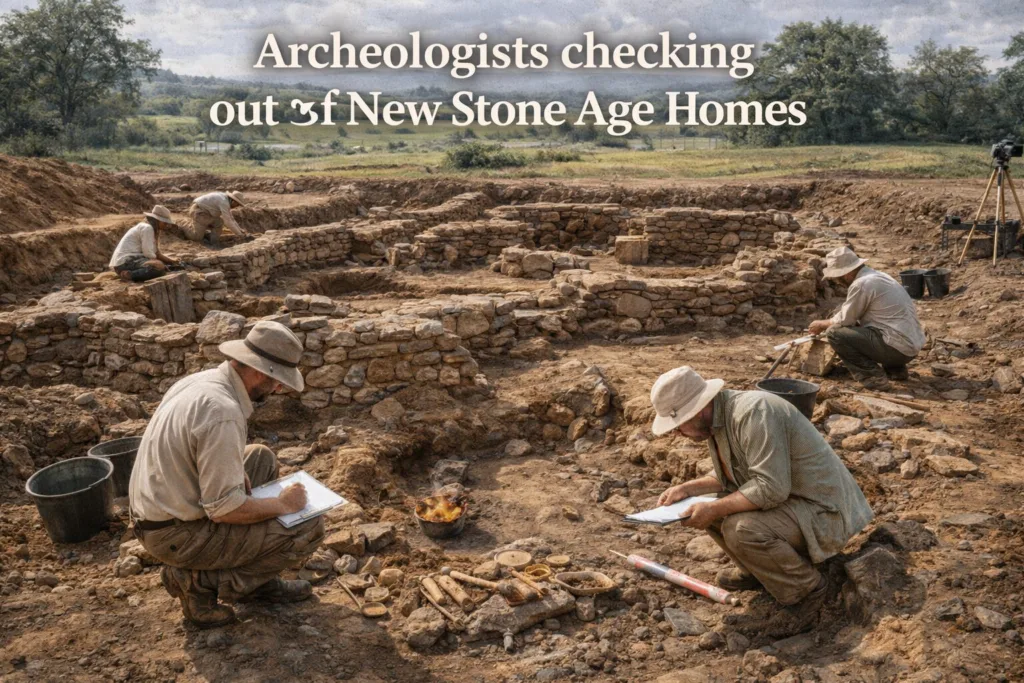
Archaeologists have spent a lot of time unearthing historic sites to study the buried secrets of the Neolithic period. They have discovered a lot about the houses during the New Stone Age. Archaeological digs at Çatalhöyük, Skara Brae, and Jericho show home layouts, fire pits, tools and many artifacts like pottery and loom weights inside the homes. While in few locations there were human skeletons sometimes buried under floors, which could be related to rituals or to show respect for ancestors. Archaeologists use methods like carbon dating, which provides a timeframe for organic material and lets us understand the age of the object discovered. They also use 3D reconstruction which creates a detailed digital model for noninvasive study of the delicate ancient objects.
Life Around the House – Farming and Family
During the Neolithic period, the houses developed around farm life which meant domestic life and community intertwined. Most families worked together to grow crops like wheat, barley, and lentils near their homes and they kept animals like sheep, goats, cattle in attached pens. The entire community protected the animals and created a sense of belonging, with the shift of survival to surplus of food, activities like pottery and weaving became household crafts. People started investing their time in food storage and cooking became a part of daily routine.
Examples of Famous Neolithic Houses
Here is a list of examples of famous Neolithic houses and where they were found:
- Skara Brae (Scotland): Here archaeologists discovered stone-built houses which were connected by covered passageways and contained stone beds and hearths for families.
- Çatalhöyük (Turkey): Here archaeologists discovered mud-brick houses with rooftop entry, with painted walls and shrines inside homes.
- Jericho (Palestine): Here archaeologists discovered circular mud-brick homes and defensive walls to keep predators out of their animal pens
- Mehrgarh (Pakistan): Here archaeologists discovered an early farming settlement with rectangular homes and granaries (a storehouse for threshed grain).
Fun Facts About Neolithic Houses
- Did you know some Neolithic homes had built-in furniture made from stone?
- Some homes had a roof entry that kept animals out and helped with ventilation.
- Did you know houses were rebuilt on the same spot for centuries?
- Lime plaster floors in Jericho were polished to shine like marble!
Conclusion & Key Takeaways
With the evolution of time the Neolithic Age brought community, and permanent houses for the people. Homes developed and were built from mud, stone, and wood, showing creativity and adaptation of the people. We learn and study villages like Çatalhöyük and Skara Brae as they reveal how early humans lived together and formed villages. Never forget that the first walls humans built weren’t just for shelter, but they constructed the idea of belonging for times to come.
Frequently Asked Questions
Where did scientists discover stone-built houses?
Archaeologists discovered stone-built houses in Skara Brae, Scotland.
What is an example of the world’s first town?
Çatalhöyük, Turkey is an example of one of the world’s first towns and it was built in 6,500 BC.
What were Neolithic homes made of?
Neolithic homes were made of mud, clay, stones, wood, reed, etc.
External Links
Keep learning
Continue with Miami Tribe Facts for Kids and Stone Age Facts For Kids – Learn All About Stone Age.
Did you know? Imagine waking up 9,000 years ago, not in a cave, but in a cozy clay hut with a fire in the center and your goats outside the door.
Try it
Build a short timeline or concept map for History using four important details from this guide.
Knowledge check
Neolithic Stone Age Houses: what is one important fact from this guide?
Show answer
Imagine waking up 9,000 years ago, not in a cave, but in a cozy clay hut with a fire in the center and your goats outside the door.