Orangutans are red-haired great apes that live in the rainforests of Borneo and Sumatra. Their name means “man of the forest”. There are three species, and all are in serious danger. They eat mostly fruit, build a new nest in the trees most nights, and their young stay with their mothers for up to seven years.
orangutans quick facts
- Orangutan means “man of the forest” in the Malay language.
- An orangutan’s arm span can be more than 2 metres.
- Orangutans build a new sleeping nest in the trees most nights.
- Young orangutans may stay with their mothers for up to seven years.
- The Tapanuli orangutan, named in 2017, numbers no more than about 800.

What is an orangutan?
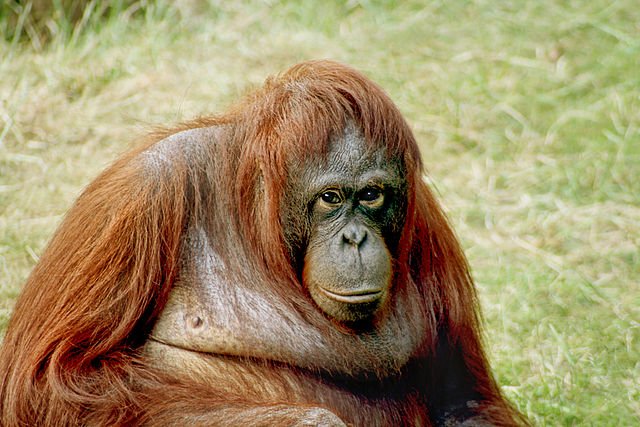
An orangutan is a great ape with long, shaggy, reddish fur. It lives in the rainforests of Borneo and Sumatra, two large islands in South-East Asia.
Its name comes from the Malay language and means “man of the forest”. Orangutans are the largest animals in the world that live mostly in trees.
Orangutans are primates, the same group of animals as monkeys, apes and humans. Like gorillas and chimpanzees, they are great apes, and they are closely related to us. WWF says orangutans share 96.4% of our genes.
Three kinds of orangutan
There are three species of orangutan.
The Bornean orangutan lives on the island of Borneo. The Sumatran orangutan lives on the island of Sumatra. Sumatran orangutans have longer facial hair and seem to form closer friendships than their Bornean cousins, while Bornean orangutans come down to the ground more often.
The third species, the Tapanuli orangutan, also lives on Sumatra. Scientists only announced it as a separate species in November 2017. There are no more than about 800 of them, which makes it the most endangered of all the great apes.
| Species | Where it lives | Estimated number |
|---|---|---|
| Bornean orangutan | Borneo | about 104,700 |
| Sumatran orangutan | northern Sumatra | about 13,846 |
| Tapanuli orangutan | a small area of Sumatra | no more than 800 |
What orangutans look like

Orangutans have long arms, short legs and hands and feet that can grip like hooks. Their arms are longer than their bodies. From fingertip to fingertip, an orangutan’s outstretched arms can measure more than 2 m (7 feet).
Females are about 45 inches (1.1 m) tall on average and weigh 80 to 120 pounds (36 to 54 kg). Males are bigger, about 54 inches (1.4 m) tall, and can weigh up to about 220 pounds (100 kg).
Cheek pads and long calls
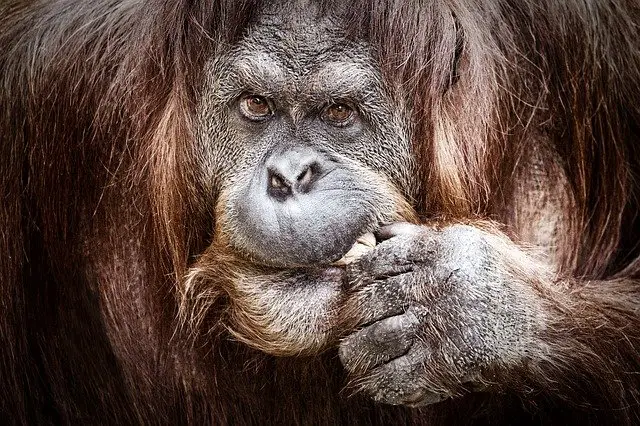
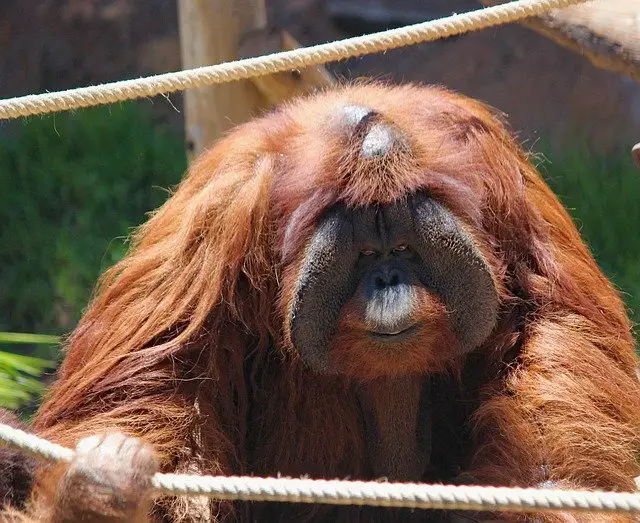
Some adult males grow big, fleshy cheek pads, called flanges, on each side of their face. They also have a large throat sac.
A flanged male uses his throat sac to make a booming call, called a long call. It can be heard a long way through the forest, and it tells other males to keep away.
Other adult males stay smaller and look more like females. They are called unflanged males. Strangely, an unflanged male can later turn into a flanged male. This is unique among primates, and scientists still do not fully understand why it happens.
What orangutans eat
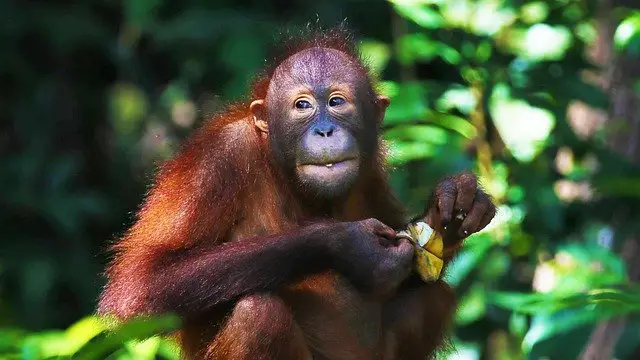
Orangutans love fruit. San Diego Zoo Wildlife Alliance says they eat up to 100 kinds of ripe fruit. Figs and the spiky durian fruit are among the most common, and they also eat lychees and mangosteens.
When fruit is hard to find, they eat young leaves, flowers, bark, vines, honey and the soft inner shoots of plants. They also eat insects such as termites and ants, and sometimes bird eggs.
In the wild, they spend a large part of each day searching for fruit and eating it. They get much of their water from their food, and they also scoop up water that collects in holes in trees.
Clever tool users
Orangutans are very intelligent. In the wild, they make and use tools.
For example, an orangutan may strip the leaves from a twig and then poke it into a hole to fish out termites to eat.
Different groups of orangutans use different tools and tricks, which they learn from one another. Scientists think of this as a kind of orangutan culture.
A life in the trees
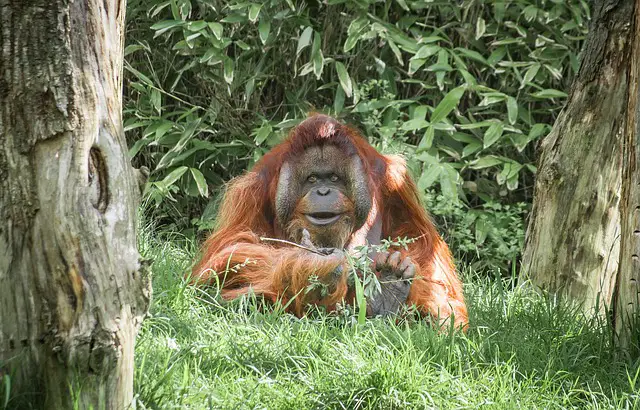
Orangutans live in tropical rainforests, including swampy forests, especially in river valleys and on flood plains.
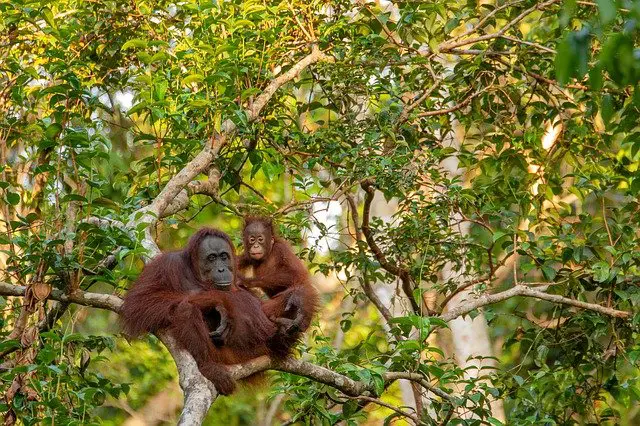
They spend almost all their time high in the trees. They swing and clamber from branch to branch, using their strong arms and grasping hands and feet.
Most orangutans live on their own. Mothers and their young stay together, but adults usually travel, feed and sleep alone.
How orangutans move
Orangutans are slow, careful climbers. They move through the forest by reaching from branch to branch, holding on with their hands and feet at the same time.
To cross a gap between trees, an orangutan may grab a thin tree and sway it backwards and forwards until it bends close enough to the next tree. Then it reaches across and climbs over.
Because they are so heavy, orangutans have to be careful. They test branches before trusting their weight to them.
A new bed every night
Every evening, an orangutan builds itself a nest high in a tree. It bends and weaves branches together and lines them with leaves to make a comfortable bed.
Orangutans usually build a new nest every night, although they sometimes reuse an old one. They may also make a nest to rest in during the day.
Young orangutans learn how to build nests by watching their mothers, practising for years until they get it right.
The longest childhood
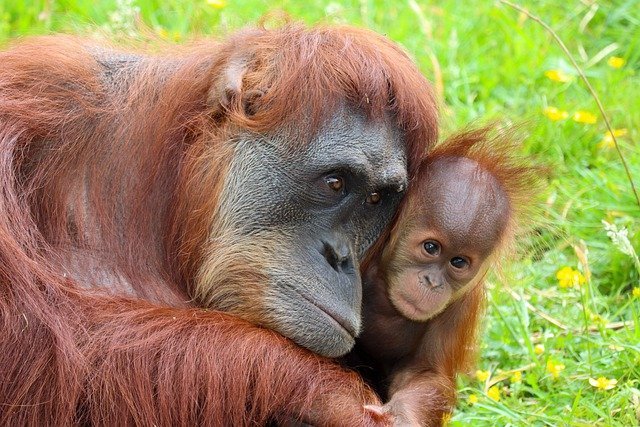
Orangutan babies stay with their mothers for a very long time. A young orangutan may drink its mother’s milk for up to seven years, the longest childhood of any great ape.
During those years, the mother teaches her young where to find food, which fruits are good to eat, how to use tools and how to build nests.
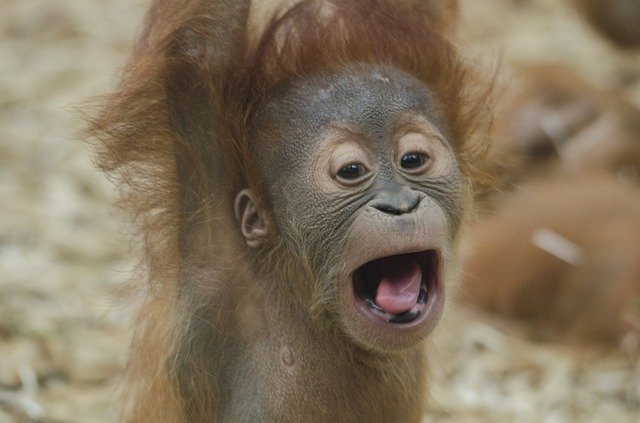
Because of this, orangutans have babies only rarely. WWF says a female has one baby about every three to five years, and San Diego Zoo Wildlife Alliance says it can be as rarely as every seven or eight years. That is one of the slowest breeding rates of any mammal.
Orangutans live for about 25 to 38 years on average, a long life for a wild animal.
Gardeners of the forest
Orangutans are important to their rainforest homes. They eat so much fruit that they spread its seeds far and wide in their droppings.
Many of those seeds grow into new trees. That is why WWF calls orangutans “gardeners” of the forest. Protecting orangutans helps protect the whole rainforest, and all the other animals that live there.
Orangutan brains
Orangutans are among the most intelligent animals on Earth. They can remember where fruit trees grow across a huge area of forest, and when each kind of tree will have ripe fruit.
They learn by watching. A young orangutan copies its mother for years, picking up the skills it needs to survive. That is why orphaned orangutans need so much help. Without a mother to learn from, they do not know how to live in the wild.
Rescue centres care for orphaned orangutans for many years, teaching them to climb, find food and build nests, before returning them to protected forests.
Why orangutans are in danger
Orangutans are in serious trouble. A century ago there were probably more than 230,000 of them. Today there are far fewer, and San Diego Zoo Wildlife Alliance describes them as Critically Endangered.
The biggest threat is the loss of their rainforest. Forests are cut down for timber, cleared for mining and towns, and turned into plantations to grow oil palms. Palm oil is used in many foods, soaps and other products. Fires, often started to clear land, have also burned large areas of orangutan forest, and some young orangutans are captured illegally to be sold as pets.
Because orangutans have babies so rarely, their numbers take a very long time to recover when they fall.
Conservation groups are working to protect forests, rescue orphaned orangutans and return them to the wild. Choosing products made with sustainable palm oil is one way families can help.
Three things people get wrong
Orangutans are primates. They are great apes, in the same group of animals as monkeys and humans.
Orangutans are not monkeys. Apes and monkeys are different. Apes, like orangutans, have no tail.
Orangutans do not live in Africa. Gorillas and chimpanzees do, but orangutans live only in South-East Asia, on Borneo and Sumatra.
Did you know? An unflanged male orangutan can later grow cheek pads and become a flanged male, something no other primate is known to do.
Try it
Stretch your arms out wide and ask someone to measure from fingertip to fingertip. Compare it with an orangutan’s arm span of more than 2 metres.
Knowledge check
What does the name orangutan mean?
Show answer
Man of the forest, in the Malay language.
Why are orangutans called gardeners of the forest?
Show answer
Because they spread the seeds of the fruit they eat, helping new trees grow.
Frequently asked questions
Where do orangutans live?
Orangutans live only in the tropical rainforests of Borneo and Sumatra, two islands in South-East Asia. They spend almost all their time high in the trees.
What do orangutans eat?
Orangutans eat mostly ripe fruit, up to 100 kinds, including figs and durian. They also eat leaves, flowers, bark, honey, termites, ants and sometimes bird eggs.
How many kinds of orangutan are there?
There are three species of orangutan: the Bornean, the Sumatran and the Tapanuli orangutan. The Tapanuli orangutan was named in 2017 and is the rarest great ape.
Are orangutans primates?
Yes. Orangutans are primates and great apes, in the same group as gorillas, chimpanzees and humans. WWF says they share 96.4% of our genes.
How long do baby orangutans stay with their mothers?
Young orangutans may drink their mother’s milk for up to seven years, the longest childhood of any great ape, while learning to find food and build nests.
Why are orangutans endangered?
Orangutans are endangered mainly because their rainforest is cut down for timber, mining, towns and palm oil plantations. They breed slowly, so their numbers recover very slowly.
Sources
- San Diego Zoo Wildlife Alliance: orangutan — species, size, arm span, diet, nests, tool use, childhood, breeding, lifespan, cheek pads and status
- WWF: orangutan — name, genes, diet, flanged and unflanged males, differences between species, populations and seed dispersal
- Orangutan Foundation International: orangutan facts — the three species, diet, nests, tool making and threats