Fisher quick facts
- A fisher is not a cat and does not catch fish. It is a member of the weasel family.
- Fishers are the only North American mammal that regularly hunts porcupines.
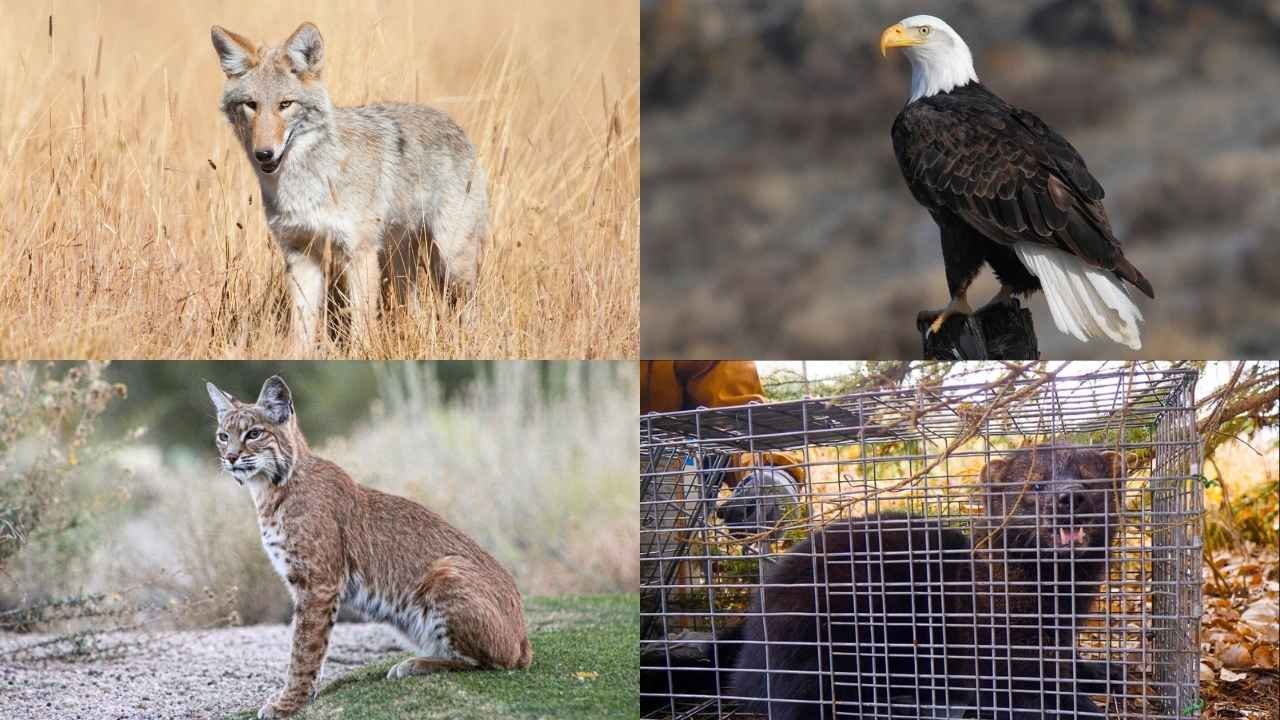
- Bobcats are probably the fisher’s most common predator.
- Washington State released 279 fishers from Canada between 2008 and 2021 to bring them back.
- California’s southern Sierra Nevada fishers were listed as endangered in 2020.
What is a fisher?
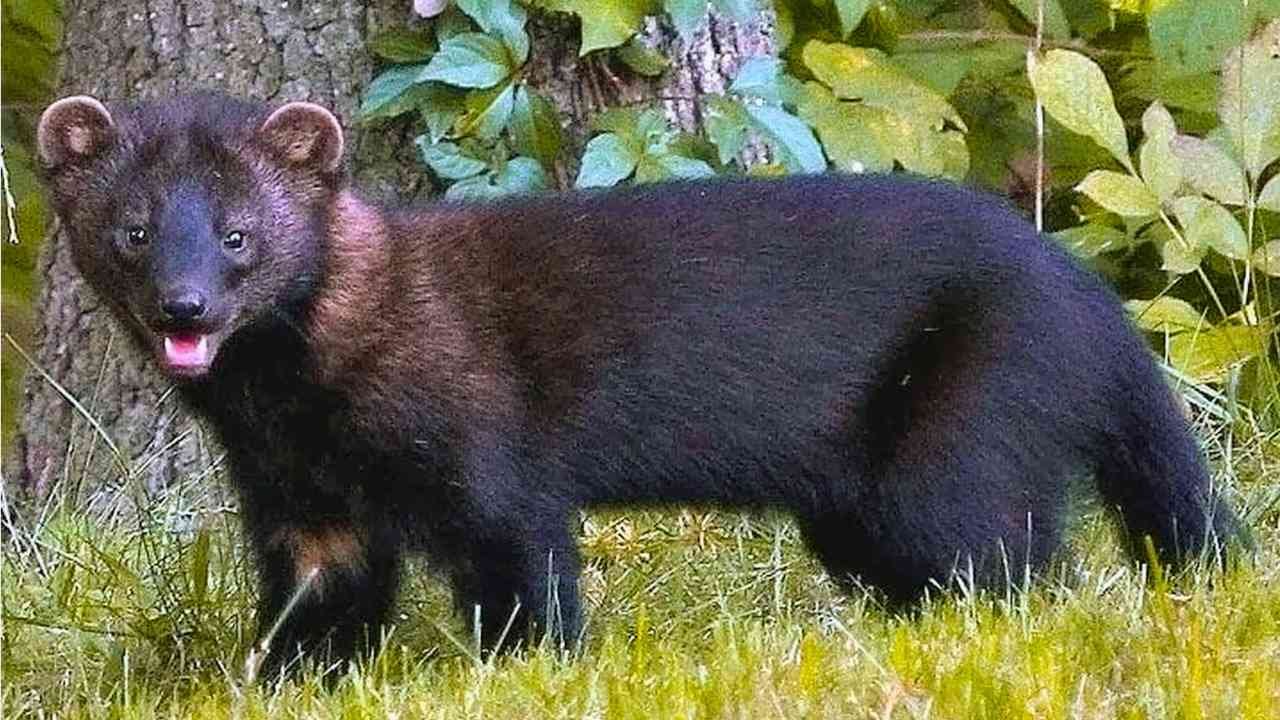
A fisher is a large, dark, long-haired animal from the forests of North America. People often call it a fisher cat, but that name is wrong twice over.
It is not a cat, and it is not closely related to cats. It belongs to the weasel family, along with minks, otters, martens and wolverines. And it does not go fishing either. Its main food is small mammals.
So where does the name come from? New York State’s wildlife department says it probably comes from the fisher’s likeness to the European polecat, which was once called a fitch or fiche.

| Fisher facts | Males | Females |
|---|---|---|
| Weight | 3.2 to 6.8 kg (7 to 15 lb) | 1.4 to 3.2 kg (3 to 7 lb) |
| Length, nose to tail tip | 89 to 119 cm (35 to 47 in) | 76 to 94 cm (30 to 37 in) |
| Babies | 2 to 3 kits, born in March or April | |
| Scientific name | Pekania pennanti |
A big male fisher weighs about as much as a large house cat, but it is longer and much more muscular, with a long bushy tail. Females are about half the size of males, and the biggest males can weigh several times as much as the smallest females.
Fishers live in thick forests where the treetops close over to shade the ground. They like old woodland with hollow trees, dead standing trunks and fallen logs, where they can hide and den. In parts of New York, they have even learned to live in the suburbs.
What animals kill fishers?
An adult fisher is fast, fierce and a good climber, so not many animals can catch one. But some can, and they are mostly other meat-eaters of the same forests.
| Predator | Where | How often |
|---|---|---|
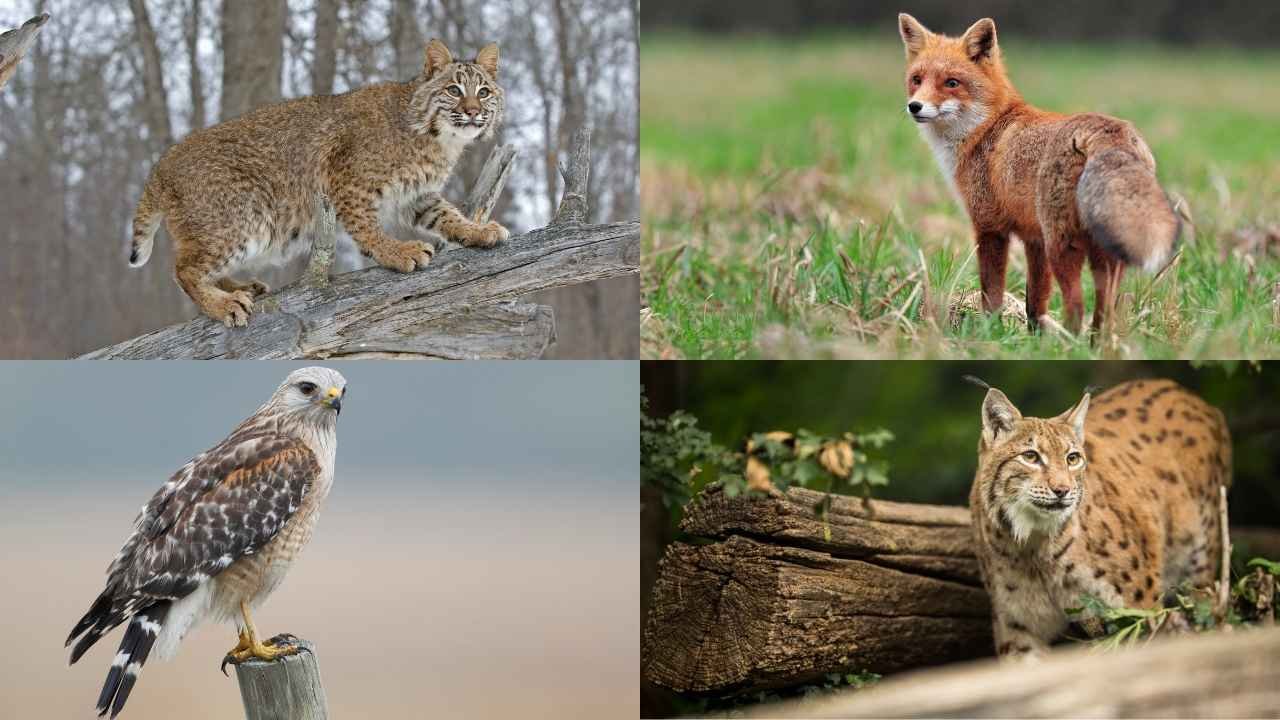
| Bobcat | across much of the fisher’s range | probably the most common predator |
| Coyote | across the fisher’s range | common |
| Cougar (mountain lion) | western mountains | common in Washington State |
| Lynx, wolves and dogs | some areas | now and then |
Bobcats are the fisher’s most dangerous enemy. Washington’s wildlife agency says they are probably the most common predator of fishers there, and New York’s wildlife department names bobcats and coyotes as the most important predators.
Coyotes hunt the same woods and fields. They are bigger than fishers, and they will kill one if they get the chance.
Cougars, also called mountain lions, share the fisher’s forests in the western mountains. In Washington, predation by cougars is one of the common causes of fisher deaths.
Lynx, wolves and dogs may also kill fishers now and then, especially where fishers live close to people or where the big cats and wolves are common.

Why young fishers are in more danger
Young fishers, called kits, are born blind and helpless in a den, usually in a hollow tree. A mother has two or three kits in March or April, and she raises them alone.
The kits drink her milk for their first 8 to 10 weeks. While they are small, they are much easier for a predator to catch than an adult, so the safety of the den matters a great deal.
Fishers mate in late winter and spring. By the autumn, the young fishers are ready to go off and find forest of their own.

The biggest danger: people
Wild predators are only part of the story. In many places, people cause as many fisher deaths as any bobcat.
Cars are a big one. Washington’s wildlife agency lists collisions with vehicles alongside predators as a common cause of death. The US Fish and Wildlife Service also lists wildfire, climate change, dying trees and poisons among the threats to fishers in California.
Trapping is another. New York is one of 16 states that allow a controlled trapping season for fishers, with rules to keep numbers healthy.
Long ago, heavy trapping and forest clearing wiped fishers out of much of their old range. Their story since then has been one of coming back.
What fishers eat
Fishers are hunters, and they are not fussy. In New York, their main prey is small mammals such as mice and voles. Next comes fruit, and then squirrels and chipmunks.
In Washington, they also catch snowshoe hares, birds and insects, and they eat the remains of dead deer and elk. In California’s Sierra Nevada they eat squirrels, mice, birds and even fungi.
One meal makes the fisher famous. It is the only North American mammal that regularly hunts porcupines. Very few animals will take on a porcupine and its sharp quills, but fishers do it often enough to be well known for it.

Because they eat so many small mammals, fishers help keep those numbers in balance. That makes them an important part of the forest ecosystem.
Bringing fishers back
In some places, fishers are doing well. New York’s wildlife department says they are now common across upstate New York, and their numbers there are stable or growing.
In others, they need help. Fishers had vanished from Washington State, so wildlife experts brought them back from Canada. Between 2008 and 2021 they released 279 fishers from British Columbia and Alberta.
The first 90 were released in Olympic National Park, starting with 12 in January 2008 and followed by 78 more over the next three years. Another 170 were released in the Cascade Mountains between 2015 and 2020, and 19 more followed in late 2021. Fishers are still listed as endangered in Washington, and trapping them is not allowed.
Far to the south, a small group of fishers lives in the forests of California’s southern Sierra Nevada, from the Tuolumne River in Yosemite National Park south to the Greenhorn Mountains. In 2020, the US Fish and Wildlife Service listed that population as endangered.
How the Olympic fishers were brought back
Fishers once lived in Washington’s forests. Their thick, dark fur made them valuable to trappers, and by the early 1900s, decades of over-trapping had wiped them out of the state.
To bring them back, Olympic National Park worked with trappers and wildlife officials in British Columbia, Canada. The Canadian fishers were caught, checked and carried south, then released into the park’s forests.
Then came the hard part: finding out if they survived. Researchers tracked them with radio signals from the air and on the ground. When some radio collars failed, they switched to hidden wildlife cameras with bait, and to hair snares.
A hair snare is a small wire or sticky pad that pulls out a few hairs as an animal brushes past. Scientists can read the DNA in those hairs to tell exactly which fisher it was, without ever catching it.
The work paid off. Studies between 2013 and 2016 found ten of the original fishers still alive, along with several generations of their children and grandchildren.
The studies also showed what kills fishers in the wild today. One fisher had high levels of brodifacoum, a poison used to kill rats and mice. Another was killed by a car on Highway 101. Poisons put out for rodents can end up inside the predators that eat those rodents.
If you see a fisher
Fishers are shy and usually keep well away from people. Most people only ever glimpse one crossing a road or slipping through a garden near woodland.
A fisher is a wild predator, though. The best thing to do is to watch it from a distance, and never try to feed it or touch it.
Keeping small pets indoors at night is sensible anywhere fishers, coyotes or bobcats live. It protects the pets, and it keeps wild animals from learning to hang around people’s homes.
Three things people get wrong
A fisher cat is not a cat. It is a member of the weasel family, related to minks, otters and wolverines.
Fishers do not live on fish. Their main food is small mammals such as mice, voles and squirrels, along with fruit.
Fishers are not too tough to be eaten. Bobcats, coyotes and cougars all kill fishers, and bobcats are probably the most common predator of all.
Did you know? The name fisher probably has nothing to do with fish. It seems to come from fitch, an old name for the European polecat, which the fisher looks a little like.
Try it
Find Washington, New York and California on a map of the United States. Fishers live in all three states, but in Washington they had to be brought back from Canada.
Knowledge check
Which animal is probably the most common predator of fishers?
Show answer
The bobcat. Coyotes and cougars also kill fishers, and lynx, wolves and dogs sometimes do too.
Is a fisher cat really a cat?
Show answer
No. A fisher is a member of the weasel family, related to minks, otters and wolverines.
Frequently asked questions
What animal can kill a fisher cat?
Bobcats are probably the most common predator of fishers. Coyotes and cougars also kill them, and lynx, wolves and dogs sometimes do. Cars kill many fishers too.
Is a fisher cat a cat?
A fisher cat is not a cat and is not closely related to cats. The fisher is a large member of the weasel family, related to minks, otters and wolverines.
What do fishers eat?
Fishers mainly eat small mammals such as mice, voles, squirrels and snowshoe hares. They also eat fruit, birds, insects and the remains of dead deer. They are famous for hunting porcupines.
Do fishers eat porcupines?
Yes. The fisher is the only North American mammal that regularly hunts porcupines, which very few other predators will attack.
How big is a fisher?
Male fishers weigh about 3.2 to 6.8 kg (7 to 15 lb) and are 89 to 119 cm long, including the tail. Females are much smaller, about 1.4 to 3.2 kg.
Where do fishers live?
Fishers live in forests across Canada and the northern United States, with smaller populations further south in the western mountains. They like thick, older forest with hollow trees and fallen logs.
Sources
- New York State Department of Environmental Conservation: fisher — size, diet, predators, kits, the name and New York’s population
- Washington Department of Fish and Wildlife: fisher — predators, causes of death, habitat and the reintroduction of 279 fishers
- US Fish and Wildlife Service: fisher — the Southern Sierra Nevada population, its diet, threats and 2020 endangered listing
- US National Park Service: fisher reintroduction in Olympic National Park — why fishers vanished from Washington, the 2008 to 2010 releases, how they were tracked and what killed some of them