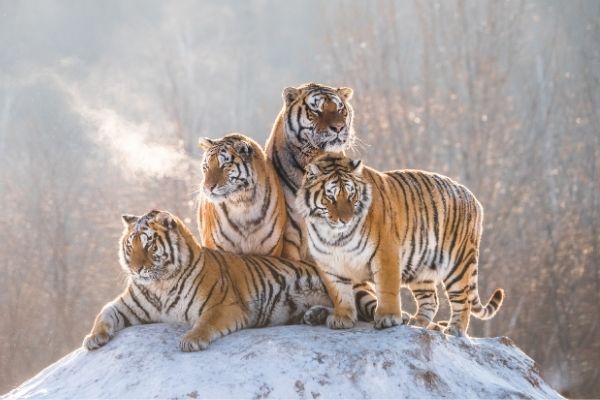
Siberian tigers, also called Amur tigers, live in the cold forests of the Russian Far East, especially the Sikhote-Alin mountains, with a small number in northeast China. They live in oak and pine forests where deer and wild boar feed. Each tiger needs a huge territory, and Russia’s 2022 count found more than 750 tigers, including cubs.
where Siberian tigers live quick facts
- Siberian tigers live in the Russian Far East and northeast China.
- Their home is named after the Amur River.
- One Siberian tiger used a range of more than 10,000 sq km.
- In winter, their fur can grow up to 11 cm long.
- By the 1940s, fewer than 50 were left in the wild.
Where do Siberian tigers live?

Siberian tigers live in the cold, snowy forests of the Russian Far East, near the Pacific coast of Russia. A small number also live across the border in northeast China.
The Smithsonian’s National Zoo says the Siberian tiger, also called the Amur tiger, lives mainly in the Russian Far East, with a few in northeast China and possibly North Korea. Its home is named after the Amur River, which runs through the region.
Despite its name, the Siberian tiger does not live across the whole of Siberia. Its home is a much smaller corner of the far east of Russia. Meet the whole subspecies in our Siberian tiger facts.
| Siberian tiger at a glance | |
|---|---|
| Also called | Amur tiger |
| Where | Russian Far East and northeast China |
| Habitat | cold oak and pine forests |
| Territory | up to about 1,600 sq km for a male |
| Food | wild boar, red deer, sika deer |
| Russia’s 2022 count | more than 750, including cubs |
| Status | Endangered |
Russia and China

Most Siberian tigers live in Russia. Columbus Zoo says their range lies along the Amur River region of south-east Russia, with a smaller group in northeast China.
Tigers do not care about borders. The Wildlife Conservation Society (WCS) says some tigers in China’s Northeast China Tiger and Leopard National Park have territories that cross into Russia.
In the late 1990s, only a handful of tigers were left in China. WCS China says there were more than 26 by 2018, and about 70 were reported in the national park in 2024.
A forest home
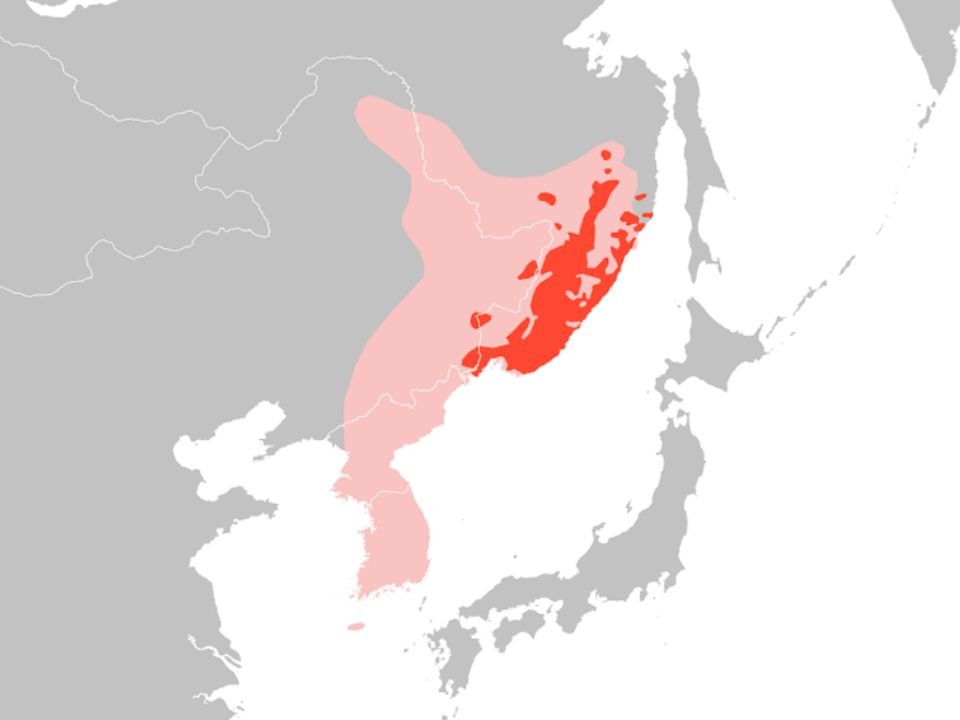
Much of the Siberian tiger’s best habitat is in Russia’s Sikhote-Alin mountains. The WCS says these mountains are covered in forests of Mongolian oak and Korean pine.
The trees are important for tigers, even though tigers do not eat plants. The WCS explains that acorns and pine nuts attract red deer, sika deer and wild boar, and these are the animals that tigers hunt.
National Geographic says northern forests like these are the tiger habitat with the fewest people. That gives tigers space, but it also means they must travel a long way to find food.
Built for the cold
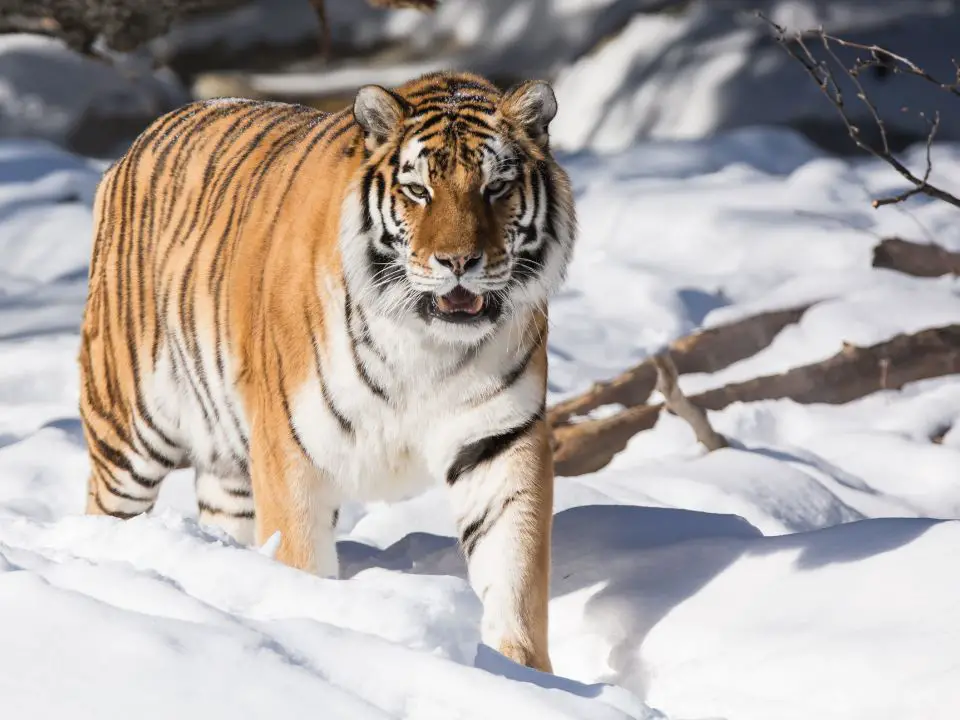
Siberian tigers live in one of the coldest places any tiger calls home. San Diego Zoo Wildlife Alliance says they have a longer, thicker coat than other tigers, and a layer of fat under the skin to keep warm.
In winter, their fur grows very long. One Earth says it can be up to 11 cm (4.3 inches) long on the neck.
Their coats are paler orange, with fewer stripes than other tigers. San Diego Zoo Wildlife Alliance says this helps them blend in with the snowy forest.
The Siberian tiger is also the largest kind of tiger. The National Zoo says big males can reach about 300 kg (660 pounds) and 3 m (10 feet) long, although most adults are smaller.
A huge territory
Prey animals are thinly spread across the cold forests, so each tiger needs a lot of space to find enough food. The WildCats Conservation Alliance says a female’s home range can be up to about 400 sq km, and some males patrol up to 1,600 sq km.
San Diego Zoo Wildlife Alliance says one Siberian tiger was recorded using a range of more than 10,000 sq km (4,000 square miles). That is bigger than many small countries.
With so much space needed, tigers are rare. One Earth says remote areas have less than one tiger per 100 sq km. The WildCats Conservation Alliance says a healthy population needs an area about the size of Italy.
What Siberian tigers eat
WCS China says wild boar is the Siberian tiger’s main food in China, with sika deer and roe deer also important. The WildCats Conservation Alliance says bears make up about 3% of its diet.
Tigers hunt alone, usually by sneaking up and ambushing their prey. One Earth says a Siberian tiger kills about once every five to seven days, and can eat up to 27 kg (60 pounds) of meat in one meal.
Tigers see well in the dark too. San Diego Zoo Wildlife Alliance says they can see about six times better than people at night.
Counting tigers in the snow
How do scientists count tigers in such a huge, wild place? One way is by their tracks in the snow.
The WildCats Conservation Alliance says a male’s paw print pad measures about 10.5 to 14.5 cm across, and a female’s about 8.5 to 9.5 cm. By measuring prints, scientists can tell tigers apart and count them.
Every tiger also has its own stripe pattern, like a fingerprint, the National Zoo says. Camera traps take photos of passing tigers, and scientists use the stripes to identify each one.
How many are left?

Siberian tigers came close to disappearing. The WildCats Conservation Alliance says fewer than 50 were left in the wild by the 1940s.
Protection helped them recover. The Amur Tiger Center, which is backed by the Russian government, says Russia’s official 2022 count found more than 750 Amur tigers, including cubs.
Some conservation groups think the number of adults is lower. The WildCats Conservation Alliance estimates 265 to 486 in the Russian Far East. About 70 more live in northeast China (2024). The subspecies is listed as Endangered.
Tiger cubs
A mother tiger is pregnant for about three to three and a half months, the WildCats Conservation Alliance says. She usually has two to four cubs.
Columbus Zoo says the cubs’ eyes open when they are 6 to 14 days old. They start hunting at about six months, and leave their mother at 1.5 to 3 years old.
Life is hard for young tigers. The National Zoo says about half of tiger cubs do not survive past the age of two. Wild tigers usually live 10 to 15 years. Read more in our guide to how long tigers live.
Dangers to Siberian tigers
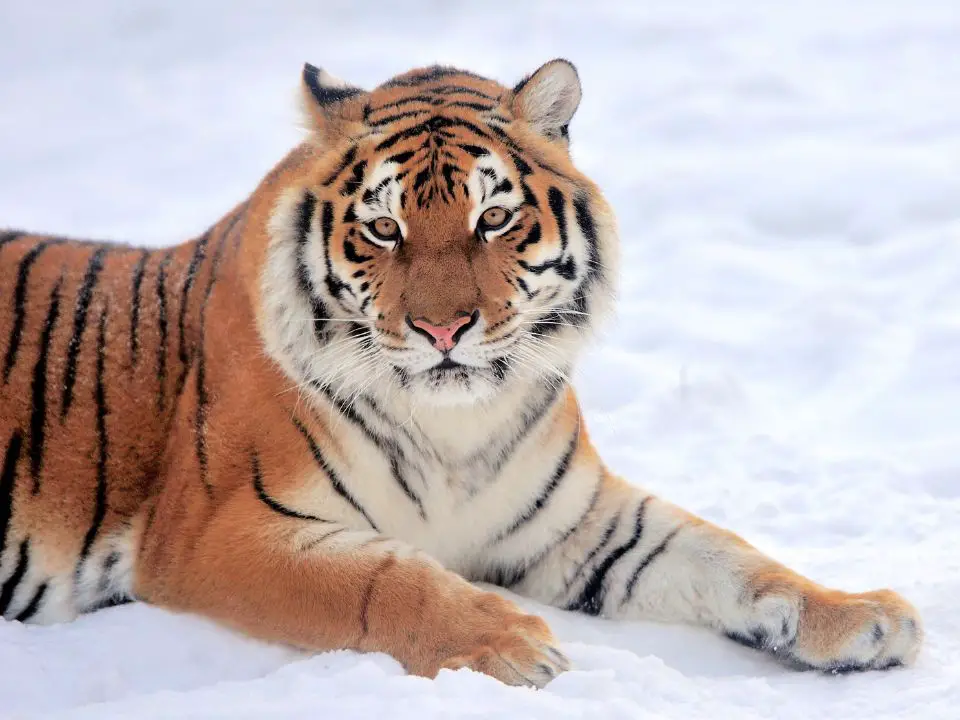
People are the biggest danger to Siberian tigers. The WildCats Conservation Alliance says people cause about 75 to 85% of all Amur tiger deaths.
Columbus Zoo and National Geographic say the main threats are poaching, loss of forest to logging, and people hunting the deer and boar that tigers need to eat.
People are working to help. WCS China says conservation teams remove snares and help villagers put up electric fences, to prevent conflicts between people, tigers and wild boar. Zoos around the world also keep Siberian tigers as part of breeding programmes.
How big are Siberian tigers?
Record-sized Siberian tigers are huge, but most are smaller. The WildCats Conservation Alliance says typical adult males weigh about 160 to 190 kg, and females about 110 to 130 kg.
One Earth says an average male is about 1.95 m (77 inches) long, not counting the tail. That is taller than most adult people are.
Tiger life
Siberian tigers spend a lot of time resting. Columbus Zoo says they can sleep for 18 to 20 hours a day in their native range, saving their energy for hunting.
When they move, they are powerful athletes. Columbus Zoo says a Siberian tiger can leap 3.7 to 4.6 m (12 to 15 feet) with ease. The National Zoo says tigers are strong swimmers too, and are happy to cross rivers.
Tigers returning to China
Camera traps show that tigers are slowly returning to China. The WildCats Conservation Alliance reported that in 2023, cameras counted 45 Siberian tigers in China’s Hunchun Nature Reserve and 9 more in a nearby area called Dahuanggou.
Five mother tigers with cubs were photographed there, and four of them had litters of three or four cubs. Families like these are a sign that the tigers are settling in.
The tigers in China still face problems. WCS China says there is too little large prey in some places, forests are broken up by roads and farms, and a disease called canine distemper can harm tigers.
Fighting poaching
Poaching, or illegal hunting, has hurt Siberian tigers badly. The WildCats Conservation Alliance says that in the early 1990s, as many as 70 tigers a year were poached. It says about 30 a year are still killed.
Rangers patrol the forests to catch poachers and remove traps. Protecting the deer and boar that tigers eat matters just as much, because a tiger cannot survive in a forest with nothing to hunt.
Three things people get wrong
Siberian tigers do not live across all of Siberia. They live in the Russian Far East and northeast China.
Siberian tigers do not live in open snowfields. They live in forests of oak and pine.
We do not know the exact number left. Counts range from about 265 adults to more than 750 tigers.
Did you know? Scientists can tell Siberian tigers apart by the size of their paw prints in the snow.
Try it
Find the Amur River on a map of Asia. It forms part of the border between Russia and China.
Knowledge check
What is another name for the Siberian tiger?
Show answer
The Amur tiger.
Why do Siberian tigers need such big territories?
Show answer
Prey animals are thinly spread across the cold forests.
Frequently asked questions
Where do Siberian tigers live?
Siberian tigers live in the forests of the Russian Far East, mainly the Sikhote-Alin mountains, with a small number in northeast China.
Do Siberian tigers live in Siberia?
Not across all of it. They live only in the Russian Far East, near the Amur River and the Pacific coast, and in northeast China.
What is a Siberian tiger’s habitat like?
It is cold forest of Mongolian oak and Korean pine, with snowy winters. Acorns and pine nuts attract the deer and boar tigers hunt.
How many Siberian tigers are left?
Russia’s 2022 official count found more than 750, including cubs. Some groups estimate fewer adults. About 70 live in northeast China.
How do Siberian tigers survive the cold?
They have long, thick fur, up to 11 cm long in winter, and a layer of fat under the skin.
What do Siberian tigers eat?
They mainly eat wild boar and deer, such as red deer, sika deer and roe deer. Bears make up a small part of their diet.
Sources
- Smithsonian’s National Zoo: tiger — range, size, stripes, cubs and lifespan
- WildCats Conservation Alliance: Amur tiger facts — population history, weights, paw prints, home ranges and threats
- Wildlife Conservation Society China: Amur tiger — tigers in northeast China, prey and conservation; the WCS blog on the Sikhote-Alin forests was also used
- San Diego Zoo Wildlife Alliance: tiger — cold adaptations, coat, night vision and range size
- One Earth: Siberian tiger — winter fur, density, meals and status
- Amur Tiger Center — Russia’s official 2022 tiger count