what barn owls eat quick facts
- Barn owls mainly eat voles, mice, shrews and rats.
- They swallow their prey whole, bones and all.
- Owls cough up one or two pellets a day.
- Barn owls can catch prey in total darkness using sound.
- A barn owl family can catch more than 1,000 rodents a year.
What do barn owls eat?
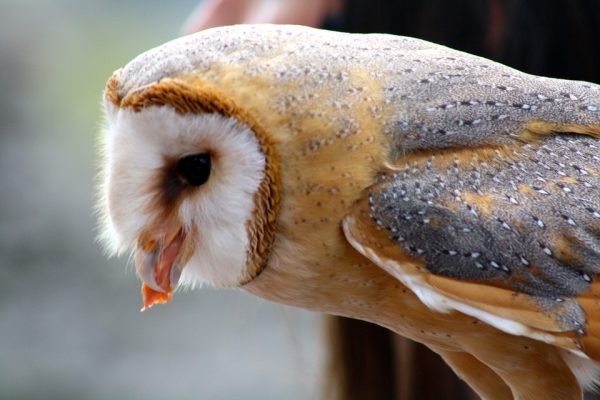
Barn owls mostly eat small mammals, especially voles, mice, shrews and rats. The RSPB, the UK’s bird charity, says voles are their main food, but they regularly eat mice, shrews and rats too.
They sometimes catch other animals as well. The Peregrine Fund, a bird of prey charity, says rodents are the barn owl’s main prey, but it also catches birds, fish, reptiles and insects.
What a barn owl eats depends on where it lives. The main prey is different in Britain and in California, for example, because different small animals live in each place.
| Place | Main prey |
|---|---|
| Britain | field voles, common shrews and wood mice |
| Scotland | field voles |
| California, USA | pocket gophers, mice and voles |
| Anywhere, sometimes | rats, small birds, reptiles and insects |
Barn owls in Britain
In Britain, the Barn Owl Trust says barn owls mainly eat small mammals, especially field voles, common shrews and wood mice.
The field vole is the favourite. A 2022 barn owl action plan from North Lanarkshire Council, written with the RSPB, says the field vole is the barn owl’s main prey in Scotland.
Field voles live in rough grassland. The RSPB says tall, tussocky grass with a thick layer of dead grass underneath is the best place for voles, and so the best hunting ground for barn owls.
Barn owls in North America
Barn owls live in many parts of the world, including North America. In California, the University of California’s farming experts say pocket gophers, mice and voles are the most important parts of a barn owl’s diet.
A California study looked at the prey brought to 25 nest boxes. The University of California says 99.5% of the prey animals identified were farm pests.
Near fruit and nut orchards and vineyards, gophers were the prey found most often in the owls’ pellets.
How much does a barn owl eat?
Barn owls eat a lot. The Peregrine Fund estimates that a barn owl eats at least one rat a day, and that a family of two adults and their young can catch more than 1,000 rats in a year.
The University of California says a barn owl family eats about 1,000 rodents in a single nesting season. The National Audubon Society says a barn owl may eat around 1,000 mice a year.
These are estimates, and they are measured in slightly different ways. But they all show that barn owls catch huge numbers of small animals.
Swallowed whole
Barn owls do not chew their food. Audubon says they usually swallow their prey whole, bones and all.
Their bodies cannot digest the bones and fur. The Barn Owl Trust says these parts are coughed back up as a neat bundle called a pellet.
Owl pellets
An owl pellet is usually 2.5 to 7.5 cm (1 to 3 in) long, Audubon says. It is easily mistaken for poo, but it comes out of the owl’s mouth, not the other end.
Owls usually make one or two pellets a day. Audubon says the fur and bones sit in part of the owl’s stomach for 6 to 10 hours before it coughs up the pellet. Barn owl pellets have a shiny, varnished look.
Pellets are like a menu of everything the owl has eaten. The Barn Owl Trust says taking pellets apart tells you exactly what the owls have been eating.
That is why schools use them. Audubon says pellets used in classrooms usually come from barn owls, because they roost in the same places, such as barns and nest boxes, so their pellets are easy to collect.
It is a big business. Audubon says one US company has sold more than 10 million barn owl pellets since 1996, and in 2024 it was handling 35,000 to 45,000 pellets a month.
Hunting by sound
Barn owls are expert listeners. The Peregrine Fund says they can catch animals in total darkness, using their hearing to find exactly where a sound is coming from. They even remember the particular sounds their prey makes while moving or feeding.
Their ears are lopsided, with one higher than the other, Audubon says. This helps the owl pinpoint a sound up, down, left and right.
Their heart-shaped face works like a satellite dish, funnelling sound towards their ears.
They are also very quiet. Audubon says their soft feathers make their flight almost silent, and they can fly as slowly as about 3 km/h (2 mph) while they listen.
Barn owls mostly hunt at night. North Lanarkshire Council’s plan says there is less competition then, and less chance of being chased by birds such as crows. The RSPB says they sometimes hunt in daylight in autumn and winter.
How barn owls hunt
Barn owls usually hunt by flying slowly back and forth over the ground, about 3 m (10 ft) up, looking and listening for prey. The Barn Owl Trust calls this quartering.
To save energy, they may also hunt from a perch, such as a fence post, the Barn Owl Trust says.
They do not usually travel far. The RSPB says a breeding pair hunts within about 2 km of its nest. The Barn Owl Trust says the hunting range is about 1 km in the breeding season and about 3 km in winter.
Barn owls need plenty of rough grass. North Lanarkshire Council’s plan says a pair in farmland with crops needs about 35 km of rough, grassy field edges within 2 km of its nest.
Some changes on farms have made life harder. The same plan says rat-proof grain stores have left fewer rodents for barn owls to hunt around farmyards.
Vole years and owl families
Vole numbers go up and down in a cycle. North Lanarkshire Council’s plan says they peak about every three years, and this is a major reason why barn owl numbers change.
In years with few voles, the youngest chicks are unlikely to survive. In a very good vole year, barn owls can lay eggs twice and raise two families.
The Barn Owl Trust says that in northern England and Scotland, barn owl numbers rise and fall naturally with the food supply. In the south, food is steadier and numbers are more stable.
Feeding the chicks
A female usually lays four to seven eggs, the Barn Owl Trust says, and each egg hatches after about 31 days.
The eggs are laid a few days apart, so the chicks hatch at different times. The oldest chick can be up to three weeks older than the youngest. If food is short, the older, bigger chicks are more likely to survive.
During courtship, the male brings food to the female, which helps her get into top condition for laying eggs. When the youngest chick is about three weeks old, the mother starts hunting too.
On average, about 2.6 young leave each nest, the Barn Owl Trust says. Only about one in four young barn owls survives to become a breeding adult, and starvation is probably the main cause of death.
How big are barn owls?
The Barn Owl Trust says a British barn owl stands about 25 cm (10 in) tall, with a wingspan of about 85 cm. The Peregrine Fund says barn owls weigh between 226 and 595 g.
Wild barn owls do not usually live long. The Barn Owl Trust says it is very unusual to find a wild barn owl over five years old. The British record is 13.5 years, and the European record is 21 years.
Dangers for barn owls
Rat poison is a danger. The RSPB says barn owls can die when they eat rodents that have eaten poison.
Roads are another. The Barn Owl Trust says about half of the dead barn owls people report were killed by traffic.
Barn owls declined in the 20th century, partly because of pesticides such as DDT in the 1950s and 1960s, the RSPB says. North Lanarkshire Council’s plan estimates about 4,000 breeding pairs in the UK, down from about 7,000 in 1950.
Barn owls are protected in the UK, where it is illegal to disturb them at the nest, the RSPB says. Worldwide, the Peregrine Fund says, barn owls are listed as Least Concern.
Barn owls and farmers
Many farmers welcome barn owls because they eat so many pests. The University of California says that in its study area, more than half of the nest boxes put up for barn owls were used.
But the experts say owls are only one part of the answer. The University of California advises farmers to use barn owls as one part of pest control, not to rely on them alone.
Barn owls are just one kind of owl. Meet a bigger hunter in our great horned owl facts, or read about all owls in What Do Owls Eat?.
Three things people get wrong
Barn owls do not hoot. The Barn Owl Trust says they screech instead.
Owl pellets are not poo. They are fur and bones coughed up through the mouth.
Barn owls do not need to see their prey. They can catch it in total darkness by sound.
Did you know? A barn owl’s ears are lopsided, one higher than the other, which helps it pinpoint exactly where a sound is coming from.
Try it
With an adult, dissect a sterilised owl pellet from a science supplier. Sort the bones and try to work out what the owl ate.
Knowledge check
What is an owl pellet?
Show answer
The fur and bones an owl coughs up through its mouth.
What is the barn owl’s favourite prey in Britain?
Show answer
The field vole.
Frequently asked questions
What do barn owls eat?
They mostly eat small mammals: voles, mice, shrews and rats. They sometimes catch small birds, reptiles, fish and insects.
How much does a barn owl eat?
The Peregrine Fund estimates at least one rat a day, and more than 1,000 rats a year for a barn owl family.
What is an owl pellet?
A pellet is a bundle of fur and bones that an owl cannot digest. It coughs them up through its mouth once or twice a day.
How do barn owls find their food?
Mostly by sound. Their lopsided ears and heart-shaped face let them find prey in total darkness, and they fly almost silently.
When do barn owls hunt?
Mostly at night, flying slowly over rough grassland. In autumn and winter they sometimes hunt in daylight too.
Why do barn owl numbers go up and down?
They follow the vole cycle. Vole numbers peak about every three years, and in poor vole years fewer chicks survive.
Sources
- Barn Owl Trust: About the Barn Owl (leaflet, revised 2010) — British diet, pellets, quartering, hunting range, eggs, chicks, survival, lifespan and calls
- North Lanarkshire Council with the RSPB: Barn Owl Species Action Plan (2022) — field voles, hunting near the nest, the vole cycle, field edges and UK numbers
- RSPB: barn owl — prey, daytime hunting, status, protection and DDT; its advice for farmers page was also used
- National Audubon Society: 10 fun facts about barn owls — swallowing prey, ears, face and silent flight; its article on owl pellets was also used
- The Peregrine Fund: common barn owl — prey, how much they eat, hunting in darkness, size and status
- University of California Agriculture and Natural Resources: barn owls as pest control (2019) — California diet, the nest-box study and advice for farmers