What is a cheetah?
| Feature | Cheetah fact | How it helps |
|---|---|---|
| Body | Light frame with long legs | Supports rapid acceleration |
| Claws | Blunt and semi-retractable | Improve traction while running |
| Tail | Long and muscular | Balances the body during turns |
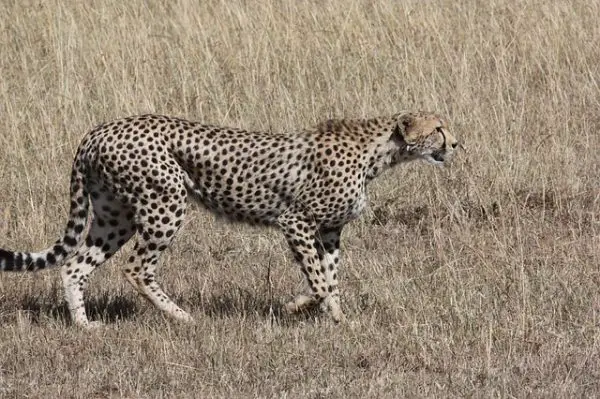
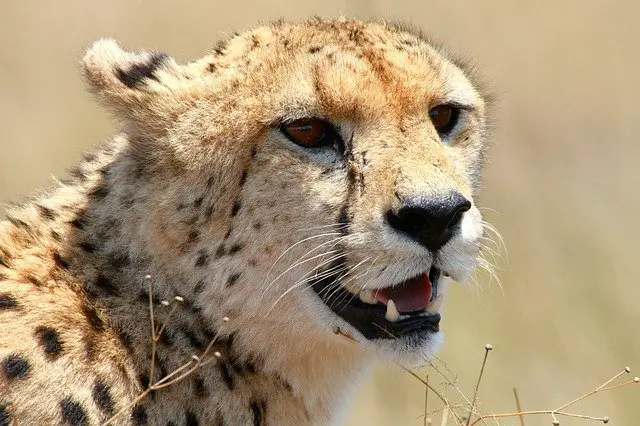
| Coat | Solid black spots and facial tear marks | Camouflage and individual identification |
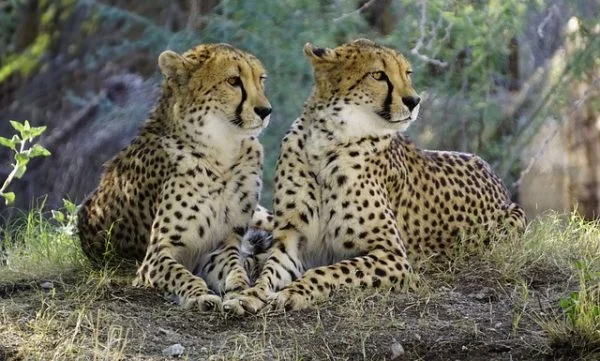
| Social life | Females are usually solitary; males may form coalitions | Different strategies support survival and breeding |
Five facts to remember
- Cheetahs are cats, but their genus Acinonyx differs from lions, tigers and leopards.
- They sprint quickly but cannot maintain maximum speed for long distances.
- Solid spots distinguish their coat from a leopard’s rosette-shaped markings.
- They live in more than open grassland; habitat can include scrub, woodland and mountainous areas.
- Conservation depends on large connected landscapes, prey and coexistence with people.
Body and running adaptations
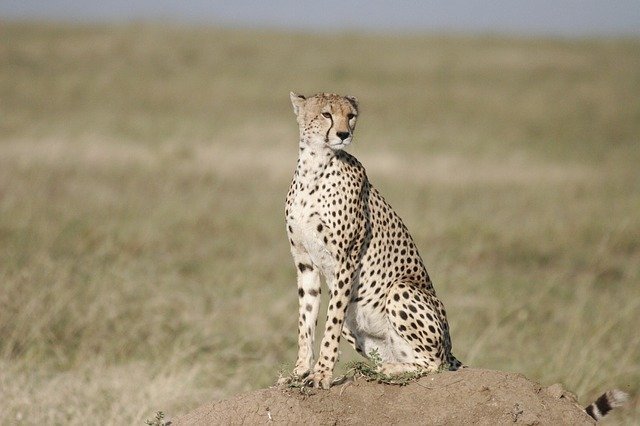
A cheetah’s small head, deep chest, narrow waist and long limbs create a streamlined shape. Its spine flexes strongly between strides, while paw pads and semi-retractable claws provide grip. Large nasal passages, lungs and a strong heart support a sudden sprint.
The tail counters the body during fast turns, and forward-facing eyes help judge distance. These adaptations make a cheetah an excellent sprinter, but its lighter skull and smaller teeth make fighting large predators risky.
Habitat, diet and family life
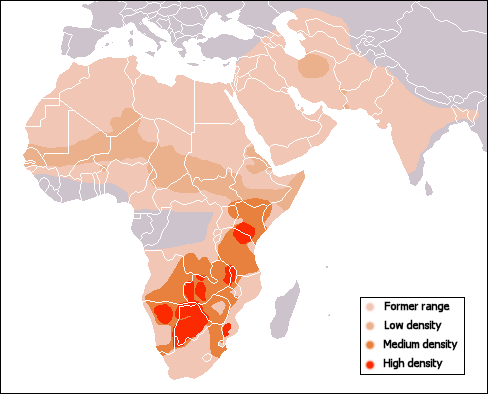
Most cheetahs live in parts of eastern and southern Africa, with smaller populations elsewhere on the continent. The Asiatic cheetah survives in Iran. Suitable habitat needs enough prey, room to move and places where the animal can see or stalk.
Cheetahs eat small and medium prey such as gazelles and impala. Adult females usually live alone except when raising cubs. Males may remain with brothers in a coalition, which can help them hold territory.
Why cheetahs need protection
Habitat loss and fragmentation separate cheetahs from prey and potential mates. Conflict can occur when wild prey declines and cheetahs enter livestock areas. Illegal wildlife trade and low genetic diversity add further pressure.
Conservation teams protect habitat, work with farmers, monitor individuals and manage breeding programmes. Reliable population estimates change as surveys improve, so this guide avoids presenting one permanent worldwide count.
Picture guide
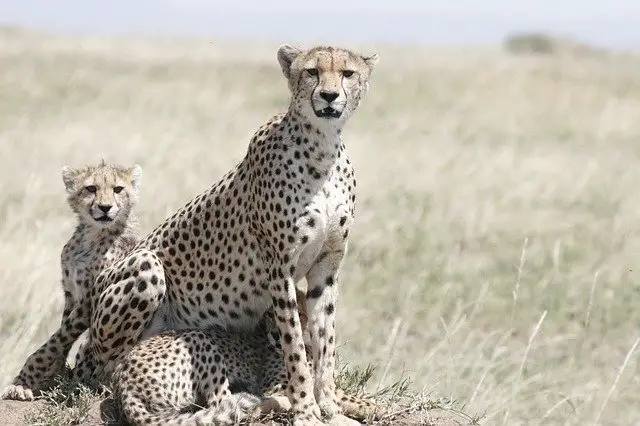
Continue the learning path
Did you know? Researchers can recognise individual cheetahs from their unique spot and tail-ring patterns, much like matching a fingerprint.
Try it
Sketch a cheetah and label the spine, legs, claws, tail, nostrils and eyes. Write one sentence explaining how each feature supports hunting.
Knowledge check
Why is a cheetah’s speed only one part of its hunting success?
Show answer
It also needs stealth, vision, traction, balance, rapid turning and a safe choice of prey.
Sources
These government, museum, zoo and scientific resources support the key facts and uncertainty statements in this guide.
- Smithsonian National Zoo: Cheetah — Provides anatomy, range, diet, behaviour and conservation facts.
- Cheetah Conservation Fund: About cheetahs — Explains adaptations, social life, habitat and threats.
- IUCN cheetah assessment — Scientific assessment of distribution, ecology and conservation status.