Where do polar bears live? Quick answer
| Region | Examples | Habitat role |
|---|---|---|
| North America | Canada and Alaska | Sea ice, coasts, islands and seasonal land areas |
| Greenland | Coasts and surrounding ice | Movement and access to marine prey |
| European Arctic | Svalbard, Norway | Sea ice and coastal denning areas |
| Russian Arctic | Northern seas and islands | Large connected marine habitat |
| Antarctica | None | Polar bears are not native to the Southern Hemisphere |
What counts as polar-bear habitat?
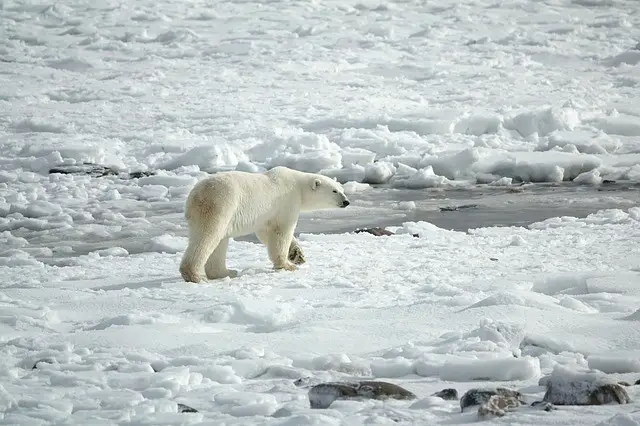
- Sea ice is a hunting platform, not simply frozen ground beneath a bear.
- Some bears spend part of the year on land, but they remain dependent on the Arctic marine food web.
- Ranges cross national boundaries, so one population may move between countries.
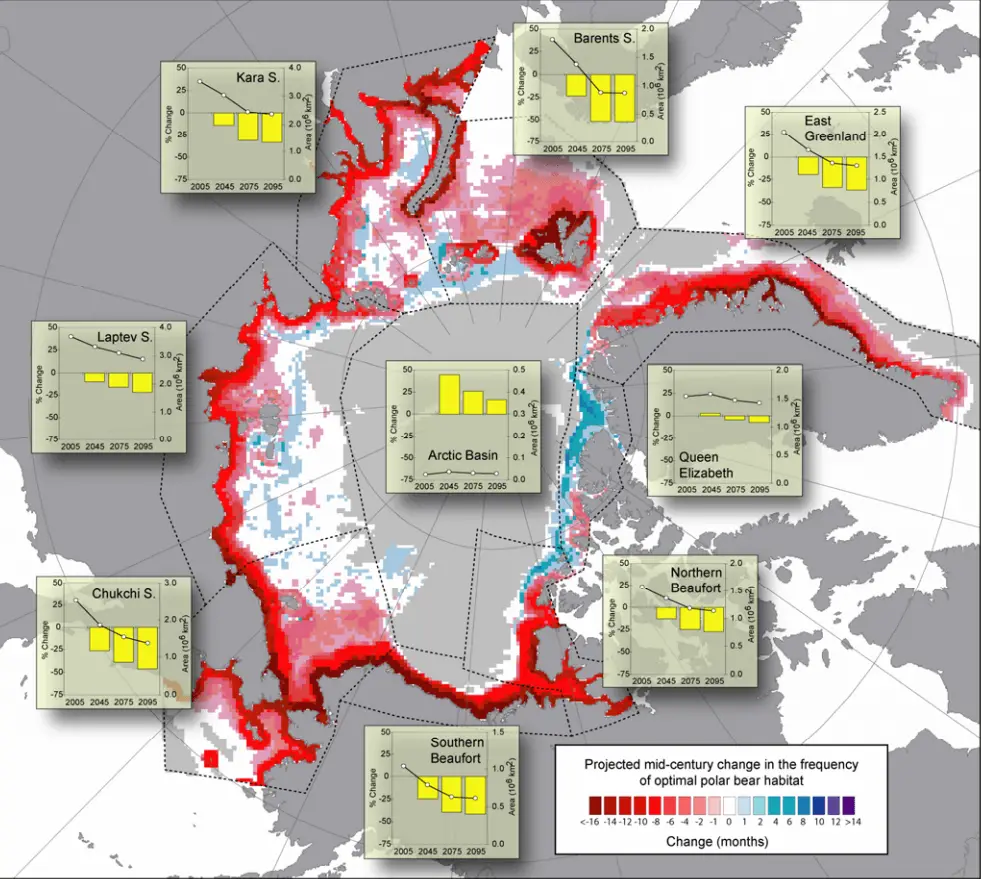
- Scientists recognise 19 subpopulations; their sea-ice conditions and status are not identical.
Why sea ice is essential
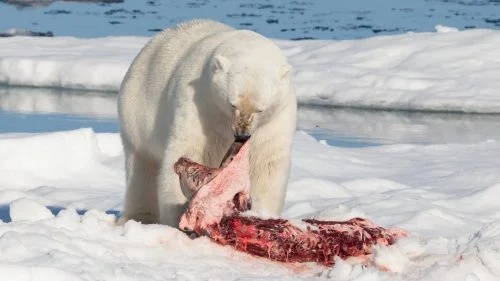
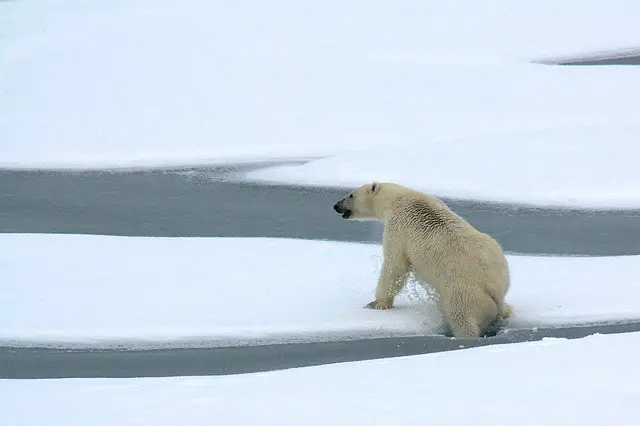
Ringed and bearded seals are difficult for a bear to catch in open water. Sea ice lets polar bears wait beside breathing holes, approach seals resting on the surface and travel between productive hunting areas.
The best ice is not always the thickest. Bears often use ice over shallow continental-shelf waters, where the marine ecosystem supports seals. Moving currents, open leads and seasonal freeze and thaw shape where bears can feed.
Land, coasts and maternity dens
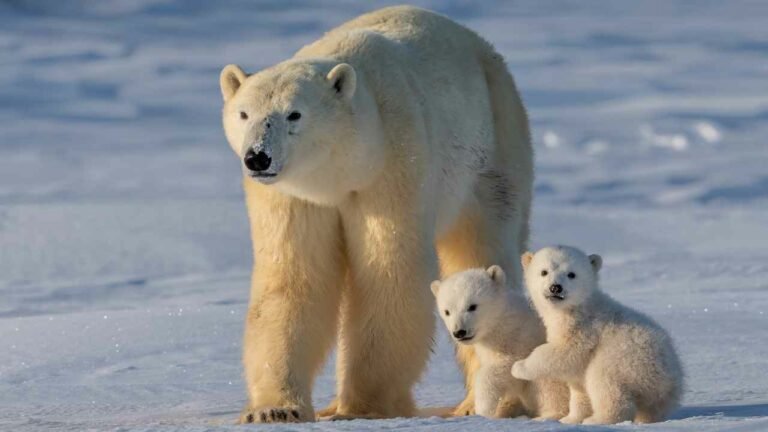
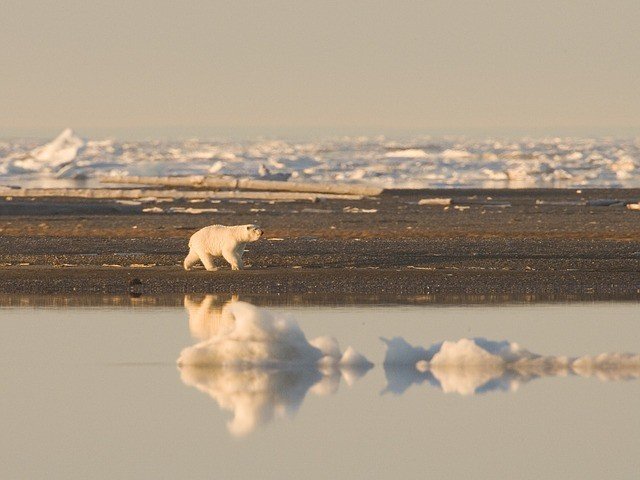
Polar bears may rest on beaches, islands or tundra when sea ice retreats. Pregnant females dig maternity dens in snow, often on land and sometimes on sea ice, depending on the region. Cubs emerge and later travel toward feeding habitat with their mother.
Land use does not make polar bears ordinary terrestrial bears. Foods found on shore are usually less energy-rich than seal blubber and cannot reliably replace access to marine prey for a whole population.
A habitat that changes by season
Sea ice grows in the darker, colder months and retreats during warmer months. Polar bears respond by moving with the ice, swimming between areas or waiting on land. The pattern differs between subpopulations and from year to year.
Longer ice-free periods can reduce hunting opportunities. That is why a map of Arctic countries is only the beginning: habitat quality depends on the timing, location and productivity of the sea ice itself.
Picture guide
Continue the learning path
Did you know? The scientific name Ursus maritimus means “sea bear,” a clue that this species belongs to a marine ecosystem.
Try it
Label Canada, Greenland, Norway, Russia and Alaska on an Arctic map. Add arrows to show that bears can cross national boundaries.
Knowledge check
Why is “the Arctic” a better habitat answer than “the North Pole”?
Show answer
Polar bears range across several Arctic countries and seas, and depend on moving sea ice rather than one point on a map.
Sources
These government, museum, zoo and scientific resources support the key facts and uncertainty statements in this guide.
- U.S. Fish and Wildlife Service: Polar bear — Official overview of range, subpopulations, sea ice and prey.
- USGS: Polar bear research — Explains distribution, movements and dependence on sea ice.
- Polar Bears International: Polar bear facts — Summarises habitat, movement, diet and life cycle.