What do lions eat? Quick answer
| Food source | Examples | Context |
|---|---|---|
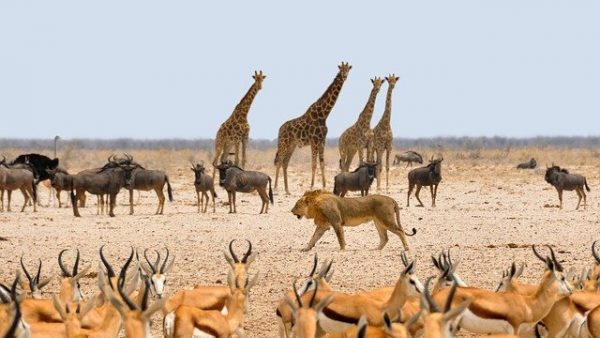
| Large hoofed mammals | Zebra, wildebeest and antelope | Core prey in many African habitats |
| Larger difficult prey | Buffalo or giraffe | Usually requires favourable conditions or cooperation |
| Smaller animals | Rodents, reptiles and birds | Useful when larger prey is scarce |
| Scavenged food | Kills made by other predators | Lions both steal food and lose food to competitors |
| Managed zoo diet | Formulated meat, bones or whole-prey items | Balanced by veterinary and nutrition teams |
Avoiding misleading diet claims
- A possible prey species is not necessarily a common or preferred meal.
- Diet changes with habitat, season, pride size and prey availability.
- Large prey can be dangerous; cooperation improves opportunity but does not guarantee success.
- Human attacks are a safety and conservation issue, not a normal item on a lion “menu.”
How lions hunt
Lionesses are the primary hunters in many prides. Several animals may stalk from different directions, using cover and darkness before a short rush. The group can surround or redirect prey, although a lion may also hunt alone.
After a catch, feeding order and access can depend on pride relationships and the situation. Lions use powerful forelimbs and jaws to hold prey. Hunting is risky, and many attempts fail before a successful meal.
Scavenging and competition
Lions do not obtain every meal through a fresh hunt. They may take carcasses or displace cheetahs, leopards and hyenas. Hyena groups can also displace lions, so the direction of competition changes with numbers and circumstances.
Near farms, lions may prey on livestock, creating conflict with people. Protecting livestock and maintaining wild prey and connected habitat are important parts of conservation.
What lions eat in zoos
Accredited zoos use diets made for carnivore nutrition. Smithsonian describes ground beef produced for zoo carnivores, with bones or rabbits provided on a schedule to exercise teeth and jaws. Other institutions may use different approved plans.
A zoo menu is designed for a known individual and includes food safety, nutrients, body condition and enrichment. It should not be presented as a universal recipe or used to feed wildlife.
Continue the learning path
Did you know? Lions may hunt cooperatively, but they are also skilled scavengers and sometimes lose their own meals to competing hyenas.
Try it
Create a lion food web with grass, zebra, lion, hyena and decomposers. Add a dotted line to show competition over carcasses.
Knowledge check
Why is a long list of animals not enough to explain a lion’s real diet?
Show answer
A diet also depends on how common each prey is, the habitat, season, pride size, hunting risk and opportunities to scavenge.
Sources
These government, museum, zoo and scientific resources support the key facts and uncertainty statements in this guide.
- Smithsonian National Zoo: Lion — Documents wild prey, hunting, scavenging and the zoo diet.
- San Diego Zoo Wildlife Alliance: Lion — Explains habitat, prey range, hunting and conservation conflict.
- Panthera: Meet the lion — Conservation organisation fact sheet on lion ecology and threats.