Thomas Edison quick facts
- Edison went to school for only a few months. His mother taught him at home.
- He said he hadn’t heard a bird sing since he was twelve.
- His first patent, for an electric vote recorder in 1868, was a flop.
- His team’s 1879 bulb, with a carbonised cotton filament, lasted 14.5 hours.
- Despite his deafness, he invented around 250 devices to do with sound.
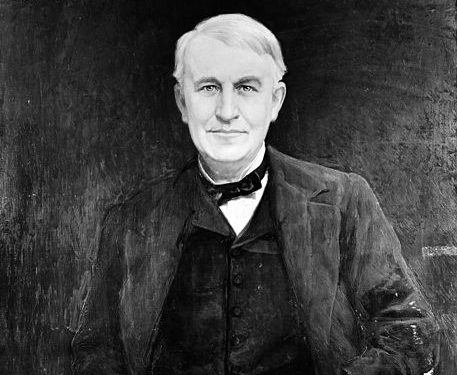
Who was Thomas Edison?
Thomas Alva Edison was an American inventor and businessman. He is famous for the phonograph, for electric lighting and for early moving pictures.
By the time he died in 1931, he had received 1,093 United States patents. A patent is an official record that says an invention belongs to the person who made it.
| Thomas Edison | |
|---|---|
| Born | 11 February 1847, Milan, Ohio |
| Died | 18 October 1931, aged 84 |
| Famous for | the phonograph, electric lighting, motion pictures |
| US patents | 1,093 |
| First patent | an electric vote recorder, 1868 |
| Famous laboratories | Menlo Park (1876) and West Orange (1887), New Jersey |
A boy who hardly went to school
Edison was born on 11 February 1847 in Milan, a village in Ohio. When he was seven, his family moved to Port Huron, in Michigan.
He went to school for only a few months. After that, his mother taught him reading, writing and arithmetic at home. He read everything he could, especially books about science.
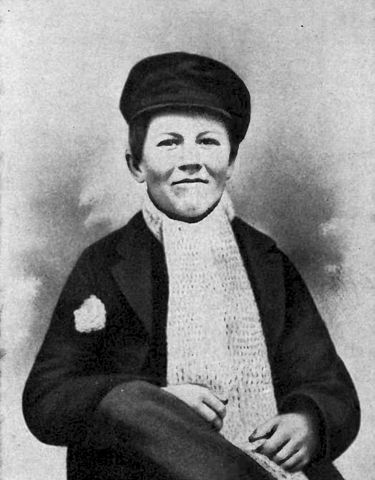
He started working young. By the time he was 16, he was skilled enough to work full time as a telegraph operator, sending and receiving messages in Morse code.
An inventor who could barely hear
Edison had trouble hearing from childhood, and it grew worse over his life. He once said: “I haven’t heard a bird sing since I was twelve years old.”
Here is the surprising part. Despite his deafness, he invented around 250 devices to do with sound. They included talking dolls, a telephone transmitter, a dictating machine and even a device to listen to the sun.
Some people think his deafness helped him concentrate, because the noise of a busy workshop did not distract him. Whatever the truth, it did not stop him working on sound for his whole life.
His first invention was a flop
In 1868, in Boston, Edison received his first patent, for an electric vote recorder. It was meant to count votes quickly.
Nobody wanted it, and it was a commercial failure. Edison learned early that an invention has to be something people will actually use.
His first big success
Edison did not give up after his vote recorder flopped. In 1869 he moved to New York City and made his first successful invention, an improved stock ticker called the Universal Stock Printer. It printed the latest share prices for businesses.
For this and some related inventions, Edison was paid $40,000, a fortune at the time. He used the money to set up his first small laboratory and factory in Newark, New Jersey, in 1871.
For the next five years he worked there on inventions that made the telegraph much faster and more efficient. That work paid for everything that came next.
The invention factory at Menlo Park
In 1876, Edison sold his businesses in Newark, New Jersey, and moved his family and his team of assistants to a small village called Menlo Park.
There he built something new: a building used only for inventing, with a machine shop and laboratories under one roof. It was one of the first industrial research laboratories. Instead of one lone inventor, a whole team worked on problems together.
People started calling Edison “the Wizard of Menlo Park”, because of what came out of it.
The phonograph: sound that could be saved
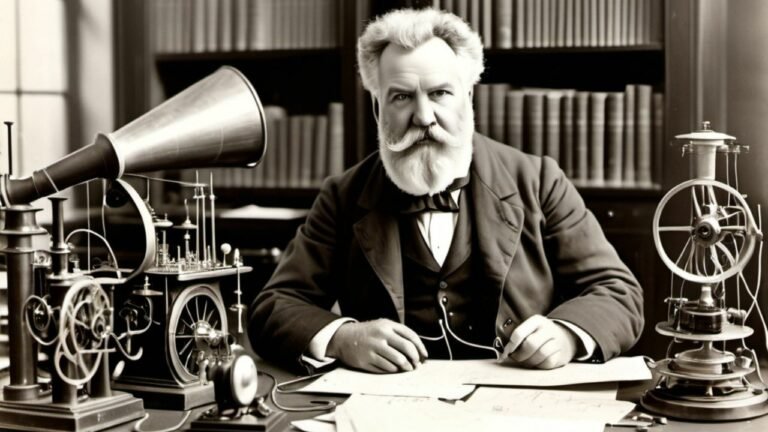
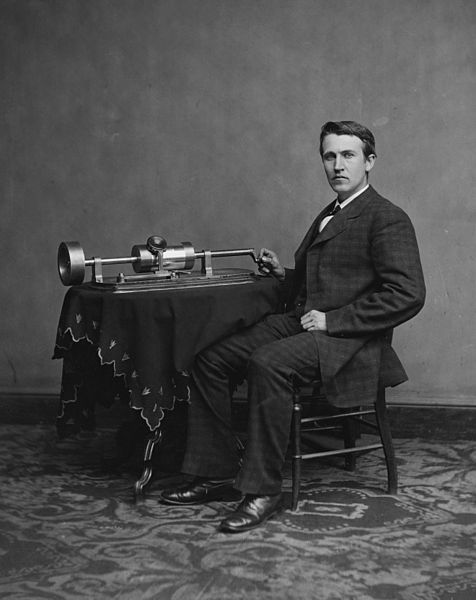
The first great invention from Menlo Park, in 1877, was the tinfoil phonograph. It was the first machine that could record sound and play it back.
A needle pressed a pattern of dents into a sheet of tinfoil wrapped around a cylinder as someone spoke. Played back, the dents made the needle vibrate and reproduce the voice. People had never heard a recorded voice before, and it caused a sensation.
The truth about the light bulb
Edison is often said to have invented the light bulb. He did not, not exactly.
Inventors had been making electric light for decades. British inventors had shown that electric light was possible using bright arc lamps, and the first steady electric light was shown in 1835.
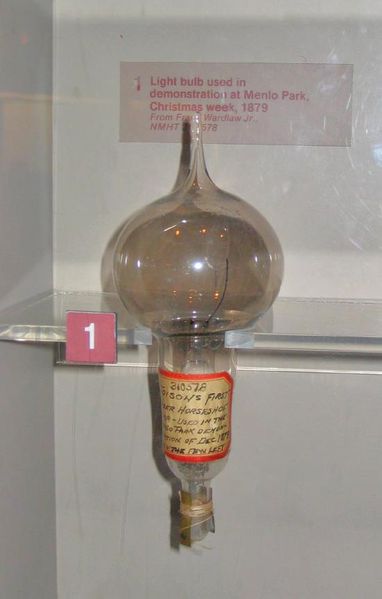
What those early lights could not do was last. In October 1879, Edison’s team made a bulb with a filament, the thin thread that glows, made from carbonised cotton thread. It lasted 14.5 hours, which was a big step forward.
His bigger achievement was the whole system. His team built generators, wires, meters and switches so that electric light could be used in homes and streets. The first public demonstration of his lighting system was in December 1879.
In September 1882, his first commercial power station opened on Pearl Street in lower Manhattan, in New York. It was the first of its kind.
Light bulbs kept improving after Edison. Bulbs with tungsten filaments, which lasted longer and shone brighter, arrived in 1904. Today most homes use LED bulbs, which use far less electricity.
In between came the compact fluorescent light, or CFL, made by bending a glowing tube into a spiral. Invented in 1976, it used about 75% less energy than an old-fashioned bulb and lasted about ten times longer.
Moving pictures and a bigger laboratory
In November 1887, Edison opened a much larger laboratory at West Orange, New Jersey, made up of five buildings.
His team there worked on moving pictures, and Edison first demonstrated motion pictures in 1891. Two years later, he began making films commercially in a strange-looking studio known as the Black Maria.
Not everything worked. For ten years Edison tried to find a better way to mine iron ore in the old mines of north-western New Jersey. He spent millions of dollars and lost all the money he had put in, so he used some of the machines to make cement instead.
His hardest project turned out well in the end. In 1899 he began work on a new kind of battery, called an alkaline storage battery. It took ten years to get right, but it became the most profitable product he ever made.
In 1928, the United States Congress voted Edison a special medal in honour of a lifetime of achievement.
How Edison worked
Edison’s greatest invention may have been a way of inventing. He did not wait for ideas to arrive on their own. He gathered a team of skilled assistants in a building made only for inventing, with tools and materials close at hand.
He also thought in whole systems. A light bulb is not much use without electricity, so his team built generators, wires, meters and switches to go with it.
And when a project failed, he looked for another use for what he had learned, just as he turned his mining machines to making cement. Research teams in companies and universities still work a lot like this today, testing ideas together and learning from what goes wrong.
Edison’s family
Edison noticed Mary Stilwell when she was 16, working at one of his companies punching holes into telegraph tape. They married on Christmas Day 1871, when he was 24.
They had three children in 13 years of marriage. Mary died on 9 August 1884, aged just 29.
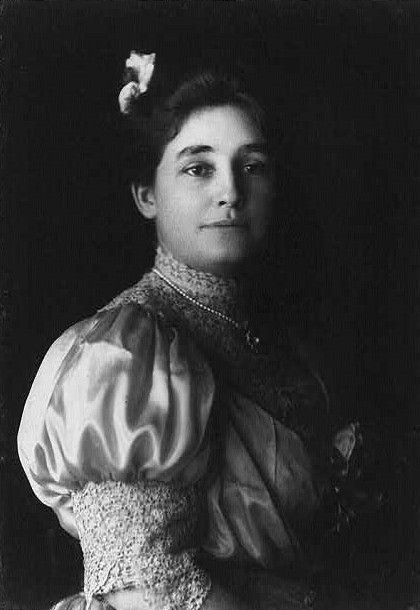
On 24 February 1886, Edison married Mina Miller. At 20, she became stepmother to his three children, and they later had children of their own. They lived in a big house called Glenmont, near the West Orange laboratory. Mina ran the household and called herself the “home executive”.
Thomas Edison died at 3:21 in the morning on 18 October 1931, aged 84.
Three things people get wrong
Edison did not invent the first light bulb. Others made electric lights before him. His team made a longer-lasting bulb and, just as importantly, a whole system to power it.
Edison did not work alone. At Menlo Park and West Orange he led teams of assistants. His idea of a laboratory full of people working together was itself one of his great inventions.
Edison’s ideas did not always work. His very first patent was a flop, and his iron-mining project lost millions. But his battery, which took ten years, became his most profitable product.
Did you know? The first machine that could record and play back sound was Edison’s tinfoil phonograph of 1877. People had never heard a recorded voice before.
Try it
Hum while you press your fingertips gently against your throat. You can feel the vibrations. Edison’s phonograph worked by capturing vibrations like these in tinfoil.
Knowledge check
Did Thomas Edison invent the first light bulb?
Show answer
No. Others made electric lights before him. His team made a longer-lasting bulb in 1879 and a whole system to power electric lighting.
What was special about the phonograph?
Show answer
It was the first machine that could record sound and play it back.
Frequently asked questions
What did Thomas Edison invent?
Thomas Edison invented the phonograph, the first machine to record and play back sound, and developed a practical electric lighting system. His teams also worked on motion pictures, batteries and cement. He received 1,093 US patents.
Did Thomas Edison invent the light bulb?
Thomas Edison did not invent the first light bulb, since others had made electric lights before him. In 1879 his team made a longer-lasting bulb and built a whole system of generators and wires to power electric lights.
When was Thomas Edison born?
Thomas Edison was born on 11 February 1847 in Milan, Ohio. His family moved to Port Huron, Michigan, when he was seven.
Was Thomas Edison deaf?
Thomas Edison had hearing problems from childhood that grew worse over his life. He said he had not heard a bird sing since he was twelve, yet he invented around 250 devices to do with sound.
What was Menlo Park?
Menlo Park was the village in New Jersey where Thomas Edison built one of the first industrial research laboratories in 1876. His team invented the phonograph there in 1877.
When did Thomas Edison die?
Thomas Edison died on 18 October 1931, aged 84, having received 1,093 US patents.
Sources
- US National Park Service: Edison biography — his birth, childhood, schooling, first patent, Menlo Park, the phonograph, electric lighting, West Orange, motion pictures and death
- Thomas A. Edison Papers, Rutgers University: biography — his 1,093 US patents, the research laboratory, cement and batteries
- US National Park Service: Thomas Edison and deafness — his hearing loss and his many sound inventions
- US National Park Service: Mary Stilwell Edison — his first marriage and Mary’s death
- US National Park Service: Mina Miller Edison — his second marriage and life at Glenmont
- US Department of Energy: the history of the light bulb — electric light before Edison, his 1879 bulb and later bulbs