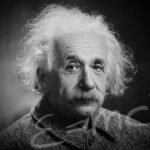
Albert Einstein (1879–1955) was a German-born physicist who developed the theories of relativity, which changed how we understand space, time and gravity. He gave the world the equation E = mc² and won the 1921 Nobel Prize in Physics for explaining the photoelectric effect. He moved to the United States in 1933.
Albert Einstein quick facts
- Einstein was born in Ulm, Germany, on 14 March 1879.
- In 1905, while working at a patent office, he published four papers that changed physics.
- He won the 1921 Nobel Prize in Physics for the photoelectric effect, not for relativity.
- He moved to Princeton in the United States in 1933 and became a US citizen in 1940.
- He played the violin and said he might otherwise have become a musician.
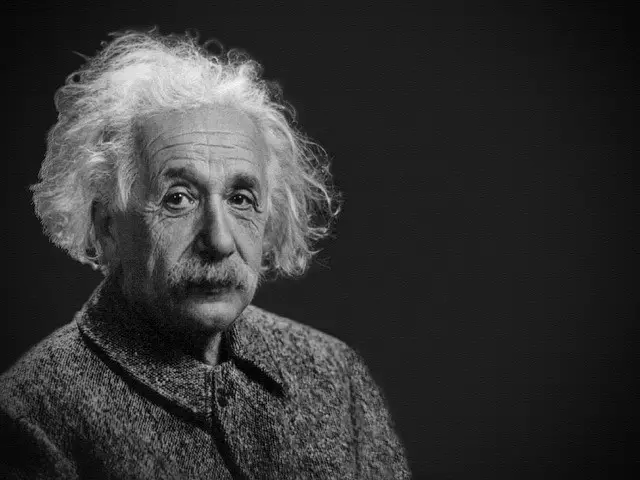
Who was Albert Einstein?
Albert Einstein was a German-born physicist, a scientist who studies how the universe works. He is famous for his theories of relativity, which changed how scientists think about space, time and gravity.
He won the Nobel Prize in Physics in 1921. Encyclopaedia Britannica calls him the most influential physicist of the 20th century.
His equation E = mc² is probably the most famous equation in the world. You can read more about what made him famous in our guide to what Albert Einstein was known for.
A curious child
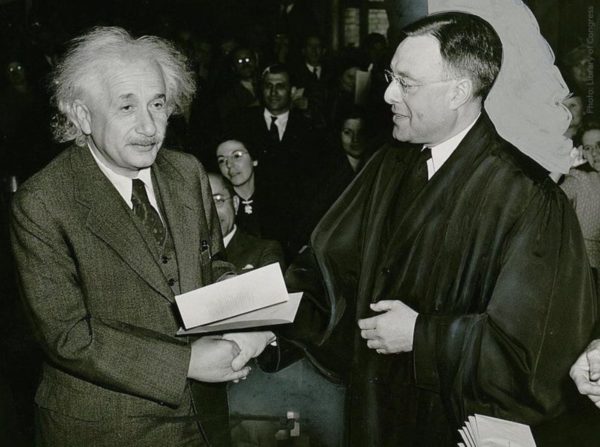
Einstein was born on 14 March 1879 in Ulm, in Germany. Six weeks later, his family moved to Munich, where he grew up and went to school.
His father, Hermann, sold featherbeds and later ran an electrical business. His mother, Pauline, ran the family home. He had one sister, Maja, who was two years younger.
Einstein later said that two “wonders” shaped his childhood. The first was a compass, which he saw when he was five. He was amazed that an invisible force could make the needle move. The second came at 12, when he found a geometry book and read it eagerly, calling it his “sacred little geometry book”.
He did not enjoy school. The strict teaching seemed to leave no room for new ideas, and he often felt out of place. One teacher even told him that he would never amount to anything.
Racing a beam of light
A young medical student called Max Talmud often came to dinner with the Einstein family. He lent Albert books about science and maths.
When Einstein was 16, one of those books made him ask a strange question: what would a beam of light look like if you could run alongside it? He thought about that question for the next ten years. In the end, it led him to one of his greatest ideas.
Trouble at school
Einstein’s schooling did not go smoothly. When he was 15, his family moved to Italy, and he was left behind in Munich to finish school. He was miserable, and after six months he left and turned up at his parents’ door.
He applied to a top science college in Zurich, in Switzerland. His marks in maths and physics were excellent, but he failed French, chemistry and biology. He was allowed in once he finished school, which he did in Aarau, Switzerland, in 1896.
Einstein later remembered his student years in Zurich as some of the happiest of his life. He made lifelong friends there, such as the mathematician Marcel Grossmann and Michele Besso, and he met his future wife, Mileva Marić.
He also gave up his German citizenship. For a few years he belonged to no country at all, until he became a Swiss citizen in 1901.
A job at the patent office
After he graduated in 1900, Einstein could not find a job at any university. For a while he earned a little money by tutoring children.
Then a friend’s father helped him get a job as a clerk at the Swiss patent office in Bern. His job was to check new inventions.
It turned out to be a lucky break. Einstein finished his work quickly, which left him time to think about the questions that fascinated him.
His miracle year
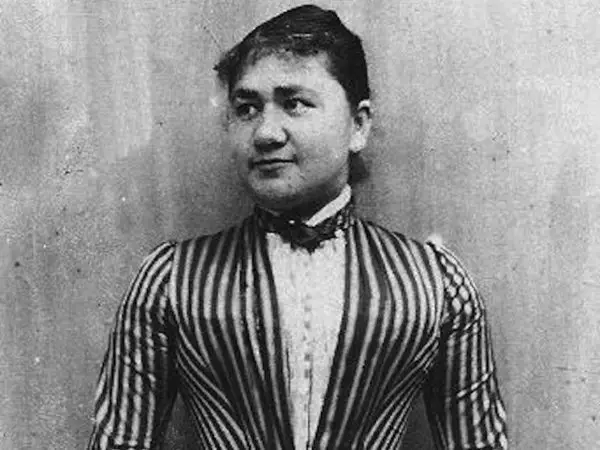
In 1905, while still working at the patent office, Einstein published four papers that changed physics. People call it his miracle year.
One paper explained the photoelectric effect, how light can knock tiny particles called electrons out of metal. It showed that light comes in small packets of energy. Another explained Brownian motion, the jiggling of tiny specks in water, which helped prove that atoms are real.
A third set out his special theory of relativity. And a fourth gave the world E = mc².
That same year, he also earned his doctor’s degree.
What is relativity?
Relativity is hard, even for grown-ups, but the main ideas can be explained simply.
Special relativity, from 1905, says that light always travels at the same speed, however fast you are moving. Because of that, time and distance can change for things that move very fast. A clock moving at almost the speed of light would tick more slowly than one standing still.
General relativity, which he published in 1916, is about gravity. Einstein described gravity as a bending of space and time. Imagine a heavy ball on a trampoline. It makes a dip, and smaller balls roll towards it. Heavy objects like the Sun bend space in a similar way.
E = mc² says that mass and energy are two forms of the same thing. E stands for energy, m for mass, and c for the speed of light. Because the speed of light is so huge, even a tiny amount of mass holds an enormous amount of energy.
A famous professor
As scientists began to understand his ideas, Einstein became a professor. He taught in Bern, Zurich and Prague, and in 1914 he moved to Berlin to lead a physics institute.
In 1921 he won the Nobel Prize in Physics. Surprisingly, it was not for relativity. It was for his explanation of the photoelectric effect.
He gave talks all over Europe, America and East Asia, and won many other awards, including the Copley Medal of the Royal Society of London in 1925 and the Franklin Medal of the Franklin Institute in 1935. He also wrote books for readers who were not scientists, such as The Evolution of Physics in 1938.
A new life in America
In 1933, as the Nazis came to power in Germany, Einstein gave up his German citizenship for political reasons. He moved to the United States to become a professor of theoretical physics in Princeton, New Jersey.
He became a United States citizen in 1940 and retired in 1945. Even after he retired, he kept working, trying to find one theory that would join together all the basic ideas of physics. After the Second World War, he was offered the job of president of the new state of Israel, but he said no. He also helped to set up the Hebrew University of Jerusalem.
Einstein died in Princeton on 18 April 1955, aged 76.
His family
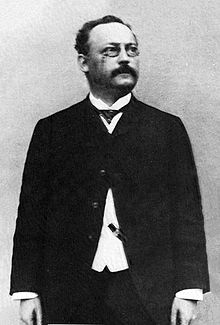
In 1903, Einstein married Mileva Marić, a fellow physics student he had met in Zurich. They had a daughter and two sons. Their sons, Hans Albert and Eduard, were born in 1904 and 1910. The marriage ended in 1919.
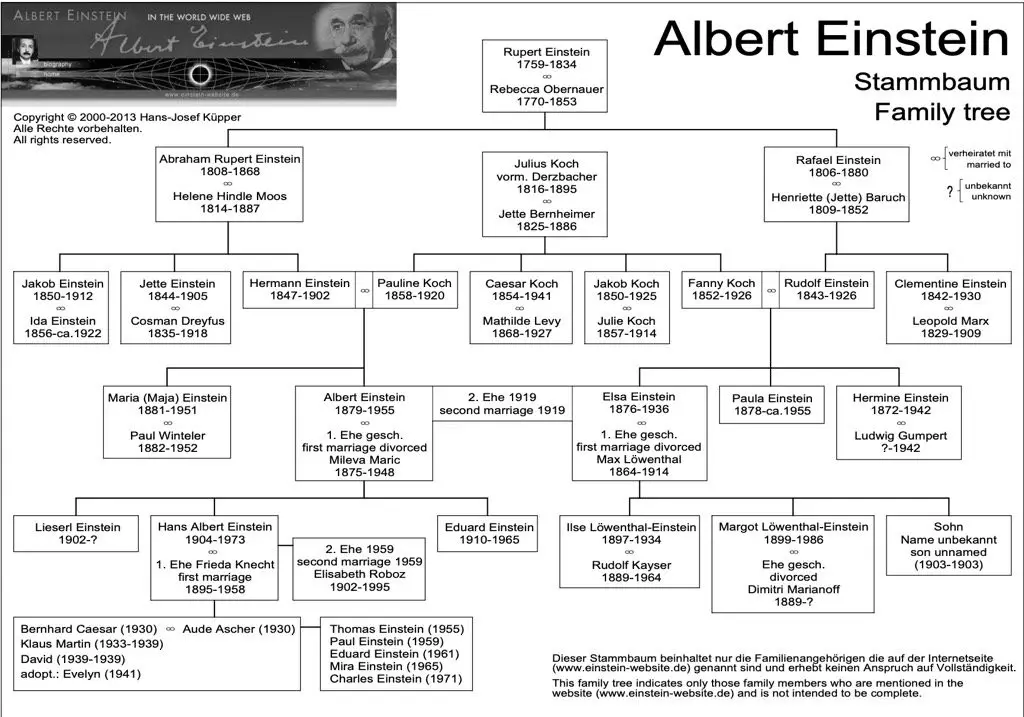
Einstein’s parents did not live to see him become famous. His father died believing that his son had failed, which made Einstein sad for years afterwards.
Surprising facts
Einstein loved music. He played the violin, and he once said that if he had not become a physicist, he would probably have been a musician.
The American police agency, the FBI, watched him closely for years. His FBI file grew to 1,800 pages.
After he died, his brain was removed without permission and kept for study, in the hope of finding the secret of his genius.
For more stories of people who changed the world, read our Neil Armstrong facts for kids.
Three things people get wrong
Einstein did not win his Nobel Prize for relativity. He won it in 1921 for explaining the photoelectric effect.
Einstein did not fail maths. His maths and physics marks were excellent. He failed French, chemistry and biology in a college entrance exam.
Einstein was not always famous. After college he could not get a university job, and he did some of his greatest work while working as a clerk in a patent office.
Did you know? When he was five, Einstein was amazed by a compass, because an invisible force moved its needle. It started a lifelong fascination with invisible forces.
Try it
Stretch a sheet or towel tightly between two people and put a heavy ball in the middle. Roll a marble near it and watch it curve. That is a simple picture of how Einstein described gravity.
Knowledge check
What did Einstein win the Nobel Prize for?
Show answer
His explanation of the photoelectric effect, in 1921.
What does E = mc² mean?
Show answer
That mass and energy are two forms of the same thing; E is energy, m is mass and c is the speed of light.
Frequently asked questions
Who was Albert Einstein?
Albert Einstein was a German-born physicist, born in 1879, who developed the theories of relativity and the equation E = mc². He won the 1921 Nobel Prize in Physics and died in 1955.
What is Albert Einstein famous for?
Albert Einstein is famous for his special and general theories of relativity, which changed how scientists understand space, time and gravity, and for the equation E = mc².
Why did Einstein win the Nobel Prize?
Einstein won the 1921 Nobel Prize in Physics for his explanation of the photoelectric effect, which showed that light comes in small packets of energy. It was not awarded for relativity.
Did Albert Einstein fail maths?
No. Einstein was excellent at maths and physics. In a college entrance exam he failed French, chemistry and biology, but his maths marks got him a place.
Where did Albert Einstein live?
Einstein was born in Ulm and grew up in Munich, Germany. He studied and worked in Switzerland, lived in Berlin from 1914 and moved to Princeton, in the United States, in 1933.
When did Albert Einstein die?
Albert Einstein died on 18 April 1955 in Princeton, New Jersey, aged 76.
Sources
- Encyclopaedia Britannica: Albert Einstein — his childhood, schooling, the patent office, marriage and the miracle year
- NobelPrize.org: Albert Einstein, biographical — his career, citizenships, the move to Princeton, retirement and awards
- Encyclopaedia Britannica: Albert Einstein facts — his awards, the violin, his FBI file and his brain