
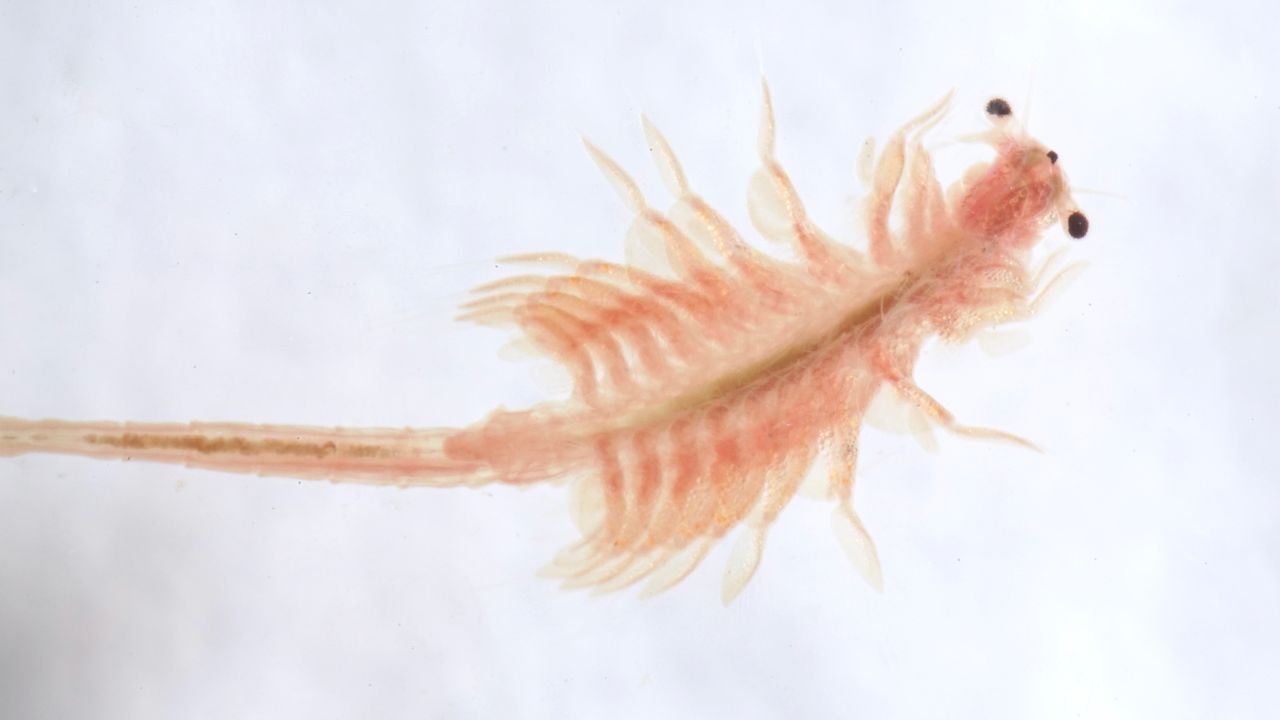
Sea monkeys are not monkeys. They are brine shrimp, tiny animals that live in very salty water. In the wild, brine shrimp eat microscopic algae. Pet sea monkeys are fed from the growth food packet in their kit, usually about once a week. The pet kind was bred in the United States, starting in 1957.
Sea monkey quick facts
- Sea monkeys are brine shrimp, not monkeys. They have three eyes.
- In the wild, brine shrimp eat microscopic algae.
- Pet sea monkeys get growth food from their kit about once a week.
- Their eggs, called cysts, can survive dry for years.
- Astronaut John Glenn took sea monkeys into space in 1998.
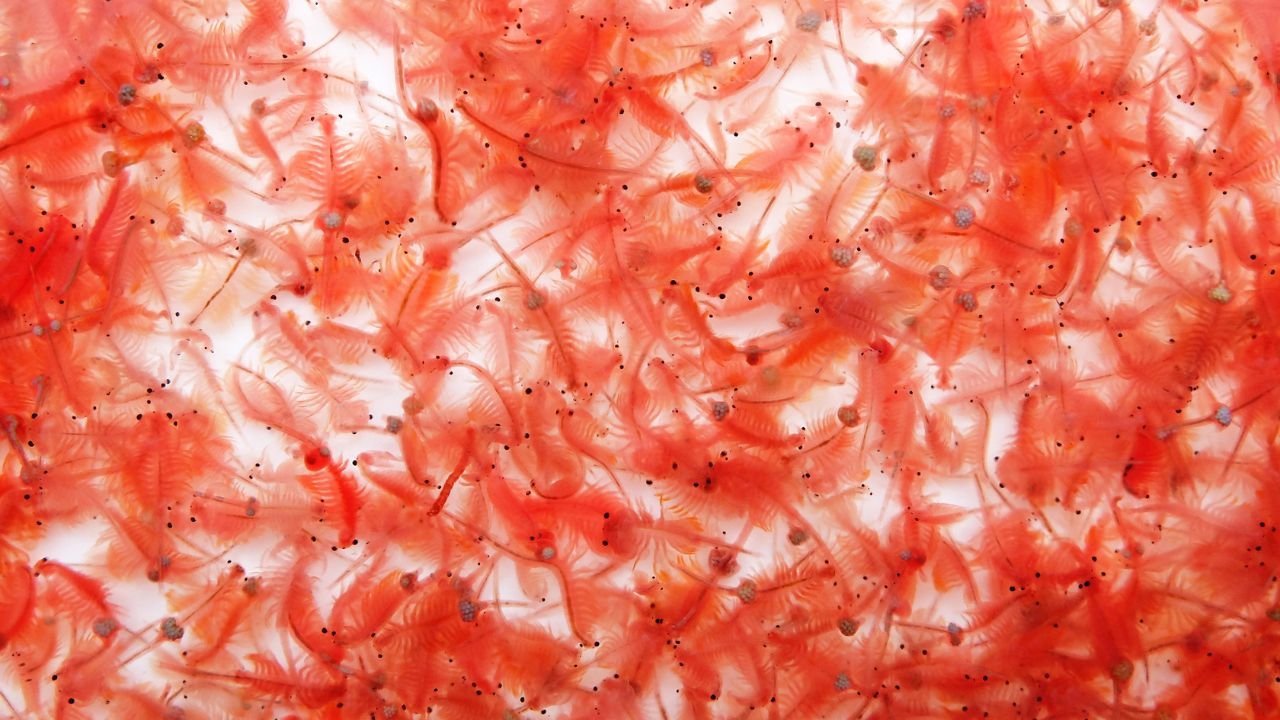
The creatures on old sea-monkey adverts had smiling human faces. The real animals look nothing like that. They are tiny shrimp, and they have three eyes.
What sea monkeys really are
Sea monkeys are brine shrimp. Brine shrimp are small crustaceans, in the same big animal group as crabs and lobsters. They live in lakes that are far saltier than the sea.
The pet kind is special. In 1957, an American inventor called Harold von Braunhut started working on them. He teamed up with a marine biologist, Anthony D’Agostino, at the New York Ocean Science Laboratory. Together they bred a tougher shrimp, known as Artemia NYOS.
Von Braunhut first sold them as “Instant Life”. The name Sea-Monkeys came in 1962.
From 1962, Sea-Monkeys were advertised in comic books, with drawings of a smiling family that looked nothing like shrimp. Harold von Braunhut once said the adverts appeared in 303 million copies of comics every year.
Artemia NYOS is a hybrid, which means it was bred by mixing different kinds of brine shrimp. It was bred to be tougher than ordinary brine shrimp.
Brine shrimp are useful to scientists too. They are often used in laboratories to study how living things grow and develop, how genes work, and how poisons affect animals.
What sea monkeys eat in the wild
Wild brine shrimp eat algae. These are tiny, plant-like living things, far too small to see one at a time. Brine shrimp strain them from the water.
The Great Salt Lake in Utah is one of the best-known homes for brine shrimp. In 2023, Utah made the brine shrimp its official state crustacean.
The law, called H.B. 137, was signed by Utah’s governor, Spencer Cox, on 17 March 2023.
The shrimp are food for millions of birds. In autumn, one eared grebe can eat 25,000 to 30,000 brine shrimp in a single day.
Eared grebes rely completely on the lake’s brine shrimp for food while they are there. Altogether, around 10 million migrating birds, of about 330 different species, use the Great Salt Lake, and many of them feed on brine shrimp.
| Wild brine shrimp | Pet sea monkeys | |
|---|---|---|
| Where they live | Very salty lakes, such as the Great Salt Lake | A small tank of salty water at home |
| What they eat | Tiny algae in the lake | Growth food from the kit |
| Size | About 8 to 13 millimetres | About the same |
| How long they live | Adults at the Great Salt Lake die each December | Usually two to three months, sometimes much longer |
What pet sea monkeys eat
A sea-monkey kit comes with packets. The first holds salt, a water conditioner and eggs. A day later, a second packet adds more eggs, with some yeast and food.
After that, the “growth food” packet is added, usually about once a week. That powder is their whole diet in the tank.
Growth food is mostly yeast and spirulina. Spirulina is a kind of blue-green algae, so the pet food is not so different from what wild brine shrimp eat.
Baby sea monkeys do not need feeding straight away. Each one hatches with a little store of yolk that feeds it for its first week. That is why the instructions say to wait a week after hatching begins before the first scoop of food.
The life of a brine shrimp
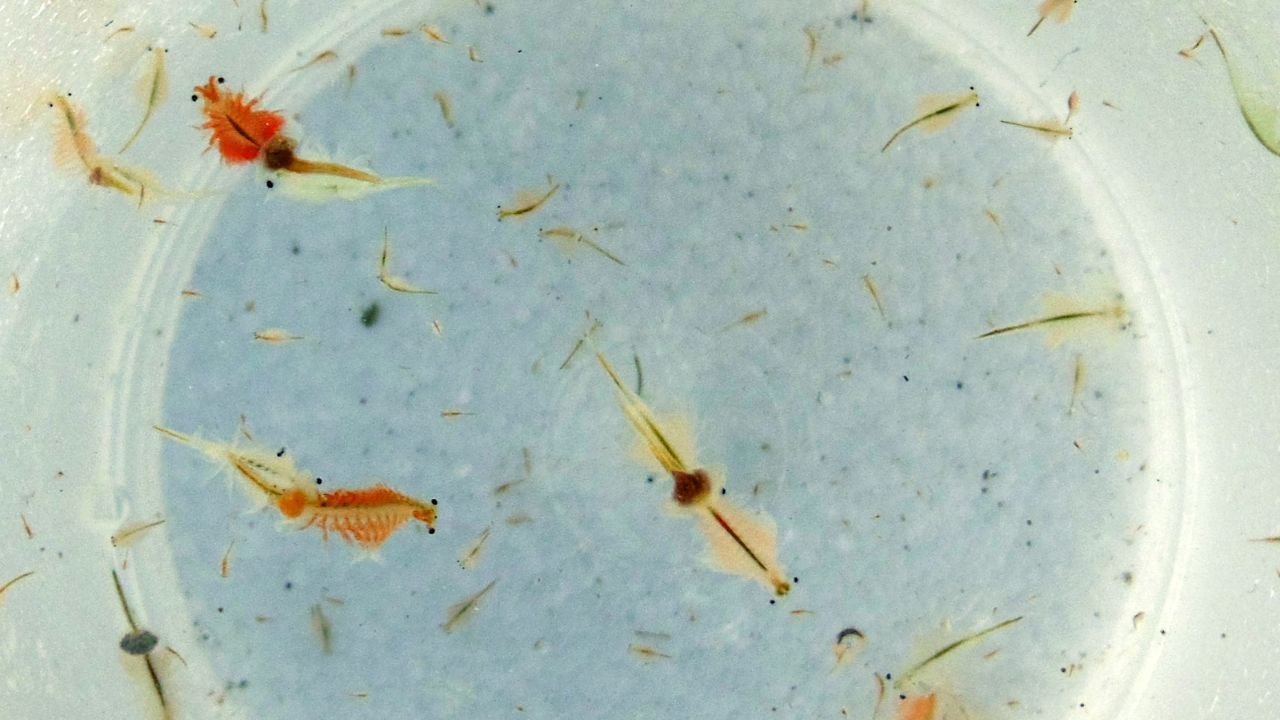
Baby brine shrimp are called nauplii (say NAW-plee-eye).
As it grows, a brine shrimp goes through 14 to 17 stages. Between each stage it sheds its hard outer skin and grows a new, bigger one. This is called moulting.
In perfect conditions, with warm water, plenty of food and lots of oxygen, a brine shrimp can grow up in as little as 8 days. In the Great Salt Lake, where life is harder, it usually takes 3 to 6 weeks.
Mothers have two ways of having young. When life is good, they release babies that can already swim. When the water turns cold and food runs short, they release tough, sleeping cysts instead, which wait for better times.
In the Great Salt Lake, the cysts start to hatch each spring as the water warms up, and by late April the lake is full of nauplii. In a home tank, the whole life cycle takes around 8 to 10 weeks.
How to keep sea monkeys healthy
Sea monkeys are easy pets, but a few simple habits make a big difference. These tips come from the makers’ own instructions.
Keep them warm and bright. They grow best above about 21°C (70°F). Put the tank somewhere well lit, where it gets some daylight, but not on a window ledge or near an air vent, where the temperature can swing.
Do not overfeed. Feed one level scoop from the feeding spoon, and only when the water is clear. If the water turns cloudy, you have given too much, so stop feeding until it clears. A green tinge is good news. It means algae are growing, and the sea monkeys can eat those instead.
Give them air. Once a week, carefully pour all the water, sea monkeys included, back and forth into another clean container. This mixes oxygen into the water.
Top up the water. Water slowly evaporates. When the level has dropped by about 5 cm, top it up with room-temperature distilled or bottled water. No extra salt is needed, because the salt stays in the tank when the water evaporates.
Be patient. Not every egg hatches at once. It can take up to three weeks for them all to hatch.
With good care, a colony can keep going for a couple of years, and the makers have had reports of colonies lasting five. Brine shrimp themselves usually live two to three months, so a long-lived colony is really many generations of babies.
How the eggs survive being dry
The eggs in the packet are not ordinary eggs. They are cysts: tiny eggs inside a tough case.
Inside, the young shrimp is in a state called cryptobiosis, which means its body almost completely shuts down. Sealed away like that, a brine shrimp egg can stay alive for up to 25 years, even if its lake dries up.
Add salty water and the eggs wake up. That is why sea monkeys seem to appear out of nothing.
In the wild, the same trick gets them through winter. At the Great Salt Lake, adult shrimp die each December. Their cysts survive the cold and hatch in March.
Sea monkeys in space
In October 1998, astronaut John Glenn took sea monkeys on the space shuttle Discovery. They spent nine days in space before coming back to Earth.
Eight weeks later, they hatched. The trip did not seem to have harmed them at all.
The eggs went up so scientists could see what the radiation in space would do to living things. For brine shrimp, at least, the answer was not much.
A salty lake in trouble
Brine shrimp love salty water, but even they have a limit. Seawater holds about 35 grams of salt in every litre. For the Great Salt Lake’s wildlife to thrive, the water in its southern part should hold between 120 and 160 grams per litre, roughly four times saltier than the sea.
In autumn 2022, it reached 185 grams per litre, well above the healthy range.
That matters far beyond the shrimp. The lake’s brine shrimp feed millions of birds, and their harvested eggs support a business worth millions of dollars to Utah.
Three things people get wrong
Sea monkeys are not monkeys. They are brine shrimp, small crustaceans related to crabs and lobsters.
They look nothing like the cartoons. Old comic-book adverts showed a family with human faces. The real animals are small, see-through shrimp with three eyes.
They are not just a toy. Wild brine shrimp eggs are big business. The Great Salt Lake supplies over 40% of the world’s brine shrimp, mostly as food for farmed fish and shrimp.
Did you know? Brine shrimp have three eyes. The famous comic-book adverts showed sea monkeys as a smiling family with human faces, which is about as far from the real animal as a drawing can get.
Try it
If you have a sea-monkey tank, look closely with a magnifying glass and count the eyes on one shrimp. If you do not, stir a teaspoon of salt into a glass of water. The lakes brine shrimp live in are much saltier than that.
Knowledge check
What kind of animal is a sea monkey?
Show answer
A brine shrimp. Sea monkeys are small crustaceans that live in very salty water, not monkeys at all. The pet kind was bred in the United States, starting in 1957.
How do brine shrimp at the Great Salt Lake get through winter?
Show answer
As eggs. The adult shrimp die each December, but their tough-cased eggs, called cysts, survive the cold and hatch in March.
Frequently asked questions
What do sea monkeys eat?
Sea monkeys eat very small food. In the wild, brine shrimp, the animals sold as sea monkeys, eat microscopic algae. Pet sea monkeys are fed from the growth food packet that comes with the kit, usually about once a week.
Are sea monkeys real animals?
Yes. Sea monkeys are brine shrimp, small crustaceans related to crabs and lobsters. The pet kind, called Artemia NYOS, was bred in the United States starting in 1957 and has been sold as Sea-Monkeys since 1962.
How long do sea monkeys live?
Brine shrimp usually live two to three months. Pet sea monkeys kept in ideal conditions have been reported living for much longer, sometimes years.
How do sea monkey eggs survive in a dry packet?
Sea monkey eggs are cysts: tiny eggs inside a tough case. Inside the case the young shrimp is in cryptobiosis, a state where its body almost shuts down, and in that state a brine shrimp egg can survive dry for years.
Where do wild sea monkeys live?
Wild brine shrimp live in very salty lakes. The Great Salt Lake in Utah is one of the best known, and its brine shrimp feed millions of migrating birds. An eared grebe can eat 25,000 to 30,000 of them in a day.
Have sea monkeys been to space?
Yes. Astronaut John Glenn took sea monkeys aboard the space shuttle Discovery in October 1998. After nine days in space they came back to Earth, and they hatched eight weeks later, apparently unharmed.
How long does it take sea monkeys to grow up?
In perfect conditions, with warm water, plenty of food and oxygen, a brine shrimp can grow up in as little as 8 days. In the wild at the Great Salt Lake it usually takes 3 to 6 weeks, going through 14 to 17 stages.
How do you keep sea monkeys alive?
Keep the tank warm, above about 21°C (70°F), and in a well-lit spot out of direct heat. Feed one level scoop only when the water is clear, pour the water between two clean containers once a week to add oxygen, and top up evaporated water with distilled or bottled water.
Why is my sea monkey water cloudy?
Cloudy water usually means the sea monkeys have been overfed. Stop feeding until the water clears. A green tinge is different: that is algae growing, which is good food for them.
How long do sea monkey eggs take to hatch?
Some sea monkeys hatch within a day or two of adding the eggs, but it can take up to three weeks for them all to hatch. Babies live off a store of yolk for their first week, so they do not need feeding straight away.
Sources
- Utah Division of Wildlife Resources: brine shrimp named state crustacean (2023) — the state crustacean law, brine shrimp size and food, eared grebes, the birds that use the lake and the cyst harvest
- Mental Floss: a brief history of Sea-Monkeys — the invention of Sea-Monkeys, Artemia NYOS, the comic-book adverts and the 1998 space flight
- Wikipedia: Sea-Monkeys — what is in each packet, growth food, lifespan, life cycle and use in science
- University of Utah, Learn.Genetics: brine shrimp life cycle — hatching, stages, growing up, two ways of having young, and how long cysts last
- State of Utah: about Great Salt Lake — the lake’s healthy salt range and the 2022 reading
- Sea-Monkeys: instructions — temperature, light, feeding, adding oxygen, topping up and hatching time
- Sea-Monkeys: FAQs — overfeeding, the first week’s yolk and how long a colony can last