The 4th of July celebrates the day in 1776 when the Continental Congress adopted the Declaration of Independence, mainly written by Thomas Jefferson. Congress voted for independence on 2 July, and most of the 56 signers signed on 2 August. It became a paid federal holiday in 1938, and the country turned 250 in 2026.
Independence Day quick facts
- Congress actually voted for independence on 2 July 1776, two days before the 4th.
- Most of the 56 signers signed the Declaration on 2 August 1776.
- John Adams and Thomas Jefferson both died on 4 July 1826, the Declaration’s 50th birthday.
- The back of the Declaration has an upside-down label, but no secret map.
- Sparklers burn at more than 1,090°C (2,000°F).
The 4th of July at a glance
The 4th of July, or Independence Day, is the birthday of the United States. On that day in 1776, the Continental Congress adopted the Declaration of Independence, announcing that 13 American colonies were breaking away from Britain.
Today Americans celebrate with parades, picnics, flags and fireworks. This guide explains what happened in 1776, who wrote and signed the Declaration, how the day became a holiday, and how to enjoy the fireworks safely.
| 4th of July at a glance | |
|---|---|
| Vote for independence | 2 July 1776 |
| Declaration adopted | 4 July 1776 |
| Main author | Thomas Jefferson |
| Signers | 56 delegates, most on 2 August 1776 |
| Became a paid federal holiday | 1938 |
| 250th birthday | 4 July 2026 |
What is Independence Day?
Independence Day is a federal holiday in the United States. It marks the day in 1776 when the country’s leaders approved the Declaration of Independence.
Before then, the 13 colonies along the east coast of North America were ruled by Britain. Many colonists were angry about taxes and laws made without their say, such as the Stamp Act. Fighting had already begun in 1775. You can read that story in our American Revolution facts for kids.
When the 4th falls at a weekend, workers get a nearby weekday off. The US Office of Personnel Management says that in 2027, 4 July falls on a Sunday, so the federal holiday is Monday 5 July.
The vote for independence
On 7 June 1776, Richard Henry Lee of Virginia asked the Continental Congress to declare independence. The US National Archives says Congress voted for his resolution on 2 July 1776. Twelve of the 13 colonies voted yes.
So the vote came first. Two days later, on 4 July, Congress officially adopted the Declaration of Independence, the document that explained the decision to the world.
John Adams was sure 2 July would be the date people remembered. The Massachusetts Historical Society holds his letter of 3 July 1776 to his wife, Abigail. In it he predicted parades, games, bells and bonfires. He was right about the celebrations, but not about the date.
Who wrote the Declaration?
Congress picked a “Committee of Five” to write the Declaration. The US National Archives names them: John Adams, Roger Sherman, Benjamin Franklin, Robert R. Livingston and Thomas Jefferson.
Jefferson wrote the first draft. The National Archives says he showed it to Franklin and Adams for corrections before giving it to the whole committee. Congress then made more changes before approving it.
Its most famous line says that “all men are created equal”, with rights to “Life, Liberty and the pursuit of Happiness”. The National Archives explains that the Declaration is not a law, unlike the Constitution. But it became a powerful symbol of freedom.
Printing and signing
On the night of 4 July 1776, a printer named John Dunlap made the first printed copies. The US National Archives says 26 copies of that first printing still survive.
Congress then ordered a special handwritten copy on parchment. A clerk named Timothy Matlack wrote it out in large, neat letters.
Most members signed that parchment copy on 2 August 1776, not on 4 July. In the end, 56 delegates signed it. The US Census Bureau says the oldest signer was Benjamin Franklin, aged 70, and the youngest was Edward Rutledge of South Carolina, aged 26.
The best-known signature belongs to John Hancock. A National Archives blog says his large signature stands out among the 56 names and has become a symbol of patriotism.
Where the Declaration is today
The original parchment is kept at the National Archives Museum in Washington, DC. It has been on show in the museum’s Rotunda since 1952.
The National Archives says the parchment measures about 75 by 61 cm (29½ by 24 inches). Years in bright light have faded the ink, so very little of the original colour remains.
There is a note on the back. Upside down, near the bottom, it says “Original Declaration of Independence dated 4th July 1776”. The National Archives says nobody knows who wrote it. The document was stored rolled up, and the label showed what it was. There is no secret map, whatever the films say.
The first celebrations
Americans started celebrating straight away. History.com says the first anniversary, on 4 July 1777, was marked in Philadelphia with a 13-gun salute, one shot for each colony.
That evening, History.com says, Philadelphia held “a grand exhibition of fireworks”. Fireworks have been part of the day ever since.
The Congressional Research Service, which advises Congress, says celebrating on 4 July became common across the country after the War of 1812.
How it became a holiday
It took almost a century for the day to become an official holiday. The Congressional Research Service says that on 28 June 1870, Congress made 4 July an official holiday for federal workers in Washington, DC.
On 29 June 1938, Congress made it a paid holiday for federal employees. History.com gives the same year. Today almost every American business, school and government office closes for the day.
Three presidents who died on the 4th of July
One of the strangest facts in American history happened on the Declaration’s 50th birthday. John Adams and Thomas Jefferson, two of its authors, both died on 4 July 1826.
The Library of Congress says Jefferson died first, at his home in Virginia, aged 83. Adams died about five hours later, aged 90. His family reported his last words as “Thomas Jefferson survives”. He did not know his old friend had already died.
A third president also died on the 4th. The Miller Center at the University of Virginia says James Monroe, the fifth president, died on 4 July 1831. You can read about more presidents in our Presidents’ Day guide.
The United States then and now
The country was tiny in 1776. The US Census Bureau says about 2.5 million people lived in the 13 colonies. The first census, in 1790, counted 3.9 million people, and New York was the biggest city with 33,131.
By 2025, the Census Bureau says, the United States had 341,784,857 people. That is more than 130 times as many as in 1776.
Some towns are named after the holiday. In 2025, the Census Bureau says, Liberty in Missouri had 31,319 people and Independence in Kentucky had 30,198. Patriot, Indiana, had just 209.
Symbols of the 4th of July
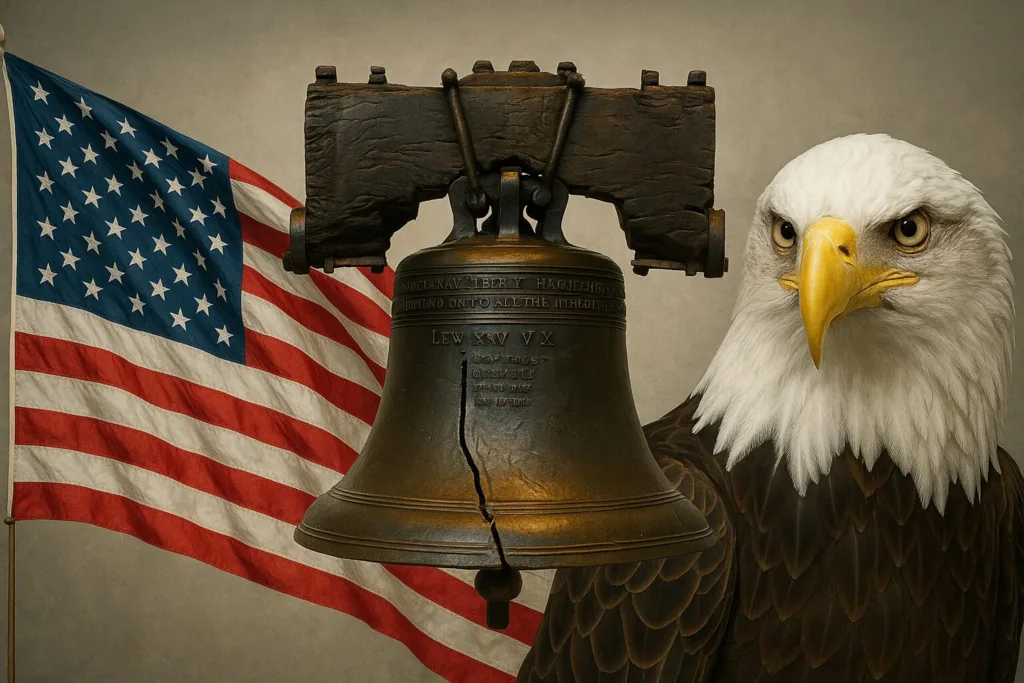
The American flag is everywhere on the 4th. Its 13 stripes stand for the original colonies, and its 50 stars stand for today’s states.
The Liberty Bell is another famous symbol. The National Park Service says it was ordered from London in 1751, cracked the first time it was tested, and was recast in Philadelphia in 1753. It weighs about 943 kg (2,080 lb).
The bell got its name in 1835, when campaigners against slavery called it the Liberty Bell. The Park Service says its famous crack formed in the early 1840s, and there is no evidence it rang on 4 July 1776.
Parades, picnics and hot dogs

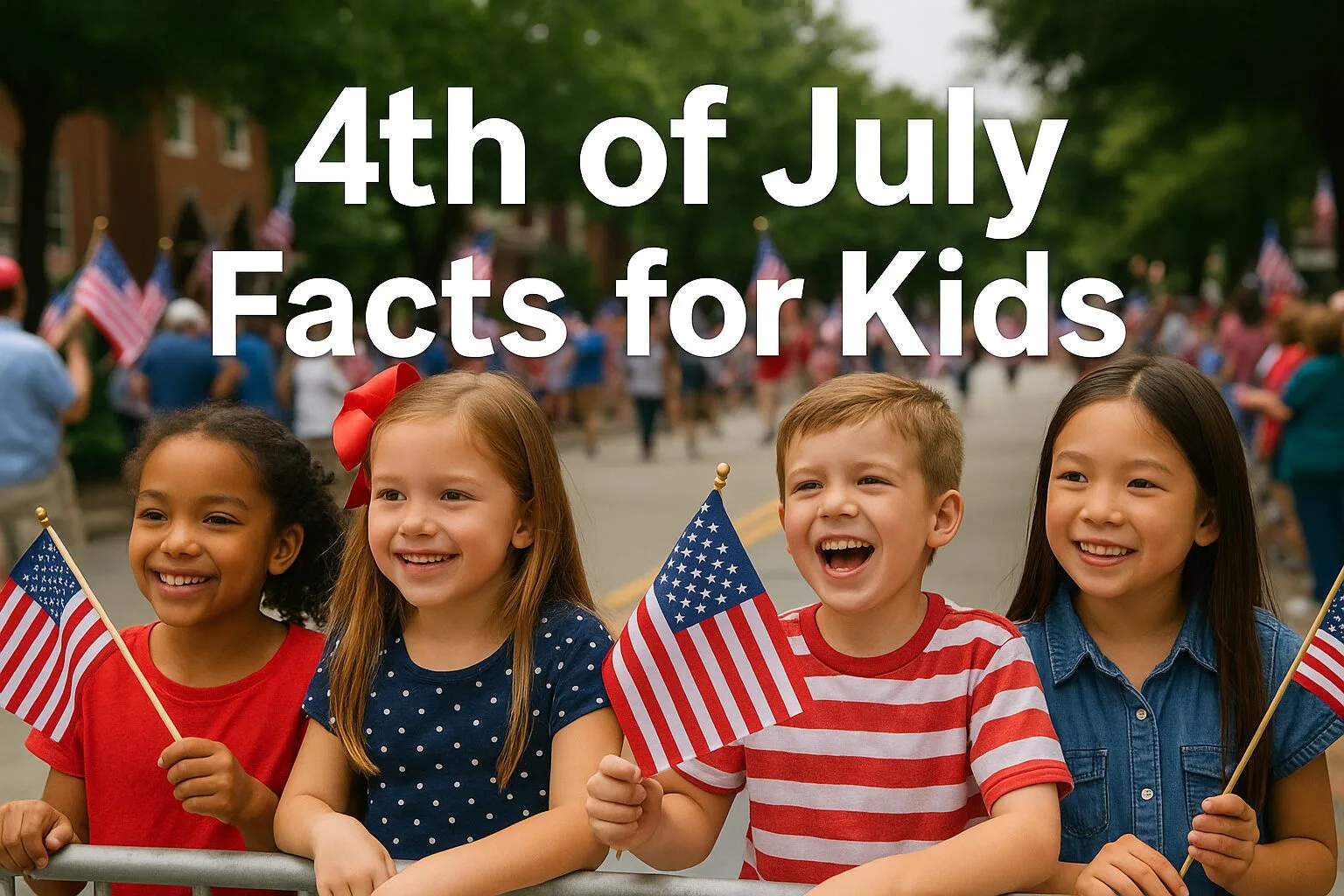
Many towns hold parades with marching bands, floats and flags. Families gather for picnics and barbecues, and people sing the national anthem, “The Star-Spangled Banner”.
Hot dogs are a 4th of July favourite. The most famous hot dog contest takes place at Coney Island in New York. CBS News reported that at the 2026 contest, Joey Chestnut won for the 18th time by eating 66 hot dogs in 10 minutes.
Contests like that are for trained adults, not for trying at home. Eating quickly is a choking risk, so enjoy your hot dog slowly.
Fireworks safety
Fireworks are exciting, but they are also dangerous. The US Consumer Product Safety Commission (CPSC) says fireworks caused 15 deaths and about 13,000 hospital emergency injuries in the United States in 2025.
Sparklers look harmless, but they are not. The CPSC says they burn at more than 1,090°C (2,000°F), hot enough to melt some metals. In 2025, sparklers alone caused about 1,300 injuries.
The CPSC says children should be kept away from all fireworks, including sparklers. The safest way to enjoy them is to watch a public show put on by professionals.
If adults use fireworks, the CPSC advises keeping water nearby, lighting one at a time and moving away quickly. Never point fireworks at people, animals or buildings. Never try to relight one that did not go off.
The 250th birthday in 2026
On 4 July 2026, the United States turned 250. This anniversary is called the Semiquincentennial. A law passed in 2016 set up a special commission to plan the celebrations.
The government of Washington, DC, says the city held a “Salute to America” celebration on the grounds of the Washington Monument. The Trust for the National Mall said the fireworks show was planned to use more than 850,000 fireworks, nearly double the usual number, in an attempt at a world record.
Celebrations were planned in towns and cities across the country. Visitors in the capital were warned about very hot weather and told to drink plenty of water.
Three things people get wrong
“Everyone signed the Declaration on 4 July 1776.” It was adopted on 4 July. The National Archives says most delegates signed the parchment copy on 2 August 1776.
“The vote for independence was on 4 July.” Congress voted for independence on 2 July. On 4 July it approved the wording of the Declaration.
“The Liberty Bell rang out on 4 July 1776.” The National Park Service says there is no evidence that it did. The bell was not even called the Liberty Bell until 1835.
Did you know? The oldest signer of the Declaration was Benjamin Franklin, aged 70, and the youngest was Edward Rutledge, aged 26.
Try it
Write your own short declaration: three rules you think every classroom should have, and why each one is fair.
Knowledge check
Who wrote the first draft of the Declaration?
Show answer
Thomas Jefferson.
On what date did most delegates sign the Declaration?
Show answer
2 August 1776.
Frequently asked questions
Why do Americans celebrate the 4th of July?
The 4th of July marks the adoption of the Declaration of Independence in 1776, when 13 colonies announced they were breaking away from Britain.
Who wrote the Declaration of Independence?
Thomas Jefferson wrote the first draft. Benjamin Franklin and John Adams suggested changes, and the full Continental Congress approved the final wording.
When was the Declaration of Independence signed?
Congress adopted the Declaration on 4 July 1776. Most of the 56 delegates signed the parchment copy on 2 August 1776.
When did the 4th of July become a holiday?
Congress made it a holiday for federal workers in Washington, DC, in 1870. It became a paid federal holiday in 1938.
Which presidents died on the 4th of July?
John Adams and Thomas Jefferson both died on 4 July 1826. James Monroe, the fifth president, died on 4 July 1831.
Are sparklers safe for children?
Sparklers are not safe for children. They burn at more than 1,090°C (2,000°F) and caused about 1,300 injuries in the United States in 2025.
Sources
- US National Archives: the Declaration of Independence, a history — the vote, the Committee of Five, printing and signing; its Declaration and Prologue pages were also used
- Congressional Research Service: Independence Day speech resources (2026) — the 2 July vote, early celebrations and the 1870 and 1938 holiday laws
- Library of Congress: the deaths of John Adams and Thomas Jefferson — the two deaths on 4 July 1826
- US Census Bureau: Fourth of July facts for features (2026) — the population then and now, the signers’ ages and patriotic place names
- US National Park Service: the Liberty Bell — the bell’s history, weight, name and crack
- US Consumer Product Safety Commission: fireworks safety (2026) — 2025 injuries and deaths, sparklers and safety advice