Memorial Day is a US holiday on the last Monday in May that honours people who died serving in the armed forces. It began after the Civil War as Decoration Day, when people decorated soldiers’ graves with flowers. It became a federal holiday in 1971, and Americans are asked to pause at 3 p.m. to remember.
Memorial Day quick facts
- Memorial Day is held on the last Monday in May.
- It was first called Decoration Day.
- The first national observance was on 30 May 1868.
- It became a federal holiday in 1971.
- Americans are asked to pause at 3 p.m. local time to remember.
What is Memorial Day?
Memorial Day is a holiday in the United States that honours people who died while serving in the country’s armed forces. It is held on the last Monday in May.
The US Department of Veterans Affairs, or VA, calls it the nation’s foremost day to mourn and honour the service men and women who have died.
For many families, the Memorial Day weekend also marks the start of summer, with picnics and barbecues. But the heart of the day is remembering.
| Memorial Day at a glance | |
|---|---|
| When | the last Monday in May |
| Original name | Decoration Day |
| First national observance | 30 May 1868 |
| Federal holiday since | 1971 |
| National Moment of Remembrance | 3 p.m. local time |
| Who it honours | service members who died serving the country |
How Memorial Day began
Memorial Day began during and just after the Civil War, which ended in 1865. The VA’s history team says communities in the North and the South decorated soldiers’ graves with flowers. Both Black and white Americans took part in these springtime “decoration days”.
Many places held early ceremonies. Britannica says three women in Boalsburg, Pennsylvania, are said to have decorated the graves of loved ones in October 1864.
On 1 May 1865, in Charleston, South Carolina, freed Black people and their allies held a large ceremony at a cemetery where 257 Union soldiers were buried.
In Columbus, Mississippi, on 25 April 1866, a group of women decorated the graves of Confederate soldiers. The VA says they also placed flowers on the nearby Union graves, which had been neglected.
Who started it?
Nobody can agree on a single birthplace. The VA says about 25 places have been named in connection with the start of Memorial Day, many of them in the South.
In 1966, Congress and President Lyndon Johnson declared Waterloo, New York, the official birthplace. There, on 5 May 1866, businesses closed and people flew flags at half-staff to honour local Civil War veterans.
Recent research by the VA’s history team points to the women of Columbus, Georgia. In 1866 they campaigned for a set day to put flowers on the graves of the Civil War dead.
General Logan’s order
On 5 May 1868, the Grand Army of the Republic, a powerful group of Union veterans, issued an order setting up Decoration Day for the whole nation. It was led by Major General John A. Logan.
Logan chose 30 May. It is believed he picked that date because flowers would be in bloom all over the country. He asked for graves to be decorated “with the choicest flowers of springtime”.
That year, the first large ceremony was held at Arlington National Cemetery, across the river from Washington, DC. General Ulysses S. Grant and his wife were among those in charge.
After the speeches, children from an orphans’ home walked through the cemetery with members of the veterans’ group. They scattered flowers on both Union and Confederate graves. The VA says about 5,000 people attended.
Arlington National Cemetery
Arlington National Cemetery lies across the Potomac River from Washington, DC. The VA says the first large ceremony there, in 1868, centred on the porch of the Arlington mansion. The house had once been the home of the Confederate general Robert E. Lee.
During the Civil War, an Army general called Montgomery Meigs took over Lee’s estate. He turned it into the cemetery. Today it is the resting place of hundreds of thousands of service members and their families.
Memorial Day ceremonies at Arlington still draw large crowds. The VA says about 5,000 people attended in 1868. That is roughly the size of the crowds at today’s ceremony.
The Charleston ceremony
One of the earliest and largest ceremonies took place in Charleston, South Carolina, on 1 May 1865, just after the war ended.
The VA’s history team says freed Black people and their Northern allies held it at a cemetery on an old racecourse. Around 257 Union soldiers were buried there. A few years later, the Army moved those soldiers to Beaufort National Cemetery.
From Decoration Day to Memorial Day
By the end of the 1800s, ceremonies were being held on 30 May across the country. States passed laws naming the day, and the Army and Navy set rules for how to mark it.
At first, the day remembered those who died in the Civil War. After World War I, it grew to honour Americans who died in all wars, and its name slowly changed to Memorial Day.
In 1971, Congress made Memorial Day a national holiday. It was moved from 30 May to the last Monday in May, like some other federal holidays, which gives people a long weekend.
Memorial Day traditions and symbols
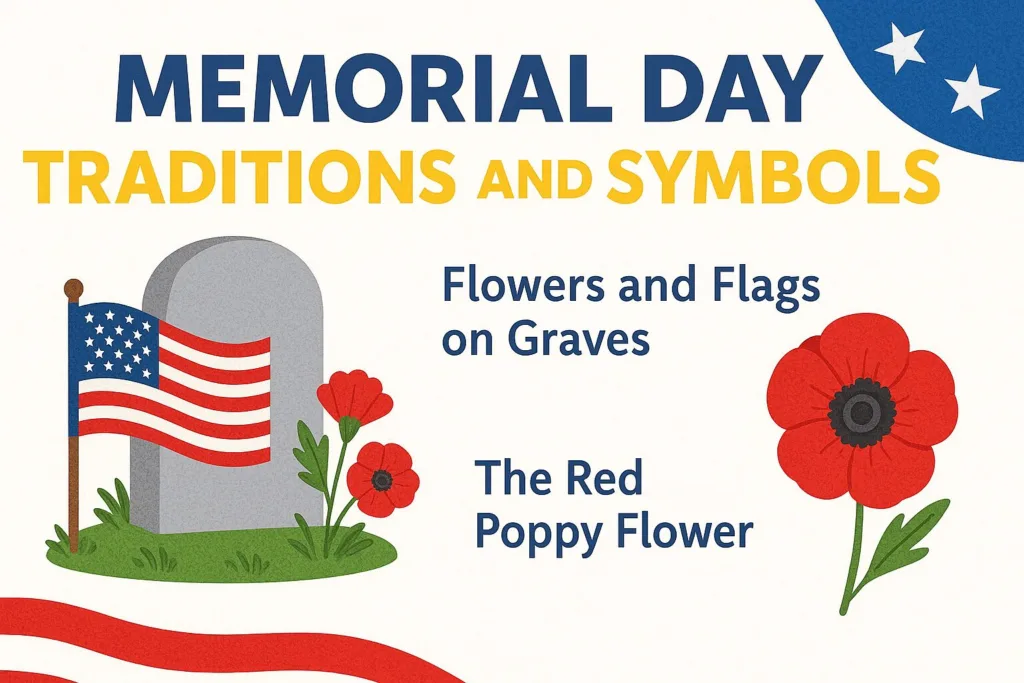
Flags on graves: small American flags are placed on each grave at Arlington National Cemetery and many other national cemeteries.
The wreath: Britannica says a wreath is laid at the Tomb of the Unknowns at Arlington, which honours soldiers whose names are not known.
Parades and services: towns across the country hold parades, speeches and religious services.
The flag at half-staff: by tradition, the US flag flies at half-staff until noon on Memorial Day, then is raised to the top of the pole.
Red poppies: many people wear red poppies, a symbol of remembrance that became popular after World War I.
The National Moment of Remembrance
In December 2000, Congress passed the National Moment of Remembrance Act. It asks all Americans to pause wherever they are at 3 p.m. local time on Memorial Day.
For one minute, people stop what they are doing and remember those who died serving the country. The founder of the idea, Carmella LaSpada, said it helps “put the memorial back in Memorial Day”.
How is Memorial Day different from Veterans Day?
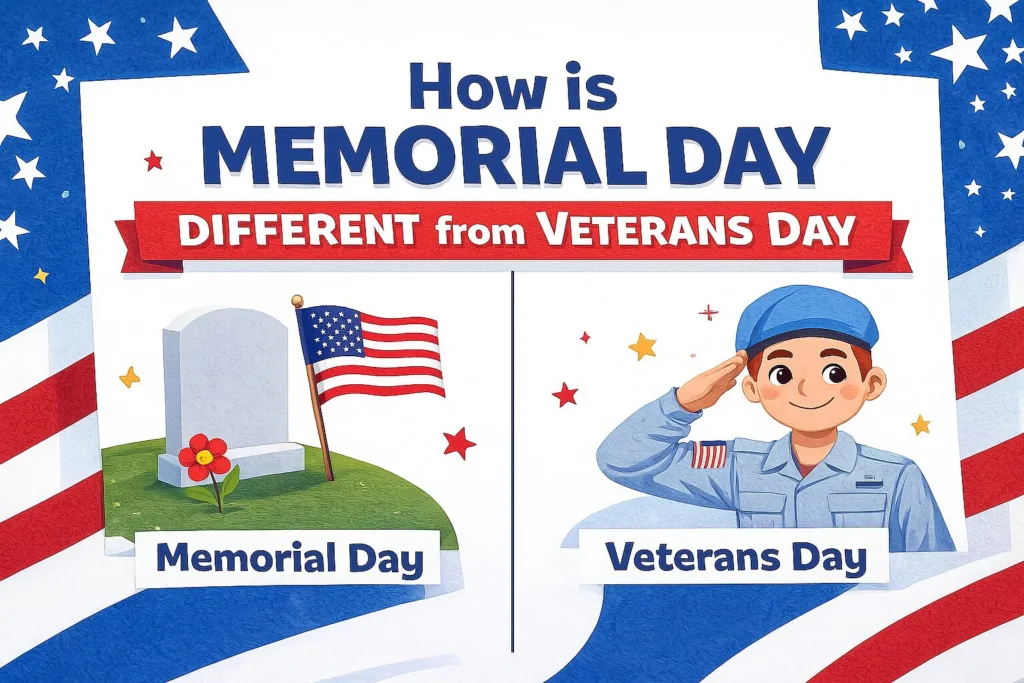
People often mix up these two holidays. Memorial Day, in May, honours those who died while serving in the armed forces.
Veterans Day, on 11 November, honours everyone who has served, living or dead. It began as Armistice Day, the day the fighting in World War I stopped in 1918.
An easy way to remember: Memorial Day is for those who gave their lives; Veterans Day is a thank-you to everyone who served.
Other days of remembrance
Some Southern states also have their own days to honour Confederate soldiers who died in the Civil War. Britannica and the VA both record these separate days. They fall on different dates in different states.
Remembering the cost
Memorial Day reminds people how many lives wars have cost. The VA says about 1.1 million Americans have died in the nation’s wars.
Behind every number is a person with a family, friends and a hometown. Memorial Day is a chance to remember them as people, not just as figures.
An old tradition
People have honoured those who died in war for thousands of years. The VA points to the Athenian leader Pericles. More than 24 centuries ago, he gave a famous speech honouring fallen soldiers.
General Logan hoped Americans would never forget their war dead. In his 1868 order, he wrote: “We should guard their graves with sacred vigilance.”
Decorating graves today
The custom of decorating graves has grown. The VA says many families now use the day to decorate the graves of all their loved ones. That includes people who never served.
In towns across the country, volunteers, scouts and schoolchildren help place flags on the graves of veterans in local cemeteries before the holiday.
Memorial Day activities for kids
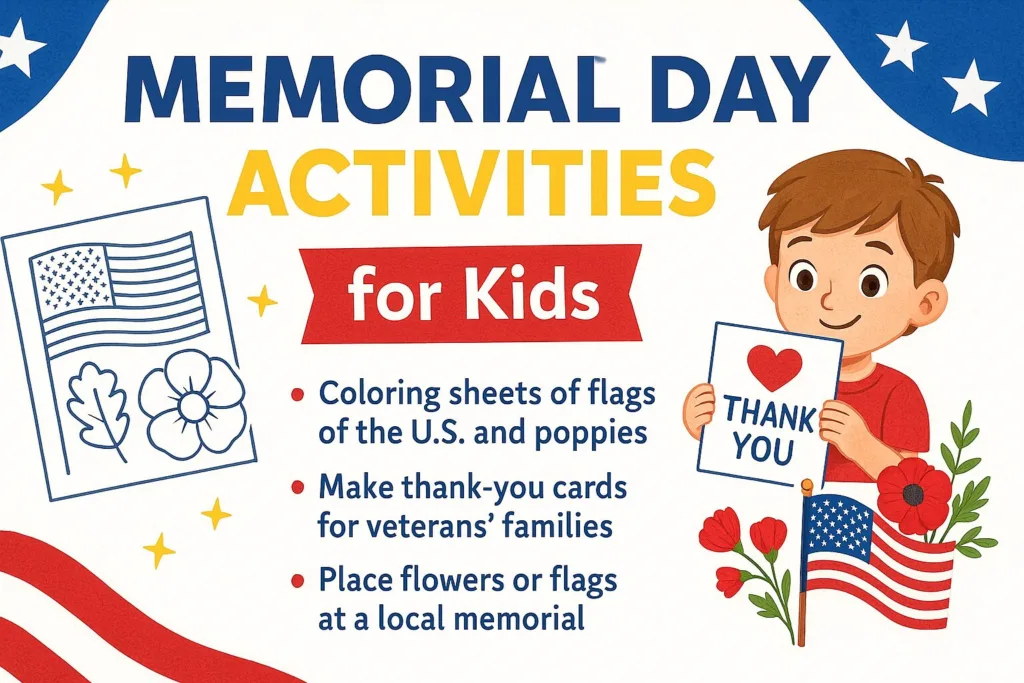
Visit a memorial: with an adult, visit a local war memorial or cemetery and place flowers or a small flag.
Pause at 3 p.m.: join the National Moment of Remembrance and spend a minute in silence.
Learn a story: find out about someone from your town or family who served, and share their story.
Make a poppy: draw or make a red paper poppy to wear or to display in your window.
Write a card: write a thank-you card for a military family or a veterans’ group.
Three things people get wrong
Memorial Day is not the same as Veterans Day. Memorial Day honours those who died; Veterans Day honours all who served.
Memorial Day is not only about the start of summer. Its purpose is to remember people who died serving their country.
There is no single birthplace everyone agrees on. About 25 places have been linked to its start.
Did you know? General John Logan is believed to have picked 30 May because flowers would be in bloom all over the country.
Try it
Set an alarm for 3 p.m. on Memorial Day and take part in the National Moment of Remembrance with your family.
Knowledge check
What was Memorial Day first called?
Show answer
Decoration Day.
How is Memorial Day different from Veterans Day?
Show answer
Memorial Day honours those who died in service; Veterans Day honours everyone who served.
Frequently asked questions
What is Memorial Day?
Memorial Day is a US holiday on the last Monday in May. It honours the men and women who died while serving in the country’s armed forces.
When did Memorial Day start?
It began after the Civil War as Decoration Day. The first national observance was on 30 May 1868, and it became a federal holiday in 1971.
Why is it called Decoration Day?
People decorated the graves of soldiers who died in the Civil War with flowers, so the day was first known as Decoration Day.
What is the National Moment of Remembrance?
It asks all Americans to pause wherever they are at 3 p.m. local time on Memorial Day for a minute of silence to remember the fallen.
What is the difference between Memorial Day and Veterans Day?
Memorial Day honours service members who died. Veterans Day, on 11 November, honours everyone who has served, living or dead.
Where was the first Memorial Day?
About 25 places claim it. In 1966 Congress and President Lyndon Johnson named Waterloo, New York, the official birthplace.
Sources
- Encyclopaedia Britannica: Memorial Day — the holiday’s date and purpose, early observances, John Logan, the name change, 1971 and traditions
- US Department of Veterans Affairs, National Cemetery Administration: Memorial Day history — early decoration days, General Orders No. 11, Charleston and Columbus observances
- US Department of Veterans Affairs: the origins of Memorial Day — Logan’s choice of date, the first Arlington ceremony, local claims, Waterloo, 1971, flags on graves and the Moment of Remembrance