Black Spiders with Red Markings quick facts
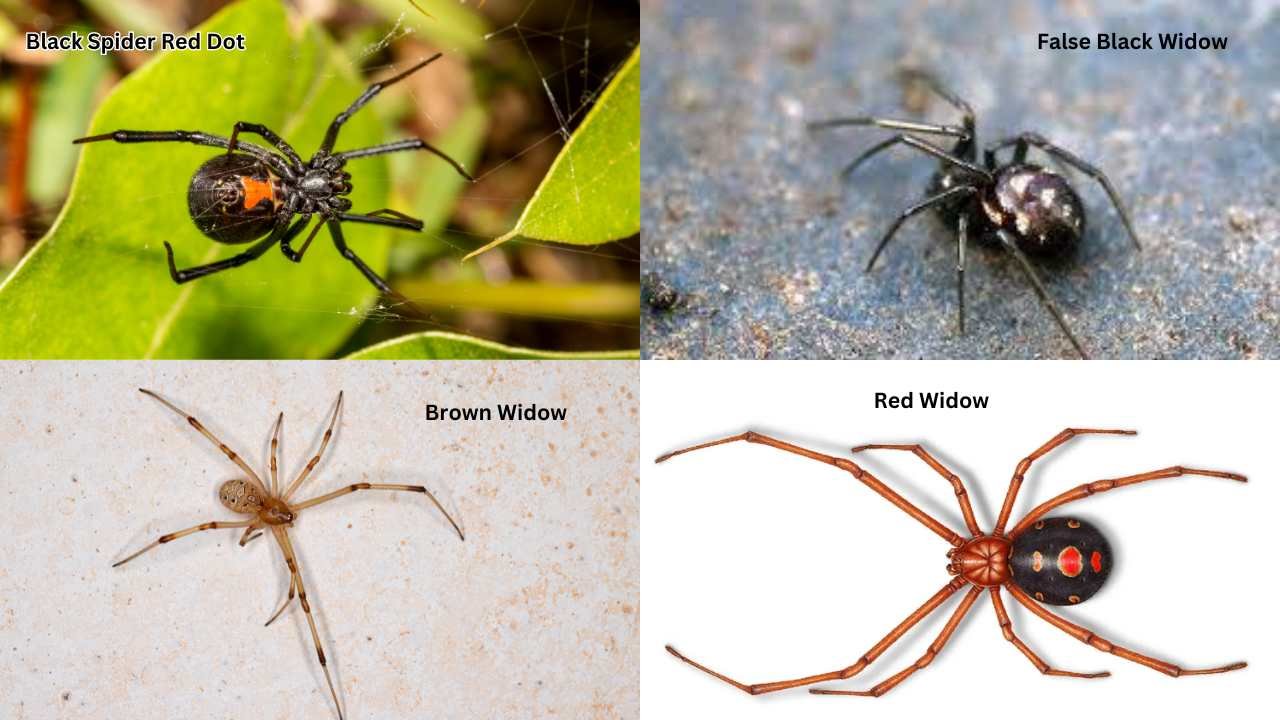
- Where the red mark sits is the key: hourglass underneath means widow, stripe on top means redback, cream on top means false widow.
- There are no true black widows living wild in Britain or Ireland. British sightings are almost always false widows.
- US poison centres have logged over 40,000 widow spider cases since 1983 with no deaths attributed to native widow species.
- Redback antivenom has existed since 1956, and only one death has followed in the sixty years since.
- Widow spiders are shy. Nearly all bites happen when a spider is accidentally pressed against skin in a glove, shoe or woodpile.
If you have found a black spider with a red mark and want to know what it is, the single most useful question is not “what does it look like” but where in the world are you. The same description means completely different things in California, Sydney and Manchester.
The second most useful question is where exactly the red mark sits. On the underside, on top, or on the back of the head? That one detail separates the spiders worth respecting from the ones that are completely harmless.
Important: this page is for learning and identification, not medical advice. If someone has been bitten and feels unwell, contact a doctor or your local emergency number straight away. Never handle a spider to identify it.
Quick identification table
| Where the red is | Likely spider | Where | Risk |
|---|---|---|---|
| Underside of the abdomen, hourglass shape | Black widow | Americas, southern Europe, parts of Asia and Africa | Medically significant |
| Top of the abdomen, a long stripe | Redback | Australia, introduced to New Zealand and Japan | Medically significant |
| Cream or pale markings, no real red | False widow (Steatoda) | UK, Ireland, Europe | Minor. Like a wasp sting at worst |
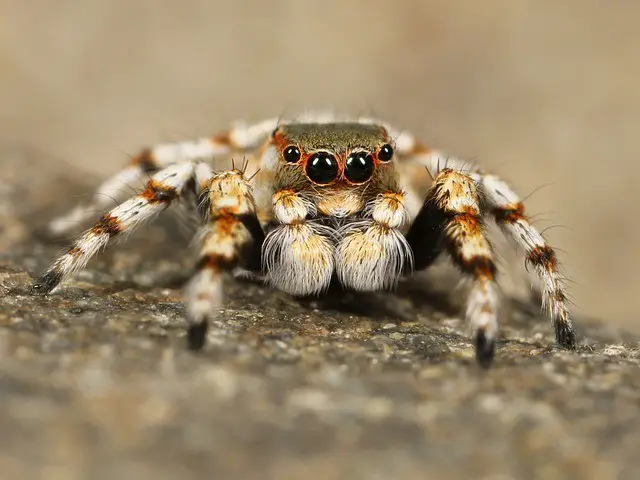
| Red on the back or head, hairy, big eyes, jumps | Jumping spider | Worldwide | Harmless |
| Orange or yellow hourglass, striped legs | Brown widow | Warm regions worldwide | Milder than black widow |
The black widow
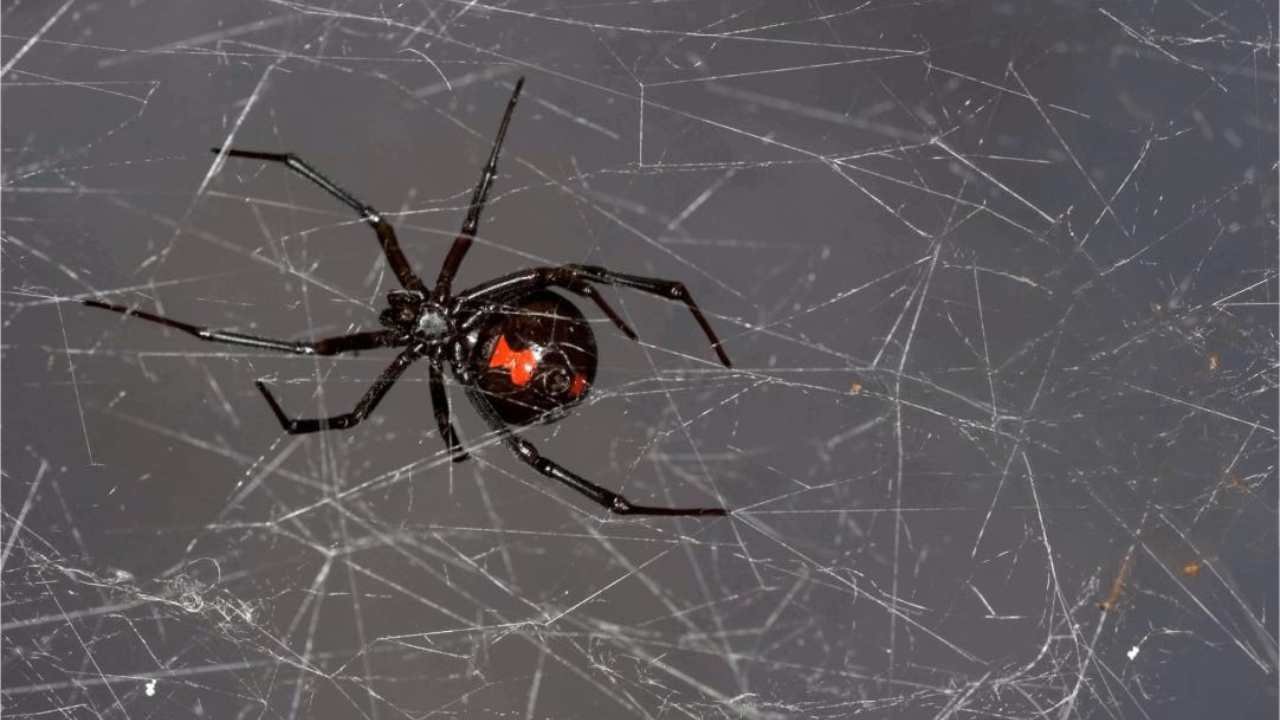
This is the spider most people mean. Several species exist in the genus Latrodectus, including the southern, western and northern black widows of North America.
How to recognise one:
- Glossy, almost patent-leather black, about the size of a fingernail in the body.
- A large, round, shiny abdomen.
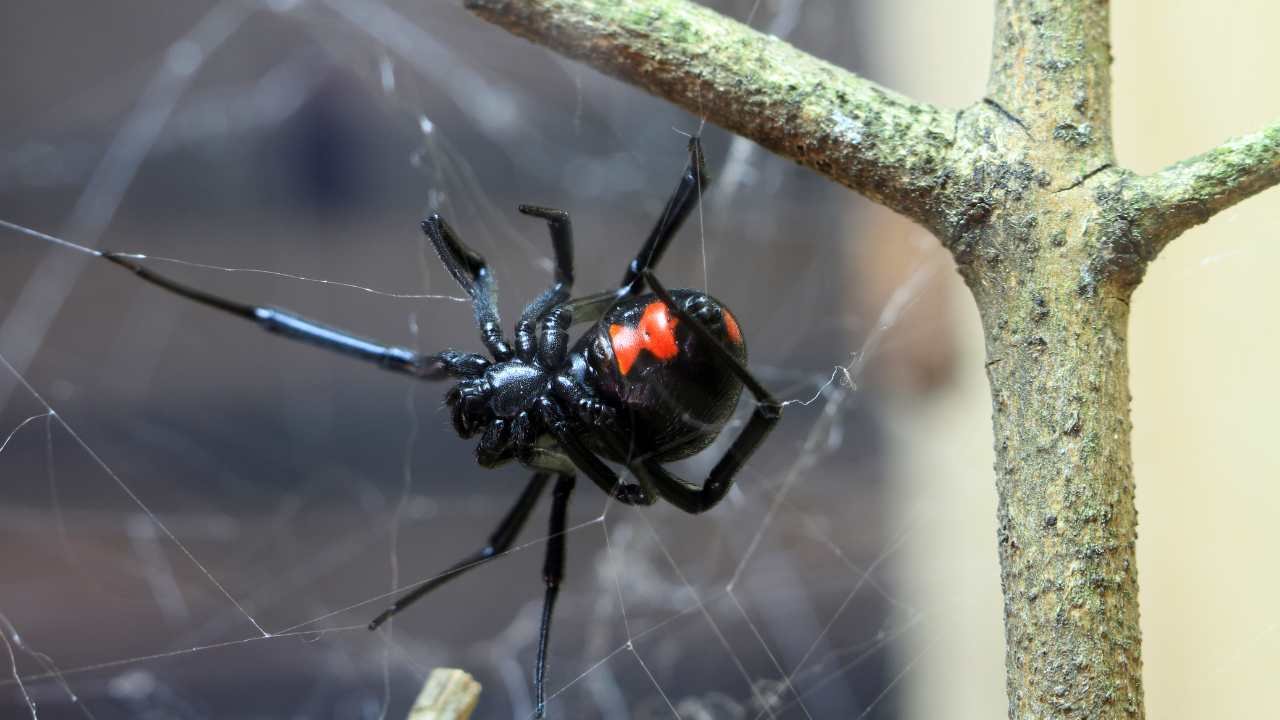
- A red hourglass shape on the underside of that abdomen, which is why the marking is often hidden. Sometimes it is two separate red triangles rather than a joined hourglass.
- Long, thin, delicate legs.
- A messy, tangled web rather than a neat spiral, usually low down in dark, undisturbed places.
Only the female is dangerous. Males are much smaller, often brownish, and their fangs cannot deliver a meaningful bite to a person.
They are not aggressive. A black widow’s normal reaction to a human is to drop out of the web and hide. Almost all bites happen when a spider is squashed against skin, in a glove, a shoe, a woodpile or under garden furniture.
The Black Widow Up Close
- Body — Glossy, almost patent-leather black
- Abdomen — Large, round and shiny
- Legs — Long, thin and delicate
- Web — Messy and tangled, low down in dark places
- Reaction to people — Drops out of the web and hides
The redback
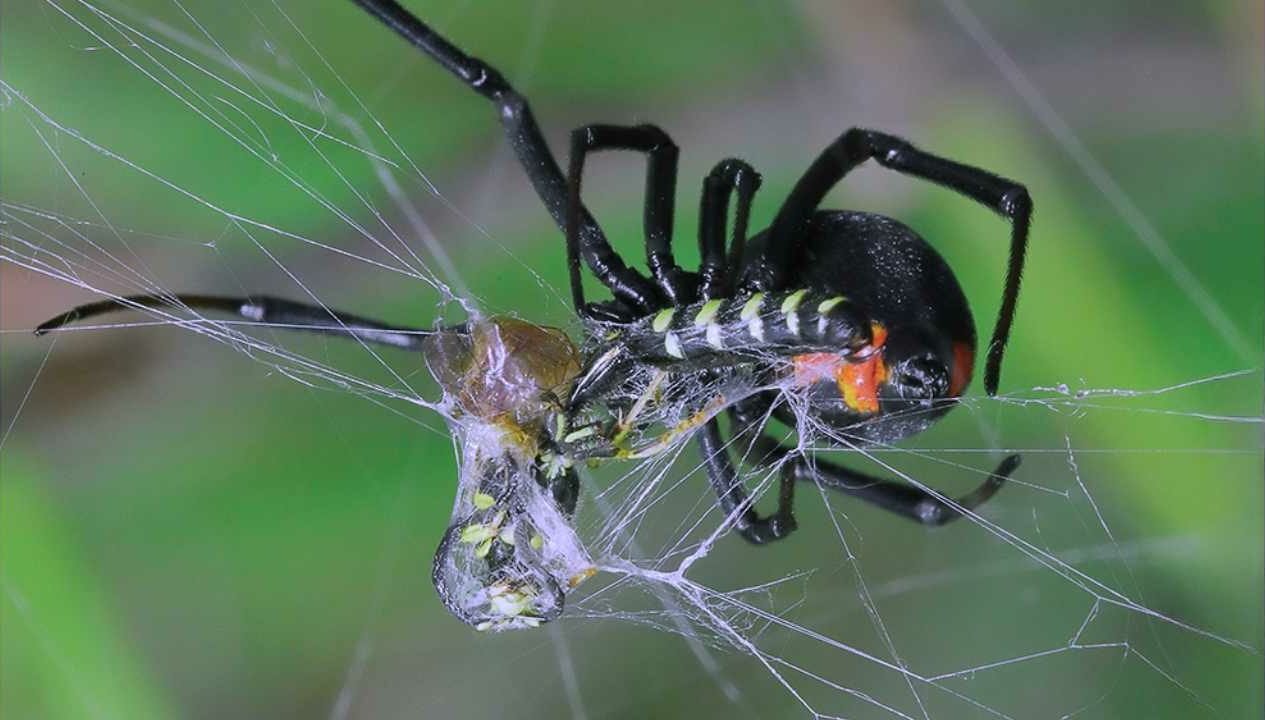
Australia‘s redback is a close relative of the black widow, and here the red mark is in the obvious place: a bold red or orange stripe running along the top of the abdomen. Many also have a red hourglass underneath.
Redbacks like the same places black widows do: sheds, letterboxes, under outdoor seats, in stacked plant pots. They are common in Australian cities and have spread to New Zealand and Japan. Our guide to animals found in Australia covers more of the country’s wildlife.
Here is the reassuring part. Antivenom for redback bites has existed since 1956, and in the sixty years afterwards there was not a single confirmed death, until one man died in 2016. That is one death in six decades in a country where thousands of people are bitten.
In Britain and Ireland, it is almost certainly a false widow
There are no true black widows living wild in Britain or Ireland. What newspapers there call a black widow is nearly always a false widow, from the genus Steatoda.
The commonest is the noble false widow, Steatoda nobilis, which arrived from the Canary Islands in the 1800s, reportedly in fruit crates, and has spread steadily since.
Telling them apart is easier than the headlines suggest:
- False widows are brown or purplish-brown, not glossy jet black.
- Their markings are cream, white or pale yellow on top of the abdomen, often in a pattern people describe as a skull. They are not bright red.
- There is no red hourglass underneath. That is the definitive test.
A false widow bite is usually compared to a wasp sting: painful for a while, then over. British false widows appear in the press far more often than they appear in hospitals.
Harmless spiders that fit the description
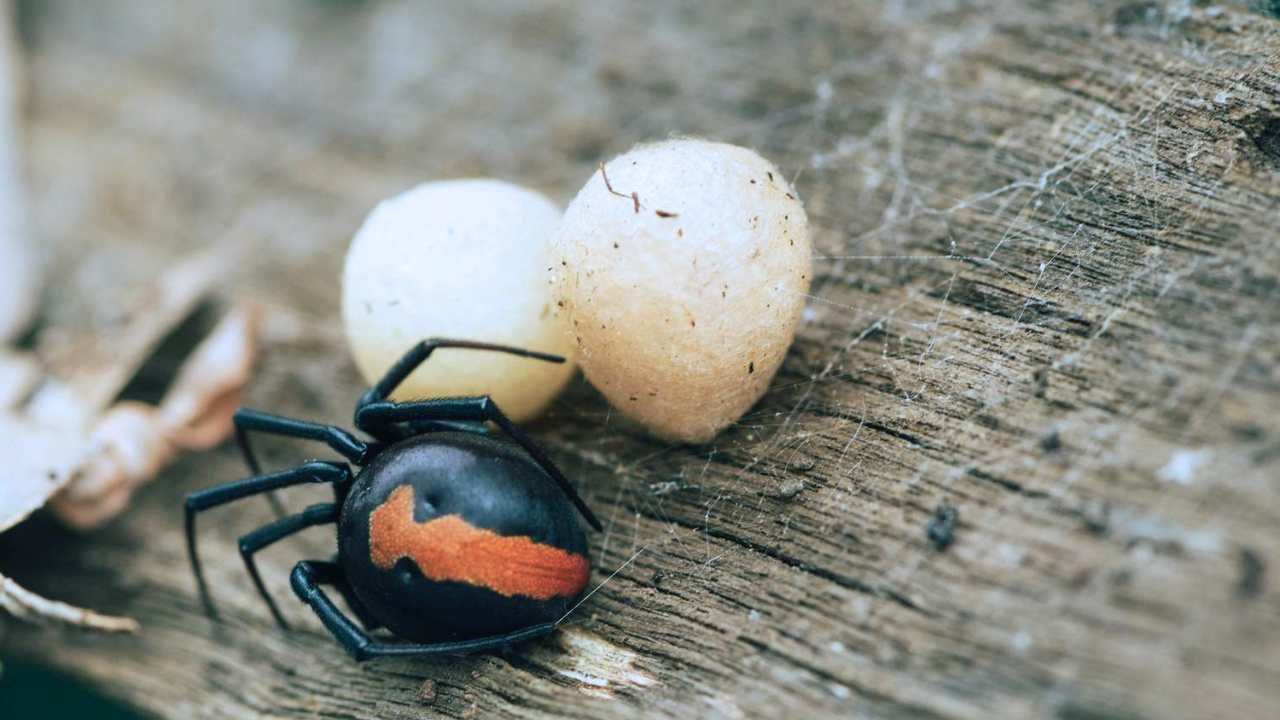
Plenty of completely harmless spiders are black with red markings, and they are worth knowing so you do not panic over the wrong animal.
- Red-backed jumping spider (Phidippus johnsoni) — western North America. Black and fuzzy with a bright red patch on top, huge forward-facing eyes, and it jumps and turns to look at you. Widows never do that.
- Ant-mimic spiders — slim, dark, with reddish sections, and they walk with their front legs waving like antennae to impersonate ants.
- Cellar spiders — extremely long thin legs, tiny body. Sometimes called daddy long-legs. Harmless.
- Woodlouse spiders — reddish body with a pale abdomen, found under logs and stones.
A useful rule of thumb: if the spider is hairy and watches you, it is a jumping spider and it is harmless. If it is smooth, glossy, round-bodied and hides in a tangled web, look more carefully.
Spot the Spider
- Red-backed jumping spider — Hairy, with huge forward-facing eyes, and it jumps
- Ant-mimic spider — Walks waving its front legs like antennae
- Cellar spider — Very long, thin legs and a tiny body
- Woodlouse spider — Reddish body and pale abdomen, found under logs and stones
- Brown widow — Orange or yellow hourglass and striped legs
What to do if someone is bitten
First, keep calm. Bites from widow spiders are uncommon, and serious outcomes are rarer still.
- Wash the area with soap and water.
- Apply a cold pack wrapped in cloth to reduce pain and swelling.
- Keep the limb still and, if possible, raised.
- Tell an adult and get medical advice. For a suspected widow or redback bite, contact a doctor or emergency services, especially if the person is young, elderly or unwell.
- If it is safe, photograph the spider from a distance. It helps doctors. Do not try to catch it.
Do not apply a tourniquet, cut the wound, try to suck out venom, or apply heat. These old remedies cause harm and do not help.
A widow bite may feel like a pinprick at first, with pain building over an hour or two and spreading to the abdomen, back or legs, sometimes with sweating and muscle cramps. It is genuinely unpleasant, and effective treatment exists. For proper medical guidance see MedlinePlus on black widow spiders, their page on spider bites, and CDC/NIOSH guidance on venomous spiders.
First Aid: Do or Don’t?
- Wash the bite with soap and water.
- Leave tight rings and clothing on the bitten arm or leg.
- Put a cold pack, wrapped in cloth, on the bite.
- Cut the bite open so the venom can come out.
- Keep the bitten arm or leg still.
- Try to suck the venom out.
- Tell an adult and get medical advice.
- Wait and see, even if the person starts to feel unwell.
How dangerous is this really?
Less than the reputation suggests, and the numbers are worth knowing.
American poison control centres have logged more than 40,000 widow spider cases since 1983. Across all of them, no deaths have been attributed to the widow species found in the United States. About 2,500 bites are reported each year, and people recover.
In Australia, redback antivenom arrived in 1956 and a single death followed in the next sixty years.
None of that means you should handle one. It means the sensible response to finding a widow in the shed is to leave it alone and wear gloves, not to panic.
Sensible precautions
- Wear gloves when moving woodpiles, bricks, plant pots or rubbish.
- Shake out shoes, gloves and clothing left in a garage or shed.
- Check under outdoor furniture and inside letterboxes before reaching in.
- Use a torch in dark corners of sheds and crawl spaces.
- If you find one indoors, trap it under a glass with card underneath and release it outside. There is no need to kill it.
Myths about red-marked spiders
- “Any black spider with red on it is a black widow.” Position matters. Hourglass underneath means widow. Red on top of a hairy body means a harmless jumping spider.
- “Britain has black widows.” It does not. British ones are false widows, which are brown with cream markings and no red hourglass.
- “A black widow bite kills you.” Over 40,000 US cases since 1983 with no deaths attributed to native widow species.
- “They chase and attack.” Widows are shy and web-bound. Nearly all bites happen when a spider is pressed against skin.
- “Male black widows are dangerous too.” Males are much smaller and cannot deliver a medically significant bite.
- “The female always eats the male.” It happens in some species and is far from universal, despite the name.
For more about spiders generally, including how many species exist and how their silk works, see our spider facts for kids.
Red-Marked Spiders: True or False?
- Black widows chase people and attack them.
- Most widow bites happen when a spider is pressed against skin, in a glove, shoe or woodpile.
- Male black widows are just as dangerous as females.
- Some black widows have two red triangles instead of a joined hourglass.
- The noble false widow is a native British spider.
- Redbacks have spread from Australia to New Zealand and Japan.
- Black widows live only in the Americas.
- Redbacks like sheds, letterboxes and stacked plant pots.
Common questions
What black spider has a red dot on its back?
In Australia, most likely a redback, which has a red stripe along the top of the abdomen. In North America, a red mark on top of a hairy body is usually a harmless jumping spider; a black widow’s red hourglass is on the underside.
Are there black widows in the UK?
No. Britain and Ireland have false widows instead, which are brown or purplish with cream markings and no red hourglass. Their bite is roughly comparable to a wasp sting.
How can I tell a black widow from a false widow?
Look at the colour and the underside. A black widow is glossy jet black with a red hourglass beneath the abdomen. A false widow is brown or purplish with cream markings on top and no red hourglass.
What should I do if I am bitten?
Wash the area, apply a wrapped cold pack, keep still, and tell an adult so you can get medical advice. For a suspected widow or redback bite, contact a doctor or emergency services. Do not cut the wound or use a tourniquet.
Do black widows chase people?
No. They are shy and stay near their webs. Almost every bite happens when a spider is accidentally squashed against skin inside a glove, shoe or woodpile.
Did you know? The noble false widow, Britain’s most common red-scare spider, is not native. It is thought to have arrived from the Canary Islands in the 1800s in crates of fruit, and has been spreading across the country ever since.
Try it
Next time you see a spider outdoors, look without touching and answer three questions: is it glossy or hairy, does it have huge front-facing eyes, and is it sitting in a tangled web? Those three answers separate a jumping spider from a widow.
Knowledge check
Where is the red hourglass on a black widow?
Show answer
On the underside of the abdomen, which is why it is often hidden. A red mark on top of the abdomen means a different spider, such as an Australian redback or a harmless jumping spider.
Are there black widow spiders in Britain?
Show answer
No. Britain and Ireland have false widows instead. They are brown or purplish-brown with cream markings on top and no red hourglass underneath, and their bite is roughly like a wasp sting.
Frequently Asked Questions About Black Spiders With Red Markings
What is a black spider with a red mark on its back?
Which spider it is depends on where the red sits and where in the world you are. A red hourglass on the underside means a black widow. A red stripe along the top means an Australian redback. Cream or pale markings on a brown body mean a harmless false widow. Red on a hairy spider that jumps is a harmless jumping spider.
Are there black widows in Britain?
No. There are no true black widows living wild in Britain or Ireland. British sightings are almost always false widows, which are far less dangerous. If you have found one in the UK, the false widow is by far the most likely answer.
How dangerous is a black widow bite?
Serious enough to need medical attention, but rarely deadly. US poison centres have logged over 40,000 widow spider cases since 1983 with no deaths attributed to native widow species. Antivenom exists and treatment works.
How dangerous is a redback bite?
Redback antivenom has existed since 1956, and only one death has followed in the sixty years since. A bite is painful and needs medical attention, but it is very unlikely to be fatal.
Why do widow spiders bite people?
Almost always by accident. Widow spiders are shy and would rather hide. Nearly all bites happen when a spider is accidentally pressed against skin inside a glove, a shoe or a woodpile.
How should I identify a spider safely?
Look, do not touch. Note where the red mark sits, whether it is on the underside or the top, and where in the world you are, because those two details do most of the identification. Never handle a spider to get a better look. If someone has been bitten and feels unwell, contact a doctor or your local emergency number straight away.
Sources
- CDC / NIOSH: venomous spiders — identification and workplace safety guidance.
- MedlinePlus: black widow spider — symptoms and medical treatment.
- MedlinePlus: spider bites — general first-aid guidance.
- Natural History Museum: identifying false widow spiders — telling Steatoda from true widows in the UK.
- British Arachnological Society: false widows — the UK species and their actual risk.
Red-Marked Spiders Final Challenge
- You find a black spider with a red mark. What is the most useful first question?
- When did redback antivenom first become available?
- US poison centres have logged tens of thousands of widow spider cases since 1983. How many deaths were caused by the widow species that live in the US?
- What is the sensible thing to do if you find a widow spider in the shed?
- What does the guide suggest if you find a spider indoors?
- How does a widow bite usually feel at first?
- What should you do before reaching into a letterbox or under outdoor furniture?
- Black widows belong to which group, or genus, of spiders?