Diwali quick facts
- In 2026, Diwali begins on 6 November, the day after the UK’s Bonfire Night.
- Leicester switched on its first public Diwali lights in 1983 and now hangs about 6,500 lights along Belgrave and Melton Roads.
- Sikhs remember Guru Hargobind leading 52 princes out of Gwalior Fort in 1619, each holding a panel of his cloak.
- For Jains, Diwali night marks the moment Mahavira’s soul was freed, and the festival begins the Jain year.
- In October 2025 California added Diwali to its list of state holidays, so public schools there can close for it.
What is Diwali?
Diwali is a festival of lights. It is one of the biggest festivals in India, and families celebrate it in towns and cities all over the world.
The name comes from the Sanskrit word Deepavali, which means “row of lights”. Sanskrit is an ancient language of India, and many Hindu holy books were first written in it.
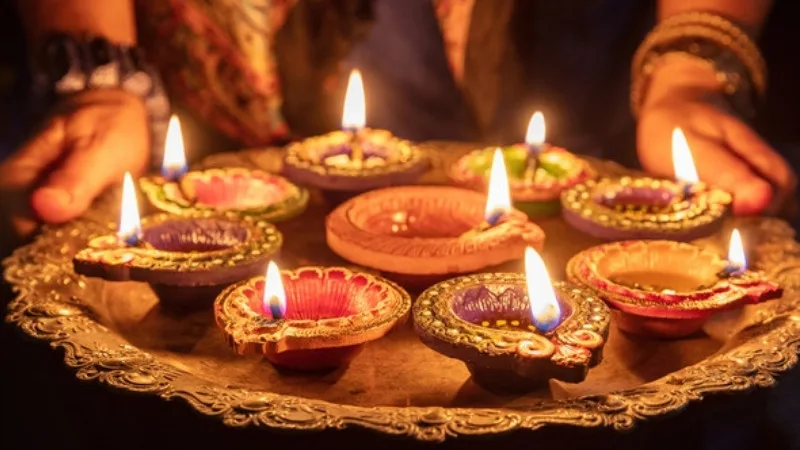
Those lights are diyas. A diya is a small clay lamp that holds a little oil and a cotton wick. At Diwali, families set rows of them on windowsills, steps and doorways, so whole streets glow after dark.
Each faith that celebrates Diwali has its own reasons. Most share one big idea, though. Light wins over darkness, and good wins over evil. Many people also see a burning lamp as the light of knowledge, pushing away ignorance.
When is Diwali 2026?
In 2026, the main day of Diwali is Sunday 8 November. Hindus call this day Lakshmi Puja. The whole festival lasts five days, from Friday 6 November to Tuesday 10 November.
Not every calendar agrees about the end. Some place the last two days on 10 and 11 November instead. The exact days depend on the Moon, and on which calendar a family follows.
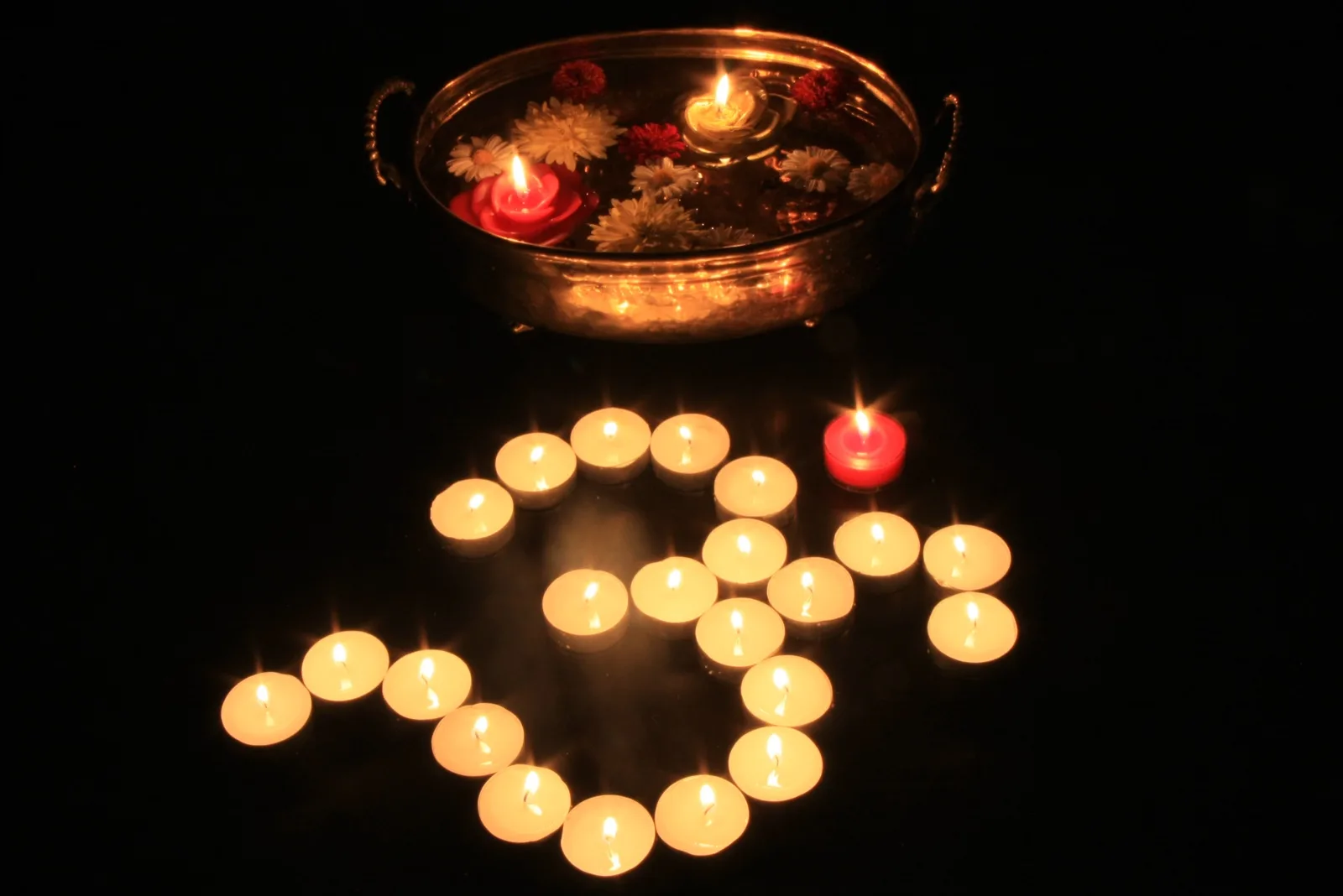
The Moon sets the date. Diwali follows the Hindu lunar calendar, and a lunar calendar counts its months by the Moon, not by the Sun. The main day falls on the night of the new moon in the Hindu month of Kartik. It is the darkest night of the month, which is one reason the lamps matter so much.
Lunar months do not line up with the months on a school calendar. So the date of Diwali moves every year, usually landing somewhere between mid-October and mid-November.
| Year | Main day of Diwali |
|---|---|
| 2023 | Sunday 12 November |
| 2024 | Thursday 31 October (1 November in some calendars) |
| 2025 | Monday 20 October |
| 2026 | Sunday 8 November |
Some regions also mark the main day differently. In a few Indian states, families celebrate on the day before, called Naraka Chaturdashi. So two friends can both be right about the day of Diwali and still name different dates.
Diwali’s Name and Date
- The name Deepavali comes from which ancient language of India?
- Many people see a burning diya as a sign of what?
- Why do the lamps matter so much on the main night of Diwali?
- In which of these years was the main day of Diwali in October?
Who celebrates Diwali?
Diwali is best known as a Hindu festival, but Sikhs and Jains celebrate at the same time of year, and so do some Buddhists in Nepal. Each faith remembers a different event. None of them borrowed it.
| Faith | What the festival remembers | How it is marked |
|---|---|---|
| Hindus | Rama’s return to Ayodhya, Krishna’s victory over Narakasura, and the goddess Lakshmi | diyas, rangoli, puja (prayer) to Lakshmi, sweets and new clothes |
| Sikhs | Bandi Chhor Divas: Guru Hargobind’s release from Gwalior Fort in 1619 | lamps at home and in gurdwaras; the Golden Temple in Amritsar is lit up |
| Jains | Mahavira reaching moksha, the final freedom of the soul | fasting, prayer and lamps; the start of the Jain year |
| Newar Buddhists (Nepal) | Swanti, Nepal’s version of the festival, and the Newar new year | lamps, Lakshmi Puja and Mha Puja, a ritual for the self at the new year |
Two words in the table are worth knowing. A gurdwara is a Sikh place of worship. Puja means worship or prayer, and it can happen at home or in a Hindu temple, called a mandir.
In Nepal the festival is called Tihar. The Newar people of the Kathmandu Valley call it Swanti, and Newar Buddhists take part as well as Newar Hindus.
The story of Rama and Sita
For many Hindus, especially in northern India, Diwali remembers the story of Prince Rama. It comes from the Ramayana, a very long poem that is one of the most important Hindu scriptures.
The story says Rama was sent away from his kingdom of Ayodhya for 14 years. His wife Sita and his brother Lakshmana went with him into the forest. There, the demon king Ravana kidnapped Sita and carried her off to his kingdom of Lanka.
Rama set out to rescue her. The story tells how he defeated Ravana and brought Sita safely home. When they reached Ayodhya, the people lit rows of clay lamps to welcome them and light their way.
Hindus light diyas at Diwali in memory of that welcome. For many families, the story is about doing what is right, even when it is hard. It is also about coming home.
Who’s Who in the Story of Rama and Sita
- Rama — The prince sent away from his kingdom for 14 years
- Sita — Rama's wife, carried off to Lanka
- Lakshmana — Rama's brother, who went with him into the forest
- Ravana — The demon king of Lanka
- Ayodhya — Rama's kingdom, where the story ends
- Ramayana — The very long poem that tells the story
Krishna, Lakshmi and Kali
Diwali has more than one story. Which one a family tells often depends on where their family comes from.
In parts of south India, Hindus remember a story about the god Krishna. The story says Krishna defeated a cruel demon king called Narakasura and freed the thousands of people he had captured. It is told on the second day of the festival.
Across most of India, the main night belongs to Lakshmi. Hindus worship her as the goddess of wealth and good fortune. Many Hindus believe she will not enter a dark home. So families sweep, wash and decorate, then leave their lights burning to welcome her. A bright home is an invitation.
In Bengal, in the east of India, many Hindus worship a different goddess at this time. She is Kali, whom they honour as a fierce protector against evil.
None of these stories cancels out the others. They sit side by side, and many families know several of them.
The five days of Diwali
Diwali is not one night but five days. Each day feels a little different. Every day has its own name and customs, and those customs change from one region of India to the next. The table shows one common pattern, with the dates for 2026.
| Day | Name | What happens | 2026 |
|---|---|---|---|
| 1 | Dhanteras | the first lamps are lit, and many families buy something new, often a metal pot or jewellery | Fri 6 Nov |
| 2 | Naraka Chaturdashi, or Choti Diwali (“little Diwali”) | Krishna’s victory over Narakasura is remembered | Sat 7 Nov |
| 3 | Lakshmi Puja | the main night: prayers to Lakshmi, diyas, sweets and fireworks | Sun 8 Nov |
| 4 | Govardhan Puja | Krishna and the sacred hill of Govardhan are honoured; for some, a new year begins | 9 or 10 Nov |
| 5 | Bhai Dooj | sisters pray for their brothers, and brothers give gifts | 10 or 11 Nov |
The fifth day has its own story. Hindus tell how Yama, the lord of death, visited his sister Yamuna and blessed her. Today sisters pray for their brothers to live long, happy lives, and brothers give presents in return.
The Five Days of Diwali
- Dhanteras The first lamps are lit, and many families buy something new.
- Naraka Chaturdashi Also called little Diwali. Hindus remember Krishna's victory over Narakasura.
- Lakshmi Puja The main night, with prayers to Lakshmi, diyas and sweets.
- Govardhan Puja Krishna and the sacred hill of Govardhan are honoured.
- Bhai Dooj Sisters pray for their brothers, and brothers give gifts.
Bandi Chhor Divas: the Sikh celebration
Sikhs light lamps at the same time as Diwali, but they celebrate their own event. It is called Bandi Chhor Divas, which means “prisoner release day”.
It remembers Guru Hargobind, the sixth Sikh Guru. The Gurus were the ten teachers who led the Sikh faith in its early years. Guru Hargobind was held prisoner in Gwalior Fort, in central India, along with 52 princes.
In 1619 he was told he could go free. Sikhs tell how he refused to leave unless the princes came too. He was told that only those who could hold on to his cloak might leave with him. So he had a cloak made with 52 long panels, 26 on each side, and every prince took hold of one. All 52 walked out together.
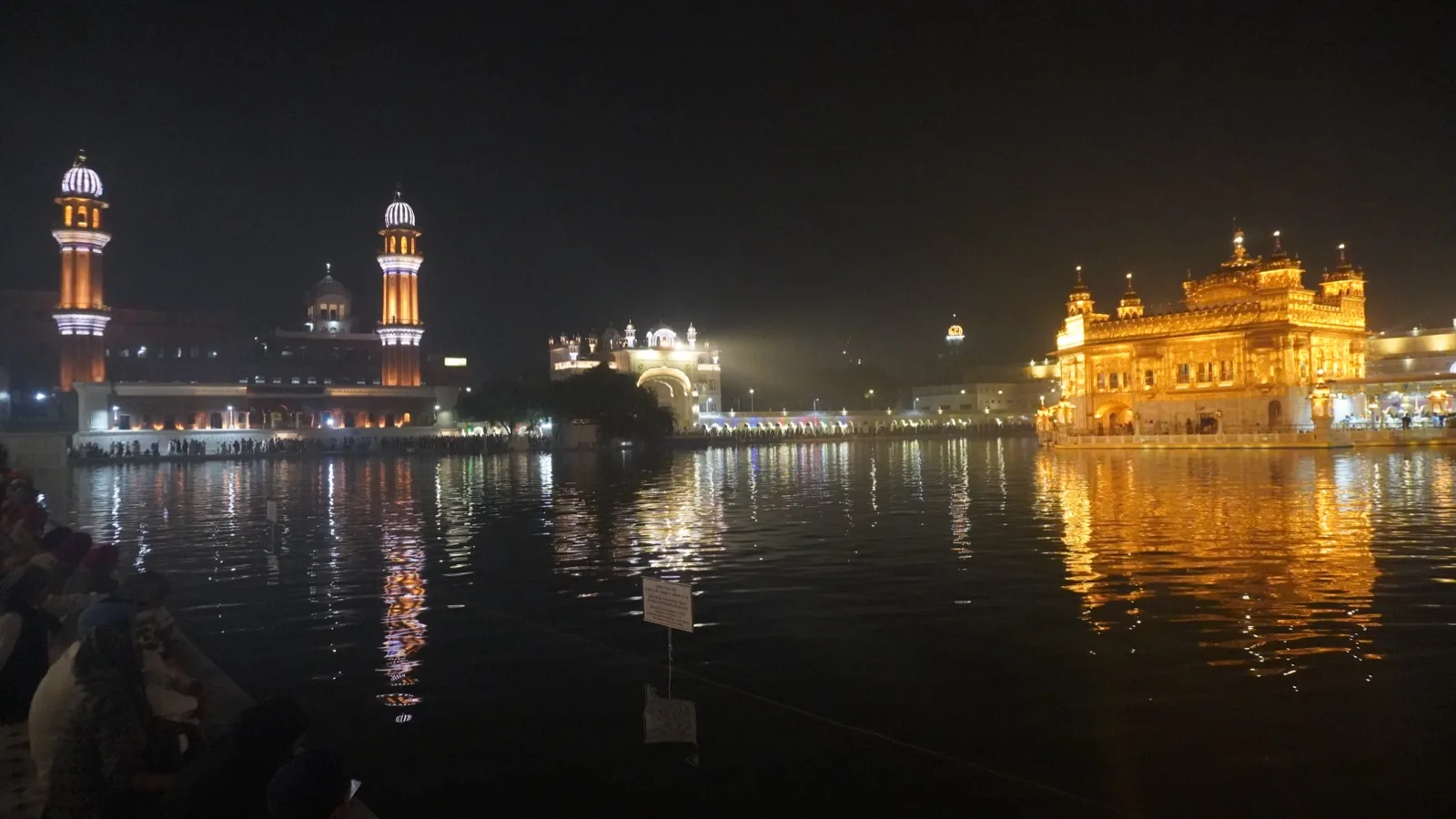
When Guru Hargobind reached the city of Amritsar, people lit it up with lamps and candles. Today the Harmandir Sahib, often called the Golden Temple, glows with thousands of lights on the night. Sikhs also light diyas at home and in their gurdwaras.
How Jains mark Diwali
For Jains, Diwali is one of the holiest nights of the year. It marks the night Mahavira reached moksha, the final freedom of the soul. Mahavira was the 24th and last of the great Jain teachers, called Tirthankaras.
Jains believe that on the same night, Mahavira’s chief follower, Gautama, reached perfect knowledge. So for Jains, Diwali remembers two events at once.
Many Jains fast and pray, and some stay awake through the night before. Lamps are lit in homes and streets. Both of the main Jain groups, the Svetambaras and the Digambaras, celebrate it, and the festival begins a new Jain year.
Diwali and Its Faiths: True or False?
- Hindus, Sikhs and Jains all remember the same event at Diwali.
- The Sikh Gurus were the ten teachers who led the Sikh faith in its early years.
- Guru Hargobind was the first Sikh Guru.
- Today the Harmandir Sahib in Amritsar, often called the Golden Temple, glows with thousands of lights on Bandi Chhor Divas.
- Jains believe that Mahavira's chief follower, Gautama, reached perfect knowledge on the same night as Mahavira's moksha.
- Only one of the two main Jain groups celebrates Diwali.
- Some Jains stay awake through the night before Diwali.
How families celebrate Diwali
Getting ready starts days before the festival. Homes are cleaned from top to bottom. Many families buy new clothes and wear them for the first time on the main day.
Food matters just as much. Families make or buy mithai, the Hindi word for sweets. Favourites include ladoos, which are round sweet balls, and barfi, a soft sweet a bit like fudge. Boxes of sweets are shared with neighbours, friends and relatives.
People visit temples and gurdwaras, give gifts and send cards. Many families also hold a puja at home on the main night, with prayers, songs and an offering of lamps and flowers.
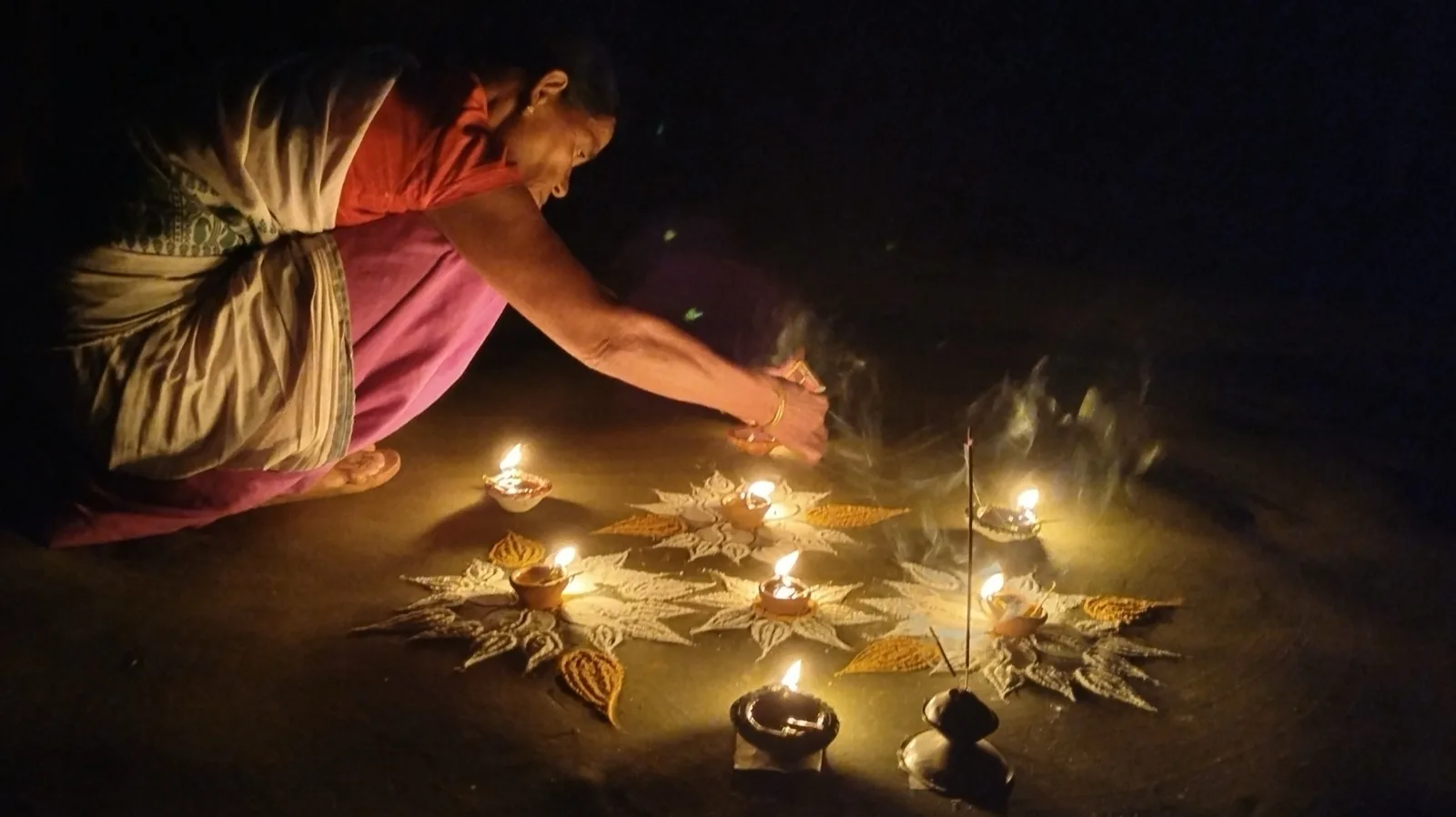
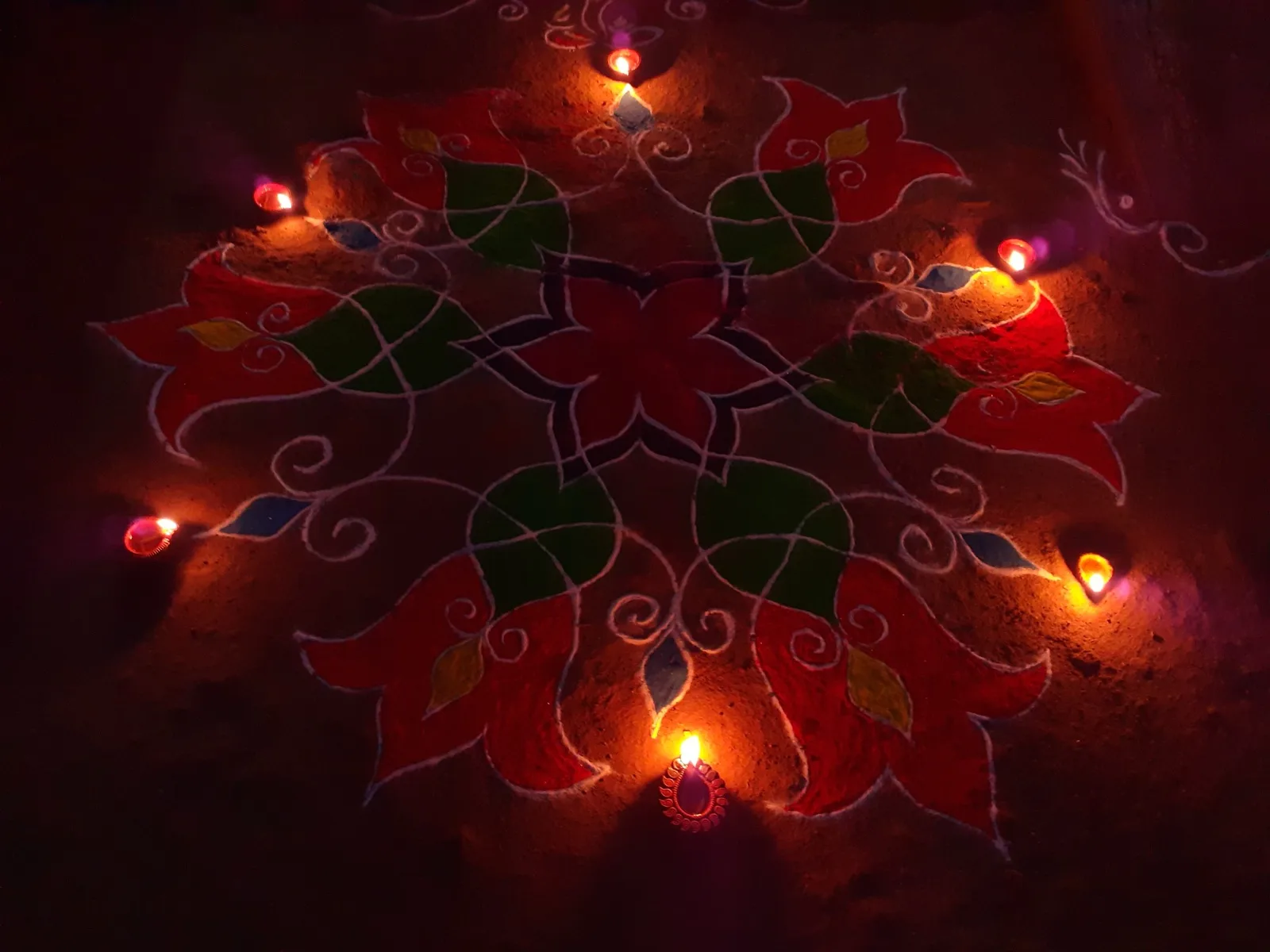
Rangoli is one of the best-known customs. A rangoli is a pattern made on the ground, usually at the entrance to a home, so it greets everyone who arrives. People make it from coloured powder, coloured rice, sand or flower petals. Many designs are symmetrical. One half mirrors the other, and some families place diyas around the edge.
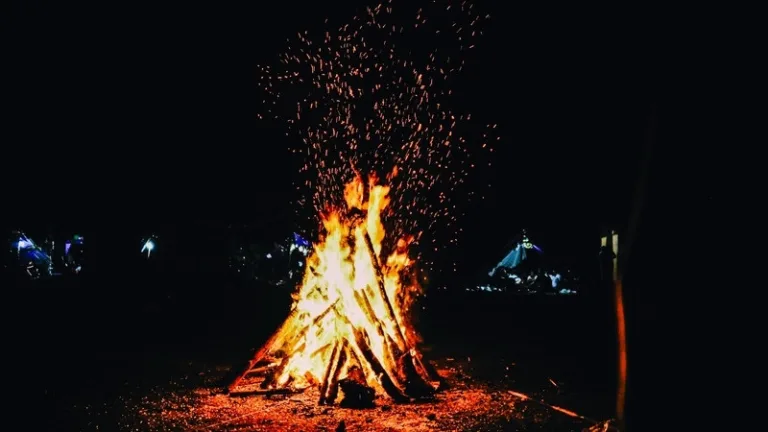
Fireworks are part of Diwali for many families too. In the UK the festival often falls close to Bonfire Night on 5 November. In 2026, Diwali begins the very next day.
Diwali Customs Match-Up
- Mithai — The Hindi word for sweets
- Ladoos — Round sweet balls
- Barfi — A soft sweet a bit like fudge
- Rangoli — A pattern made from coloured powder, rice, sand or petals
- Puja at home — Prayers, songs and an offering of lamps and flowers
- New clothes — Often worn for the first time on the main day
Fireworks and clean air
Fireworks make Diwali loud and bright, but they also fill the air with smoke. Delhi shows the problem most clearly. In India’s capital, the air is often badly polluted at that time of year, and fireworks add even more smoke.
To protect people’s health, Delhi has limited or banned firecrackers at Diwali in recent years. Sometimes only “green” crackers are allowed, which are made to give off less smoke. The rules change from year to year, so families there check them before the festival.
Diyas and sparklers are real flames. Always ask an adult before lighting one, and never leave a lit lamp on its own.
Diwali around the world
Diwali is a public holiday in India. It is also a public holiday in Singapore, where it is called Deepavali, and in several other countries with large Hindu communities.
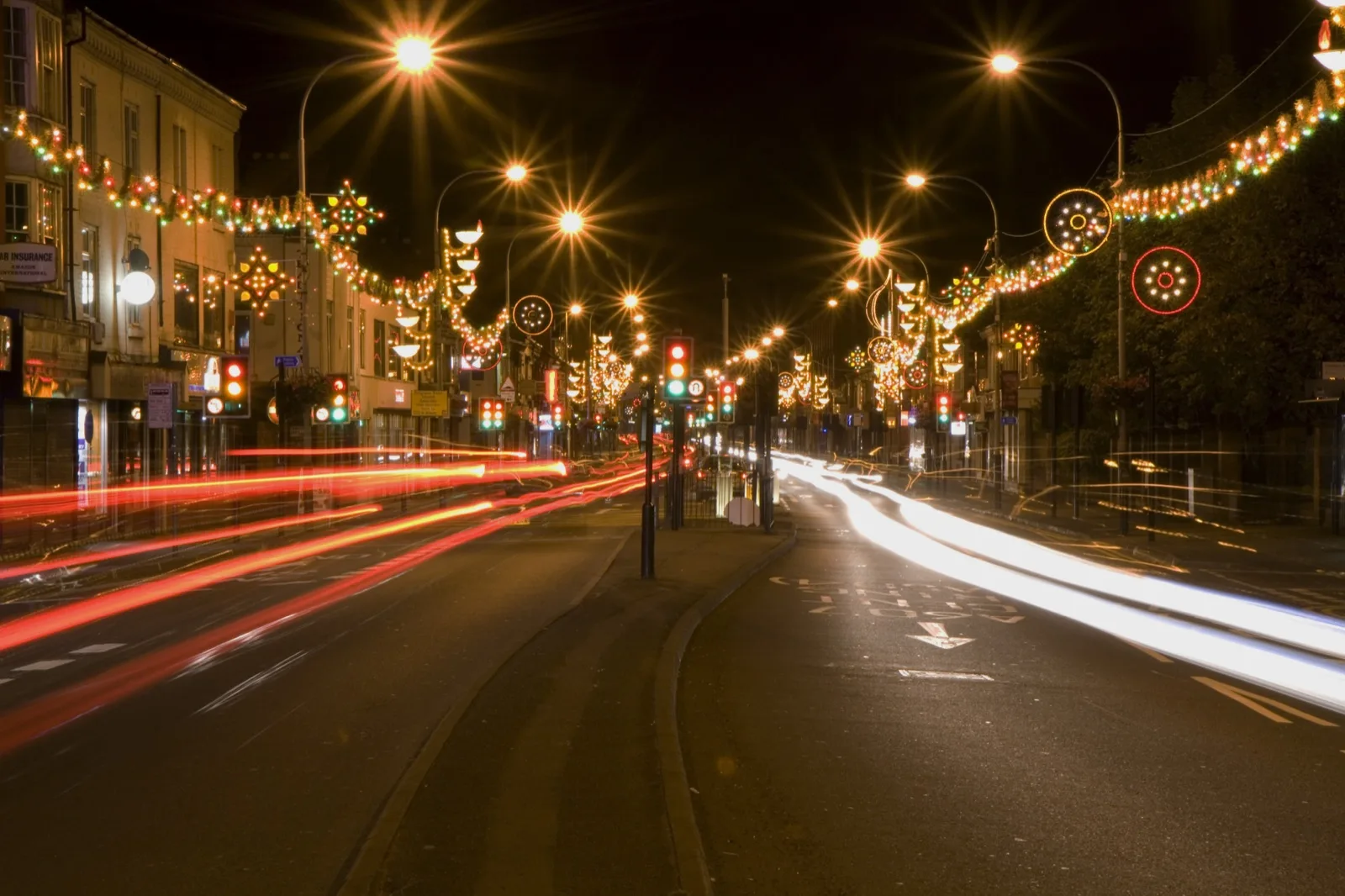
In the UK, the biggest celebration is in Leicester, a city in the East Midlands of England. The city’s first public Diwali lights went up in 1983. Today about 6,500 lights stretch along Belgrave Road and Melton Road, an area known as the Golden Mile.
Leicester City Council says the city’s Diwali is regarded as the largest celebration outside India. Families come from all over the country to see the lights.
In the United States, New York City’s public schools now close for Diwali. California went further. In October 2025 it added Diwali to its list of state holidays. Public schools and community colleges there can now close for the festival.
Diwali and the new year
For many Hindus, Diwali also starts a new year. It is a fresh start. Some count the new year from the main night. Jains and some Hindus count it from the day after.
In Nepal, the Newar people begin a new year of Nepal Sambat, their own calendar, on the fourth day of the festival. That day they perform Mha Puja, a ritual to celebrate and cleanse the self and to ask for a long, lucky life.
Cleaning the house, wearing new clothes and visiting family are all ways of starting fresh. You will find the same ideas in many other new year traditions around the world.
Diwali words for KS2 projects
- Deepavali: the longer name for Diwali, meaning “row of lights”.
- Diya: a small clay lamp filled with oil and lit with a cotton wick.
- Rangoli: a coloured pattern made on the ground near a doorway.
- Puja: worship or prayer, at home or in a mandir, which is a Hindu temple.
- Gurdwara: a Sikh place of worship, where lamps are lit for Bandi Chhor Divas.
- Moksha: in Jain and Hindu teaching, the soul’s final freedom from being born again.
- Mithai: Indian sweets, often given as gifts at Diwali.
- Lunar calendar: a calendar that counts its months by the Moon.
- Ramayana: the long Hindu poem that tells the story of Rama and Sita.
Three things people get wrong
1. Diwali is not “Indian Christmas”. Both festivals have lights, gifts and family meals, and both brighten the darker months of the year. The two are very different, though. Christmas is a Christian festival that remembers the birth of Jesus, on a fixed date. Diwali belongs to several faiths, remembers different events and moves with the Moon. Calling it “Indian Christmas” hides what makes it special to the people who celebrate it.
2. Diwali is not only a Hindu festival. Hindus are the largest group, but Sikhs celebrate Bandi Chhor Divas at the same time, and Jains remember Mahavira. In Nepal, Newar Buddhists take part too. Each group tells its own story.
3. Diwali is not always on the same date. It follows the Hindu lunar calendar, so it moves each year. The Moon decides, not the calendar on the wall. The main day was 20 October in 2025 and is 8 November in 2026. Even in the same year, some regions and families celebrate on a different day.
Did you know? In Bengal, in the east of India, many Hindus worship the goddess Kali at Diwali time, while families in most other parts of India worship Lakshmi.
Try it
Design your own rangoli on paper. Fold a square sheet in half, then in half again, and open it out so the creases cross in the middle. Draw a pattern in one quarter, then copy it into the other three so it matches across each fold. That is line symmetry. Colour it in with pencils or felt tips. If you want to make a paper diya too, give it a yellow paper flame, never a real one.
Knowledge check
Why do Hindus light diyas at Diwali?
Show answer
The story says the people of Ayodhya lit rows of lamps to welcome Rama and Sita home. Many Hindus also believe the light welcomes Lakshmi, the goddess of wealth and good fortune.
What does Bandi Chhor Divas mean, and who does it remember?
Show answer
It means ‘prisoner release day’. Sikhs remember Guru Hargobind, who was freed from Gwalior Fort in 1619 and made sure 52 princes were freed with him.
Frequently asked questions
What is Diwali?
Diwali, also called Deepavali, is a festival of lights celebrated by Hindus, Sikhs, Jains and some Buddhists. The name means ‘row of lights’, and people light clay lamps, make rangoli patterns, share sweets and pray.
When is Diwali 2026?
Diwali 2026 runs from 6 to 10 November, and the main day, Lakshmi Puja, is Sunday 8 November. Some calendars place the last day on 11 November, and some regions celebrate the main day a day earlier.
Why does the date of Diwali change every year?
Diwali follows the Hindu lunar calendar, which counts months by the Moon. The main day falls on the new moon of the month of Kartik, usually between mid-October and mid-November.
What do Sikhs celebrate at Diwali?
Sikhs celebrate Bandi Chhor Divas, meaning ‘prisoner release day’. The day remembers Guru Hargobind, who was freed from Gwalior Fort in 1619 and refused to leave until 52 imprisoned princes could go with him.
Why do Jains celebrate Diwali?
Jains celebrate Diwali as the night Mahavira, the 24th great Jain teacher, reached moksha, the final freedom of the soul. Many Jains fast, pray and light lamps, and the festival begins the Jain year.
Is Diwali a public holiday?
Diwali is a public holiday in India, Singapore and several other countries. The UK has no Diwali bank holiday, but New York City schools close for it, and California has made it a state holiday.
What is a diya?
A diya is a small clay lamp filled with oil and lit with a cotton wick. During Diwali, families place rows of diyas in windows, on steps and around rangoli patterns.
Sources
- Bhaktivedanta Manor: the five days of Diwali — the names and meanings of the five days, Rama’s return to Ayodhya, Krishna and Narakasura, Lakshmi Puja, Govardhan Puja and Bhai Dooj
- Ministry of Manpower, Singapore: public holidays — the date of Deepavali in 2025 (20 October) and 2026 (8 November) and its status as a public holiday
- California Legislature: AB 268, State holidays: Diwali — Diwali added to California’s state holidays, approved by the Governor on 6 October 2025, and what it allows state employees, public schools and community colleges to do
- Story of Leicester (Leicester City Council): Diwali in Leicester — the first public lights in 1983, the 6,500 lights on Belgrave and Melton Roads and the celebration’s standing outside India
- RE:ONLINE (Culham St Gabriel’s): Divali and Bandi Chhor Divas — Guru Hargobind’s release from Gwalior in 1619, the 52 princes and the cloak, and the lamps lit in Amritsar
- Jainpedia (Institute of Jainology): Divali — how Jains mark Diwali: Mahavira’s liberation, Gautama’s enlightenment, fasting, lamps and the new Jain year
Diwali Final Challenge
- Which story do Hindus in northern India especially remember at Diwali?
- In Bengal, which goddess do many Hindus worship at Diwali time?
- On the fifth day of Diwali, Hindus tell how Yama, the lord of death, visited whom?
- As Sikhs tell the story, how many panels were on each side of Guru Hargobind's cloak?
- What is a gurdwara?
- Many rangoli designs are symmetrical. What does that mean?
- Which UK celebration falls on 5 November, the day before Diwali begins in 2026?
- Why is it wrong to call Diwali 'Indian Christmas'?
- What is the festival called in Nepal?
- Besides a festival of lights, what else does Diwali mark for many Hindus?