Day of the Dead quick facts
- A traditional ofrenda holds the four elements: water, wind, earth and fire.
- Altars for children often have white flowers, toys and food cooked without chilli.
- Some altars hold a model xoloitzcuintle, a hairless dog said to help souls cross a river to the land of the dead.
- La Catrina was first drawn only as a head and shoulders. Diego Rivera gave her a full body and her name in 1947.
- In Mixquic, in Mexico City, thousands of candles light up the graves on the night of 2 November.
A gentle note: this guide is about how families remember people who have died. If it makes you think of someone you miss, that is normal. You can always talk about it with a grown-up you trust.
What is the Day of the Dead?
The Day of the Dead, or Día de los Muertos in Spanish, is a festival from Mexico. Families use it to remember relatives who have died. They do it with flowers, food, music and stories.
That might sound sad. For most families, though, it is a happy time. Many believe the spirits of their loved ones come home for a short visit each year. So the family gets ready, the way you might for a grandparent coming to stay.
They tidy the house and cook the food the person loved. They build a special table of gifts called an ofrenda, which means “offering”. Then they wait, and remember.
You will hear two Spanish names for the festival. Día de los Muertos means “Day of the Dead”. Many Mexicans simply say Día de Muertos. Both are correct.
UNESCO, the United Nations body that looks after world culture, first honoured the festival in 2003. In 2008 it added it to a list of the world’s intangible cultural heritage. Intangible means you cannot touch it. The festival is a living tradition made of customs and beliefs, not a building or an object. UNESCO calls it the Indigenous festivity dedicated to the dead.
When is Día de los Muertos?
The main days are 1 and 2 November. They come straight after Halloween on 31 October. That is one reason people mix the two up.
In many places, 1 November is for children who have died. Families call them the muertos chiquitos, the “little dead ones”. Then 2 November is for adults. Customs change from town to town, and some families welcome the children’s souls a day early, on 31 October.
| Date | Who is remembered | What often happens |
|---|---|---|
| 31 October | children, in some towns | a children’s altar is set out with white flowers and toys |
| 1 November | children who have died | families welcome the little dead ones; it is also the Catholic All Saints’ Day |
| 2 November | adults who have died | families visit graves with flowers and candles; it is also the Catholic All Souls’ Day |
The timing is not an accident. UNESCO points out that the festival falls when the maize harvest ends. Maize is the plant that sweetcorn comes from. Autumn is when farmers gather it in.
Where the Day of the Dead came from
The festival is older than Mexico itself. Long before Europeans arrived, Indigenous peoples in Mesoamerica set aside times to remember the dead. Mesoamerica is the name for the region that covers Mexico and the north of Central America.
The Aztec, Maya and Toltec peoples all did this. Some months were for people who had died as adults. Others were for those who had died as children.
Many believed the dead made a long journey to Mictlán, the land of the dead. Their families held a feast to help guide them on the way.
Then, in the 1500s, Spanish soldiers and priests arrived. They brought Christianity, and with it two Catholic holy days. All Saints’ Day falls on 1 November, and All Souls’ Day on 2 November.
Over time, the old customs and the new holy days blended into one festival. UNESCO calls it a fusion of Indigenous rites and Catholic feasts. You can see both sides on a single altar. A picture of a saint may stand beside copal, a tree resin that Indigenous people burned for their gods long before the Spanish came.
Nobody can say exactly which custom came from which side. The two have been mixed for about 500 years, and every region mixed them in its own way.
Where the Festival Came From
- What is Mesoamerica?
- Which peoples set aside times to remember the dead before Europeans arrived?
- Many Indigenous people believed the dead made a long journey. Where were they believed to be going?
- How does UNESCO describe the festival we know today?
- What is copal?
What goes on an ofrenda
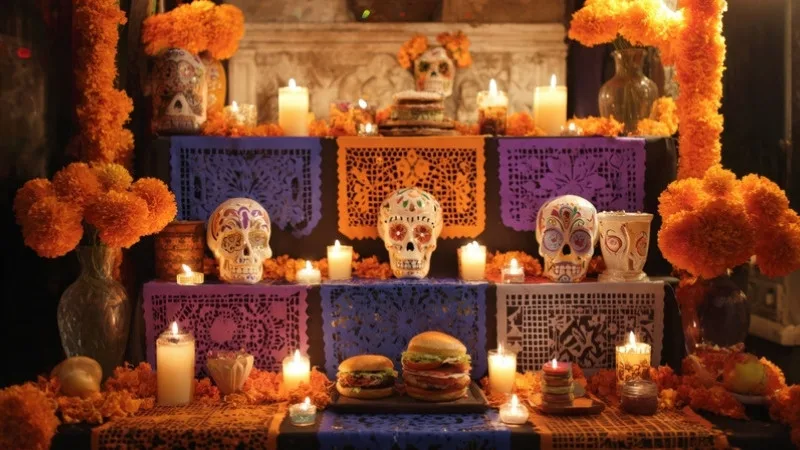
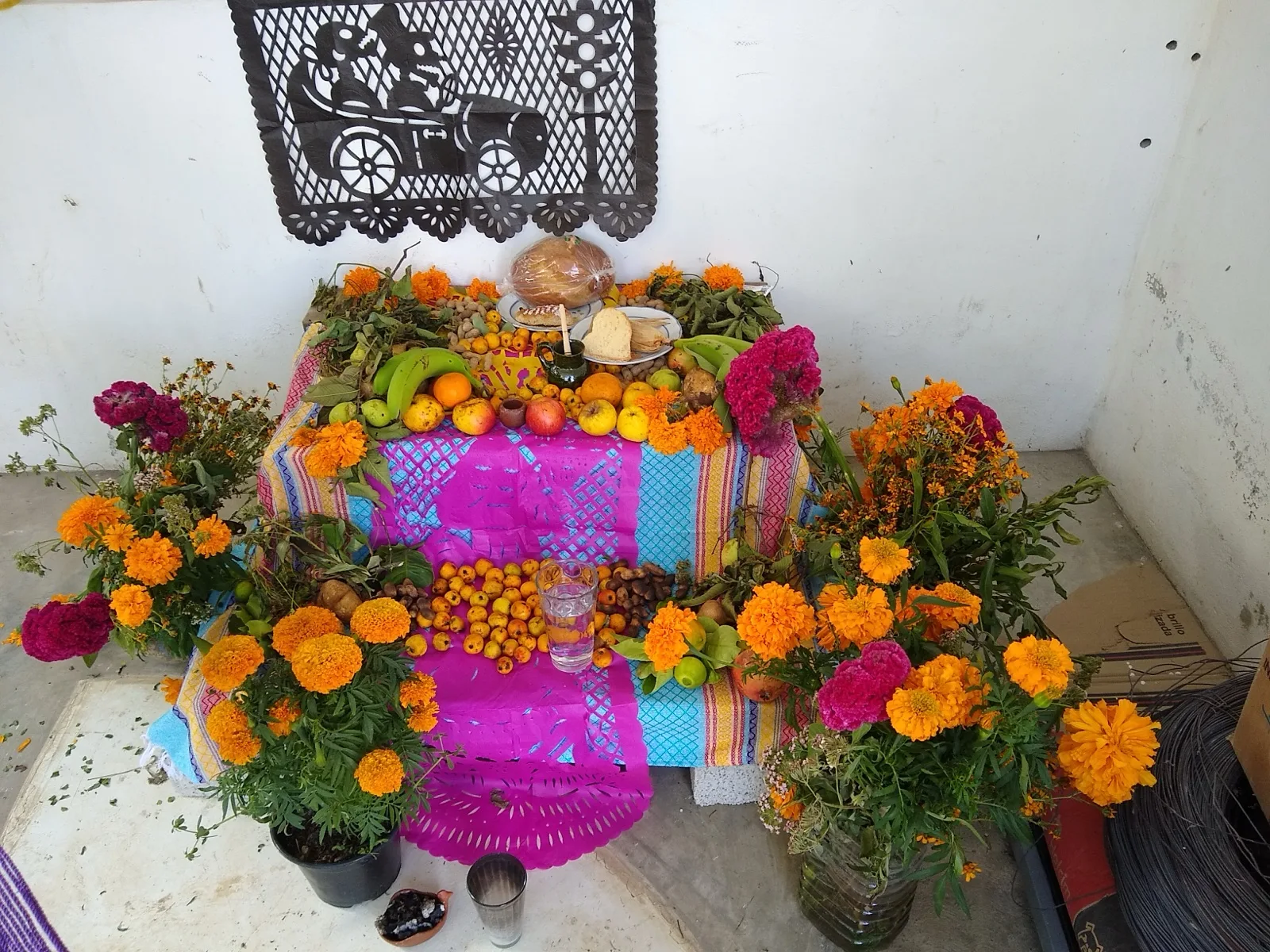
The ofrenda (oh-FREN-dah) is the heart of the festival. It is a home altar, often a table covered with a cloth. Families build it for one visit a year and take it down again afterwards.
The most important thing on it is a photo of the person being remembered. Around it go things that belonged to them, or that they loved. That might be a favourite food, a drink, sweets, a toy or a hat. The idea is to welcome them home with everything they enjoyed.
According to the Smithsonian, a traditional ofrenda also holds the four elements: water, wind, earth and fire. Each item has a job to do.
| On the ofrenda | What many families believe it does |
|---|---|
| Photo of the person | shows who is being welcomed home |
| Water | quenches the spirit’s thirst after a long journey |
| Papel picado | stands for the wind |
| Bread and food | stands for the earth, and feeds the visitor |
| Candles | stand for fire and light the way; four in a cross point to the four directions |
| Salt | keeps the spirit pure for the journey there and back |
| Copal smoke | cleans the space so the spirit can enter safely |
| Cempasúchil marigolds | guide the spirit with their colour and scent |
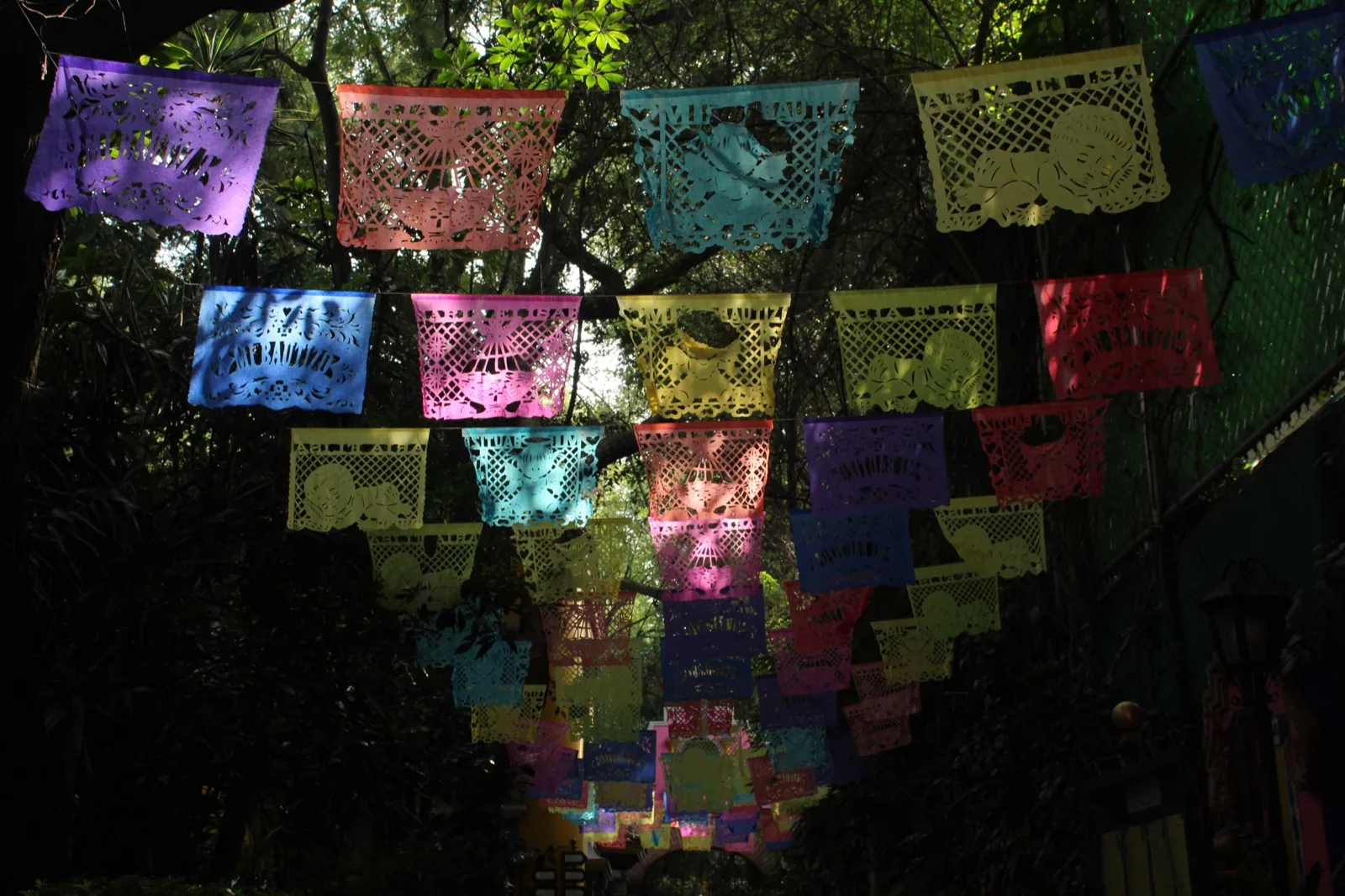
Papel picado (pah-PEL pee-KAH-doh) means “punched paper”. It is tissue paper cut into lacy patterns of skulls, flowers and birds, then strung up in bright rows. Because it flutters in the slightest breeze, it stands for the wind.
An altar for a child looks different. It often has white flowers, which stand for purity and tenderness, and small toys. Even the food is different. Families may cook it without chilli, so it is not too spicy for a young visitor.
Some altars hold a little model of a xoloitzcuintle (show-loh-eets-KWEENT-leh). This is a hairless dog from Mexico. An old belief says the dog helps souls cross a river on the way to Mictlán.
In Oaxaca, in southern Mexico, altars are often built in steps. The first step is for grandparents and older adults. The steps above it are for everyone else in the family.
What Families Believe Each Ofrenda Item Does
- Photo of the person — Shows who is being welcomed home
- Water — Quenches the spirit's thirst after a long journey
- Papel picado — Stands for the wind
- Bread and food — Stands for the earth and feeds the visitor
- Candles — Stand for fire and light the way
- Salt — Keeps the spirit pure for the journey there and back
Cempasúchil, the flower of the dead
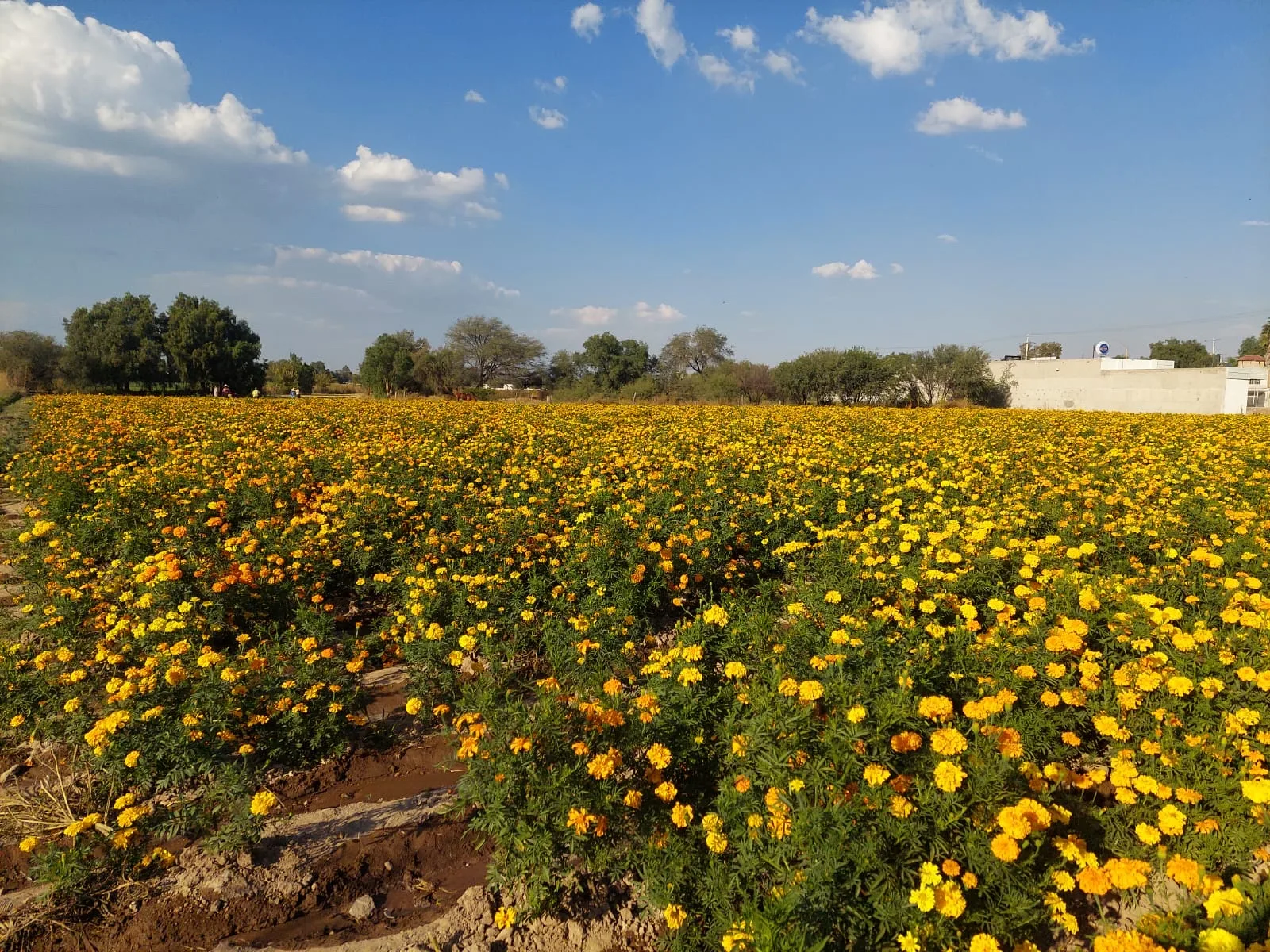
The orange flower you see everywhere at this time of year is the cempasúchil (sem-pah-SOO-cheel). It is a kind of marigold, and it is native to Mexico.
Families pull off its petals and scatter them to make paths. UNESCO describes petals, candles and offerings laid along the way from the cemetery to the family’s home.
Why marigolds? Many families believe the flower’s strong scent and bright colour help the spirits find their way. It works a little like the lights on a runway, showing a plane where to land.
The flowers are grown in huge numbers for the festival. In the days before it, markets fill with armfuls of them, and some fields turn completely orange.
Some families also link the festival with monarch butterflies. The first monarchs arrive in Mexico for the winter around 1 November. Many people believe the butterflies carry the spirits of the dead.
Pan de muerto and sugar skulls
Pan de muerto (pan deh MWEHR-toh) means “bread of the dead”. It is a soft, sweet, round loaf. On top, strips of dough are shaped like bones, and a small ball in the middle stands for a skull.
Bakers often flavour it with orange and anise, a spice that tastes a little like liquorice. Then they dust it with sugar or sesame seeds. Families put it on the ofrenda for the visiting spirits, and eat it themselves too.
Sugar skulls are called calaveras de azúcar (kah-lah-VEH-rahs deh ah-SOO-kar). They are made of sugar and decorated with icing in bright colours. Families leave them on altars for children who have died, along with toys.
A skull may look spooky to you. Here it is meant to be cheerful. The Smithsonian describes the skull as a playful reminder that life goes round in a cycle. That is why sugar skulls are so brightly decorated.
Spanish Words of the Festival
- Día de los Muertos — Day of the Dead
- Ofrenda — Offering
- Cempasúchil — An orange marigold
- Pan de muerto — Bread of the dead
- Calaveras de azúcar — Sugar skulls
- Xoloitzcuintle — A hairless dog from Mexico
La Catrina, the elegant skeleton
You have probably seen La Catrina. She is a grand lady skeleton in a long dress and a wide, fancy hat.
She began as a joke. The Mexican printmaker José Guadalupe Posada (1852–1913) drew her in the early 1900s. He called the picture La Calavera Garbancera.
Garbancera was a nickname for someone with Indigenous roots who pretended to be rich and European. Posada’s picture poked fun at people like that. Many people read its message this way: however grand you dress, everyone ends up as a skeleton. Rich or poor, we are alike.
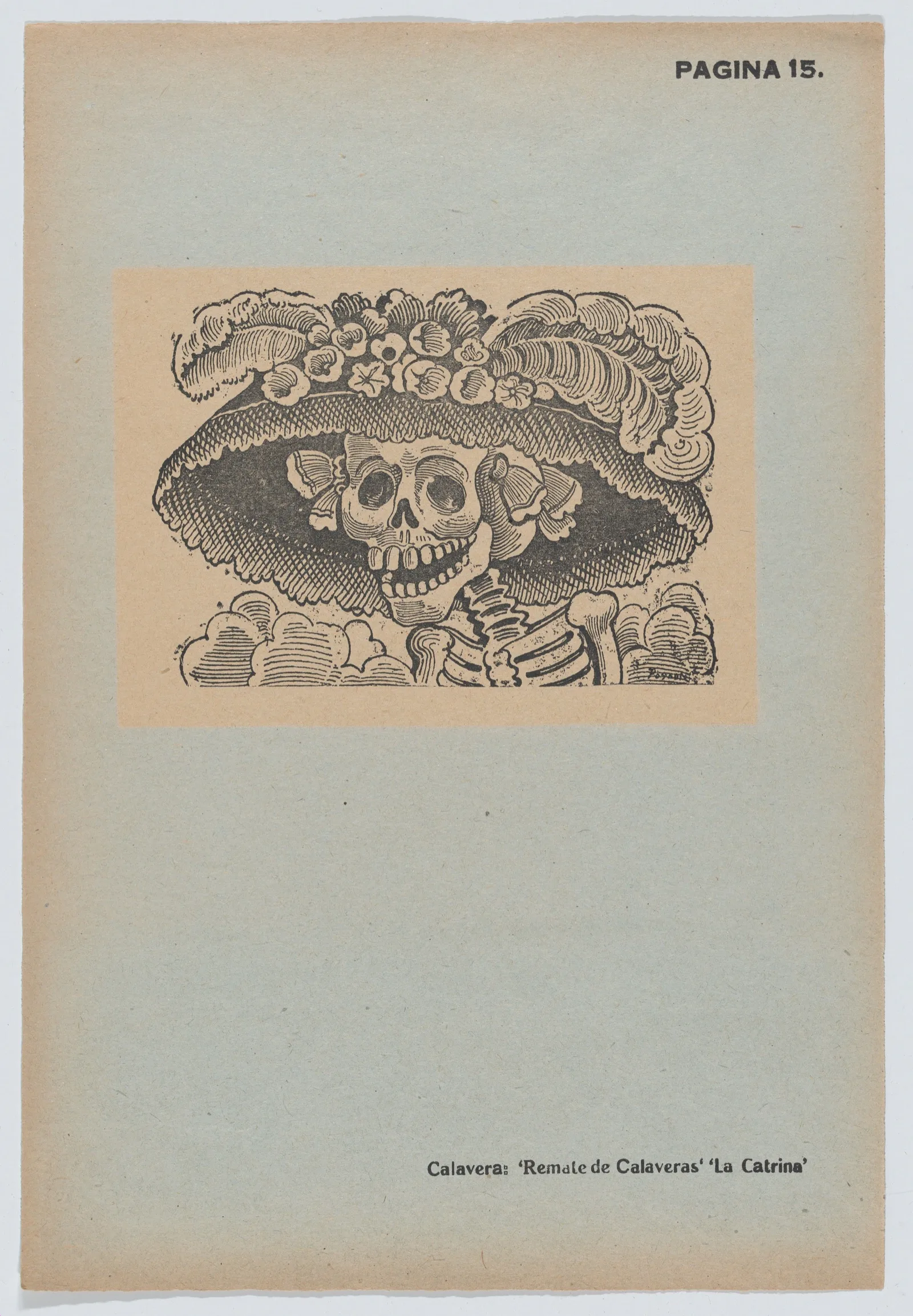
Posada only drew her head and shoulders. In 1947 the painter Diego Rivera gave her a full body and the name La Catrina. He did it in a huge mural called Dream of a Sunday Afternoon in the Alameda Central. Rivera painted himself as a boy holding her hand, with Posada standing on her other side.
The mural is in Mexico City. La Catrina is now one of the best-known faces of the festival. People dress as her, paint their faces like her and make clay figures of her.
How the Day of the Dead Grew
- Ancient peoples The Aztec, Maya and Toltec set aside months to remember the dead.
- Spanish arrival Spanish soldiers and priests bring All Saints' Day and All Souls' Day.
- Posada's print José Guadalupe Posada draws a skull in a fancy hat and calls it La Calavera Garbancera.
- Rivera's mural Diego Rivera paints her with a full body and names her La Catrina.
- UNESCO's first honour UNESCO first honours the festival.
- UNESCO's list The festival joins UNESCO's list of intangible cultural heritage.
Night vigils in the cemetery
For many families, the festival goes on at the graveside. A vigil is a time of staying awake to keep watch. Families clean the graves of their relatives, then decorate them with flowers, candles and food.
Some stay all night. They share food, pray, tell stories about the person and sometimes play music. It can feel more like a family picnic than a sad occasion.
In Mixquic, a town in the south of Mexico City, the night of 2 November is called La Alumbrada, “the lighting”. Thousands of candles glow on graves covered in flowers.
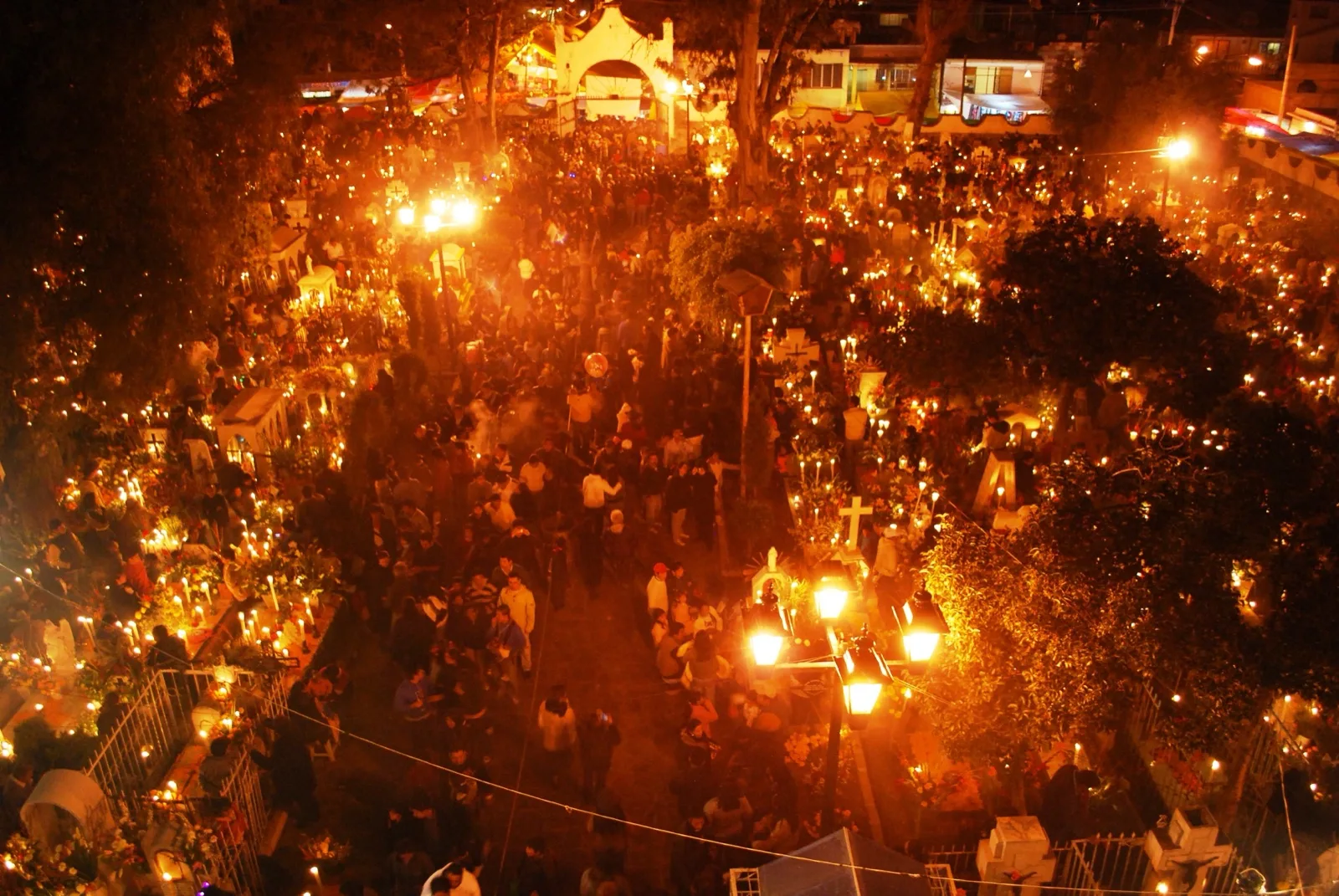
On the island of Janitzio, in Lake Pátzcuaro in the state of Michoacán, families keep watch in the cemetery through the night. Candles light the tombs until morning. It is one of the most famous places in Mexico to see the festival.
There is dancing as well. In La Danza de los Viejitos, the dance of the little old men, boys and young men dress as old men. They shuffle along bent over, then suddenly leap into a lively dance.
Customs at the Cemetery
- What is a vigil?
- What do many families do first when they reach their relatives' graves?
- In Mixquic, what does the name La Alumbrada mean?
- In La Danza de los Viejitos, who do the dancers pretend to be?
The Day of the Dead around the world
Today the festival is kept mostly in Mexico and in parts of Central and South America. It has also become popular with Latino communities in other countries, especially the United States.
In US cities, museums, schools and neighbourhoods hold their own events, with altars, music and face painting. The Smithsonian’s National Museum of the American Indian, in Washington, D.C., has hosted festivals with traditional dances. Many schools learn about Latino traditions like this one during Hispanic Heritage Month.
Many families who keep the Day of the Dead also enjoy Halloween. They simply celebrate one after the other.
Day of the Dead and Halloween compared
The two festivals sit side by side on the calendar, and both use skeletons. That is where most of the likeness ends.
| Day of the Dead | Halloween | |
|---|---|---|
| Where it began | Mexico and Central America, from Indigenous customs blended with Catholic holy days | Europe, from old autumn festivals |
| Dates | 1 and 2 November, sometimes from 31 October | 31 October |
| Mood | loving, joyful remembrance | spooky fun and scares |
| Who it is about | the family’s own relatives who have died | no one in particular |
| Symbols | ofrendas, marigolds, sugar skulls, papel picado, La Catrina | pumpkins, witches, black cats |
| Food | pan de muerto and the favourite dishes of the dead | sweets from trick-or-treating |
| Where it happens | the home altar and the cemetery | streets and doorsteps |
Halloween’s best-known symbols are pumpkins, witches and black cats. Its roots are in Europe, and you can follow its long story in our Halloween history for kids. For costumes and trick-or-treating, read our Halloween facts for kids.
Day of the Dead or Halloween?
- Halloween falls on 31 October, just before the main days of the Day of the Dead.
- Pumpkins, witches and black cats are the best-known symbols of the Day of the Dead.
- Families who keep the Day of the Dead cannot also celebrate Halloween.
- The Day of the Dead is about a family's own relatives.
- Sweets from trick-or-treating are the main food of the Day of the Dead.
- Day of the Dead customs happen mainly at the home altar and the cemetery.
Remembering someone you miss
If someone you love has died, it is fine to feel sad, even on a festival day. Families who keep the Day of the Dead feel sad too. That is part of remembering. They also laugh, cook and tell stories, because remembering is a way of keeping someone close.
You can remember someone in small ways. Look at photos with your family, share a story, or help cook a food the person enjoyed. If you feel upset, talk to a grown-up you trust.
If you visit a Day of the Dead event, remember that each altar is personal. Look closely, but do not touch anything. Ask before you take a photo.
Three things people get wrong
1. It is not “Mexican Halloween”. The two fall next to each other, but they have different roots. Halloween grew up in Europe. The Day of the Dead grew from Indigenous customs in Mexico, blended with Catholic holy days. Its purpose is different too: it is about remembering particular people.
2. It is not meant to be scary or gloomy. Nobody is trying to frighten you. The skulls are painted in bright colours and often smile. The Smithsonian calls it a celebration of life, not death. Families welcome their dead as honoured guests.
3. The giant Mexico City parade is not ancient. The first one was held in 2016. The year before, a James Bond film called Spectre opened with a huge Day of the Dead parade through the city. In real life, no such parade existed. After the film, the city decided to hold one. Over 250,000 people watched the first, and more than a million came to the second in 2017.
Did you know? Mexico City’s giant Day of the Dead parade is very new. The first, in 2016, drew over 250,000 people, and more than a million came to the second in 2017.
Try it
Make a memory card for someone you miss, or for a grandparent or great-grandparent you never met. Fold a sheet of paper in half. On the front, draw something they loved, such as a flower, a food or a pet. Inside, write three things about them. If you do not know any, ask a grown-up to tell you a story. With an adult’s help, you can also fold tissue paper and snip small shapes into it to make your own papel picado.
Knowledge check
Why do families scatter cempasúchil petals on paths?
Show answer
Many families believe the flower’s bright colour and strong scent guide the spirits from the cemetery to their home.
Which two Catholic holy days blended with the Day of the Dead?
Show answer
All Saints’ Day on 1 November and All Souls’ Day on 2 November.
Frequently asked questions
What is the Day of the Dead?
The Day of the Dead, or Día de los Muertos, is a festival from Mexico when families remember relatives who have died. Families build home altars called ofrendas, share food and visit graves, and most treat it as a joyful time.
When is the Day of the Dead celebrated?
The Day of the Dead is celebrated on 1 and 2 November. In many places 1 November is for children who have died and 2 November is for adults, and some towns begin on 31 October.
Is the Day of the Dead the same as Halloween?
No. Halloween began in Europe and is about spooky fun, while the Day of the Dead grew from Indigenous Mexican customs blended with Catholic holy days, and is about remembering loved ones.
What is an ofrenda?
An ofrenda is a home altar built for the Day of the Dead. Families put a photo of the person being remembered on it, with their favourite food and drink, candles, water, bread, papel picado and orange marigolds.
Why are marigolds used on the Day of the Dead?
Orange cempasúchil marigolds are native to Mexico. Many families believe their strong scent and bright colour guide the spirits of the dead from the cemetery to the family’s home and altar.
Who is La Catrina?
La Catrina is an elegant skeleton lady in a fancy hat. The printmaker José Guadalupe Posada drew her in the early 1900s to mock people who pretended to be rich, and Diego Rivera named her in a 1947 mural.
Why do people make sugar skulls for the Day of the Dead?
Sugar skulls, or calaveras de azúcar, are placed on altars, especially for children who have died. Their bright decorations show that the skull is a cheerful reminder of the cycle of life, not a scary symbol.
Sources
- UNESCO: Indigenous festivity dedicated to the dead — the timing at the end of the maize harvest, altars and tombs, petal paths from cemetery to home, the blend of Indigenous and Catholic rites, and the 2003 proclamation and 2008 inscription
- Smithsonian Institution: five facts about Día de los Muertos — Mesoamerican origins, All Saints’ and All Souls’ Days, the days for children and adults, the four elements, marigolds, monarch butterflies, sugar skulls, dances and celebration in the United States
- National Institute of Indigenous Peoples (INPI), Mexico: the elements of an ofrenda (in Spanish) — the meaning of water, salt, candles, copal, flowers and the xoloitzcuintle, and how children’s altars differ
- INAFED, Government of Mexico: Día de Muertos, a Mexican tradition (in Spanish) — the days for children and adults, Mictlán, Oaxaca’s stepped altars, Mixquic’s Alumbrada and Janitzio
- Ministry of Culture, Mexico: the mural that immortalised La Catrina (in Spanish) — Posada’s Calavera Garbancera, and Diego Rivera naming La Catrina and painting her full body in 1947
- Ministry of Tourism, Mexico: the 2017 Day of the Dead parade (in Spanish) — the 2017 parade as the second ever, with more than a million spectators after over 250,000 at the first
Day of the Dead Final Challenge
- What do many families believe happens during the Day of the Dead?
- According to UNESCO, what is happening on farms when the festival falls?
- UNESCO lists the festival as intangible cultural heritage. What does intangible mean?
- For about how long have Indigenous customs and Catholic holy days been mixed in this festival?
- On an altar for a child, what do white flowers stand for?
- In Oaxaca, altars are often built in steps. Who is the first step for?
- Why do some families link the festival with monarch butterflies?
- What did the old nickname garbancera mean?
- Where is Diego Rivera's mural with La Catrina?
- Outside Mexico, where is the Day of the Dead kept today?
- You visit a Day of the Dead event. Which of these should you NOT do?