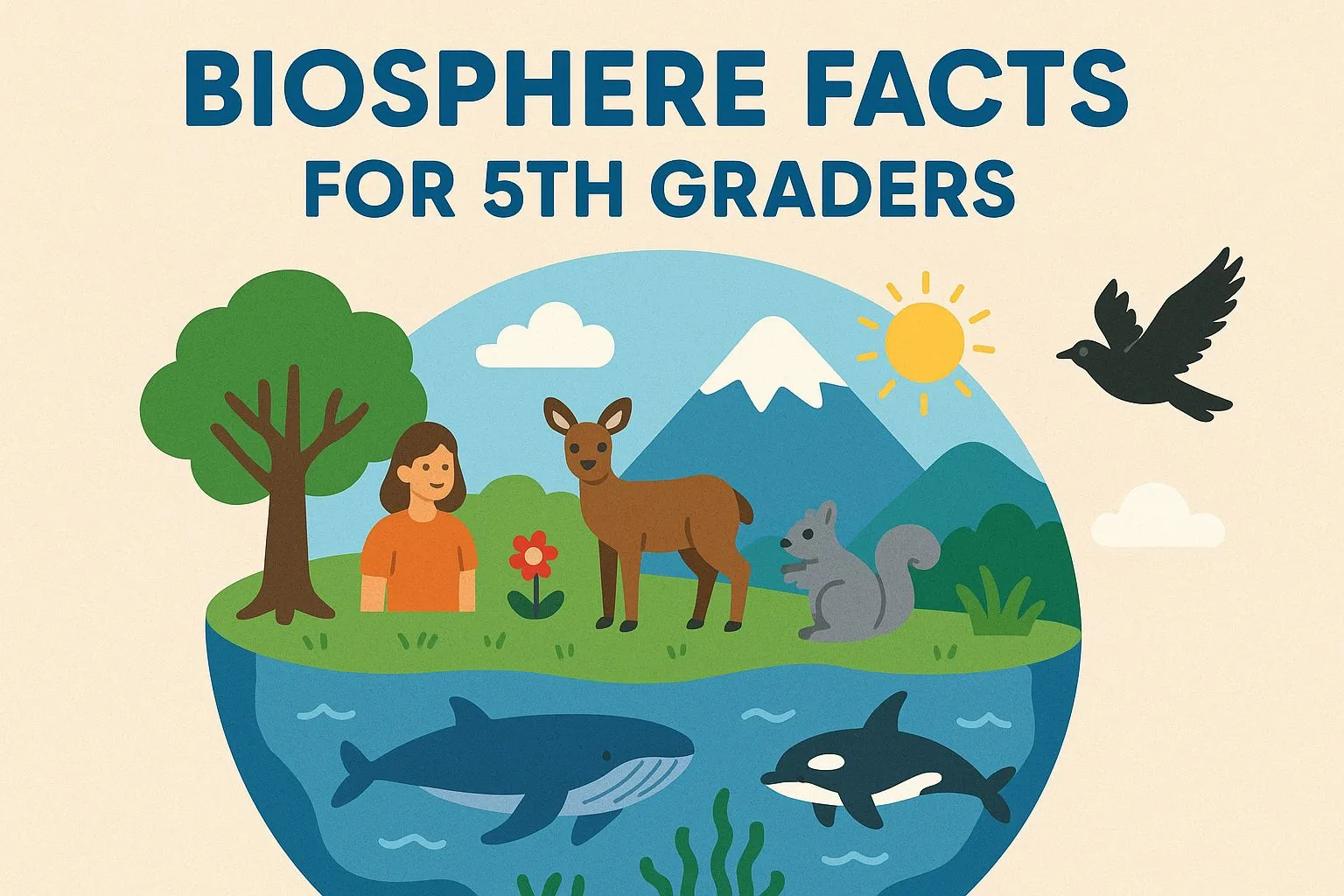
The biosphere is the part of Earth where life exists, a thin layer from the deep-sea vents to a few kilometres up into the air. It includes every living thing and the air, water and soil they use. It began about 3.5 billion years ago and supports an estimated 3 million to 30 million species.
the biosphere quick facts
- The biosphere is all the places on Earth where life exists.
- It has existed for about 3.5 billion years.
- It supports an estimated 3 million to 30 million species.
- It overlaps with the lithosphere, hydrosphere and atmosphere.
- Biosphere 2 in Arizona copies five of Earth’s biomes under glass.
What is the biosphere?
The biosphere is the part of Earth where life exists. National Geographic describes it simply as the parts of Earth where life is found.
Britannica calls it a thin, life-supporting layer of Earth’s surface, reaching from a few kilometres up into the air down to the deep-sea vents on the ocean floor.
The biosphere includes every living thing on the planet, from the tallest trees to the tiniest bacteria, together with the air, water and soil they depend on.
| The biosphere at a glance | |
|---|---|
| What it is | all the places on Earth where life exists |
| How old | about 3.5 billion years |
| Species | an estimated 3 million to 30 million |
| Main parts | living things plus the air, water and rocks they use |
| Key cycles | carbon, nitrogen, sulfur, phosphorus and water |
| Model version | Biosphere 2, in Arizona, USA |
What makes up the biosphere?

Britannica says the biosphere supports an estimated 3 million to 30 million species of plants, animals, fungi and tiny single-celled living things, such as bacteria.
Britannica explains that the biosphere has two main parts. The living part includes producers, consumers and decomposers. The non-living part includes energy, nutrients, water and gases.
Producers: plants and algae, which make food from sunlight.
Consumers: animals, which eat plants or other animals.
Decomposers: fungi and bacteria, which break down dead things and recycle nutrients.
Where is the biosphere found?
Life is found almost everywhere on Earth: on land, in water and in the air. National Geographic says most life exists between about 500 m below the ocean’s surface and about 6 km above sea level.
But living things have been found even further away. National Geographic says that if you measure it from top to bottom, the biosphere is about 20 km deep in total.
Life survives in amazing places. Britannica says the biosphere reaches down to deep-sea vents, cracks in the ocean floor where hot water pours out and strange creatures live in total darkness.
Examples: rainforests, coral reefs, deserts, grasslands, frozen tundra, rivers, lakes, the deep ocean and even the air, where birds, insects and tiny spores float.
The biosphere and Earth’s other spheres

Scientists divide Earth into layers, or spheres. National Geographic says the biosphere overlaps with all three of the others.
The lithosphere: the solid, rocky outer layer of Earth, including the soil.
The hydrosphere: all of Earth’s water, in oceans, rivers, lakes, ice and clouds.
The atmosphere: the layer of air that surrounds Earth.
Life links them together. Plant roots break up rocks and help make soil. Animals and plants take in and give out gases. Trees pull water up from the ground and release it into the air, where it forms clouds and falls as rain.
How the biosphere began
Britannica says that before life began, Earth was a bleak, rocky place with shallow seas and a thin layer of gases, mostly carbon dioxide, nitrogen and water vapour, with no oxygen to breathe.
National Geographic says the biosphere has existed for about 3.5 billion years. The first living things were tiny, simple cells that could survive without oxygen.
Over time, some of these early living things began to use sunlight, water and carbon dioxide to make sugar and oxygen. This process is called photosynthesis.
National Geographic says photosynthesis slowly changed the air, adding oxygen. That made it possible for new kinds of life to appear, including, much later, animals and people.
Oxygen and carbon dioxide

Britannica says that all life on Earth depends in the end on green plants and water. Plants use sunlight to make the food that animals eat, and they give off oxygen, which most animals need to breathe.
Animals breathe in oxygen and breathe out carbon dioxide. Plants take in carbon dioxide to make their food, and they release oxygen again.
This swap goes on all the time, all around the world. It is one of the most important partnerships in the biosphere.
The great cycles of the biosphere
Materials in the biosphere are used again and again. Britannica says the main cycles are the carbon cycle, the nitrogen cycle, the sulfur cycle, the phosphorus cycle and the water cycle.
In the carbon cycle, for example, carbon moves from the air into plants, from plants into the animals that eat them, and back into the air when living things breathe or decay.
In the water cycle, water evaporates from seas and lakes, forms clouds, falls as rain or snow, and flows back to the sea, giving every living thing the water it needs along the way.
Ecosystems and biomes
The biosphere is too big to study all at once, so scientists split it into smaller parts. Britannica says any piece of the landscape with its living and non-living parts can be called an ecosystem. A lake, for example, is an ecosystem.
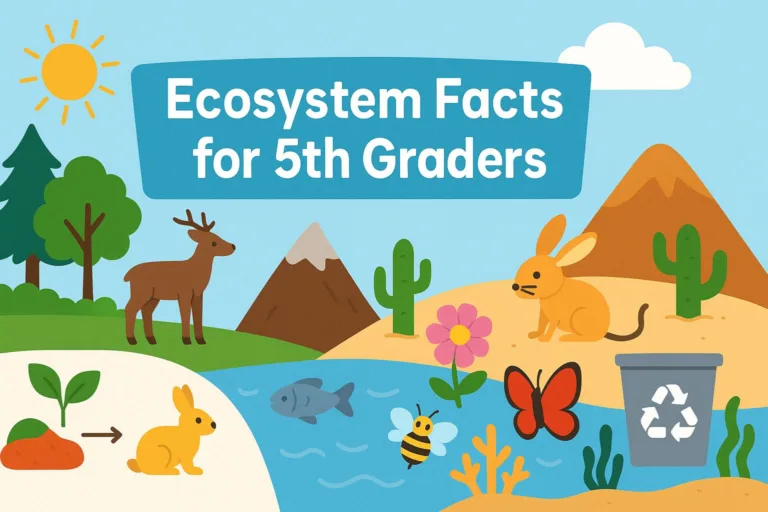
Large areas with a similar climate and similar plants and animals are called biomes. Rainforests, deserts, grasslands and tundra are all biomes. Find out how ecosystems work in our ecosystem facts for 5th graders.
The Amazon is one of the richest parts of the biosphere, home to an enormous variety of plants and animals. Explore it in our Amazon rainforest facts.
Biosphere 2: a biosphere in a box
In the desert of Arizona, in the USA, there is a giant glass building called Biosphere 2. It was built to copy parts of Earth’s biosphere, which scientists call Biosphere 1.
Biosphere 2 says building began in 1986. The research centre covers about 1.3 hectares (3.14 acres) under sealed glass, with 6,500 windows.
Inside are five different living areas: an ocean, a mangrove wetland, a tropical rainforest, a grassy savanna and a fog desert.
Between 1991 and 1994, two teams of people were sealed inside to see whether they could survive in a closed world. Since 2011, the University of Arizona has run Biosphere 2, and scientists use it to study things such as how extra carbon dioxide affects plants.
People and the biosphere
People are part of the biosphere too, and we affect it more than any other living thing. National Geographic says clearing forests and burning fossil fuels upset the natural flow of energy and materials.
Burning fuels such as coal, oil and gas adds extra carbon dioxide to the air, which is warming the planet. Learn more in our global warming and fossil fuels guides.
National Geographic also says people play an important part in keeping the biosphere healthy, for example by protecting forests and wild places.
Life in extreme places
Some living things survive in places that seem impossible. Deep-sea vents on the ocean floor pour out hot, mineral-rich water, far from any sunlight.
Instead of using sunlight, some bacteria there get their energy from chemicals in the water. Other animals, such as giant tube worms, live alongside them.
Tiny living things have also been found in freezing polar ice, in boiling hot springs and deep underground in rocks. These discoveries show just how far the biosphere reaches, and how tough living things can be.
A delicate balance
Every part of the biosphere is linked. If one part changes, other parts can change too.
For example, if a forest is cut down, the animals that lived there lose their homes, less carbon dioxide is taken out of the air, and soil can wash away into rivers.
Protecting one part of the biosphere helps protect the rest of it, including the people who depend on it.
How you can help the biosphere
Plant something: trees and plants take in carbon dioxide and give out oxygen.
Waste less: reusing and recycling means fewer resources are taken from the Earth.
Save energy: switching off lights and devices you are not using cuts pollution.
Protect wildlife: leave wild places as you found them, and learn about the plants and animals near you.
Three things people get wrong
The biosphere is not only forests and jungles. It includes oceans, deserts, the air and even deep-sea vents.
The biosphere is not very thick. Compared with the size of Earth, it is a thin layer, like the skin on an apple.
People are not separate from the biosphere. We are part of it, and we depend on it for food, water and air.
Did you know? Between 1991 and 1994, teams of people lived sealed inside Biosphere 2 to see if they could survive in a closed world.
Try it
Make a mini biosphere: put soil, small plants and a little water in a clear jar with a lid. Watch water collect and fall inside, like a tiny water cycle.
Knowledge check
What is the biosphere?
Show answer
All the parts of Earth where life exists.
Which three spheres does the biosphere overlap with?
Show answer
The lithosphere, hydrosphere and atmosphere.
Frequently asked questions
What is the biosphere?
The biosphere is the part of Earth where life exists. It includes every living thing and the air, water and soil that they depend on.
How big is the biosphere?
Most life lives between about 500 m below the ocean’s surface and 6 km above sea level, but the whole biosphere is about 20 km deep.
How old is the biosphere?
National Geographic says the biosphere has existed for about 3.5 billion years, beginning with tiny, simple cells that lived without oxygen.
What are the parts of the biosphere?
The biosphere has living parts, such as producers, consumers and decomposers, and non-living parts, such as energy, nutrients, water and gases.
How does the biosphere connect to Earth’s other spheres?
The biosphere overlaps with the lithosphere (rock and soil), the hydrosphere (water) and the atmosphere (air), and living things link them together.
What is Biosphere 2?
Biosphere 2 is a giant glass research centre in Arizona with five mini biomes. People lived sealed inside it between 1991 and 1994.
Sources
- National Geographic Education: biosphere — definition, how far it extends, links with the other spheres, the first life, photosynthesis and people
- Encyclopaedia Britannica: biosphere — definition, species, living and non-living parts, cycles, early Earth, plants and oxygen, and ecosystems
- Biosphere 2, University of Arizona: about Biosphere 2 — location, construction, size, biomes, the 1991 to 1994 missions and research