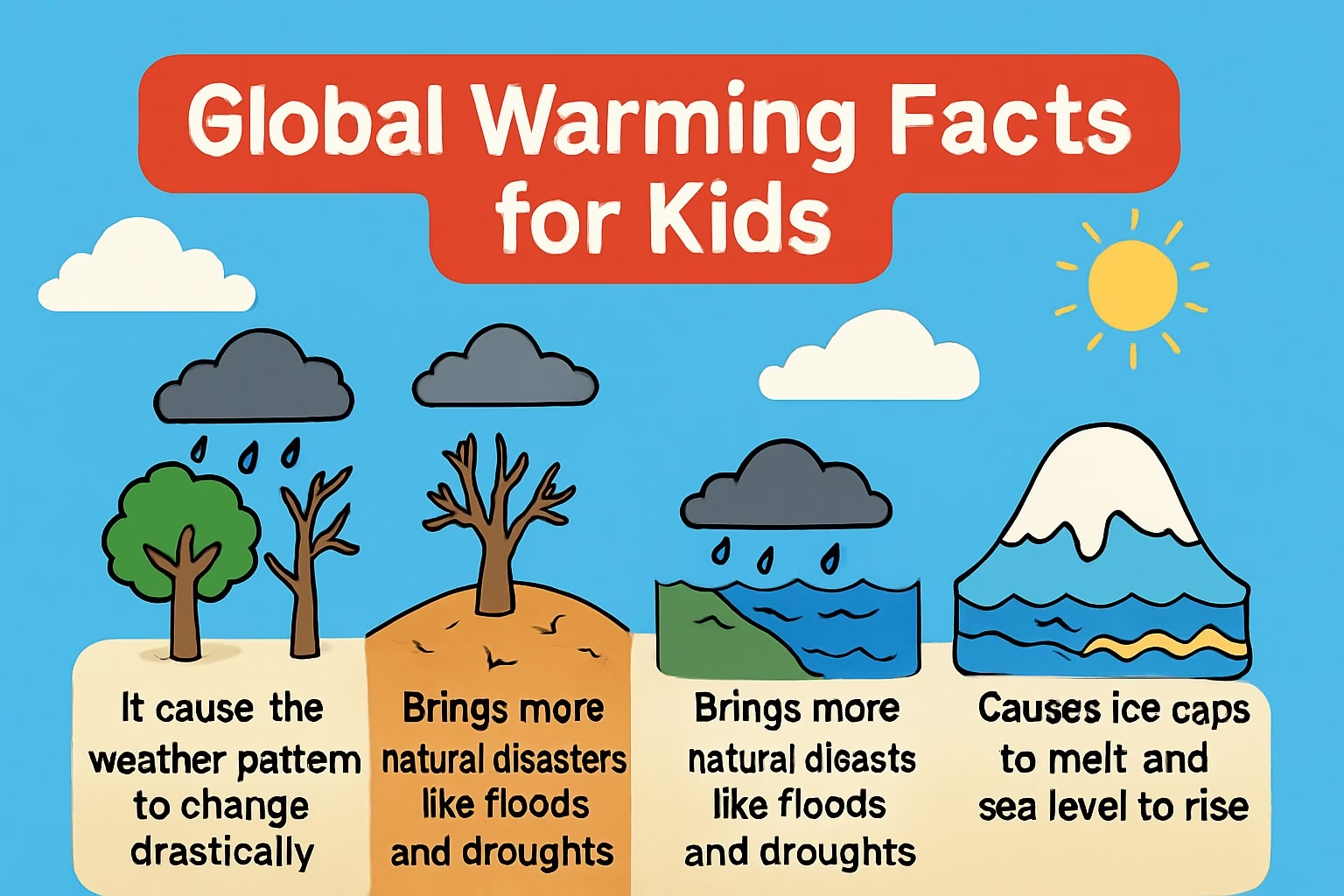
Global warming is the slow rise in the Earth’s average temperature. Since the Industrial Revolution, the planet has warmed by about 1.1°C. The main cause is people burning coal, oil and gas, which releases greenhouse gases such as carbon dioxide. These trap heat, melting ice, raising sea levels and making weather more extreme.
global warming quick facts
- The Earth has warmed by about 1.1°C since the Industrial Revolution.
- Climate is worked out from the weather over 30 years or more.
- 64% of the greenhouse gases made by people come from burning fossil fuels and industry.
- People release more than 100 times as much carbon dioxide each year as volcanoes.
- Without the natural greenhouse effect, Earth would be too cold to live on.
What is global warming?

Global warming means that the Earth’s average temperature is slowly rising. It is one part of climate change, which means a big, long-lasting change in the planet’s weather patterns and temperatures.
Since the Industrial Revolution, when people began burning lots of coal, oil and gas, the average temperature of the planet has risen by about 1.1°C, according to the UK’s Met Office.
That might not sound like much. But it is an average for the whole world, over a whole year. A small change in the average means big changes in weather, ice and oceans.
Weather or climate?
Weather and climate are not the same thing.
Weather is what is happening outside right now, in one place. Is it sunny, rainy, windy or snowy today?
Climate is the kind of weather a place usually has, worked out by looking at the weather over 30 years or more. For example, deserts have a hot, dry climate, and the UK has a mild, damp one.
So one cold day does not mean global warming has stopped. Scientists look at the long-term pattern, not a single day.
The greenhouse effect

To understand global warming, you need to know about the greenhouse effect.
Some gases in the air, called greenhouse gases, act like a blanket around the Earth. Sunlight passes straight through the blanket and warms the ground. The warm Earth then gives off a different kind of energy, called infrared, back towards space.
The greenhouse gases soak up some of that infrared energy and send it back down again. This traps heat and keeps the planet warm.
The greenhouse effect is natural, and we need it. Without it, the Earth would be far too cold for us to live on. The problem is that people are making the blanket thicker, so it traps more heat than it used to.
The main greenhouse gases
The most important greenhouse gas made by people is carbon dioxide. Others include methane, nitrous oxide and gases called F-gases. Water vapour and ozone are greenhouse gases too.
| Greenhouse gas | Where it comes from |
|---|---|
| Carbon dioxide | burning coal, oil and gas; cutting down forests |
| Methane | farm animals such as cattle; rubbish rotting in landfill sites |
| Nitrous oxide | fertilisers spread on crops |
| F-gases | some factory products and cooling systems |
What causes global warming?
Scientists agree that people are the main cause of the warming we see today. Here are the biggest reasons.
Burning fossil fuels: When we burn coal, oil and gas to make electricity, heat our homes and power cars, buses and factories, we release carbon dioxide. The Met Office says 64% of the greenhouse gases made by people come from burning fossil fuels and from industry. Find out more in our fossil fuels facts for kids.
Cutting down forests: Trees take in carbon dioxide as they grow. When forests are cleared, there are fewer trees to soak it up, and burning or rotting wood releases more. The Met Office says 11% of people’s greenhouse gases come from the way land and forests are used.
Farming and waste: Raising cattle, spreading fertiliser on crops and burying rubbish in landfill sites all release greenhouse gases.
Nature can change the climate too, for example through volcanoes or changes in the Sun. But today, people release more than 100 times as much carbon dioxide each year as all the world’s volcanoes put together.
What is global warming doing?
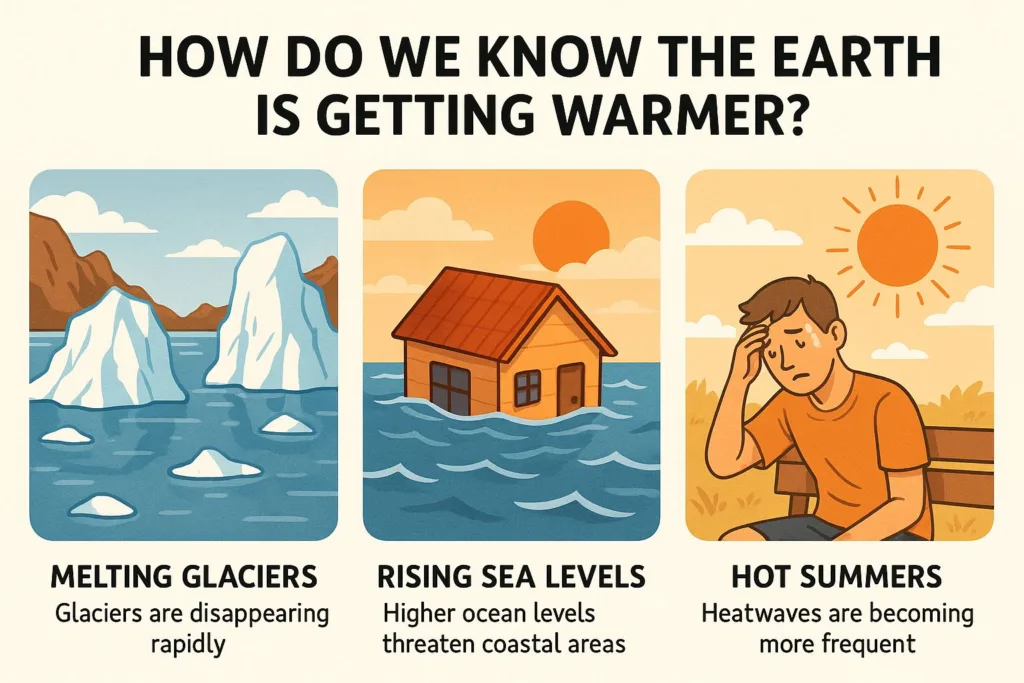
Global warming is already changing our world. According to NASA, global air temperatures have gone up by more than 2°F (about 1°C) in the past 100 years.
Ice is melting: Glaciers, ice sheets and sea ice are melting faster than usual. Animals that depend on sea ice, such as polar bears, are losing their hunting grounds.
Sea levels are rising: Melting ice adds water to the oceans, and warmer water takes up more space. Rising seas can flood coasts and islands.
The oceans are changing: The seas are getting warmer and more acidic, which harms coral reefs and other sea life.
The weather is getting more extreme. Heatwaves are becoming stronger and more common, and droughts and floods are becoming more intense.
Nature is shifting: Plants are flowering at different times, growing seasons are changing, and some animals are migrating at different times of year.
What could happen in the UK?
The Met Office has worked out what might happen in the UK if greenhouse gases keep rising fast.
By 2070, winters could be between 1°C and 4.5°C warmer and up to 30% wetter. Summers could be between 1°C and 6°C warmer and up to 60% drier.
That could mean more flooding in winter and more droughts and heatwaves in summer.
Why does a small change matter?
A rise of about 1°C might not sound like much. After all, the temperature changes by more than that between morning and afternoon on most days.
But this is a rise in the average temperature of the whole planet, all year round. It takes a huge amount of extra heat to warm all the land, air and oceans of the Earth by that much.
Here is another way to think about it. During the last Ice Age, when great sheets of ice covered much of northern Europe and North America, the world was only a few degrees colder on average than it is today. So a few degrees can make a very big difference.
The oceans help, but at a cost
The oceans soak up some of the carbon dioxide that people release. That slows down global warming a little.
But when carbon dioxide mixes into seawater, it makes the water more acidic. That makes life harder for sea creatures that build shells and for coral reefs.
Forests also soak up carbon dioxide as trees grow. That is one reason why protecting forests is so important.
What can we do?
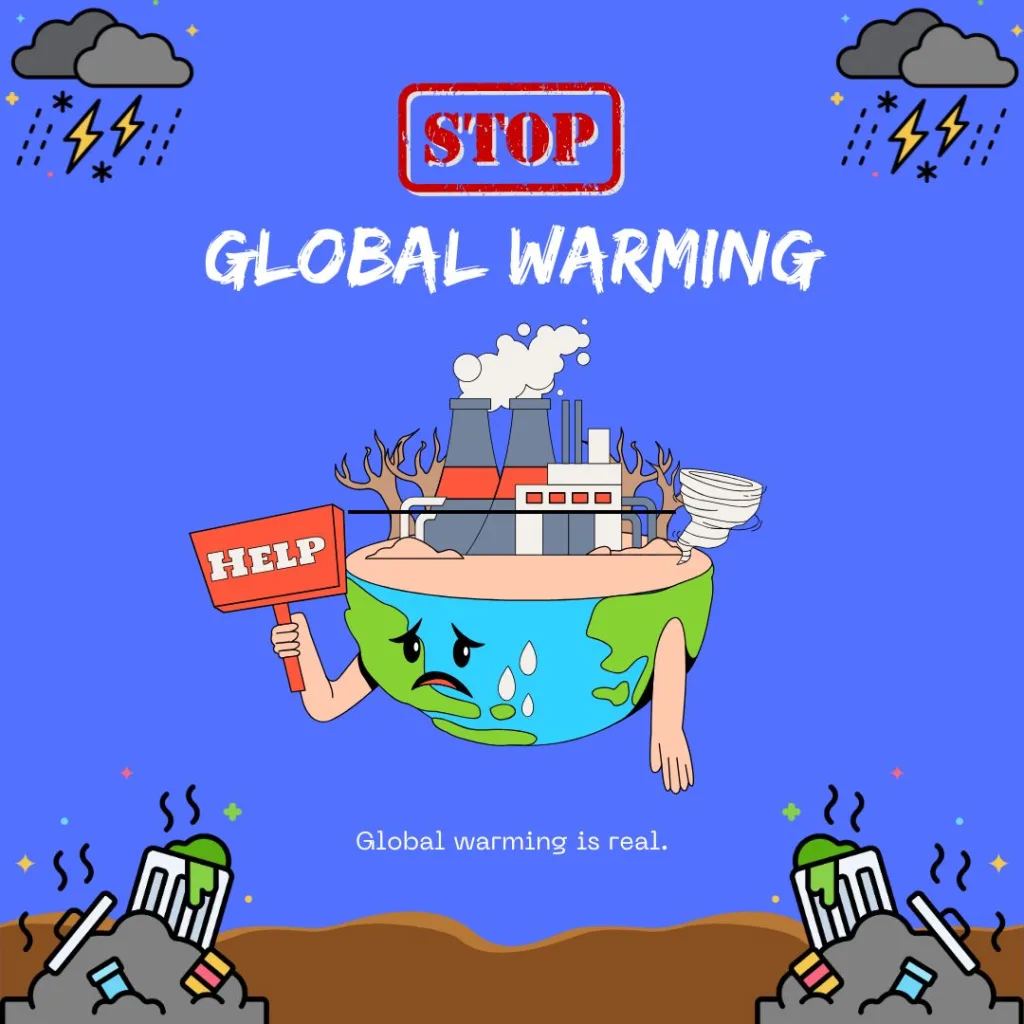
The most important thing is to make big and quick cuts in the greenhouse gases we release. That needs governments, businesses and ordinary people to work together.
You can help too. Here are some ideas.
Save energy: Switch off lights, screens and chargers when you are not using them. Put on a jumper instead of turning up the heating.
Travel greener: Walk, cycle or scoot for short journeys, or take the bus or train instead of the car.
Waste less: Reuse and recycle things, and try not to waste food. Rotting food in landfill sites gives off methane.
Eat more plants: growing vegetables, fruit and grains usually releases fewer greenhouse gases than raising cattle. You could try a meat-free meal once or twice a week.
Plant and protect: Plant trees and flowers, and look after green spaces. Plants take in carbon dioxide as they grow.
Spread the word: Talk to your family, friends and school about what you have learned. Lots of small actions add up.
Is there any good news?
Yes, there is. Around the world, people are building more wind turbines and solar panels, which make electricity without burning fuel. More and more cars run on electricity.
Scientists, engineers and young people everywhere are coming up with new ideas to cut greenhouse gases. The sooner we act, the more we can limit the warming.
Three things people get wrong
A cold day does not mean global warming has stopped. Weather changes every day. Climate is the long-term pattern, and that is getting warmer.
The greenhouse effect is not bad in itself. It keeps Earth warm enough to live on. The problem is that people are making it stronger.
Volcanoes are not the main cause of rising carbon dioxide. People release more than 100 times as much carbon dioxide each year as volcanoes do.
Did you know? People release more than 100 times as much carbon dioxide every year as all the world’s volcanoes put together.
Try it
Put two thermometers in the sun, one inside a clear jar with a lid and one outside it. After 20 minutes, compare them. The jar traps heat, a little like greenhouse gases do.
Knowledge check
What is the difference between weather and climate?
Show answer
Weather is what is happening now in one place; climate is the usual weather of a place over 30 years or more.
What is the main greenhouse gas made by people?
Show answer
Carbon dioxide.
Frequently asked questions
What is global warming?
Global warming is the slow rise in the Earth’s average temperature. Since the Industrial Revolution, the planet has warmed by about 1.1°C, mainly because of greenhouse gases released by people.
What causes global warming?
Global warming is mainly caused by people burning coal, oil and gas, cutting down forests, farming and producing waste. These release greenhouse gases that trap heat in the atmosphere.
What is the greenhouse effect?
The greenhouse effect is when gases in the air trap some of the Earth’s heat, like a blanket. It is natural and keeps Earth warm enough to live on, but extra gases make it stronger.
What are the effects of global warming?
Global warming is melting glaciers and sea ice, raising sea levels, warming the oceans, and making heatwaves, droughts and floods more intense.
How can children help stop global warming?
Children can help by saving energy, walking or cycling short journeys, reusing and recycling, not wasting food, planting trees and talking to others about climate change.
Is the greenhouse effect bad?
The natural greenhouse effect is not bad; without it Earth would be too cold for life. The problem is that people are adding extra greenhouse gases, which trap too much heat.
Sources
- Met Office: what is climate change? — the definition of climate change, 1.1°C of warming, causes, the greenhouse effect and UK projections
- NASA Science for Kids: what is climate change? — weather and climate, warming over the past 100 years, the greenhouse effect and its effects
- US Environmental Protection Agency: basics of climate change — the greenhouse effect, the main greenhouse gases, human activities and observed changes
- US Environmental Protection Agency: causes of climate change — natural causes of climate change and carbon dioxide from people compared with volcanoes