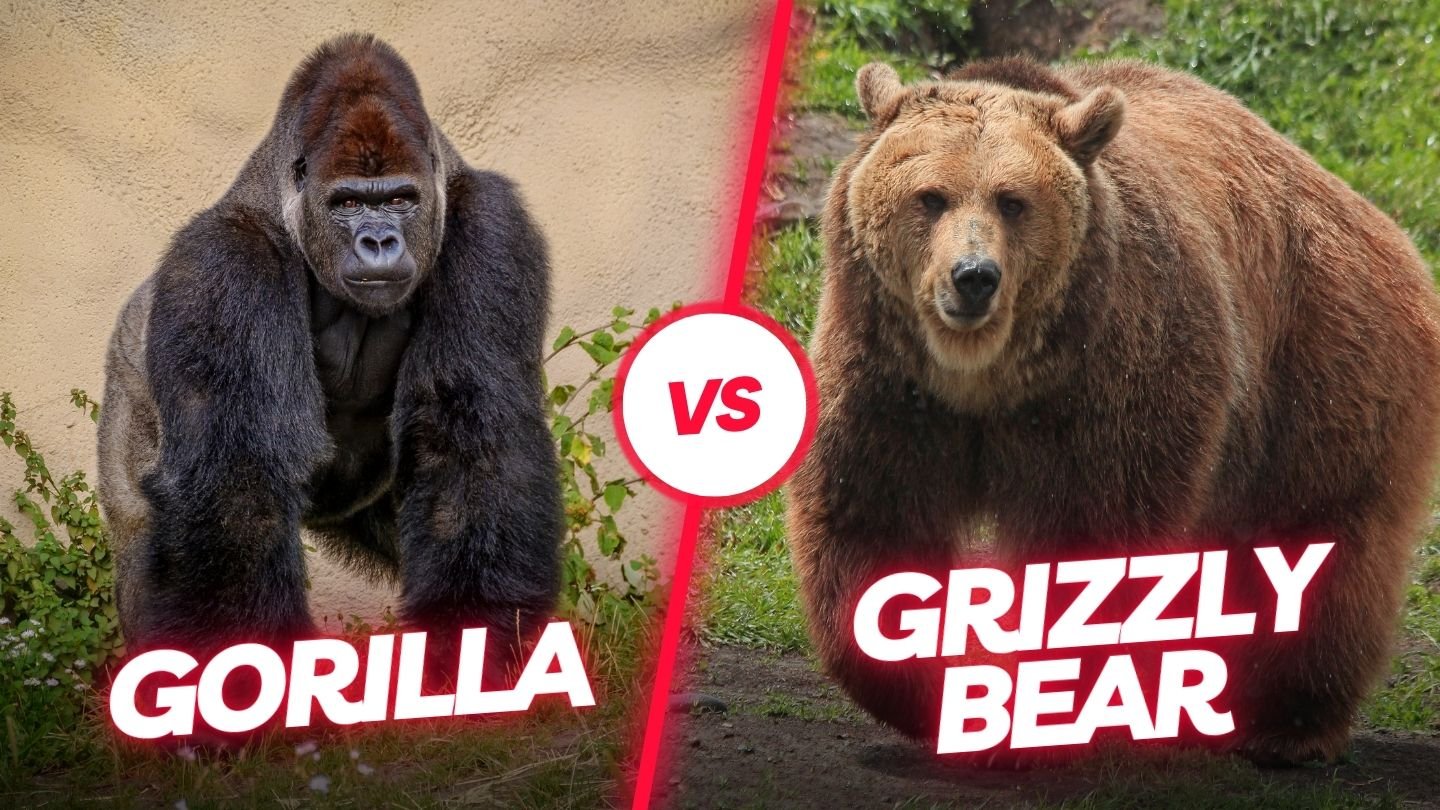
No one knows for sure, because gorillas and grizzlies never meet. On the evidence, a grizzly bear would probably win: a big male grizzly can weigh almost twice as much as a big male gorilla, has claws up to 15 cm long, and is used to tackling large prey. Gorillas are very strong but mostly peaceful plant-eaters.
gorilla versus grizzly bear quick facts
- Gorillas live in central Africa; grizzlies live in western North America.
- Male gorillas weigh 136 to 181 kg; male grizzlies about 180 to 270 kg.
- Grizzly claws can be up to 15 cm long.
- Gorillas eat almost only plants.
- A silverback’s charge is usually a warning, not an attack.
Gorilla versus grizzly bear: who would win?

Nobody knows for sure, because gorillas and grizzly bears never meet. Gorillas live in the forests of central Africa, and grizzly bears live in western North America.
What we can do is compare their bodies and their behaviour, using facts from zoos and wildlife experts. On that evidence, most of the advantages lie with the grizzly: it is heavier, it has long claws and powerful jaws, and it hunts and fights for food.
But gorillas are enormously strong, and a real fight would depend on the animals, the place and many other things. This guide looks at the evidence, round by round.
| Gorilla | Grizzly bear | |
|---|---|---|
| Where it lives | forests of central Africa | western North America |
| Weight of an adult male | 136 to 181 kg, up to 227 kg | about 180 to 270 kg, up to 324 kg known |
| Height | up to 1.8 m standing | about 2.5 m long |
| Food | almost all plants | plants and meat |
| Weapons | strong arms, big canine teeth | long claws, strong jaws |
| Temper | mostly peaceful; charges to warn | usually avoids people; mothers defend cubs |
Could they ever meet?
In the wild, never. The two animals live on different continents, with an ocean between them.
Gorillas live in the rainforests of Africa. Grizzly bears live in the forests, mountains and open country of western North America.
So this match-up is a thought experiment. It is a fun way to compare two amazing animals, not a real contest.
Two very different homes
Gorillas live in warm, wet tropical forests, full of leaves, stems and fruit to eat all year round. They spend most of their time on the ground, moving slowly and feeding.
Grizzlies live in cold places with long, snowy winters. They eat huge amounts in summer and autumn, then spend four to six months hibernating in dens.
Each animal is perfectly suited to its own home. A gorilla would struggle in a snowy Montana winter, and a grizzly would have little to eat in a rainforest.
Meet the gorilla
San Diego Zoo Wildlife Alliance says gorillas live in groups called troops, of 5 to 30 animals, led by a strong, experienced male called a silverback.
An adult male can eat up to 18 kg (40 pounds) of plants a day. Every night, each gorilla builds a new nest of leaves and branches to sleep in. The National Zoo says gorillas live for 30 to 40 years in the wild.
Meet the grizzly
The Fish and Wildlife Service says grizzlies in the Greater Yellowstone area eat more than 260 different kinds of food, from plants and insects to fish and meat.
Unlike gorillas, grizzlies mostly live alone. The main exception is a mother with her cubs, which stay with her for about two and a half years. The National Park Service says grizzlies live for about 20 to 30 years.
Round one: size and weight
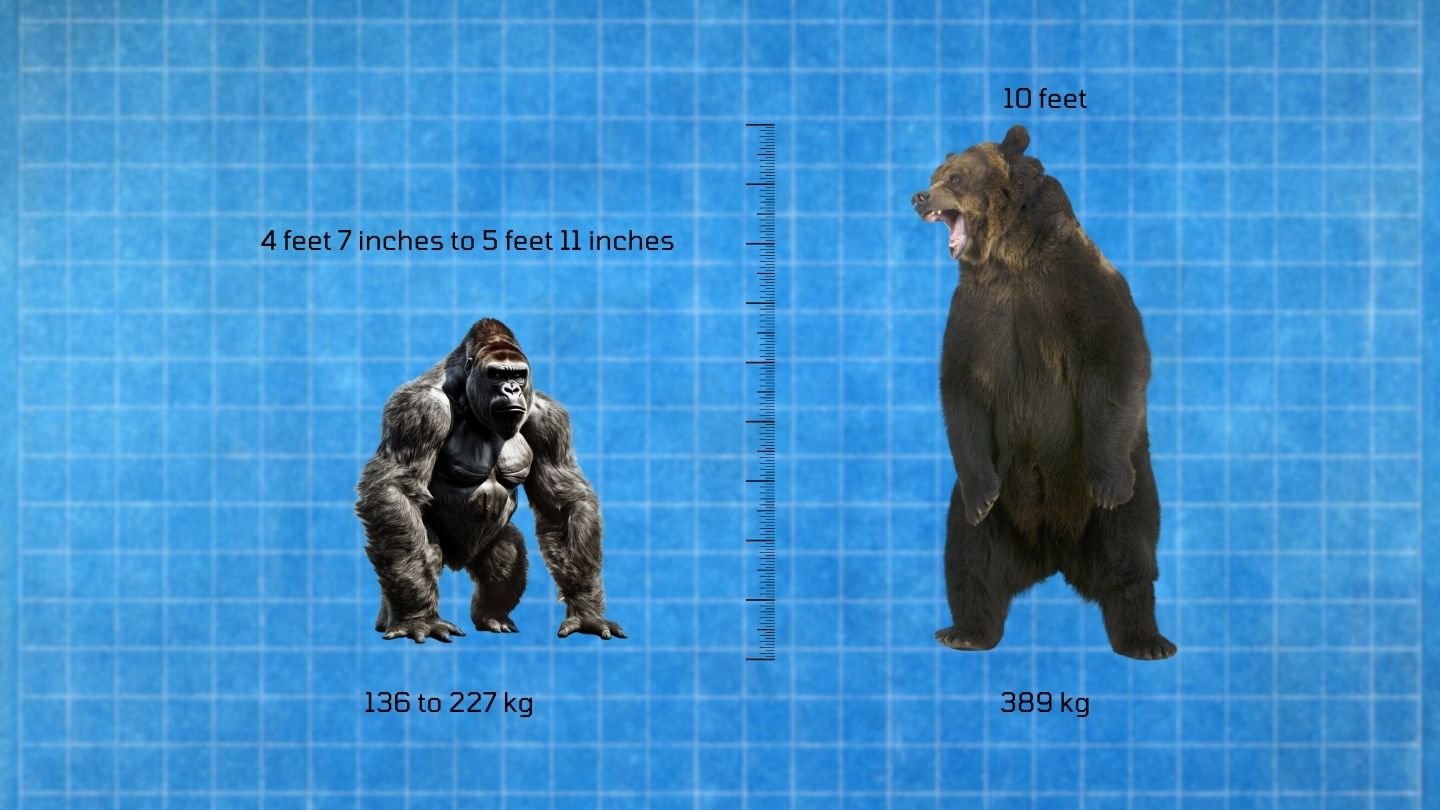
San Diego Zoo Wildlife Alliance says male gorillas grow up to 1.75 m (5.7 feet) tall and weigh 136 to 181 kg (300 to 400 pounds). The Smithsonian’s National Zoo says the biggest can weigh up to 227 kg (500 pounds).
The US Fish and Wildlife Service says male grizzlies in the lower 48 states weigh about 180 to 270 kg (400 to 600 pounds). The National Park Service says the heaviest known male in the Yellowstone area weighed 324 kg (715 pounds).
Britannica says large grizzlies can be about 2.5 m (8 feet) long and weigh about 410 kg (900 pounds).
Round one: the grizzly. A big male grizzly can weigh almost twice as much as a big male gorilla.
Round two: claws and teeth
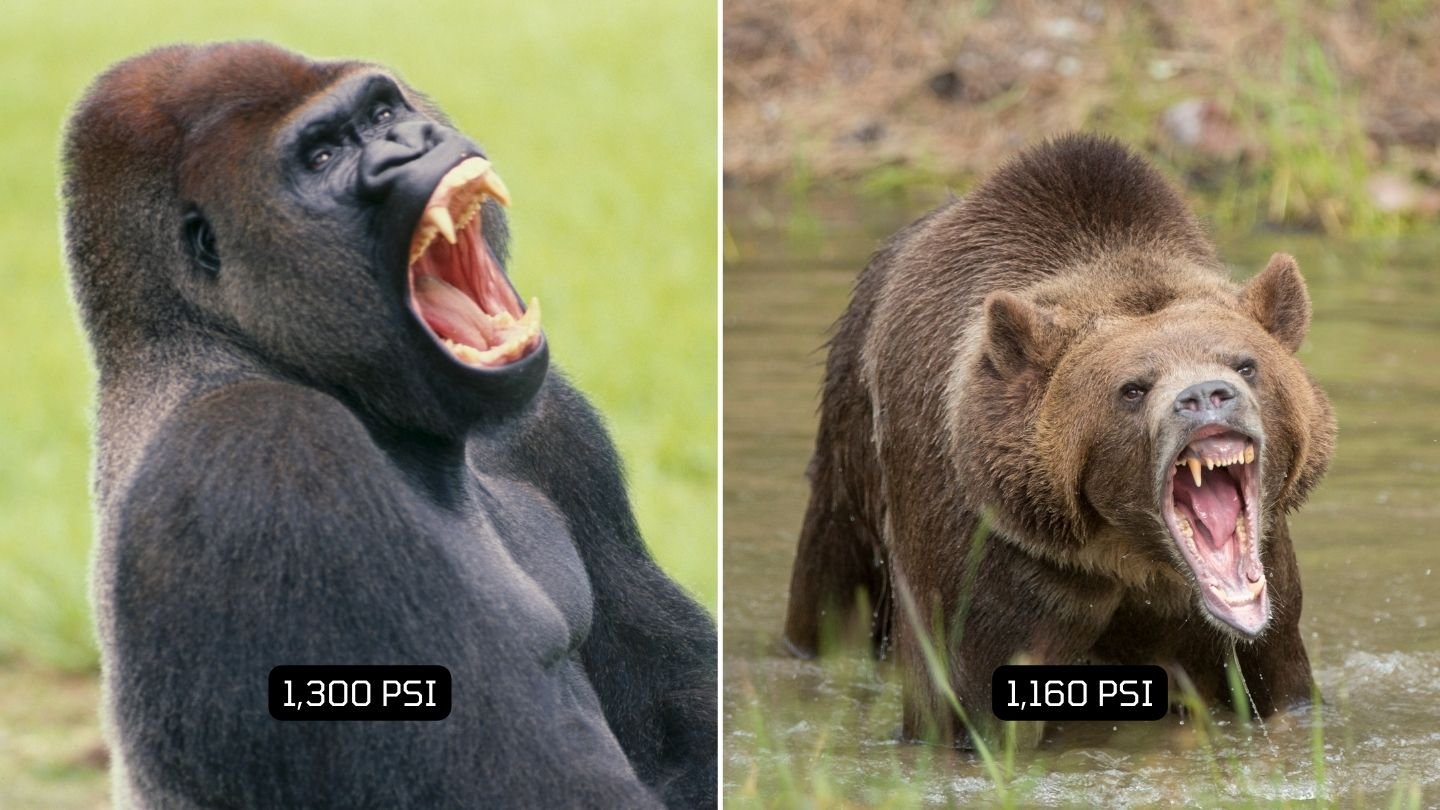
A grizzly has powerful weapons. The National Park Service says its front claws average about 4.5 cm (1.8 inches) and can be up to 15 cm (5.9 inches) long. It also has strong jaws and large teeth.
Gorillas have large canine teeth, which males show off when they are threatened. But they use them mostly for display, not for hunting.
You may see exact bite-force numbers for both animals online. Be careful: many of these figures are estimates or guesses, not careful measurements, and different websites give very different numbers.
Round two: the grizzly, thanks to its long claws.
Round three: arm power
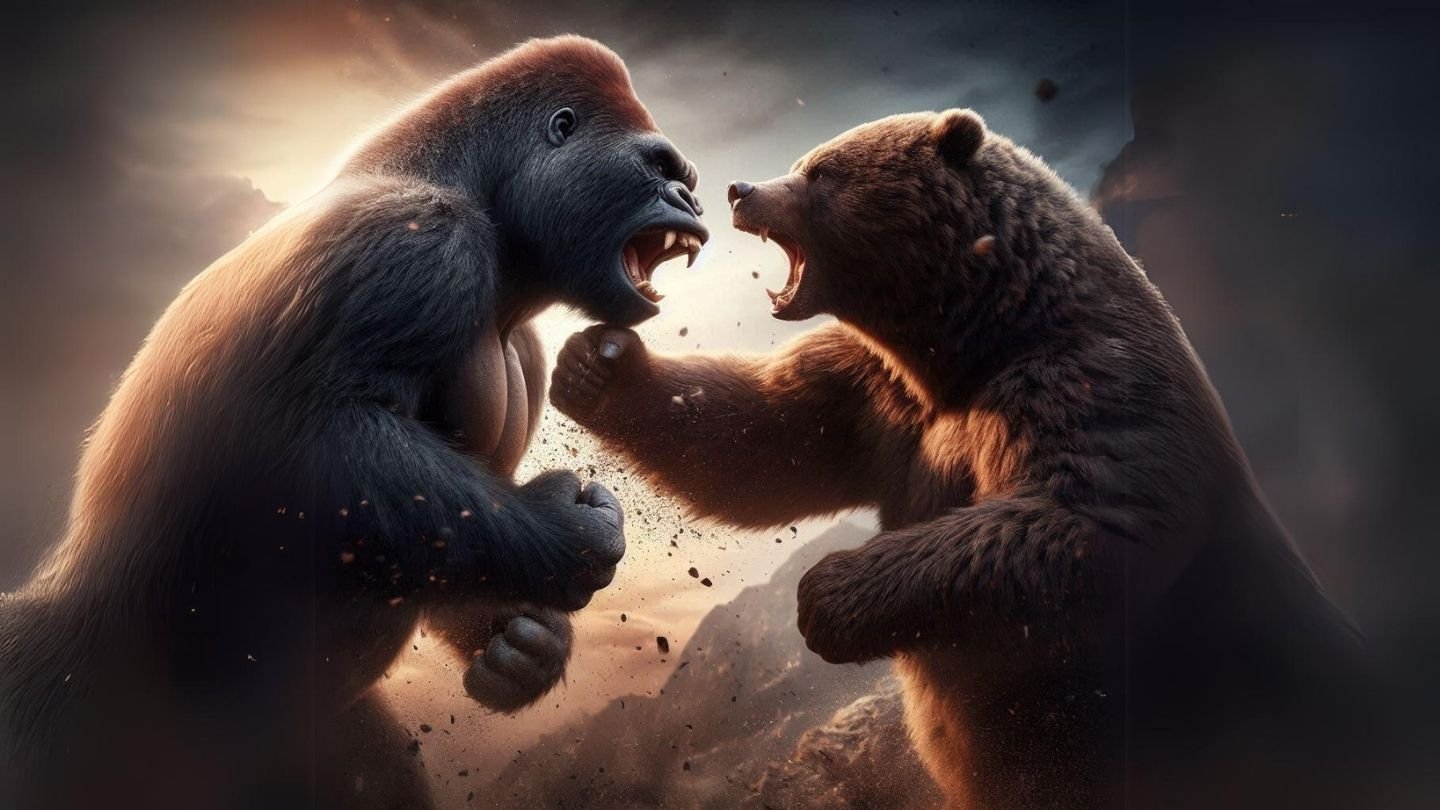
Gorillas have incredibly strong arms and shoulders. The Smithsonian’s National Zoo says an adult male gorilla has an arm span of about 2.4 m (8 feet).
Gorillas use their arms to walk on their knuckles, to pull down branches and to beat their chests. A silverback can rip apart tough plants that no human could.
Grizzlies have enormous strength too. The big hump on their shoulders is a mass of muscle that powers their front legs for digging, and they can dig up rocky ground and tear open logs.
Round three: a close call. Both animals are far stronger than any person.
Why online strength numbers can’t be trusted

Some websites claim that a gorilla can lift a certain weight, or that a grizzly’s punch has a certain force. Nobody has tested a wild gorilla or a wild grizzly on a weightlifting bench.
These numbers are usually guesses, sometimes based on body size, sometimes copied from other websites. If a number has no clear source, treat it as a guess.
It is much better to compare facts that scientists have measured, such as weight, claw length and diet.
Round four: fighting experience
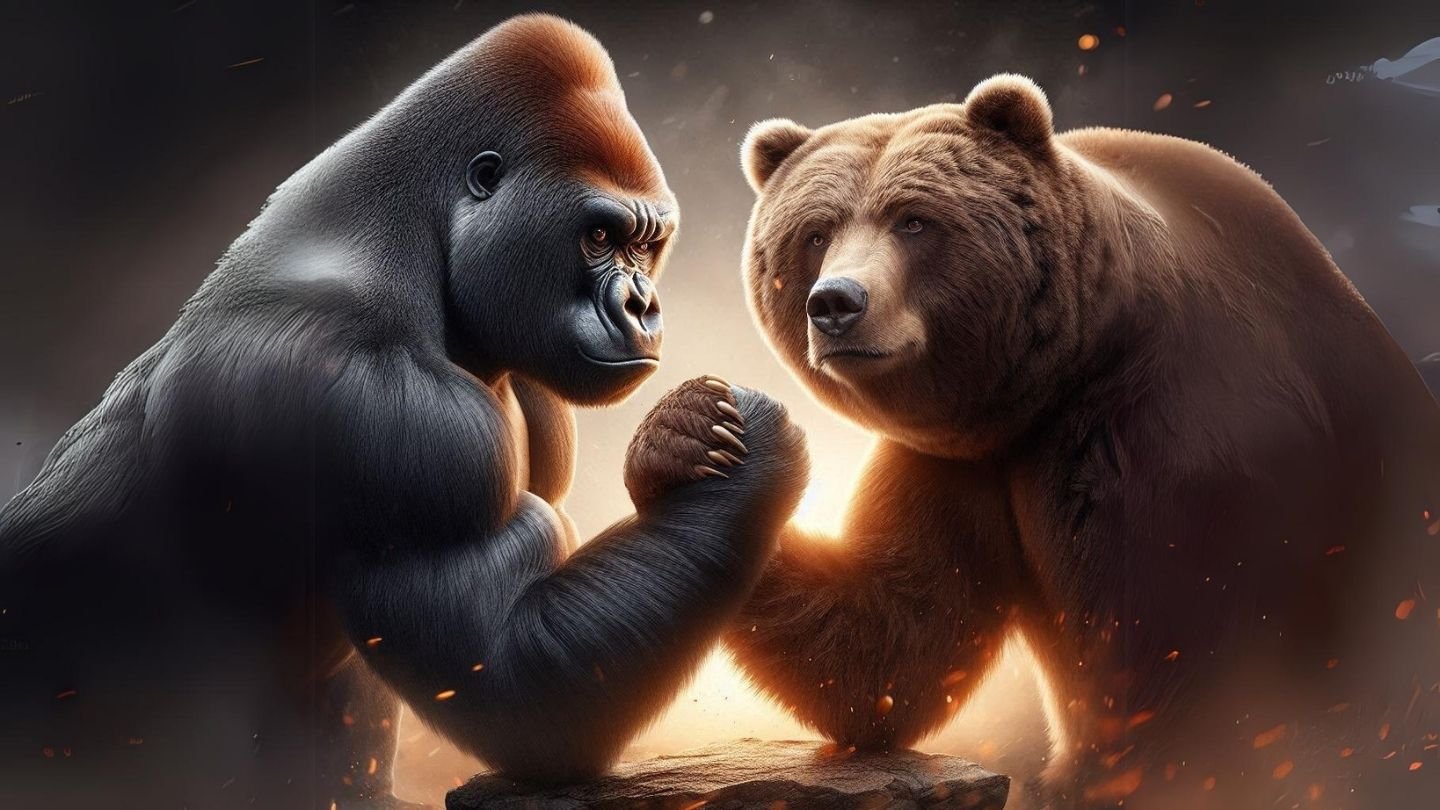
Gorillas are mostly peaceful. San Diego Zoo Wildlife Alliance says almost everything a gorilla eats is plants. They do not hunt other animals.
When a silverback feels threatened, he beats his chest, screams, bares his teeth and charges. Most of the time, this display is enough to scare the threat away without a real fight.
Grizzlies are different. Britannica says they eat meat as well as plants, including the young of hoofed animals such as elk. They are used to catching and killing large prey, and to fighting other bears and wolves over food.
Round four: the grizzly, which is far more used to real fights.
How each animal really defends itself
In real life, both animals try to avoid danger rather than fight. A silverback’s chest-beating and charge are designed to scare a threat away, and they usually work.
Grizzlies also usually avoid trouble, especially with people. Britannica says females with cubs are the most aggressive grizzlies, because they are protecting their young.
So the most likely outcome of a real meeting is not a fight at all. One animal would probably back away. Both are far more interested in finding food and staying safe than in fighting.
How scientists compare animals fairly
Scientists never stage fights between animals. That would be cruel, and it would not tell us much anyway.
Instead, they compare measured facts, such as weight, height, claw length and diet, and they watch how animals behave in the wild. Watching animals in the wild, from a safe distance, teaches scientists far more than any made-up contest could. That is how the facts in this guide were gathered.
The verdict

On the evidence, a grizzly bear would probably beat a gorilla. It is usually heavier, it has long claws and strong jaws, and it is used to tackling big animals.
But this is only a best guess. A gorilla is still one of the strongest animals on Earth, and in real life both animals would try to avoid a dangerous fight.
An injured wild animal may not be able to find food and could die, so animals usually back away from fights they do not need.
What about speed?
Grizzlies are fast. Britannica says they can run at up to 56 km/h (35 mph) over short distances.
Nobody has measured a gorilla’s top speed properly. You may see 32 to 40 km/h (20 to 25 mph) online, but that is an estimate. Read more in our guide to how fast gorillas can run.
Both need protecting
Instead of fighting, both animals need help. WWF says western lowland gorillas are Critically Endangered, and their numbers have fallen by more than 60% over 20 to 25 years because of poaching and disease.
Grizzlies in the lower 48 states are protected as a threatened species. The Fish and Wildlife Service says about 1,900 live there today, compared with about 50,000 in the past.
Three things people get wrong
Gorillas and grizzlies do not meet in the wild. They live on different continents.
Gorillas are not fierce hunters. They eat almost only plants, and most charges are warnings.
Online strength numbers are not proven. Most punch and bite figures are guesses.
Did you know? An adult male gorilla has an arm span of about 2.4 m, longer than most people are tall.
Try it
Make a two-column chart comparing gorillas and grizzlies on weight, food, weapons and home. Circle only the facts that have a source.
Knowledge check
Do gorillas and grizzly bears meet in the wild?
Show answer
No, they live on different continents.
Why can’t we trust online punch numbers?
Show answer
They are usually guesses, not careful measurements.
Frequently asked questions
Who would win, a gorilla or a grizzly bear?
A grizzly would probably win, because it is heavier, has long claws and is used to tackling large prey. Nobody can know for sure, though.
Is a grizzly bear bigger than a gorilla?
Usually, yes. Male grizzlies in the lower 48 states weigh about 180 to 270 kg, while male gorillas weigh about 136 to 181 kg.
Do gorillas and grizzly bears live in the same place?
No. Gorillas live in the forests of central Africa, and grizzly bears live in western North America, so they never meet in the wild.
Is a gorilla stronger than a grizzly bear?
Both are far stronger than people. Nobody has measured their strength fairly, so claims about who is stronger are usually guesses.
Are gorillas dangerous?
Gorillas are mostly peaceful plant-eaters. A silverback may beat his chest and charge to scare off a threat, but this is usually a warning.
How long are grizzly bear claws?
The National Park Service says grizzly claws average about 4.5 cm and can be up to 15 cm long, which makes them powerful weapons.
Sources
- San Diego Zoo Wildlife Alliance: gorilla — gorilla size, diet and chest-beating charges
- Smithsonian’s National Zoo: western lowland gorilla — maximum weight and arm span
- WWF: western lowland gorilla — status and population decline
- US Fish and Wildlife Service: grizzly bear — grizzly size, population and protection
- US National Park Service: Yellowstone grizzly bear facts — heaviest grizzly and claw length
- Encyclopaedia Britannica: grizzly bear — grizzly length, weight, speed and diet