
The Ice Age most people mean, the Pleistocene, lasted about 2.6 million years, from about 2,600,000 to 11,700 years ago. It was not one long freeze: cold glacials took turns with warm interglacials. At the coldest point, about 20,000 years ago, Earth was about 6 °C colder. Technically, we still live in an ice age, in a warm interglacial.
the Ice Age quick facts
- The Pleistocene Ice Age lasted about 2.6 million years.
- It ended about 11,700 years ago.
- At the coldest point, Earth was about 6 °C colder than in the 20th century.
- Sea level was about 120 to 130 m lower than today.
- Ice ages are linked to slow changes in Earth’s orbit, tilt and wobble.
How long did the Ice Age last?

The Ice Age that most people mean lasted about 2.6 million years. The Oxford University Museum of Natural History says this time, called the Pleistocene, ran from about 2,600,000 years ago until 11,700 years ago.
But here is a surprise: in a way, the Ice Age is not over. NOAA, the US government’s climate agency, says we are technically still in an ice age. We just happen to be living in a warm spell called an interglacial.
NOAA says all of human civilisation, from the first farms and cities to the present day, has happened within this warm spell.
| Ice Age at a glance | |
|---|---|
| The Pleistocene | about 2.6 million to 11,700 years ago |
| Coldest point | about 26,000 to 20,000 years ago |
| Temperature then | about 6 °C colder than the 20th century |
| Ice cover | about half of North America, Europe and South America |
| Sea level | about 120 to 130 m lower than today |
| Today | a warm interglacial, still within an ice age |
Not one long freeze
The Ice Age was not one long, non-stop freeze. The Oxford University Museum of Natural History says cold periods, called glacials, took turns with warmer periods, called interglacials.
During glacials, huge sheets of ice spread across the land. During interglacials, the weather was more like today’s, and the ice shrank back.
The pattern changed over time. NASA says that between about 3 million and 1 million years ago, cold spells came about every 41,000 years. About 800,000 years ago, ice ages began coming about every 100,000 years instead.
In Britain, the most recent glacial period is called the Devensian, the Oxford museum says. In the middle of it, 60,000 to 30,000 years ago, much of Britain was covered by ice sheets a kilometre thick.
The coldest part
The coldest part of the last glacial period is called the Last Glacial Maximum. Scientists at the University of Arizona say it happened about 20,000 years ago. AntarcticGlaciers.org, a site run by a glacier scientist, puts it between about 26,000 and 20,000 years ago.
How cold was it? A 2020 study led by Jessica Tierney at the University of Arizona found the average temperature across the whole Earth was about 8 °C (46 °F). In the 20th century it was about 14 °C (57 °F), so the Ice Age was about 6 °C colder.
That might not sound like much, but it made a huge difference. The University of Arizona says glaciers covered about half of North America, Europe and South America, and many parts of Asia.
The scientists worked out the temperature by studying the fossils of tiny sea creatures called plankton in mud from the ocean floor, and feeding the results into computer models, much as weather forecasters do.
Giant ice sheets
The ice sheets were enormous. AntarcticGlaciers.org says the Laurentide Ice Sheet covered most of Canada and reached as far as the Great Lakes and the north-eastern United States.
Over central Canada, the ice was about 3 to 4 km (1.9 to 2.5 miles) thick. That is thicker than the height of many mountains.
Ice sheets also spread across northern Europe, including Britain and Scandinavia.
So much water was locked up in ice that the sea level dropped. AntarcticGlaciers.org says global sea level was about 120 to 130 m (390 to 430 ft) lower than it is today. Land that is now under the sea was dry, and animals and people could walk across it.
What causes ice ages?
Ice ages are not random. NASA says the Serbian scientist Milutin Milankovitch suggested that slow changes in Earth’s journey around the Sun trigger them. These changes are now called Milankovitch cycles.
There are three main cycles. The first is about the shape of Earth’s orbit. NASA says it slowly changes from almost a circle to a slightly squashed oval and back again, over about 100,000 years.
The second is Earth’s tilt. NASA says it swings between 22.1 and 24.5 degrees over about 41,000 years. Today the tilt is 23.4 degrees, and it is slowly getting smaller.
The third is a wobble. Earth’s axis wobbles like a spinning top, NASA says, in a cycle that takes about 23,000 years on average once other changes are included.
Together, these cycles change how much sunlight reaches different parts of Earth in different seasons. When northern summers get less sunshine, snow does not melt, and ice sheets can grow.
Even older ice ages

The most recent Ice Age is not the only one. NOAA says Earth is about 4.54 billion years old and has had several much older ice ages.
The Huronian ice ages happened between 2.4 and 2.1 billion years ago, NOAA says. Much later, two ice ages called the Sturtian, about 720 to 660 million years ago, and the Marinoan, about 640 to 635 million years ago, may have turned Earth into a “Snowball Earth”, frozen almost from pole to pole.
Ice Age animals

The Ice Age was home to some amazing animals. The US National Park Service says woolly mammoths stood about 2.7 to 3 m (9 to 10 ft) tall at the shoulder, with curved tusks up to 3.7 m (12 ft) long.
Woolly mammoths had shaggy coats and small hairy tails, and they grazed on grass. The National Park Service says they crossed the Bering Land Bridge into North America about 100,000 years ago.
There were even bigger mammoths. The Columbian mammoth was over 4.3 m (14 ft) tall and weighed about 9 tonnes, the National Park Service says, and it had very little hair.
Fierce hunters roamed too. The National Park Service says American lions were about 25% bigger than today’s African lions, and the giant short-faced bear could be up to 3 m long and weigh up to about 900 kg.
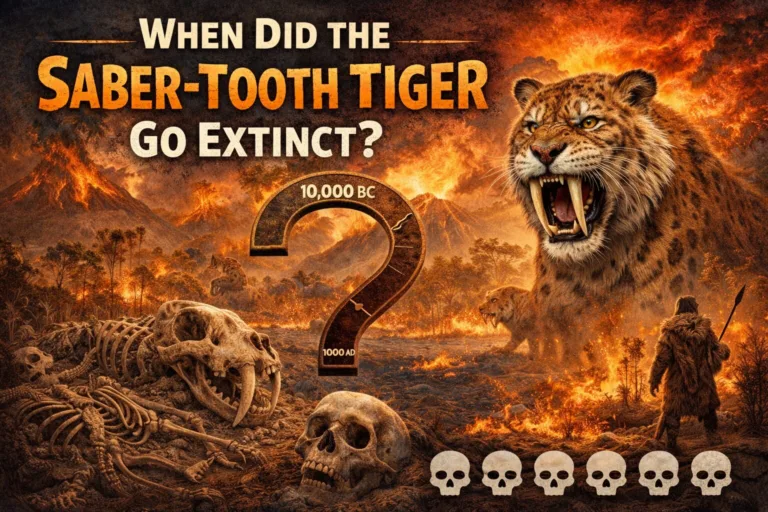
The sabre-toothed cat Smilodon was about the size of an African lion, with curved teeth about 20 cm long, the National Park Service says. It lived in North America until about 13,000 years ago. Meet it in our sabre-toothed tiger facts.
In Britain, the Oxford museum says, woolly mammoths, woolly rhinos, steppe bison, horses and reindeer lived alongside spotted hyenas, wolves, lions and brown bears during cold spells.
People in the Ice Age
People lived through the Ice Age too. The Oxford University Museum of Natural History says Neanderthals were making stone tools in Oxfordshire 200,000 years ago, and modern humans arrived in Britain about 40,000 years ago.
Learn how early people lived in our Stone Age facts.
How the Ice Age ended
As Earth’s orbit shifted, the ice began to melt. The Pleistocene ended about 11,700 years ago, the Oxford museum says, and the warm interglacial we live in now began.
Many Ice Age animals disappeared around this time. The National Park Service says scientists still do not fully know why mammoths died out, but it is often blamed on a changing climate combined with hunting by humans.
Some mammoths lasted much longer, on a remote island in the Arctic. Find out whether they could return in Are Scientists Bringing Back the Woolly Mammoth?.
More about Earth’s journey
Why does Earth’s orbit change shape at all? NASA says it is because of the pull of the giant planets Jupiter and Saturn, which slowly tug Earth’s path around the Sun from nearly round to slightly oval and back.
NASA says Earth’s orbit is becoming slightly more circular at the moment. Its tilt, now 23.4 degrees, is slowly getting smaller.
The wobble of Earth’s axis is a little like a spinning top that leans as it turns. NASA says one full wobble takes about 25,772 years on its own.
More Ice Age giants
North America had some surprising Ice Age animals. The US National Park Service says the western camel stood about 2.1 m tall, and that camels first appeared in North America about 45 million years ago, long before they lived in deserts elsewhere.
Steppe bison roamed the cold grasslands too. The National Park Service says they reached Alaska between about 187,000 and 129,000 years ago, and died out between about 11,000 and 8,000 years ago.
American lions could run at up to about 48 km/h and survived until about 10,000 years ago, the National Park Service says. The Columbian mammoth, which lived further south, had tusks up to 4.9 m long.
In Britain, the Oxford University Museum of Natural History says, a warm spell about 200,000 years ago left more than 1,500 fossils of large mammals at Stanton Harcourt near Oxford. They include elephants, mammoths, bison, lions and bears.
During the coldest part of Britain’s last glacial, 60,000 to 30,000 years ago, the Oxford museum says the land was too harsh for most wildlife. Animals and people came and went as the climate changed.
Three things people get wrong
The Ice Age is not completely over. We are living in a warm spell within an ice age.
It was not one long freeze. Cold glacials and warm interglacials took turns.
The whole Earth was not covered in ice. Ice covered about half of North America, Europe and South America.
Did you know? Over central Canada, the Ice Age ice sheet was about 3 to 4 km thick.
Try it
Put ice cubes on a plate of modelling-clay land in a tray of water. Watch the water level rise as the ice melts, like the seas after the Ice Age.
Knowledge check
Are we still in an ice age?
Show answer
Technically yes, in a warm spell called an interglacial.
What are Milankovitch cycles?
Show answer
Slow changes in Earth’s orbit, tilt and wobble that help trigger ice ages.
Frequently asked questions
How long did the Ice Age last?
The Pleistocene Ice Age lasted about 2.6 million years, from about 2,600,000 years ago until 11,700 years ago.
When did the last Ice Age end?
The Pleistocene ended about 11,700 years ago. Since then, Earth has been in a warmer period called an interglacial.
Are we still in an ice age?
Technically yes. NOAA says we are in a warm interglacial within a longer ice age that began about 2.6 million years ago.
How cold was the Ice Age?
At the coldest point, about 20,000 years ago, the average global temperature was about 8 °C, about 6 °C colder than the 20th century.
What caused the Ice Age?
Slow changes in Earth’s orbit, tilt and wobble, called Milankovitch cycles, changed how much sunlight reached Earth and let ice sheets grow.
What animals lived in the Ice Age?
Woolly mammoths, woolly rhinos, sabre-toothed cats, American lions, giant short-faced bears and steppe bison all lived during the Ice Age.
Sources
- NOAA Climate.gov: what’s the coldest Earth’s ever been? — still being in an ice age, older ice ages and Snowball Earth
- NASA: Milankovitch cycles — orbit, tilt and wobble cycles and how often ice ages came
- University of Arizona: how cold was the Ice Age? (2020) — the Last Glacial Maximum’s temperature, ice cover and how scientists measured it
- Oxford University Museum of Natural History: ice ages in Oxfordshire — Pleistocene dates, glacials and interglacials, the Devensian, and Ice Age animals and people in Britain
- AntarcticGlaciers.org: the Laurentide Ice Sheet — the timing of the coldest point, ice thickness and sea level
- US National Park Service: Ice Age mammals (Bering Land Bridge) — woolly mammoths, American lions and giant short-faced bears; the Waco Mammoth National Monument page was also used